Mark The Days - January

January kicks down the door shouting, “New year, new you!” while most of us are still digesting cheese logs and trying to remember what day it is. It’s a month built on resolutions, optimism, and the subtle judgment of kale. The parties are over, the decorations are down, and suddenly everyone’s into self-improvement and budgeting—until about the 12th. But January has its perks: fresh starts, fresh calendars, and the joy of celebrating completely random things like National Bubble Bath Day (because self-care still counts if it’s slippery). It’s cold, it’s hopeful, and it’s mostly held together with caffeine.
- Details
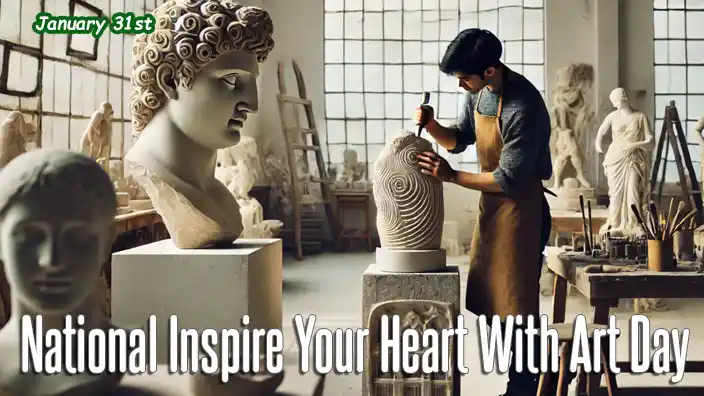
They say beauty is in the eye of the beholder, but that doesn’t explain why a banana duct-taped to a wall once sold for $120,000. Art has a way of making us question everything—our taste, our budget, and sometimes our own sanity. One person sees a profound statement about the human condition, while another sees something their toddler accidentally created with spaghetti sauce. Whether it’s an abstract masterpiece, a sculpture made of recycled junk, or a portrait with eyes that follow you across the room, art keeps life interesting, confusing, and occasionally very, very expensive.
Celebrated: Annually, on January 31st
Celebrate National Inspire Your Heart With Art Day on January 31st by exploring the emotional power of art in its many forms and connecting with creativity.


- Details
National Shortbread Day is your official reminder that sometimes the best things in life come with zero drama and a whole lot of butter. Shortbread doesn’t need frosting, sprinkles, or a surprise filling—it shows up with three ingredients and the quiet confidence of something that’s been perfect since before people started putting bacon on dessert. One bite and you’ll understand why it’s lasted for centuries: it’s crisp, crumbly, and politely addictive… the kind of cookie that makes you say “just one” and then mysteriously forget how counting works.
Celebrated: Annually, on January 6th
Celebrate with Scotland’s classic buttery cookie—simple, crumbly, timeless, and perfect with tea or coffee any day of the week.


- Details
People working on their mind and body are a fascinating bunch. One moment, they’re meditating so deeply you’d think they’re auditioning to become a statue, and the next, they’re trying to touch their toes in yoga class while simultaneously praying their hamstrings don’t snap like rubber bands. Their fridge is a curious mix of kale smoothies and “emergency chocolate,” because balance, right? And let’s not forget their gym playlists, which range from calming ocean waves for mindfulness to high-energy dance beats for cardio—because nothing screams inner peace like sweating profusely to techno.
Celebrated: Annually, on January 3rd
Embrace holistic health with tips for International Mind-Body Wellness Day. Explore yoga, mindfulness, and laughter to achieve balance and joy in your life.


- Details
Using poetry at work is a bold move, because nothing changes the mood of a meeting faster than someone clearing their throat and saying, “I’d like to share a few lines about quarterly projections.” Imagine a staff memo written in rhyme, or a performance review that ends with a dramatic stanza about teamwork and coffee shortages. It might start as a joke, but before long you’ve got the accounting department trading haikus about expense reports and the boss delivering motivational sonnets before lunch. Sure, it may not speed up productivity, but at least when the work piles up, you can say it’s all part of the company’s ongoing epic poem. 😄📜
Celebrated: Annually, on the Second Tuesday in January
Discover the joy of Poetry at Work Day, a whimsical celebration encouraging creativity and poetic expression in everyday office life.

- Details
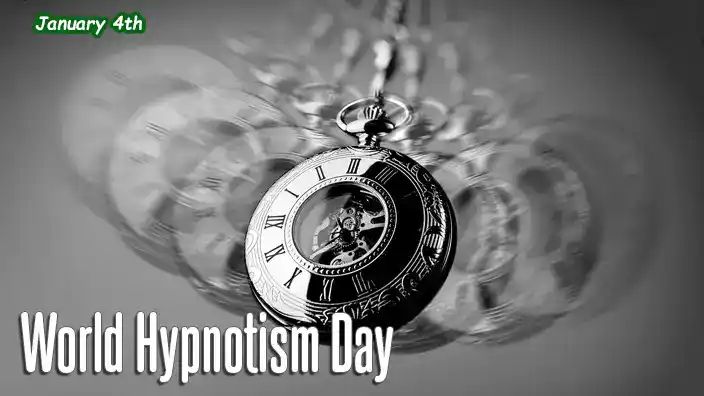
Have you ever been hypnotized? It's like agreeing to let your brain go on a spontaneous vacation while leaving a stranger in charge of your thoughts. One moment, you’re wide awake, scoffing at the idea of clucking like a chicken, and the next, you’re convinced you are a chicken, auditioning for the lead role in a Broadway barnyard musical. You start to wonder why you've never appreciated the allure of corn kernels before, and suddenly the phrase “pecking order” makes perfect sense. Hypnosis is proof that your mind has a “comedy mode,” and honestly, it’s a show worth watching—even if you’re the star and the laughing audience is everyone else in the room.
Celebrated: Annually, on January 4th
Uncover the truths of hypnotism this World Hypnotism Day! It's a day for education, self-improvement, and celebrating the power of the subconscious mind.


- Details
Stephen Foster’s legacy might seem like a serious matter, but let’s not forget the lighter side of his genius. After all, this is the man who managed to turn the simple act of going to a race into the unforgettable refrain of “doo-dah, doo-dah.” One can only imagine Foster, quill in hand, chuckling as he wrote the lyrics. Perhaps he mused, “If this doesn’t get folks singing with a smile, nothing will!” His knack for blending heartfelt themes with catchy, whimsical tunes proves that even in the 19th century, life’s soundtrack needed a bit of fun.
Celebrated: Annually, on January 13th
Celebrate Stephen Foster Memorial Day, honoring the 'Father of American Music' with singalongs, Southern comfort food, and reflections on his timeless melodies.


- Details
Ellis Island was the gateway to America, where dreams came ashore and accents collided in ways no interpreter could prepare for. Over 12 million immigrants passed through its halls, bringing with them hope, courage, and enough family recipes to make the U.S. a culinary paradise. It was a place where last names mysteriously shortened, often because officials decided vowels were overrated. Despite the long lines and medical inspections that probably felt like the world's least fun theme park, Ellis Island symbolized the start of something incredible: a chance to build a new life, one mispronounced "Welcome" at a time.
Celebrated: Annually, on January 1st
Ellis Island Day commemorates the historical significance of this iconic site, celebrating the diverse immigrant stories that shaped America's identity and values.

- Details
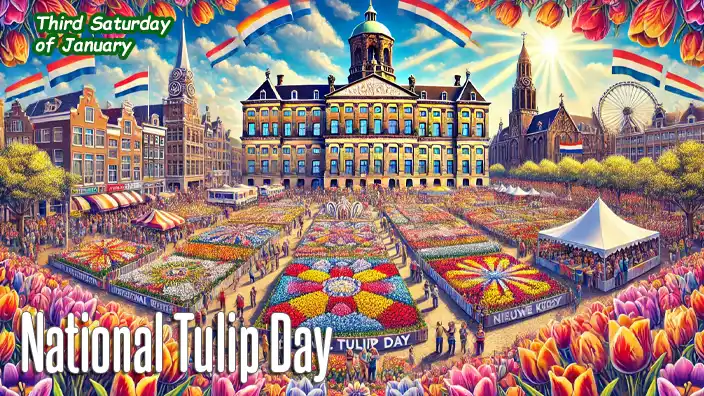
It’s not every day you see something that looks like it belongs on a cake, in a vase, and in a field all at once, but tulips manage to pull it off effortlessly. They’re like the divas of the floral world—demanding just the right amount of sunlight, water, and admiration, or they’ll throw a dramatic wilt. And let’s not forget their shape, which teeters somewhere between a wine glass and a tiny spaceship, leaving you wondering if they’re here to bloom or abduct the bees. Tulips: equal parts beauty and sass in one petal-packed package.
Celebrated: Annually, on the Third Saturday in January
Discover the rich history of tulips, from their origins in Central Asia to becoming a symbol of beauty and resilience celebrated on National Tulip Day.

- Details
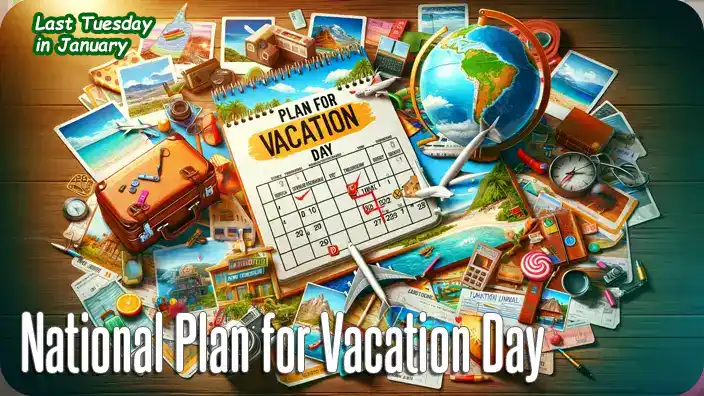
Vacation planning is like a game of Whack-a-Mole, but instead of moles, you're tackling flight deals, hotel reservations, and the ever-elusive quest for a swimsuit that looks good in vacation selfies. It starts with the noble intention of a budget-friendly trip, but quickly spirals into a frenzied deep dive through travel forums where you learn, among other things, the best street food stalls in Bangkok and how to say "I'm lost" in four languages. You promise yourself you'll travel light this time, yet somehow end up sitting on your suitcase, trying to zip it shut, while your pet gives you a judgmental look. In the end, you step out of your door, armed with an itinerary so packed it would make a NASA launch schedule look lazy, ready to make memories - and maybe find that mythical swimsuit.
Celebrated: Annually, on the Last Tuesday in January
National Plan for Vacation Day. Embrace the joy of planning your dream getaway. Boost happiness, save money, and improve health with travel plans.

- Details
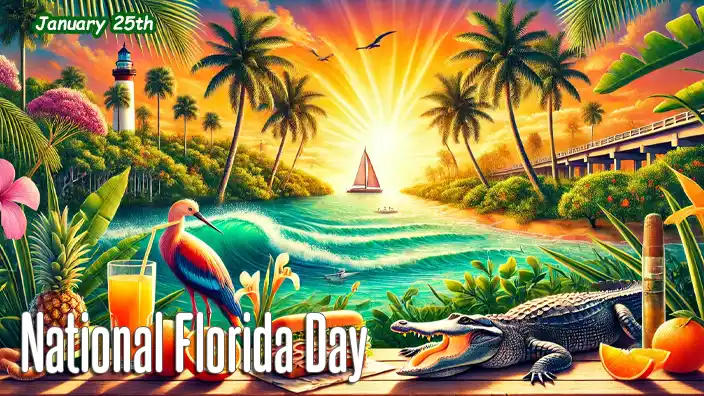
In a place where flip-flops are considered formal wear and alligators occasionally sunbathe on golf courses, life is anything but predictable. One moment you’re enjoying a beachside mojito, and the next, you’re dodging an iguana that fell out of a tree because it got too cold. Whether it’s the rocket launches, the hurricanes, or the tourists trying to feed marshmallows to wildlife, Florida keeps the rest of the country entertained year-round.
Celebrated: Annually, on January 25th
Celebrate National Florida Day on January 25th! Discover the Sunshine State's charm, history, and unique attractions that make it a must-visit destination.


- Details
In the great race of life, there's nothing quite like shunning the sluggish elevator for the good ol' cardio climb. Every step on the staircase is a step away from becoming best friends with the 'close door' button. It's about opting for huffing and puffing over awkward elevator music and the silent plea of "Please don't stop on another floor." So next time, skip the awkward silence with strangers and take the stairs; your heart (and your Fitbit) will thank you, not to mention it's a perfect excuse to avoid that "out of order" escalator that's just stairs with a superiority complex.
Celebrated: Annually, on the Second Wednesday in January
National Take the Stairs Day celebrates the unsung heroes of architecture - the stairs. Embrace fitness and lung health by defying gravity the old-fashioned way.

- Details
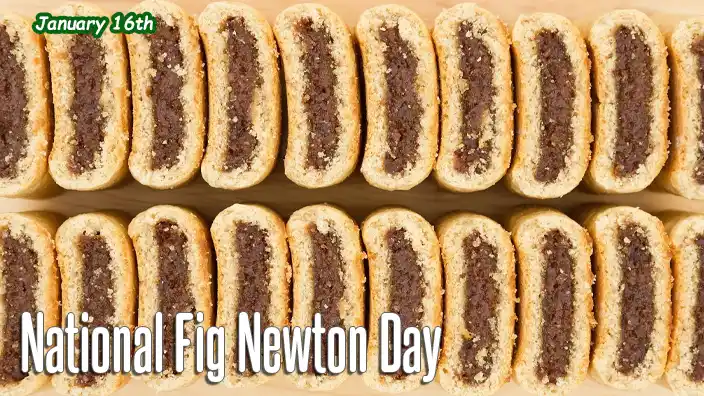
When it comes to fruits, figs are the mysterious, eyebrow-raising cousins in the fruit family. They're not flashy like strawberries, nor do they have the universal appeal of apples. Instead, figs are the understated, enigmatic characters you might find in a spy novel, quietly hiding their sweet secrets under a modest, bulbous exterior. They've been around since ancient times, probably gossiping in the background about historical events. Rumor has it that they were Cleopatra's favorite snack – talk about having a taste for drama! And if that wasn't enough, figs play hard to get, ripening only when they're good and ready, ensuring every bite is an adventure in timing and patience. In short, figs are the fruit equivalent of a wise, old sage with a mischievous twinkle in their eye, always ready to surprise you with their depth of flavor and ancient anecdotes.
Celebrated: Annually, on January 16th
Discover the joys of National Fig Newton Day! Dive into the history, fun facts, and unique ways to celebrate this beloved fig-filled treat every January 16th.


- Details
Keto is the diet that looks at a basket of warm bread and says, “Absolutely not,” then turns around and happily eats half an avocado wrapped in bacon with a side of cheese. It flips the usual food pyramid on its head and treats carbs like suspicious strangers while welcoming butter, eggs, and steak like long-lost friends. At first, you find yourself reading labels like a detective searching for hidden sugar, muttering, “Three grams of carbs? Not today.” But once you get the hang of it, keto becomes less about sacrifice and more about creative ways to turn ordinary meals into something that looks like a celebration of everything the butter dish has to offer. 😄🥓🥑🧀
Celebrated: Annually, on January 5th
Join the fun on National Keto Day! Explore keto-friendly meals, common challenges, and creative ways to embrace this low-carb lifestyle with friends.


- Details
This is the official holiday for everyone who's ever wanted to throw their alarm clock across the room, reply all to a company email with "unsubscribe," or tell the barista that, no, a medium isn't a 'grande.' It's the one day a year when you can channel your inner movie hero and dramatically declare enough is enough—with a cape or without. So dust off your soapbox, rehearse your most righteous monologue, and let the world know that your patience has officially left the chat!
Celebrated: Annually, on January 7th
Celebrate 'I’m Not Going To Take It Anymore Day' on January 7th by embracing a day of humorous defiance and rebellion against daily annoyances. Join the global fiesta of saying 'No!' with a comedic twist.

- Details
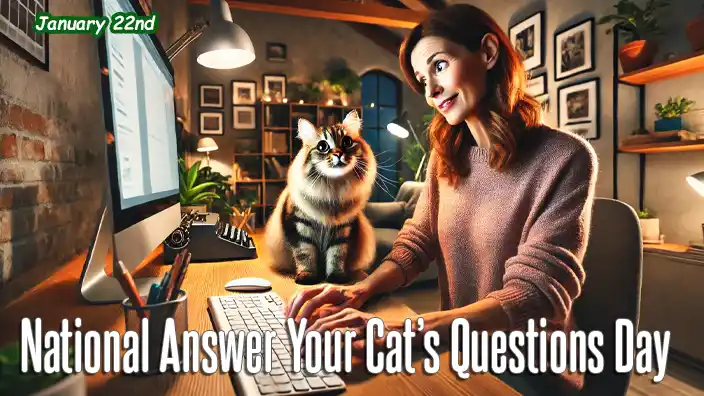
Peering up with wide eyes and a tail swishing like a metronome, it’s clear they’re plotting their next interrogation. Why does the food bowl have a bottom? What sorcery makes the red dot vanish into thin air? And most importantly, how dare you sit in their chair when they’ve clearly marked it with fur? Cats don’t just ask questions—they demand answers, preferably while knocking something off the table to ensure you’re paying attention.
Celebrated: Annually, on January 22nd
Uncover the humorous thoughts of cats on National Answer Your Cat's Questions Day. Join the laughter as you attempt to answer their quirky queries.


- Details
Navigating the twists and turns of your own mind is like rummaging through a closet you haven’t organized since the 90s. You might stumble upon a vivid recollection of your first-grade talent show performance but completely forget why you walked into the kitchen. Memories have a sense of humor, too—saving the cringiest moments for 3 a.m. playback while important facts, like your neighbor’s name, vanish into the void. They’re like party guests: some stay too long, some leave too soon, and others you never invited but can’t seem to get rid of.
Celebrated: Annually, on January 19th
Celebrate Good Memory Day on January 19th by revisiting joyful moments from your past and understanding the science behind memories.


- Details
J.R.R. Tolkien was the kind of genius who could look at a blank page and think, "This world needs a whole new language—and maybe a few more elves." Not content with just writing a story, he invented entire histories, genealogies, and maps for his fictional universe, probably spending more time on Middle-earth’s politics than most people spend on their own taxes. Tolkien turned trees into celebrities (shoutout to the Ents), made jewelry the most dangerous thing you could own, and somehow convinced millions of people to learn Elvish just for fun. Now that’s a level of brilliance that makes the rest of us wonder if we’ve been using our imaginations all wrong.
Celebrated: Annually, on January 3rd
Celebrate J.R.R. Tolkien Day on January 3rd, honoring the legacy of the master storyteller. Join fans worldwide in festive activities and discussions.

- Details
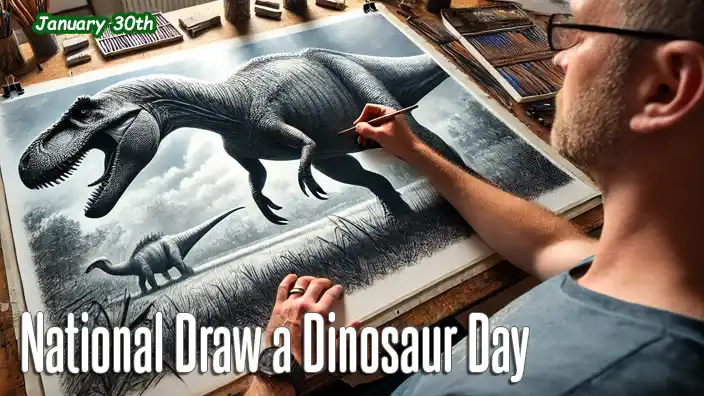
Who knew that creating a prehistoric masterpiece could lead to such existential questions? Like, did Stegosauruses have fabulous, rainbow-colored plates, or were they rocking a more subdued, earthy vibe? And let’s not even talk about the pressure of getting those T-Rex arms just right—one wrong move and you’ve turned a fearsome predator into the world’s angriest toddler. Drawing dinosaurs is less about accuracy and more about embracing the chaos—because if science hasn’t figured it all out yet, your polka-dotted Triceratops is as valid as anyone else’s!
Celebrated: Annually, on January 30th
Join artists and dinosaur enthusiasts on January 30th for National Draw a Dinosaur Day. Learn tips, techniques, and have fun creating your dinosaur masterpieces.

From Our Marks Catelog
-

Brussels sprouts: the tiny green orbs that have been sparking dinner table debates for...
-
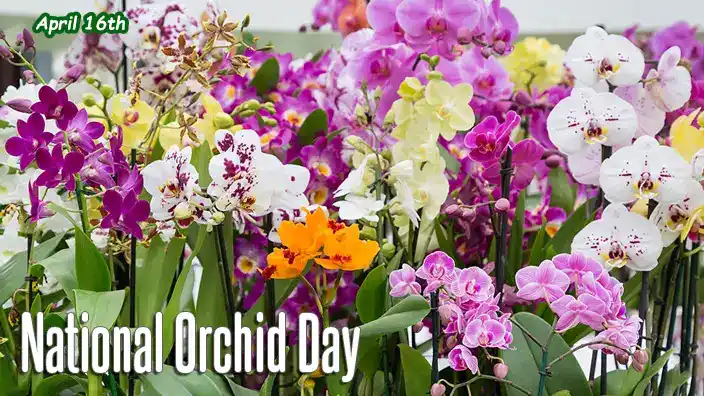
Elegance, mystery, and just the right amount of arrogance—some things demand admiration without lifting...
-
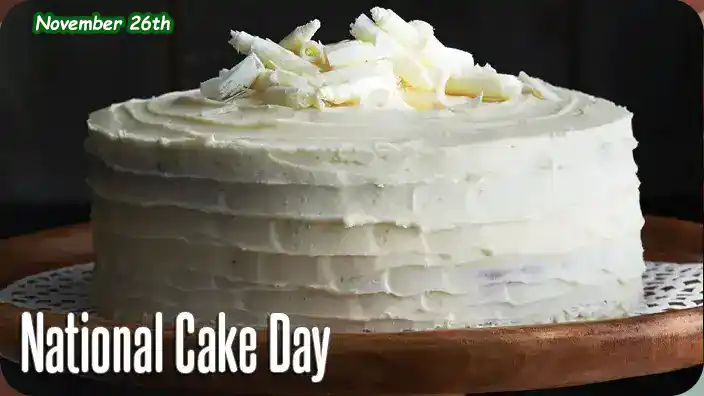
National Cake Day is the one day of the year when it's socially acceptable to have your cake and eat...
-

Forget glow-in-the-dark snack cakes and cheese that comes in a spray can—there’s something wildly...
-
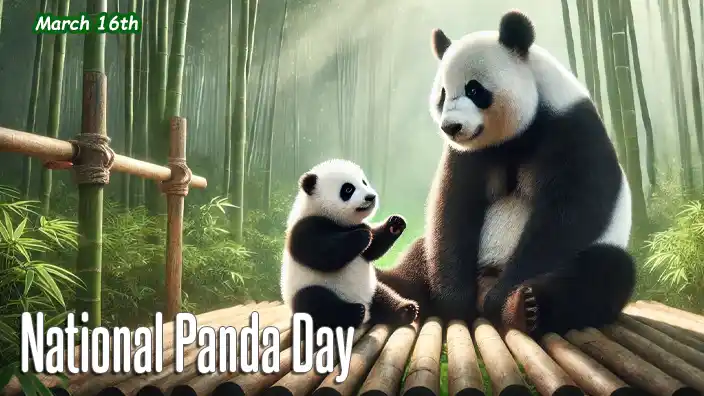
If there were an Olympic event for clumsiness, someone would be rolling down the hill, missing their...
-
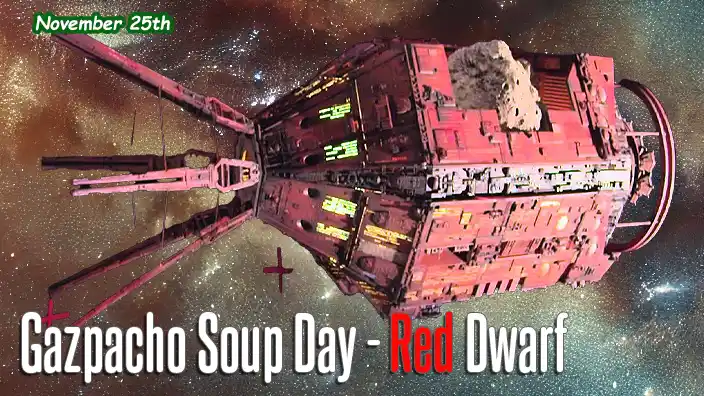
Gazpacho Soup Day isn’t just a day to honor cold tomato soup; it’s a day to revel in the absurdity of...

