Mark The Days - January

January kicks down the door shouting, “New year, new you!” while most of us are still digesting cheese logs and trying to remember what day it is. It’s a month built on resolutions, optimism, and the subtle judgment of kale. The parties are over, the decorations are down, and suddenly everyone’s into self-improvement and budgeting—until about the 12th. But January has its perks: fresh starts, fresh calendars, and the joy of celebrating completely random things like National Bubble Bath Day (because self-care still counts if it’s slippery). It’s cold, it’s hopeful, and it’s mostly held together with caffeine.
- Details
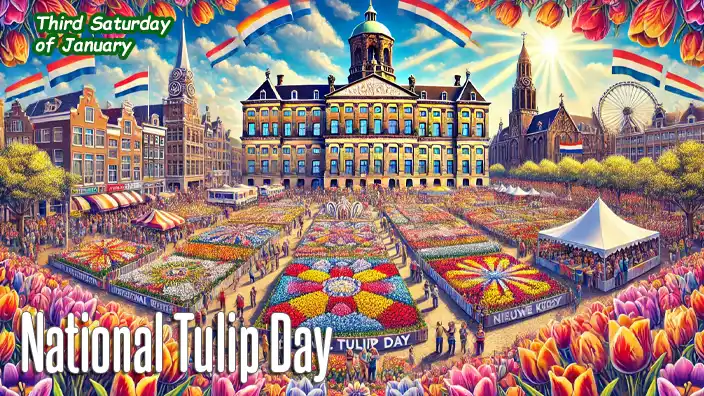
It’s not every day you see something that looks like it belongs on a cake, in a vase, and in a field all at once, but tulips manage to pull it off effortlessly. They’re like the divas of the floral world—demanding just the right amount of sunlight, water, and admiration, or they’ll throw a dramatic wilt. And let’s not forget their shape, which teeters somewhere between a wine glass and a tiny spaceship, leaving you wondering if they’re here to bloom or abduct the bees. Tulips: equal parts beauty and sass in one petal-packed package.
Celebrated: Annually, on the Third Saturday in January
Discover the rich history of tulips, from their origins in Central Asia to becoming a symbol of beauty and resilience celebrated on National Tulip Day.

- Details
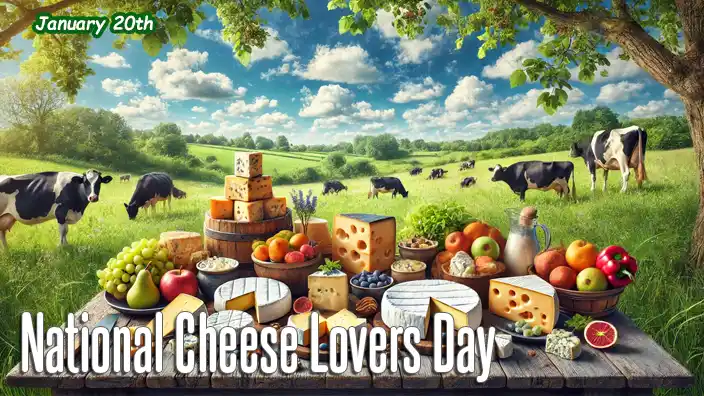
Cheese lovers are a unique breed—part epicurean, part adventurer, and part mad scientist. These are the people who will passionately debate the merits of an aged Roquefort versus a fresh burrata as though the fate of humanity depends on it. They’ll unapologetically sniff a pungent wedge of Limburger and describe it as “earthy” while everyone else is politely holding their breath. Cheese enthusiasts have no fear of the unknown—they’ll gleefully dive into a cheese so stinky it could double as an industrial adhesive, all in the name of flavor. Truly, there’s a certain bravery in chasing the perfect cheese, but for these dairy devotees, it’s not just food; it’s a way of life.
Celebrated: Annually, on January 20th
Discover why cheese is more than just food; it's a cultural experience that brings joy, nostalgia, and creativity to every meal on National Cheese Lovers Day.


- Details
If your power bill could talk, it would probably say, “Hey… maybe we ease up on the whole burning-things-for-electricity routine?” That’s where clean energy steps in—quietly doing the job without the smoke, the guilt, or the dramatic weather side effects. The International Day of Clean Energy is basically the world’s polite nudge to stop setting things on fire just to charge our phones and start using the free stuff falling from the sky or blowing past our ears.
Celebrated: Annually, on January 26th
Explore Clean Energy, its history, benefits, and how renewable energy like solar and wind is shaping a cleaner future


- Details
There’s always that moment of hesitation—arms awkwardly hovering as you calculate whether to go for a full embrace or settle for a polite shoulder tap. And let’s not even mention the accidental face bump when both parties lean the same way! Hugging is the ultimate social gamble: when it goes right, it’s heartwarming; when it goes wrong, you’re left holding a stranger a second too long, questioning every life choice that led to this moment. Yet, even the most hilariously clumsy hugs have a charm of their own—because nothing says “I care” quite like an accidental headlock.
Celebrated: Annually, on January 21st
Celebrate National Hugging Day on January 21st, a heartwarming occasion to share hugs and foster genuine connections with loved ones.

- Details
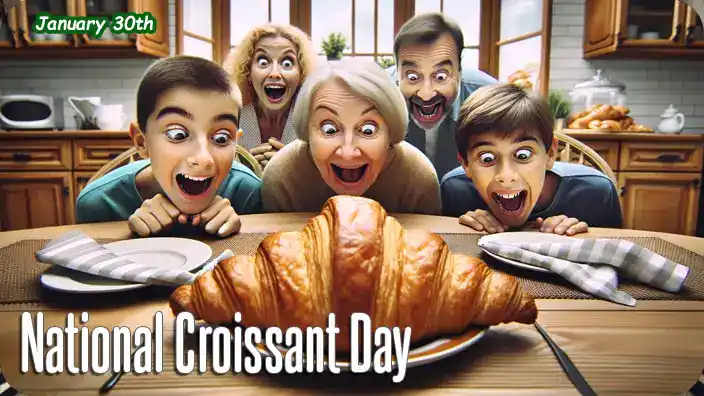
The croissant: the ultimate culinary plot twist in the world of baked goods. It's as if a loaf of bread and a stick of butter had a delicious rendezvous in Paris. This flaky, buttery crescent is not just a pastry, it's an experience. Eating a croissant is like a mini adventure for your taste buds – you never know when you'll encounter a buttery landslide or a flaky avalanche. Perfect for breakfast, lunch, or whenever you want to pretend you're sipping coffee on the Seine, the croissant is the ultimate "I'm fancy but also like to crumble everywhere" statement. It's the James Bond of pastries: sophisticated, a bit messy, and always leaves you wanting more.
Celebrated: Annually, on January 30th
Join the delicious celebration of National Croissant Day! Learn the croissant's intriguing history, fun ways to celebrate, and amusing facts about Croissants.

- Details
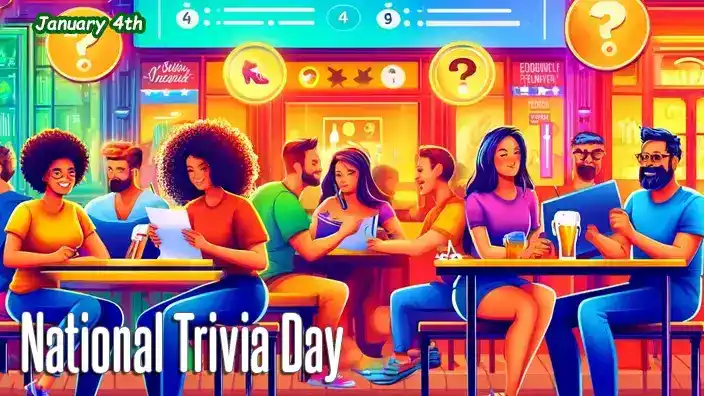
It's the one day a year when your ability to recall the name of Napoleon's horse (it's Marengo, by the way) or the world's largest manufacturer of tires (surprise—it's LEGO!) can earn you not just eye-rolls but actual admiration. It's a day when knowing the capital of Burkina Faso (Ouagadougou, obviously) is as important as knowing your own birthday. So, dust off those obscure factoids stored in the nooks and crannies of your brain and prepare to shine—or at least to dazzle your friends with your ability to remember the entire periodic table in reverse, just for kicks.
Celebrated: Annually, on January 4th
Uncover the origins of National Trivia Day, a celebration that transcends borders, started by Robert L. Birch in the late 1970s. Join the global community in appreciating the value of trivial facts and the joy of learning.
- Details
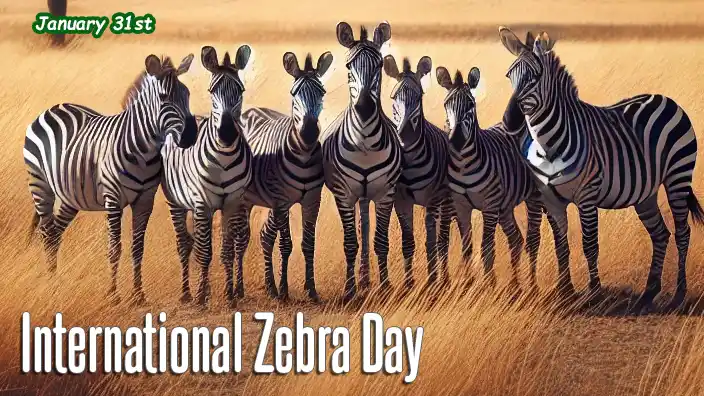
If zebras had a dating app, their bios would all read: “Black and white, but never boring. Loves long gallops on the savannah, expertly dodging lions, and rocking the most iconic stripes in the animal kingdom.” Seriously, these creatures are nature’s most fashionable escape artists—one moment they’re standing still looking majestic, the next, they’ve vanished into a herd like a barcode scanner gone haywire. And let’s talk about those stripes—scientists still debate if they’re black with white stripes or white with black stripes, but honestly, zebras just roll their eyes and say, “We’ve been wearing the same outfit for millions of years, and we still look amazing.”
Celebrated: Annually, on January 31st
Explore the significance of International Zebra Day, the science behind zebra stripes, and how to participate in conservation efforts for these remarkable animals.


- Details
This is the official holiday for everyone who's ever wanted to throw their alarm clock across the room, reply all to a company email with "unsubscribe," or tell the barista that, no, a medium isn't a 'grande.' It's the one day a year when you can channel your inner movie hero and dramatically declare enough is enough—with a cape or without. So dust off your soapbox, rehearse your most righteous monologue, and let the world know that your patience has officially left the chat!
Celebrated: Annually, on January 7th
Celebrate 'I’m Not Going To Take It Anymore Day' on January 7th by embracing a day of humorous defiance and rebellion against daily annoyances. Join the global fiesta of saying 'No!' with a comedic twist.

- Details
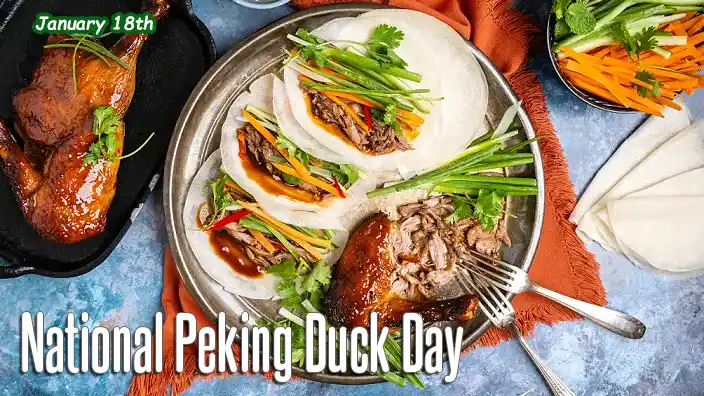
In a world where crispy skin reigns supreme and pancakes aren’t just for breakfast, there’s a dish that commands both respect and drooling admiration. Combining culinary precision with the kind of decadence that makes you momentarily forget your diet, it’s a meal so glorious that even emperors once demanded it by name. Add a side of hoisin sauce and some scallions, and suddenly, you’re not just eating—you’re participating in an edible symphony of flavor and crunch.
Celebrated: Annually, on January 18th
Celebrate National Peking Duck Day on January 18th by exploring the rich history, preparation, and cultural significance of this iconic Chinese dish.

- Details
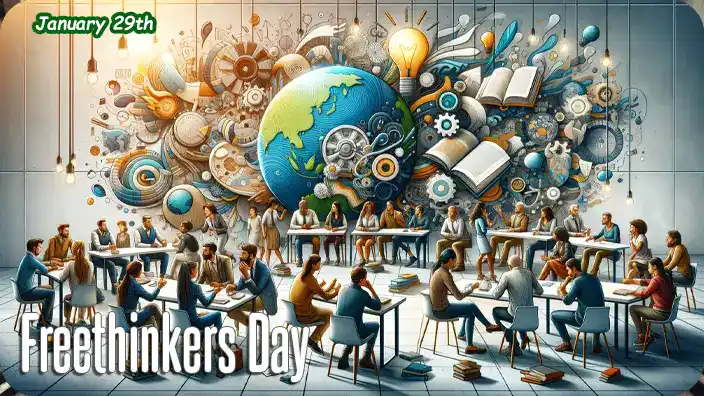
Free thinking is like regular thinking but with less regard for the rulebook and a healthy dose of "What if?" It's for those who treat traditional thought patterns like a "Do Not Enter" sign and instead gleefully skip down the "Wrong Way" lane. A free thinker looks at a square, sees a circle, hears "it can't be done," and thinks "challenge accepted." They're the kind of people who would try to solve a jigsaw puzzle without looking at the picture on the box, just for the thrill of it. In the world of free thinkers, 2 + 2 might equal fish, and that's perfectly fine. After all, in the realm of unbridled imagination and defiant curiosity, the only bad idea is not having any.
Celebrated: Annually, on January 29th
Unleash your inner rebel on Freethinkers Day, Jan 29! Celebrate the legacy of Thomas Paine and the spirit of questioning norms with humor and intellect.


- Details
This is the time when your diet resolutions meet their ultimate nemesis: the dumpling. It's the annual celebration where the skies light up with more fireworks than a rock band's finale, and the family gossip flows as freely as the tea. It's the season when red envelopes magically transform adults into eager children and when every household turns into a Michelin-starred kitchen. Forget about whispering sweet nothings to your partner; it's time to declare your undying love for turnip cakes and sticky rice balls. And let's not forget the yearly zodiac animal switch-up, ensuring that your fate is quite literally in the paws, claws, or hooves of creatures that wouldn't know a stock market from a vegetable market. Happy Chinese New Year, or as I like to call it, the Great Festival of Elastic Waistbands!
Celebrated: Annually, between January 21st. and February 20th.
Celebrate Chinese New Year with a festival of fireworks, fortune, and fabulous food. Dive into the cultural traditions, culinary delights, and family reunions.


- Details
Navigating the twists and turns of your own mind is like rummaging through a closet you haven’t organized since the 90s. You might stumble upon a vivid recollection of your first-grade talent show performance but completely forget why you walked into the kitchen. Memories have a sense of humor, too—saving the cringiest moments for 3 a.m. playback while important facts, like your neighbor’s name, vanish into the void. They’re like party guests: some stay too long, some leave too soon, and others you never invited but can’t seem to get rid of.
Celebrated: Annually, on January 19th
Celebrate Good Memory Day on January 19th by revisiting joyful moments from your past and understanding the science behind memories.

- Details
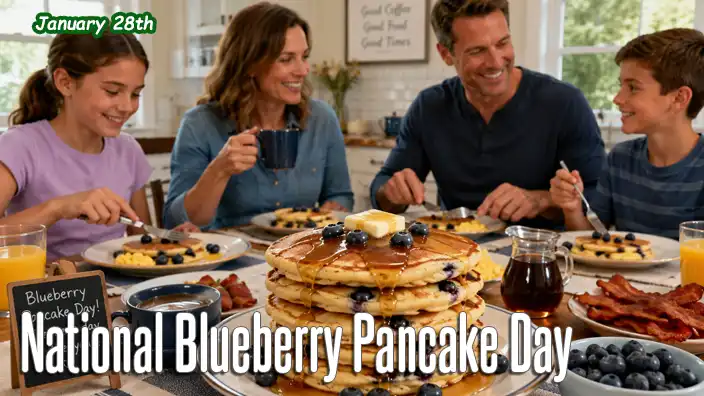
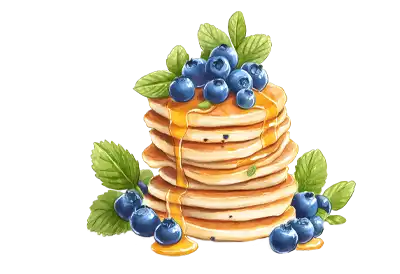
Some breakfasts whisper politely. Blueberry pancakes kick the kitchen door open, carrying butter, syrup, and absolutely no concern for your diet plans. National Blueberry Pancake Day celebrates those glorious mornings when flipping pancakes feels like a public service and counting blueberries somehow makes the entire stack “healthy.” Somewhere between the first bite and the syrup-covered plate, all of life’s problems suddenly seem at least 73% more manageable.
Celebrated: Annually, on January 28th
Celebrate National Blueberry Pancake Day with a humorous and factual look at fluffy pancakes, blueberries, breakfast traditions, and syrup-covered fun

- Details
There’s a moment—right after that first bite of English toffee—when all plans of “just one piece” quietly fall apart. You tell yourself you’re in control, that you’re here to appreciate the craftsmanship, the texture, the rich buttery flavor… and then suddenly you’re brushing crumbs off your shirt and wondering who finished the tray. National English Toffee Day isn’t about discipline—it’s about accepting the inevitable with dignity (and maybe a fresh cup of coffee to go with your next piece).
Celebrated: Annually, on January 8th
Join us in celebrating the history, recipes, and crunchy charm of this buttery classic treat loved for generations.

- Details
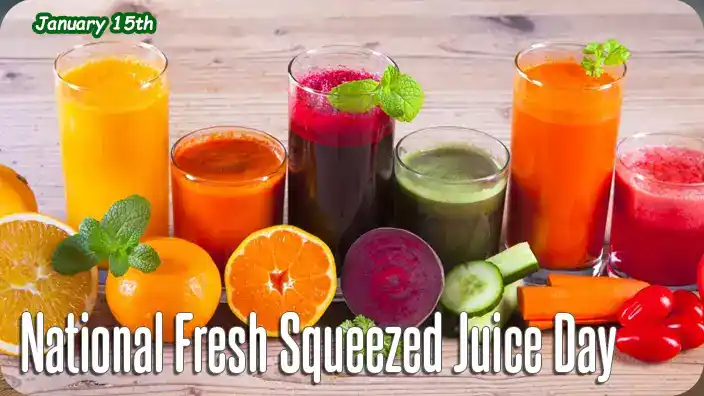
Juicing is like the ultimate kitchen adventure; it's where fruit wrestling meets modern art. You start with noble intentions of health and vitality, armed with an assortment of fruits that look like they've been plucked straight from Eden. But as soon as the juicing begins, it's more like a scene from a slapstick comedy. There's the orange that squirts directly into your eye, the rogue pomegranate seeds that pop like tiny fireworks, and let's not forget the inevitable blender lid malfunction, turning your kitchen into a Jackson Pollock painting. In the end, you stand victorious, albeit sticky, with a glass of juice that's half in your glass, and half on the walls. Cheers to the juicy chaos of health!
Celebrated: Annually, on January 15th
Squeeze the fun out of National Fresh Squeezed Juice Day with our take on this juicy celebration. It's a blend of health, laughter, and creative chaos!


- Details
In a world where smartphones can predict the weather better than most meteorologists, it's only fair that we dedicate a day to imagining even stranger possibilities. National Science Fiction Day invites us to dream big—or, more accurately, to envision aliens who think our obsession with cat memes is a sign of cultural dominance. It’s the perfect excuse to dust off your spaceship blueprints, debate which Star Trek captain was the best (we know you have opinions), and contemplate a future where robots might finally figure out how to brew coffee without spilling half of it.
Celebrated: Annually, on January 2nd
Join fans worldwide on National Science Fiction Day to explore the genre's creativity and its influence on real-world innovations and society.

- Details
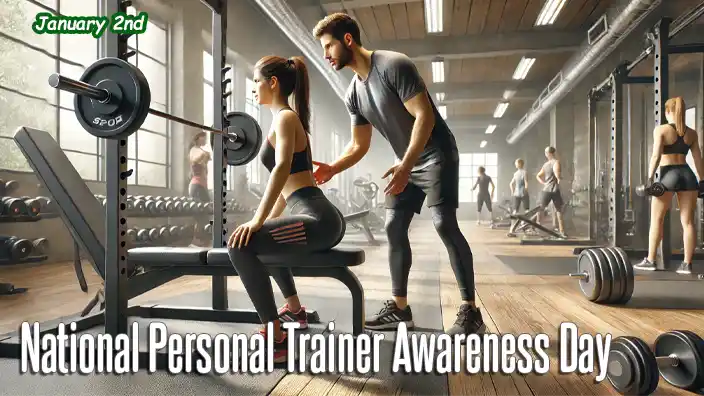
Personal trainers are the only people who can make you question your life choices with a smile. They somehow convince you that holding a plank for 60 seconds is more fun than binge-watching your favorite show, all while reminding you to “engage your core” like it’s the magic phrase that will unlock the secrets of the universe. And just when you think you’ve survived, they hit you with the dreaded words: “Let’s finish strong!” which is trainer-speak for “I’m about to ruin your day—but in a good way.”
Celebrated: Annually, on January 2nd
Explore the rich history and vital role of personal trainers in our fitness journeys, from ancient Greece to modern-day wellness coaching.

- Details
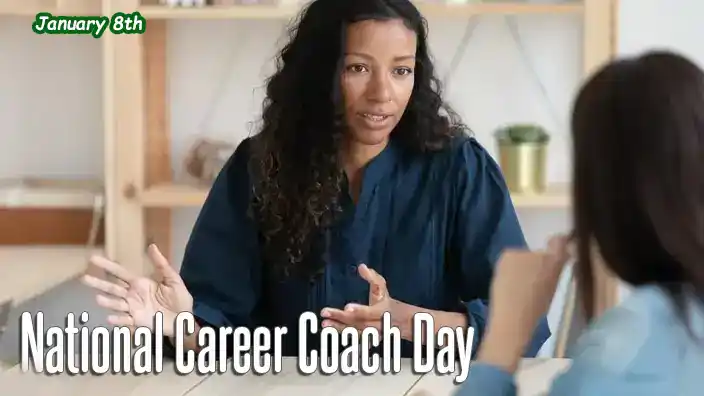
Career coaches are like the GPS for your professional life, except they don’t reroute you to a dead-end street or passive-aggressively say “recalculating” when you make a mistake. They’re the folks who can take your rambling, five-paragraph explanation of your skills and turn it into a punchy, irresistible elevator pitch. Need to answer the dreaded “What’s your biggest weakness?” question? They’ll help you spin “I’m bad at math” into “I’m a creative thinker who prioritizes innovation over rigid structures.” Career coaches are basically career magicians—only instead of pulling rabbits out of hats, they pull confidence out of your nervous soul.
Celebrated: Annually, on January 8th
Discover the significance of National Career Coach Day, a day to appreciate the transformative impact of career coaches on professional journeys and job market navigation.

From Our Marks Catelog
-

Brussels sprouts: the tiny green orbs that have been sparking dinner table debates for...
-
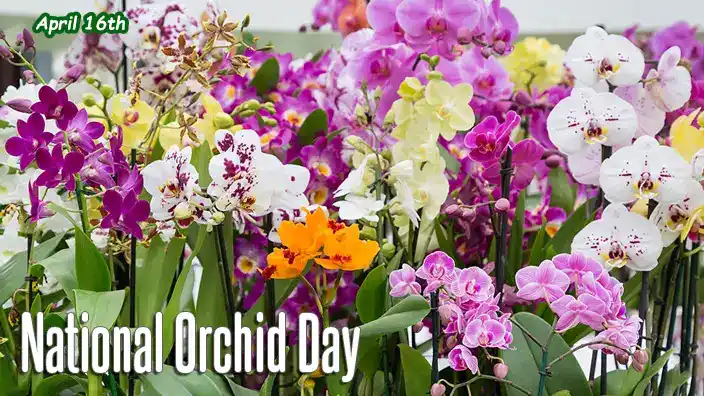
Elegance, mystery, and just the right amount of arrogance—some things demand admiration without lifting...
-
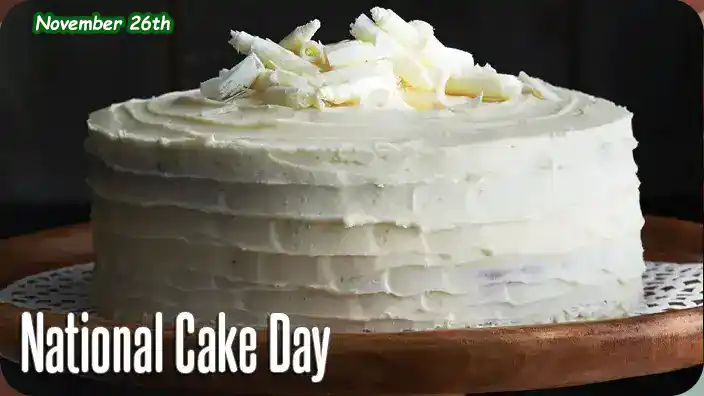
National Cake Day is the one day of the year when it's socially acceptable to have your cake and eat...
-

Forget glow-in-the-dark snack cakes and cheese that comes in a spray can—there’s something wildly...
-
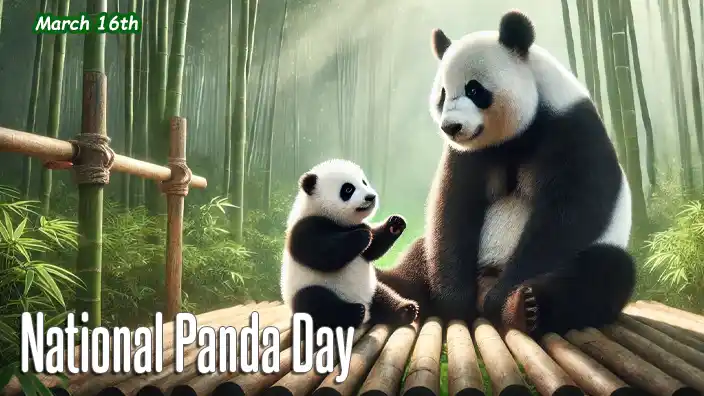
If there were an Olympic event for clumsiness, someone would be rolling down the hill, missing their...
-
Gazpacho Soup Day isn’t just a day to honor cold tomato soup; it’s a day to revel in the absurdity of...

