October 27, 1997, in Anaheim, California

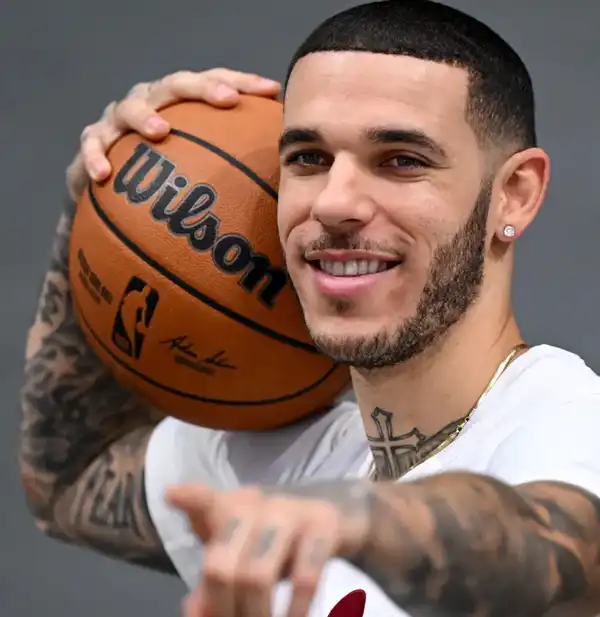
Lonzo Anderson Ball was born on October 27, 1997, in Anaheim, California, and grew up to become one of the most widely discussed American professional basketball players of his generation. Known for his exceptional passing ability, defensive awareness, and instinctive understanding of the game, Ball attracted national attention long before entering the National Basketball Association. His basketball journey has included outstanding high school achievements, a celebrated college career at UCLA, selection as the second overall pick in the 2017 NBA Draft, and professional appearances for the Los Angeles Lakers, New Orleans Pelicans, Chicago Bulls, and Cleveland Cavaliers. Along the way, he became a prominent figure in sports media, experienced the pressures of enormous public expectations, and confronted serious injuries that challenged his professional future. His career illustrates the unpredictable nature of professional basketball, where extraordinary talent can open doors, but determination is often required to keep them open.
Ball was raised in Chino Hills, California, in a household where basketball was considerably more than an occasional recreational activity. His father, LaVar Ball, had played college basketball and briefly pursued professional football, while his mother, Tina Ball, was also an accomplished college basketball player. Together, they encouraged their children to develop athletic skills from an early age. Lonzo grew up alongside his younger brothers, LiAngelo and LaMelo, both of whom also pursued professional basketball careers. Their childhood involved constant practice, competitive games, and a family atmosphere in which basketball discussions were as common as conversations about school or household chores. LaVar became particularly well known for his ambitious predictions about his sons' futures, frequently expressing confidence that they would become exceptional professional athletes. Whether the boys were practicing jump shots or simply trying to enjoy breakfast, basketball was rarely far from the conversation.
Lonzo began developing his skills through youth basketball programs and organized competition, displaying an unusual ability to recognize passing opportunities and anticipate the movements of other players. Unlike many young athletes who concentrated primarily on scoring, he demonstrated an early preference for involving teammates and controlling the pace of a game. His height, coordination, and basketball intelligence allowed him to become an effective point guard, a position requiring responsibility for organizing offensive plays and making rapid decisions under pressure. Playing regularly with his brothers also contributed to his development, creating a competitive environment in which each player challenged the others to improve. The family eventually became familiar to basketball fans throughout Southern California, particularly as Lonzo's performances began attracting attention from coaches, scouts, and recruiting organizations.
Ball attended Chino Hills High School, where he developed into one of the nation's most highly regarded basketball prospects. Playing alongside his brothers and several talented teammates, he helped transform the school's basketball program into a nationally recognized powerhouse. During the 2015–2016 season, Chino Hills achieved an extraordinary undefeated record of 35 victories and no defeats, capturing the California Open Division state championship and earning widespread recognition as one of the country's outstanding high school teams. The team's fast-paced playing style, aggressive defense, and spectacular passing attracted enormous attention from basketball enthusiasts and sports journalists. Lonzo's ability to deliver accurate passes over considerable distances became a defining feature of the team's offense, frequently creating scoring opportunities before opposing defenders had time to understand what had happened.
His individual achievements during that remarkable high school season were equally impressive. Ball averaged a triple-double, recording approximately 23.9 points, 11.3 rebounds, and 11.7 assists per game. Achieving double-digit averages in three major statistical categories is unusual at any competitive level, particularly for a player responsible for directing his team's offense. His performances earned him recognition as the Naismith High School Player of the Year and the Morgan Wootten National Player of the Year. He was also selected for the McDonald's All-American Game, one of the most prestigious showcases for American high school basketball talent. These accomplishments established Ball as an exceptional college prospect and generated considerable anticipation about his future. By the time he graduated, basketball recruiters were already discussing his potential as a professional player, while his father was enthusiastically discussing considerably more than that.
Ball committed to the University of California, Los Angeles, joining the UCLA Bruins for the 2016–2017 college basketball season. His arrival generated enormous excitement among supporters of the historic program, which had previously enjoyed legendary success under coach John Wooden. UCLA had experienced a disappointing season before Ball's arrival, but his exceptional passing and leadership helped transform the team's offensive performance. Working under head coach Steve Alford, Ball quickly established himself as one of the most exciting freshman players in college basketball. His willingness to distribute the ball, push the pace, and create opportunities for teammates helped produce an entertaining offensive style that attracted national attention. Rather than dominating possession through constant individual shooting, he frequently made the entire team more effective by identifying the best available scoring opportunity.
During his single season at UCLA, Ball averaged 14.6 points, 6.0 rebounds, and 7.6 assists per game, leading the nation in assists. His remarkable court vision allowed him to deliver precise passes through crowded defensive formations, while his rebounding ability helped initiate fast breaks without waiting for another player to collect the ball. UCLA finished the season with a 31–5 record and advanced to the Sweet Sixteen of the NCAA Tournament before losing to Kentucky. Although the team's championship ambitions ended earlier than supporters had hoped, Ball's individual performances attracted widespread recognition. He earned consensus first-team All-American honors, was named Pac-12 Freshman of the Year, and shared the conference's Player of the Year award. His success established him as one of the leading prospects for the upcoming NBA Draft, where professional teams were already evaluating whether his unusual combination of size, passing, and defensive intelligence could translate into success against the world's best players.
Ball's college career also attracted attention because of his unconventional shooting technique. His jump shot featured an unusual motion in which the basketball moved across his body before release, creating a distinctive appearance that became a frequent subject of discussion among coaches, analysts, and television commentators. Some observers questioned whether the technique would remain effective against the faster and more athletic defenders encountered in professional basketball. Others argued that his passing ability, basketball intelligence, and defensive potential were sufficiently valuable to outweigh concerns about his shooting mechanics. The debate became another element of the enormous publicity surrounding Ball, demonstrating that even the way a player released a basketball could become a national talking point. For a young athlete already facing extraordinary expectations, having thousands of strangers analyze the angle of his elbow was probably not the most relaxing introduction to professional life.
The Los Angeles Lakers selected Lonzo Ball with the second overall pick in the 2017 NBA Draft, placing him among the most highly regarded young players entering the league. The selection carried particular significance because the Lakers were one of basketball's most famous franchises, with a history featuring legendary players such as Magic Johnson, Kareem Abdul-Jabbar, Kobe Bryant, and Shaquille O'Neal. Magic Johnson, serving as the Lakers' president of basketball operations, expressed enormous confidence in Ball's potential and praised his ability to make teammates better. Ball arrived in Los Angeles with the responsibility of helping rebuild a franchise seeking to return to championship contention. The expectations were considerable, particularly for a player entering a major media market where every impressive performance, disappointing game, and questionable decision could become the subject of national debate.
Before beginning his first NBA season, Ball made an impressive appearance in the 2017 NBA Summer League, where he demonstrated the passing ability that had made him such an attractive draft prospect. He averaged 16.3 points, 9.3 assists, and 7.7 rebounds per game during the competition and was named Summer League Most Valuable Player. His performances helped generate additional enthusiasm among Lakers supporters, many of whom hoped he would become the franchise's next outstanding point guard. The combination of his distinctive playing style, confident personality, and extensive media coverage made him one of the most recognizable newcomers in professional basketball. His arrival also coincided with the growing popularity of social media sports commentary, ensuring that virtually every memorable pass or missed shot could be replayed, analyzed, and argued about within minutes.
Ball made his regular-season NBA debut in October 2017 and quickly demonstrated that his passing and rebounding abilities could translate to professional competition. During his rookie season, he averaged 10.2 points, 7.2 assists, and 6.9 rebounds per game, impressive numbers for a first-year point guard. His ability to contribute in multiple statistical categories made him a valuable player even when his shooting was inconsistent. He recorded several triple-doubles, including one against the Milwaukee Bucks in November 2017 that made him, at the time, the youngest player in NBA history to achieve the feat. The record was subsequently surpassed, but the performance reinforced his reputation as a versatile playmaker capable of influencing games without relying exclusively on scoring. Ball was named to the NBA All-Rookie Second Team in 2018, recognizing his contributions during a season that included both impressive achievements and the inevitable difficulties of adjusting to professional basketball.
The 2018–2019 season brought major changes to the Lakers following the arrival of superstar LeBron James. Playing alongside one of basketball's greatest all-around performers created new opportunities for Ball, particularly because both players possessed exceptional passing instincts and an ability to recognize developing offensive situations. Their partnership occasionally produced spectacular fast breaks and creative passing sequences, demonstrating the advantages of having multiple players capable of organizing an offense. However, injuries limited Ball's availability, and the Lakers struggled to establish consistent team performance. An ankle injury eventually ended his season prematurely, contributing to concerns about his durability. Despite those difficulties, his defensive improvement and ability to contribute without dominating possession suggested that he could become an effective complementary player alongside established NBA stars.
In June 2019, Ball became part of a major trade that sent him, Brandon Ingram, Josh Hart, and additional draft assets to the New Orleans Pelicans in exchange for superstar Anthony Davis. The transaction represented one of the NBA's most significant personnel moves of the period, helping the Lakers assemble the team that would win the 2020 NBA championship. For Ball, the trade marked the end of his highly publicized Los Angeles chapter and the beginning of an opportunity to establish himself in a different environment. Joining New Orleans allowed him to work with a developing roster that included talented young players and offered greater flexibility in defining his role. Although leaving the Lakers was a major professional transition, the move provided an opportunity to concentrate on improving his game away from some of the relentless publicity associated with the Los Angeles franchise.
Ball's first season with the Pelicans coincided with the arrival of Zion Williamson, the highly anticipated first overall selection in the 2019 NBA Draft. The partnership between Ball and Williamson quickly attracted attention because of their complementary athletic abilities. Ball's accurate long-distance passing and instinctive understanding of transition basketball created numerous opportunities for Williamson to finish spectacular plays near the basket. Their combination produced memorable alley-oop dunks and fast-break sequences that became popular highlights throughout the league. Ball also continued improving his outside shooting, working to develop a more conventional and repeatable technique. His willingness to modify a shooting motion that had become familiar since childhood demonstrated an important aspect of professional development: even exceptionally talented athletes must sometimes abandon comfortable habits to achieve better results.
During the 2020–2021 season, Ball produced some of the strongest offensive performances of his career. He averaged 14.6 points, 5.7 assists, and 4.8 rebounds per game while shooting approximately 37.8 percent from three-point range. His improved perimeter accuracy made him a more dangerous offensive player, forcing opposing defenders to respect his shooting rather than concentrating exclusively on his passing. He also remained an effective defender, using his size, quick hands, and anticipation to disrupt opposing guards and generate turnovers. Although the Pelicans struggled to achieve consistent team success, Ball's individual development demonstrated that he could contribute as both a traditional playmaker and a modern NBA guard capable of operating effectively without constant possession of the basketball.
In August 2021, Ball joined the Chicago Bulls through a sign-and-trade agreement, signing a four-year contract reportedly worth approximately $80 million. The move placed him alongside an exciting collection of established and emerging players, including Zach LaVine, DeMar DeRozan, Nikola Vučević, and Alex Caruso. Chicago hoped that Ball's passing, defensive versatility, and improved three-point shooting would help transform the team into a serious Eastern Conference contender. His arrival generated considerable excitement among Bulls supporters, particularly because the franchise had been seeking to return to the level of success associated with its celebrated championship history. Ball's ability to distribute the basketball while contributing defensively made him an appealing addition to a roster featuring several talented scorers.
The early results were extremely encouraging. During the opening months of the 2021–2022 season, the Bulls emerged as one of the Eastern Conference's strongest teams, combining effective offensive play with energetic perimeter defense. Ball and Caruso formed a particularly effective defensive partnership, using anticipation, communication, and aggressive pressure to disrupt opposing offenses. Ball also continued shooting efficiently from beyond the three-point line, helping create space for teammates operating closer to the basket. His contributions were not always reflected in spectacular scoring totals, but his influence on team organization and defensive consistency was substantial. Chicago's promising performances suggested that Ball had found an environment ideally suited to his abilities, with teammates capable of converting his passes and a system that valued his defensive intelligence.
Unfortunately, Ball's promising Chicago career encountered a devastating obstacle in January 2022 when he suffered a left knee injury that required surgery. What initially appeared to be a manageable absence developed into a prolonged and complicated recovery involving persistent pain, additional procedures, and extensive rehabilitation. The injury prevented him from returning during the remainder of the 2021–2022 season and eventually forced him to miss the entire 2022–2023 and 2023–2024 NBA seasons. His absence represented a major setback for both the player and the Bulls, who had relied heavily on his defensive presence and offensive organization. For Ball, the challenge extended far beyond the disappointment of missing games, requiring him to confront uncertainty about whether his knee would ever recover sufficiently to withstand the demands of professional basketball.
His medical treatment eventually included an unusual and complex cartilage transplant procedure in March 2023, following earlier unsuccessful attempts to resolve his knee problems. The operation attracted widespread attention because such procedures are uncommon among elite professional basketball players, particularly those hoping to return to a sport involving repeated jumping, sprinting, sudden changes of direction, and physical contact. Ball subsequently underwent extensive rehabilitation, gradually rebuilding strength, mobility, and confidence while working toward the possibility of returning to competition. His recovery became one of the most closely followed injury stories in the NBA, with supporters and commentators regularly discussing his progress. The process required patience and persistence, two qualities that can be especially difficult for an athlete accustomed to measuring success through immediate performance on the basketball court.
After more than two years away from NBA competition, Ball finally returned to the court during the Chicago Bulls' preseason in October 2024. His first regular-season appearance followed on October 23, 2024, against the New Orleans Pelicans, marking an emotional milestone after approximately 1,000 days without playing an NBA regular-season game. The return attracted widespread attention from players, coaches, supporters, and sports journalists who understood the extraordinary difficulties involved in recovering from such a serious injury. Although Ball's playing time was carefully managed, his ability to compete again represented a significant personal achievement. His performances demonstrated that he retained valuable passing instincts, defensive awareness, and an understanding of team basketball, even as he continued adjusting to the physical limitations created by his prolonged absence.
During the 2024–2025 season, Ball appeared in 35 games for Chicago, averaging 7.6 points, 3.4 rebounds, and 3.3 assists per game. His minutes were restricted compared with earlier seasons, but his return provided an encouraging example of perseverance following a potentially career-ending injury. He continued contributing as a defender and playmaker while attempting to regain confidence in his shooting and movement. The Bulls eventually traded him to the Cleveland Cavaliers in June 2025 in exchange for Isaac Okoro, giving Ball another opportunity to establish himself with a competitive Eastern Conference team. Cleveland viewed his experience and basketball intelligence as potentially valuable additions to its backcourt rotation, although questions remained about his ability to maintain consistent performance following his lengthy rehabilitation.
Ball's time with the Cavaliers during the 2025–2026 season proved difficult. He appeared in 35 games, averaging 4.6 points, 4.0 rebounds, and 3.9 assists, while struggling with shooting consistency. His defensive awareness and passing instincts remained evident, but his offensive production did not reach the level he had previously demonstrated with New Orleans and Chicago. In February 2026, Cleveland traded him to the Utah Jazz as part of a three-team transaction, and Utah subsequently waived him. The move left Ball without an NBA contract, introducing another period of uncertainty into a career already shaped by unexpected setbacks. Although his playing record included outstanding achievements and impressive individual performances, the physical demands of professional basketball continued to present significant challenges.
In September 2026, Ball attracted renewed attention when comments made during an appearance on the Ball in the Family podcast were interpreted by several media outlets as an announcement of his retirement from professional basketball. However, Ball subsequently clarified through social media that he had not formally retired and remained interested in returning to the NBA if another team offered him an opportunity. His comments reflected a realistic understanding of the difficulties he had encountered while also demonstrating that his desire to compete had not disappeared. As of October 2026, he remained an unrestricted free agent rather than a member of an NBA roster. The situation illustrated the uncertainty surrounding professional sports careers, particularly for athletes whose abilities remain respected but whose injury histories complicate decisions about future contracts.
Beyond basketball, Lonzo Ball has developed interests in music, business, and entertainment. He has released rap music under the name Zo, including the 2018 album Born 2 Ball, demonstrating a creative interest extending beyond the basketball court. His musical projects have frequently referenced his family, athletic career, and experiences growing up in Southern California. Although his recording career has not approached the commercial prominence of his basketball achievements, it has provided another outlet for personal expression and helped establish his identity beyond professional sports. Like many modern athletes, Ball has used social media and entertainment platforms to communicate directly with supporters, allowing him to present aspects of his personality that may not always be visible during competitive games.
The Ball family's involvement in business also contributed to Lonzo's public profile. His father, LaVar Ball, established the Big Baller Brand, a sportswear company that attracted widespread attention during Lonzo's early professional career. The brand became particularly controversial when it introduced the ZO2 signature basketball shoe with an unusually high retail price, challenging conventional arrangements between professional athletes and established sportswear manufacturers. The decision generated considerable debate about athlete independence, family businesses, and the commercial opportunities associated with emerging basketball stars. Although the brand encountered financial and organizational difficulties, its early publicity demonstrated the extraordinary commercial attention surrounding the Ball family. Lonzo's association with the company became another example of how his career developed at the intersection of professional sports, business, and entertainment.
Lonzo's brothers have also contributed to the family's extraordinary visibility within basketball culture. His younger brother LaMelo Ball developed into an NBA star after being selected third overall by the Charlotte Hornets in the 2020 NBA Draft, while LiAngelo pursued professional basketball opportunities and later attracted attention through music. The brothers' experiences were documented through the reality series Ball in the Family, which introduced viewers to their personal relationships, professional ambitions, and the sometimes unconventional methods employed by their father. The program helped establish the Ball family as recognizable figures beyond traditional basketball audiences. Lonzo's relatively reserved public personality often contrasted with LaVar's outspoken enthusiasm, creating a family dynamic that attracted considerable interest from television viewers and sports commentators.
Away from professional basketball, Ball is also a father. His daughter, Zoey Ball, was born in 2018, and he has spoken about the importance of family and maintaining a meaningful relationship with his child. His experiences with serious injuries and lengthy rehabilitation have also influenced his perspective on personal priorities and the uncertainties of professional sports. Having spent much of his life preparing for a career in basketball, he has encountered circumstances that required him to consider his identity and future beyond athletic competition. His public discussions of these experiences have provided insight into the emotional and practical challenges faced by professional athletes when injuries interrupt careers that once appeared full of possibility.
Lonzo Ball's influence on basketball is closely connected to his distinctive style of play. At his best, he combined exceptional passing instincts with defensive versatility, strong rebounding for a guard, and an ability to accelerate offensive possessions through rapid decision-making. His willingness to pass rather than dominate scoring opportunities made him particularly effective alongside talented teammates, while his improved perimeter shooting demonstrated a capacity for technical development. Although injuries prevented him from fully realizing the potential suggested by his outstanding high school and college performances, his career offered memorable examples of intelligent, team-oriented basketball. His success also helped establish the Ball brothers as one of the most recognizable families in modern American sports.
The enormous publicity surrounding Ball's early career created expectations that few young athletes could reasonably be expected to satisfy. His selection by the Lakers, comparisons with established basketball legends, and the constant commentary generated by his father's public statements placed him under unusual scrutiny before he had played a single NBA regular-season game. Yet his professional achievements included selection to the NBA All-Rookie Second Team, impressive passing performances, substantial improvements in shooting, and important contributions to competitive teams. His remarkable return following multiple knee surgeries also demonstrated a level of determination that cannot be measured through conventional basketball statistics. While his career has followed a more complicated path than originally anticipated, it remains an important example of the opportunities and difficulties associated with elite professional athletics.
Lonzo Anderson Ball's journey from a nationally celebrated high school prospect to an NBA point guard represents a story of exceptional talent, enormous expectations, professional development, and remarkable perseverance. His experiences with the Los Angeles Lakers, New Orleans Pelicans, Chicago Bulls, and Cleveland Cavaliers brought him into some of basketball's most demanding competitive environments, while his struggles with serious injuries revealed the uncertainty that can accompany even the most promising athletic careers. His achievements on the court, influence on popular basketball culture, and determination to return after prolonged rehabilitation have established a recognizable place for him in modern sports history. Whatever opportunities the future may bring, Ball has already demonstrated that basketball success involves considerably more than scoring points. Sometimes the most impressive achievement is simply finding the determination to get back onto the court when the odds seem determined to keep you sitting on the bench.