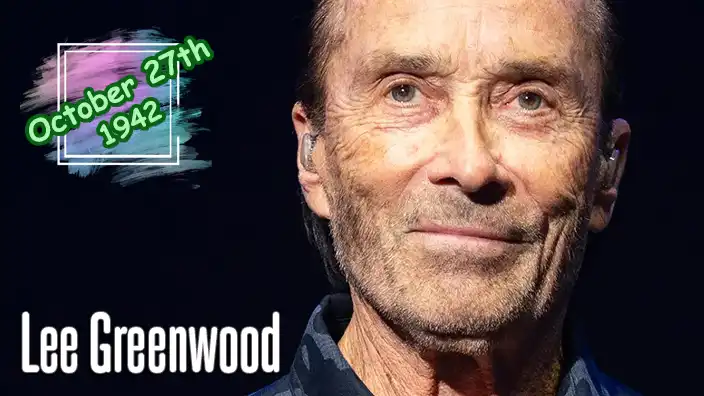
October 27, 1942, in Southgate, California

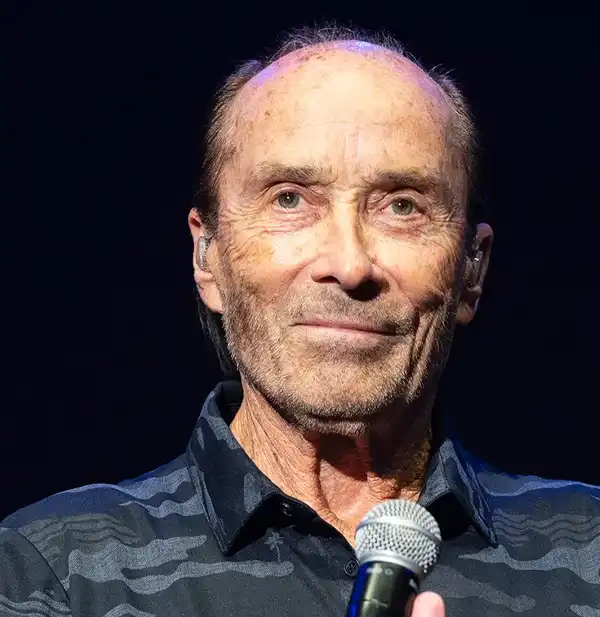
Melvin Lee Greenwood was born on October 27, 1942, in California and became one of the most recognizable voices in American country music. Best known for his patriotic anthem God Bless the U.S.A., Greenwood built an impressive career as a country music singer, songwriter, and performer, recording seven number-one hits on the Billboard country charts and numerous other successful singles. His distinctive baritone voice, emotional delivery, and ability to connect with audiences helped establish him as a major figure in country music during the 1980s. Although his signature patriotic song eventually became his most famous achievement, Greenwood's musical career encompasses romantic ballads, country-pop recordings, award-winning performances, and decades of entertaining audiences across the United States and around the world.
Greenwood's childhood was shaped by family difficulties, rural living, and an early fascination with music. His parents, Eugene and Bliss Greenwood, divorced during World War II, and he and his sister Patricia were raised for much of their childhood by their maternal grandparents on a farm near Sacramento, California. Farm life involved plenty of chores, physical work, and responsibilities, but it also provided opportunities for a young boy with an unusually strong musical curiosity. Greenwood developed interests in both music and baseball, eventually becoming sufficiently accomplished in each to face a genuine decision about his future. Fortunately for country music audiences, the microphones won out over the baseball bats, although one suspects his grandparents might occasionally have preferred another pair of hands helping around the farm.
Greenwood began learning musical instruments as a child, developing skills on piano and saxophone before expanding his abilities to other instruments. By his teenage years, he could play much of the instrumentation found in a school orchestra, demonstrating a remarkable versatility that would serve him throughout his professional career. While attending school, he formed an early band known as the Moonbeams and began performing at local events. His enthusiasm for music extended well beyond an ordinary childhood hobby, and he became increasingly determined to pursue entertainment professionally. He eventually declined opportunities connected with higher education and baseball, choosing instead to concentrate on developing a musical career. His commitment was so strong that he missed his high school graduation ceremony because he had a professional performance scheduled in Reno, Nevada. Most students celebrate graduation with a party; Greenwood apparently preferred a paying audience.
The road to country music success was considerably longer than the effortless rise sometimes suggested by hit records and television appearances. During the 1960s and 1970s, Greenwood worked extensively as a professional musician, performing in clubs, lounges, casinos, and entertainment venues throughout the western United States. He spent many years in Las Vegas, where he gained valuable experience singing different musical styles and adapting to audiences whose expectations could change dramatically from one evening to the next. His repertoire included country, pop, rhythm and blues, and other popular musical forms, allowing him to develop the vocal flexibility that would later become a distinctive feature of his recordings. He also worked as a casino dealer during periods when performing alone did not provide sufficient financial security. It was an education in both show business and human nature, with the added advantage that disappointed customers generally blamed the cards rather than the singer.
Greenwood's professional breakthrough began in 1979 when he attracted the attention of Larry McFaden, a musician and bandleader associated with country star Mel Tillis. McFaden recognized Greenwood's vocal abilities and helped introduce him to opportunities in Nashville, Tennessee, the center of America's country music recording industry. Greenwood subsequently signed with MCA Records and began working with producer Jerry Crutchfield, establishing a productive professional relationship that continued for many years. His arrival in Nashville came after nearly two decades of experience as a working entertainer, giving him a degree of musical confidence and stage presence that many newly signed performers were still struggling to develop. Rather than being an overnight sensation, Greenwood was a seasoned professional whose overnight success had taken a remarkably long time to arrive.
His first major country hit, It Turns Me Inside Out, was released in 1981 and quickly introduced his rich, expressive voice to a national audience. The song reached the upper reaches of the Billboard country singles chart and established Greenwood as a promising new recording artist. It was followed by Ring on Her Finger, Time on Her Hands, a dramatic ballad about a troubled marriage that became another major success. Greenwood's ability to communicate heartbreak, regret, and romantic uncertainty appealed to listeners who appreciated traditional country storytelling combined with polished contemporary production. His vocal style drew comparisons with Kenny Rogers, another performer whose smooth delivery helped country music reach audiences beyond its established boundaries. Greenwood's recordings were particularly well suited to the increasingly popular country-pop sound of the early 1980s.
The commercial success continued with an impressive sequence of country singles, including Somebody's Gonna Love You, Going, Going, Gone, Dixie Road, and I Don't Mind the Thorns (If You're the Rose). These songs demonstrated Greenwood's talent for selecting material that combined memorable melodies with emotionally engaging lyrics. His seven number-one Billboard country hits were Somebody's Gonna Love You, Going, Going, Gone, Dixie Road, I Don't Mind the Thorns (If You're the Rose), Don't Underestimate My Love for You, Hearts Aren't Made to Break (They're Made to Love), and Mornin' Ride. The recordings established him as one of the most successful country performers of the decade, while his growing popularity led to extensive touring, television appearances, and recognition from the music industry. Greenwood had developed a particularly effective formula: find a strong melody, deliver the lyrics with conviction, and leave the audience wondering why their own romantic lives never came with such an impressive soundtrack.
Greenwood also achieved success with I.O.U., a heartfelt romantic ballad released in 1983. The song became a major country hit and crossed into the broader pop and adult contemporary markets, introducing his music to listeners who might not ordinarily follow country radio. Its emotional lyrics and polished arrangement showcased his ability to interpret sentimental material without losing the warmth and sincerity that characterized his performances. The recording earned Greenwood the Grammy Award for Best Male Country Vocal Performance at the 1984 ceremony, representing a major milestone in his career. His success continued through collaborations with other performers, including country music star Barbara Mandrell, with whom he recorded the popular duet To Me. The combination of their voices produced another memorable recording and reinforced Greenwood's position among Nashville's leading performers.
Despite these achievements, Greenwood's most enduring contribution to American popular music arrived with God Bless the U.S.A., which he wrote in 1983 and released in 1984. The song expressed pride in American citizenship, appreciation for freedom, and gratitude toward those who have served and sacrificed for the country. Greenwood developed the composition while traveling on his tour bus, drawing upon his personal feelings about America and his desire to create a song that would communicate those emotions to a broad audience. Rather than focusing on a particular political issue or military conflict, he wrote lyrics emphasizing national identity, resilience, and the responsibilities associated with freedom. The result was a powerful patriotic ballad that would eventually become far more widely recognized than Greenwood could reasonably have anticipated when he first put the words together.
Initially, God Bless the U.S.A. became a successful country recording, reaching number seven on the Billboard Hot Country Singles chart in 1984. Its influence, however, extended well beyond conventional record sales and radio airplay. The song was featured during the 1984 Republican National Convention and became increasingly associated with patriotic celebrations, military ceremonies, national holidays, and political events. Its popularity grew again during the Persian Gulf War in 1991, when Americans turned to patriotic music as a means of expressing solidarity with military personnel serving overseas. The song subsequently experienced another dramatic resurgence following the terrorist attacks of September 11, 2001, when its themes of national unity and determination resonated with listeners confronting a period of profound grief and uncertainty. Greenwood's recording returned to the charts and reached number sixteen on the Billboard Hot 100, demonstrating the extraordinary staying power of a composition originally released nearly two decades earlier.
The enduring popularity of God Bless the U.S.A. transformed Greenwood into a familiar presence at major patriotic gatherings. His performances became associated with Independence Day celebrations, Memorial Day observances, Veterans Day events, military homecomings, and other occasions honoring American service members. The song has also featured prominently at Republican political events, including presidential campaigns, although its broader cultural recognition extends beyond any single election or administration. Greenwood has performed for multiple American presidents and has repeatedly expressed his appreciation for military personnel and their families. Through numerous USO and Department of Defense entertainment tours, he has visited service members stationed in locations around the world, using his music to provide encouragement, familiarity, and a reminder of home.
Greenwood's personal connection to military service has deep family roots. His father enlisted in the United States Navy shortly after the Japanese attack on Pearl Harbor in December 1941, an event that profoundly affected American families and helped shape the circumstances of Greenwood's early childhood. Although Greenwood did not follow his father into military service, his appreciation for those who serve became an important part of his public identity. His commitment to entertaining troops has taken him to military installations and overseas locations where performers sometimes face challenging travel arrangements and demanding conditions. For Greenwood, these appearances have represented more than ordinary concerts, providing opportunities to acknowledge the sacrifices made by service members and their families. It is a particularly meaningful use of musical talent, especially when the audience consists of people who would probably prefer to be listening from the comfort of their own living rooms.
Recognition from the country music industry accompanied Greenwood's commercial achievements. He received the Academy of Country Music Award for Top Male Vocalist in 1983 and was named Male Vocalist of the Year by the Country Music Association in both 1983 and 1984. In 1985, the Country Music Association honored God Bless the U.S.A. as Song of the Year, recognizing Greenwood's songwriting achievement and the composition's growing cultural significance. His Grammy victory for I.O.U. further established his standing among the leading country performers of his generation. These awards reflected not only his popularity with audiences but also the professional respect he had earned from fellow musicians, recording industry executives, and country music organizations.
Throughout his recording career, Greenwood released numerous albums showcasing his versatility as a vocalist and interpreter of different musical styles. His early albums, including Inside Out, Somebody's Gonna Love You, and You've Got a Good Love Comin', helped establish the polished country-pop sound that defined much of his commercial success. Later recordings explored romantic ballads, traditional country themes, inspirational material, and patriotic music. His extensive discography reflects a willingness to work across musical categories while maintaining a recognizable vocal identity. Although changing musical trends eventually reduced his presence on mainstream country radio, Greenwood continued performing and recording, drawing upon a loyal audience that appreciated both his familiar hits and his commitment to traditional musical values.
His contributions to American patriotic music extended beyond his signature recording. Greenwood released projects featuring inspirational and patriotic selections, including the album American Patriot, which brought together songs celebrating the United States and its national heritage. His repertoire has included interpretations of familiar American standards alongside his own compositions, allowing him to perform at events where music serves a ceremonial as well as an entertainment purpose. The continued demand for God Bless the U.S.A. has also resulted in new recordings, collaborations, and interpretations by other artists. Beyoncé released a version in 2011 to benefit families and firefighters affected by the September 11 attacks, illustrating the song's ability to reach performers and audiences outside the country music tradition.
Greenwood's musical achievements have been complemented by a longstanding commitment to charitable causes, particularly organizations supporting military veterans, active-duty personnel, and their families. His involvement in benefit concerts, fundraising activities, and patriotic commemorations has made him a familiar figure within communities that place considerable importance on military service and national traditions. He has received recognition for these efforts, including the Congressional Medal of Honor Society's Patriot Award. His willingness to combine entertainment with charitable activities reflects his belief that public recognition brings opportunities to contribute beyond the concert stage. A successful musician can certainly collect awards and applause, but Greenwood has frequently chosen to share the spotlight with people whose daily responsibilities involve considerably more than remembering the lyrics.
Away from performing, Greenwood has experienced the responsibilities and rewards of family life. He married Kimberly Payne, a former Miss Tennessee USA, in 1992, and the couple have two sons, Dalton and Parker. Greenwood has spoken about the importance of balancing his demanding entertainment career with his responsibilities as a husband and father. His professional life has involved extensive travel, recording commitments, public appearances, and performances, making family time especially valuable. Having spent much of his early career pursuing musical success through long hours in casinos and entertainment venues, he developed an appreciation for the stability and personal fulfillment offered by family relationships.
Greenwood's career has also demonstrated the remarkable ability of certain songs to outlive the musical trends that originally surrounded them. Many successful recordings enjoy a few weeks of radio popularity before gradually becoming nostalgic favorites, but God Bless the U.S.A. has repeatedly returned to public attention during moments of national celebration, uncertainty, and remembrance. Its longevity has made Greenwood's voice familiar to successive generations of Americans, including listeners who may know little about his extensive catalog of romantic country hits. The song has become a regular feature of patriotic ceremonies and public gatherings, while its association with particular political movements has also made it a subject of cultural discussion. Regardless of those differing interpretations, its continued presence illustrates the unusual power of music to become intertwined with national identity.
Lee Greenwood's remarkable journey from a California farm to the heights of country music success reflects decades of determination, versatility, and professional dedication. His seven number-one country hits, Grammy Award, major industry honors, and extensive recording career would be sufficient to establish his importance in American popular music even without his most famous composition. Yet God Bless the U.S.A. gave him something few songwriters ever achieve: a recording that became a recurring part of the soundtrack to American public life. Whether performing a tender country ballad, entertaining military personnel, or leading an audience in a familiar patriotic chorus, Greenwood has demonstrated that a powerful voice and a meaningful song can leave an impression long after the final note fades. And while many musicians spend their careers searching for one unforgettable hit, Greenwood managed to write one that America keeps inviting back for another encore.