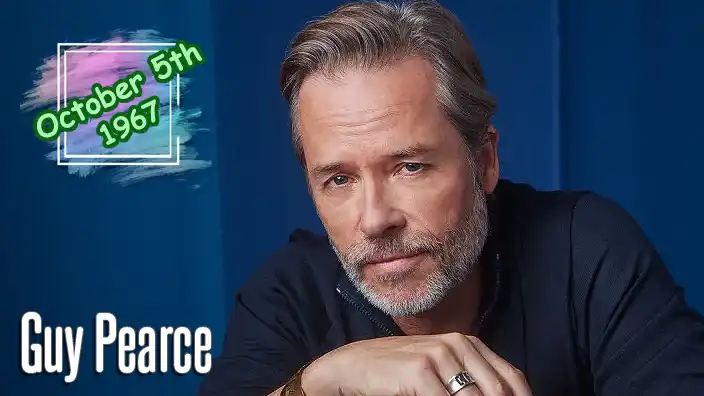
October 5, 1967, in Ely, England
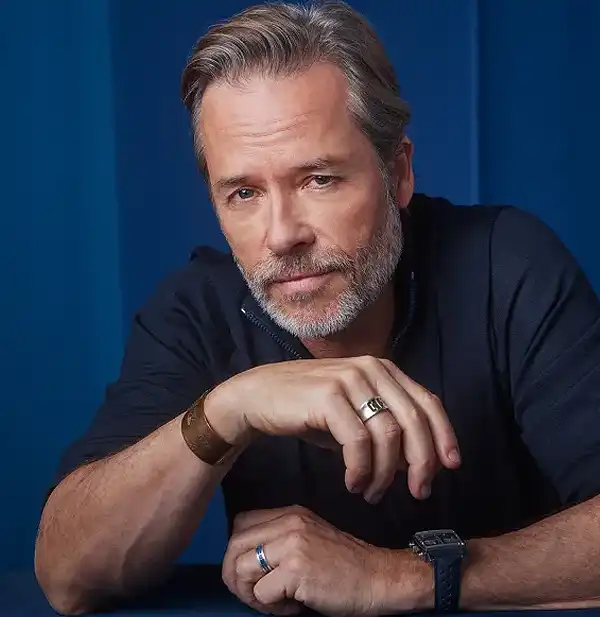
Guy Edward Pearce was born on October 5, 1967, in Ely, Cambridgeshire, England. His family moved to Australia when he was a small child, settling in Geelong, Victoria. Pearce's father, Stuart, was a test pilot, while his mother, Anne, was a schoolteacher. His father died in an aviation accident when Pearce was still young, leaving his mother to raise Guy and his older sister.
Pearce developed an interest in performing during his school years and became involved with local theater. He also competed in amateur bodybuilding as a teenager, an early pursuit that seems slightly removed from the thoughtful character acting for which he would eventually become known. Nevertheless, the discipline of transforming himself physically would prove useful in a career containing more than a few characters who looked nothing like the fellow who had played the previous one.
His first major break came through Australian television when he was cast as Mike Young in Neighbours in 1986. The soap opera had become an extraordinary launching pad for Australian talent, and Pearce joined a cast that also included Kylie Minogue and Jason Donovan. Mike was a troubled but likable young man who became one of the program's popular characters, giving Pearce widespread recognition in Australia and Britain.
Pearce remained with Neighbours for several years before moving into other Australian television productions, including Home and Away and Snowy River: The McGregor Saga. Like many performers emerging from successful television roles, however, he faced the challenge of convincing audiences and casting directors that he was capable of becoming someone other than the familiar character they had watched in their living rooms.
The answer arrived wearing considerably more makeup.
Pearce played Adam Whitely, better known by his drag persona Felicia Jollygoodfellow, in the 1994 Australian film The Adventures of Priscilla, Queen of the Desert. Alongside Hugo Weaving and Terence Stamp, Pearce portrayed one of three performers traveling across the Australian Outback in a bus named Priscilla. The combination of flamboyant costumes, comedy, drama, spectacular scenery and ABBA helped turn the relatively modest Australian production into an international success.
Priscilla was an important turning point for Pearce. Anyone who had previously thought of him simply as Mike from Neighbours was now confronted by Felicia dancing across the Outback in extravagant costumes. Typecasting had been dealt a fairly decisive blow.
Hollywood soon took notice. Pearce's international breakthrough came with Curtis Hanson's L.A. Confidential in 1997, an adaptation of James Ellroy's crime novel set amid corruption, celebrity and police politics in 1950s Los Angeles. Pearce played Detective Lieutenant Edmund Exley, an ambitious and highly intelligent police officer whose rigid adherence to procedure places him in conflict with Russell Crowe's considerably more physical Bud White.
The cast also included Kevin Spacey, Kim Basinger, James Cromwell and Danny DeVito, but Pearce more than held his ground in an ensemble packed with formidable performers. L.A. Confidential received widespread critical acclaim and multiple Academy Award nominations, establishing Pearce firmly with international audiences. His Ed Exley was calculating, ambitious and initially rather difficult to like, but Pearce gradually revealed the principles and courage beneath the character's carefully controlled exterior.
If L.A. Confidential introduced Pearce to Hollywood, Christopher Nolan's Memento in 2000 gave him one of the defining roles of his career. Pearce played Leonard Shelby, a man suffering from an inability to form new long-term memories following a traumatic attack. Determined to find the person responsible for murdering his wife, Leonard relies upon photographs, handwritten notes and tattoos to preserve information he will otherwise forget.
Nolan constructed the film partly in reverse chronological order, placing audiences in a state of uncertainty resembling Leonard's own experience. Pearce had to create a coherent character within a deliberately fragmented narrative in which Leonard repeatedly awakens, figuratively and sometimes almost literally, without knowing how he reached his present situation. It was an extraordinary acting challenge wrapped inside an extraordinary filmmaking challenge.
Memento became one of the most influential films of its period and helped establish Christopher Nolan as a major filmmaker. For Pearce, Leonard Shelby became perhaps his most recognizable role. The character's Polaroid photographs, tattoos and repeated attempts to reconstruct his own reality became inseparable from the film's identity. It is difficult enough for an actor to remember where his character is emotionally within an ordinary screenplay. Pearce managed it in a film whose chronology appeared to have been dropped down the stairs and reassembled deliberately in the wrong order.
His career after Memento continued to resist simple classification. Pearce appeared in The Count of Monte Cristo as the treacherous Fernand Mondego and starred in the science-fiction adaptation The Time Machine. He also appeared in films including Two Brothers, The Proposition, Factory Girl, Death Defying Acts and The Hurt Locker. Some were large productions, others were independent films, and Pearce appeared increasingly comfortable moving between leading roles and distinctive supporting characters.
The Australian Western The Proposition, written by Nick Cave and directed by John Hillcoat, provided Pearce with one of his grittier roles. Playing outlaw Charlie Burns, he inhabited a brutal colonial Australian landscape far removed from the polished Los Angeles offices of Ed Exley. The film developed a strong critical reputation and became another example of Pearce's willingness to choose demanding material rather than simply chase conventional leading-man roles.
In 2010, Pearce joined Colin Firth and Geoffrey Rush in The King's Speech. He portrayed King Edward VIII, whose decision to abdicate the British throne so that he could marry Wallis Simpson places his younger brother Albert—later King George VI—on the throne. Pearce's role was relatively small but historically crucial to the story. The film became a major critical success and won the Academy Award for Best Picture.
Pearce then entered the Marvel Cinematic Universe with Iron Man 3 in 2013, playing Aldrich Killian. Introduced as an awkward scientist whom Tony Stark casually dismisses, Killian later reappears transformed into the polished and dangerous head of Advanced Idea Mechanics. The role allowed Pearce to enjoy the full comic-book-villain package: scientific brilliance, personal resentment, expensive tailoring and a plan that could probably have benefited from considerably less ambition.
Science fiction continued with Ridley Scott's Prometheus, in which Pearce played Peter Weyland, the enormously wealthy founder of the Weyland Corporation. Considerable prosthetic makeup was used to transform Pearce into the elderly Weyland, prompting the slightly peculiar spectacle of hiring a relatively young actor and then spending substantial time and effort making sure nobody could recognize him.
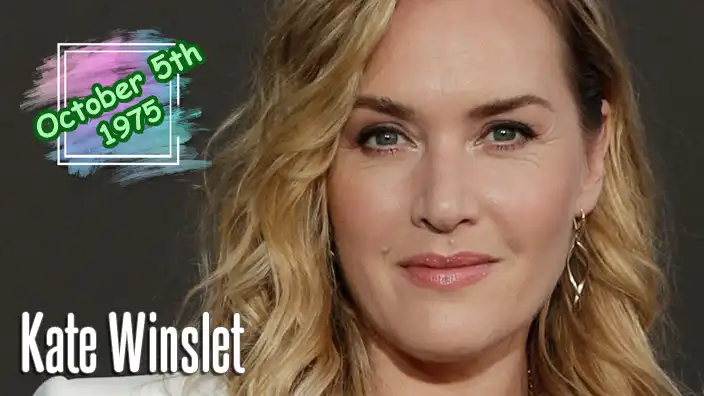
Pearce also returned repeatedly to smaller dramatic projects. His work in the HBO miniseries Mildred Pierce, starring Kate Winslet, brought him an Emmy Award for Outstanding Supporting Actor in a Miniseries or Movie. The production reunited two performers whose careers had successfully crossed between major films and more intimate character-driven work.
Other roles followed in productions including Lawless, The Rover, Results, Genius, Alien: Covenant, Mary Queen of Scots, The Innocents and A Spy Among Friends. Pearce's choices continued to range freely across genres and budgets. He could appear in a science-fiction blockbuster, historical drama, independent thriller or television production without any of them seeming particularly unusual territory.
One particularly enjoyable return occurred when Pearce revisited Neighbours as Mike Young decades after leaving the series. He appeared in what was originally expected to be the program's finale in 2022, sharing scenes with former co-star Henrietta Graham as Jane Harris. When Neighbours subsequently returned from its supposedly permanent conclusion—a remarkably soap-operatic development in itself—Pearce again appeared as Mike.
A major late-career triumph arrived with Brady Corbet's The Brutalist. Pearce portrayed Harrison Lee Van Buren, a wealthy American industrialist who becomes the patron of Hungarian-Jewish architect László Tóth, played by Adrien Brody. Van Buren initially appears cultured, enthusiastic and generous, but the relationship between patron and architect becomes increasingly complicated and disturbing.
Pearce's performance in The Brutalist brought some of the strongest awards recognition of his career. He received nominations for the Academy Award, BAFTA Award and Golden Globe for Best Supporting Actor. Remarkably, the Oscar nomination was Pearce's first, arriving decades after L.A. Confidential and Memento had already established him as one of the most respected actors of his generation.
That lengthy wait says something interesting about Pearce's career. He has rarely seemed to build his professional life around awards campaigns or the conventional machinery of movie stardom. Instead, he has accumulated an unusually diverse collection of characters, often working as part of ensembles and frequently accepting supporting roles capable of leaving a stronger impression than their amount of screen time might suggest.
Music has provided another creative outlet. Pearce is a singer and songwriter and has released albums including Broken Bones and The Nomad. It is another branch of a career that began with school productions and Australian television before expanding across film, theater, television and music.
Perhaps the most striking aspect of Guy Pearce's career is how thoroughly he escaped the limitations that might have accompanied his earliest success. Being recognized internationally from a long-running soap opera can become either a launching pad or a rather comfortable cage. Pearce chose the launching pad, followed it with Priscilla, and then landed in L.A. Confidential before taking one of cinema's strangest journeys through Memento.
Since then, he has rarely taken the predictable route. Detectives, kings, villains, outlaws, scientists, spies, businessmen and deeply damaged men have all passed through his filmography. Some have occupied enormous movies; others have appeared in productions intended for considerably smaller audiences. Pearce approaches both with much the same seriousness.
Guy Pearce may still be Mike Young to generations of Neighbours viewers and Leonard Shelby to anyone who has ever finished Memento and immediately considered watching it again to work out what on Earth just happened. But between those two characters lies only part of an exceptionally varied career. Pearce has spent decades making sure that remembering one of his performances rarely tells you very much about what he will do next—which, for the star of Memento, seems wonderfully appropriate.