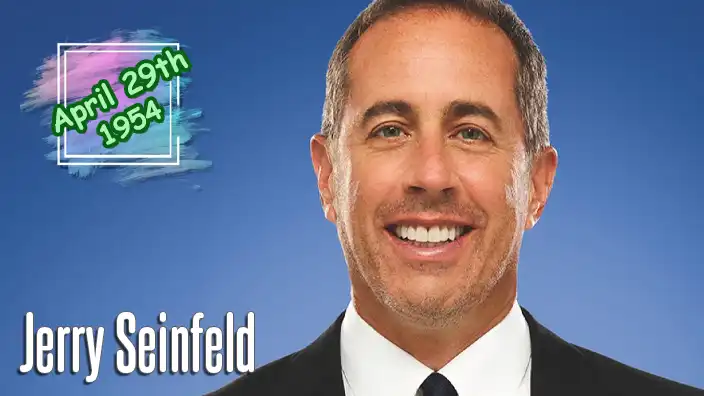
April 29, 1954, in Brooklyn, New York
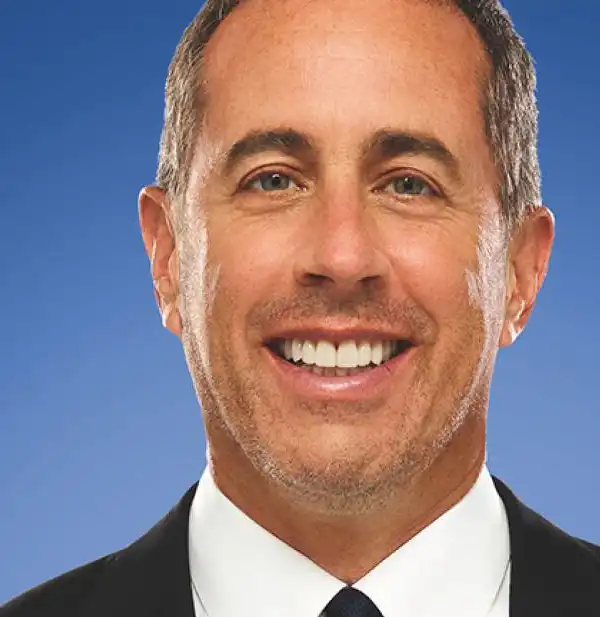
There are comedians who tell jokes, and then there’s Jerry Seinfeld—a man who looked at airline peanuts, waiting rooms, and the general weirdness of everyday life and somehow built an empire out of it. While the rest of us were just trying to get through the day, he was quietly asking the important questions: “What’s the deal with socks disappearing in the dryer?” And just like that, a career was born. No explosions, no car chases—just a microphone, a sharp eye, and the kind of patience it takes to turn nothing into something hilarious.
Jerry Seinfeld was born in Brooklyn, New York, and raised in Massapequa on Long Island. His upbringing was fairly ordinary, though his father’s natural sense of humor clearly rubbed off—proving once again that comedy often starts at the dinner table.
He attended Queens College, where he studied communications and theater, and it was there that he began dabbling in stand-up comedy. Like many comedians, he started at open mic nights—those glamorous proving grounds where dreams are made, and sometimes politely ignored. His persistence paid off when he landed a spot on The Tonight Show Starring Johnny Carson in 1981, a career-defining moment that gave him national exposure and credibility overnight.
From there, Seinfeld steadily built a reputation as one of the sharpest observational comics in the business. His humor wasn’t loud or outrageous—it was precise, relatable, and rooted in the everyday quirks most people overlook. That style would become his signature… and eventually, his golden ticket.
In 1988, Seinfeld teamed up with fellow comedian Larry David to create a sitcom originally titled The Seinfeld Chronicles. It didn’t exactly set the world on fire at first. In fact, early reception was lukewarm—proof that even legendary shows sometimes need a minute (or three seasons) to find their footing.
But once it clicked, it really clicked.
Renamed simply Seinfeld, the show ran from 1989 to 1998 and became one of the most influential sitcoms in television history. Often described as “a show about nothing,” it followed a fictionalized version of Seinfeld navigating everyday life with friends played by Julia Louis-Dreyfus, Jason Alexander, and Michael Richards.
By its third season, it was the most-watched sitcom in America, and by the time it ended, it had cemented itself as a cultural phenomenon. Catchphrases like “yada, yada, yada” and “No soup for you!” became part of everyday language, which is about as close as television gets to immortality.
Here’s a fun twist: at the height of its success, NBC reportedly offered Seinfeld over $100 million to continue the show for another season… and he turned it down. That’s right—he walked away. Most people can’t walk away from a second cup of coffee, and this guy walked away from nine figures. That’s either confidence or the greatest act of discipline in show business history.
After Seinfeld, he didn’t disappear into sitcom reruns and beach chairs. Instead, he went right back to his roots—stand-up comedy—proving that, for him, the craft mattered just as much as the fame. He continued touring, released specials, and later created Comedians in Cars Getting Coffee, a series that combined two of his favorite things: jokes and cars.
Speaking of cars… Seinfeld is famously passionate about automobiles—particularly Porsches—and owns an extensive collection that would make any enthusiast quietly weep with envy.
Over the decades, Jerry Seinfeld has remained a defining figure in comedy. His influence is everywhere, from modern sitcom writing to the way stand-up comedians approach everyday material. He didn’t need shock value or controversy—just a sharp mind, a keen eye, and a willingness to ask, “Why is this the way it is?”
And honestly, we’re all better for it.