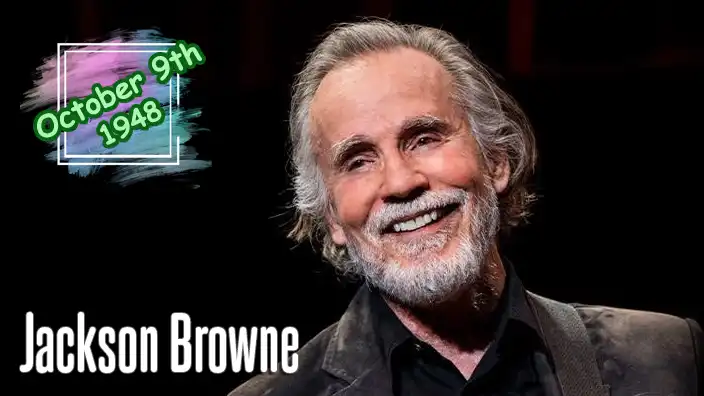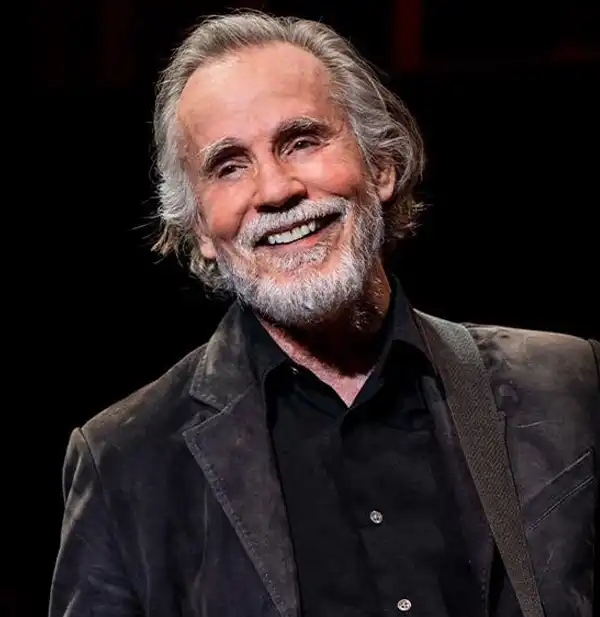
Clyde Jackson Browne was born on October 9, 1948, in Heidelberg, Germany, to American parents. His father, Clyde Jack Browne, was working as a journalist for the United States Army newspaper Stars and Stripes, while his mother, Beatrice Amanda Dahl, came from a family with Norwegian roots. Although his birthplace was German, Browne's childhood and musical identity would become closely associated with Southern California. His family returned to the United States when he was three, settling in Los Angeles before eventually moving to Orange County. The young Jackson grew up surrounded by the changing sounds and attitudes of postwar America, little realizing that he would eventually become one of the most recognizable voices of the California singer-songwriter movement. His life began overseas, but his musical journey would be thoroughly American, with enough highways, heartbreak, and philosophical questions to keep a songwriter occupied indefinitely.
Growing up in Southern California during the 1950s and early 1960s exposed Browne to an extraordinary mixture of musical influences. Rock and roll was transforming popular entertainment, folk music was experiencing a revival, and young musicians were beginning to experiment with songs that addressed personal experiences and social concerns. Browne developed an interest in guitar and songwriting while attending Sunny Hills High School in Fullerton. Unlike performers who concentrated primarily on technical showmanship, he became fascinated by the possibilities of lyrics, melody, and emotional expression. He discovered that a song could communicate complicated feelings in a way ordinary conversation sometimes could not. This realization would become the foundation of his career, although it probably made him a rather dangerous person to invite to a simple discussion about relationships.
As a teenager, Browne became involved in the emerging Southern California folk music scene, performing in coffeehouses and small clubs where young songwriters exchanged ideas and tested new material. These intimate venues encouraged performers to rely on the strength of their songs rather than elaborate stage productions. Browne's thoughtful lyrics and melodic instincts attracted attention from fellow musicians, including members of the developing Laurel Canyon community. His early compositions revealed a remarkable ability to explore longing, uncertainty, and personal responsibility, themes that would remain central to his work for decades. While other aspiring rock stars were perfecting their guitar solos, Browne was already wondering what happened after the excitement faded and everyone had to face the consequences of their decisions.
In 1966, Browne briefly joined the Nitty Gritty Dirt Band, a Southern California group whose music combined folk, country, and rock influences. His involvement was relatively short, but it provided valuable experience working within a professional ensemble and introduced him to musicians who would become important figures in American popular music. The band eventually developed a distinguished career of its own, while Browne continued pursuing songwriting opportunities. His early departure reflected an independent artistic direction that would become increasingly apparent as he developed his own repertoire. He was interested in collaboration, but his songs frequently demanded a personal approach that did not always fit comfortably within the structure of a conventional band.
Browne subsequently traveled to New York City, where he became associated with Andy Warhol's artistic circle and worked briefly with German singer and actress Nico, who had gained recognition through her involvement with the Velvet Underground. Nico recorded several of Browne's early compositions for her 1967 album Chelsea Girl, including "These Days," a song he had written as a teenager. The recording introduced his songwriting to a wider audience and demonstrated an emotional maturity that seemed remarkable for someone so early in his career. "These Days" explored regret, reflection, and the passage of time with a quiet intensity that would become characteristic of Browne's finest work. The song eventually became one of his most admired compositions, recorded by numerous artists and rediscovered by successive generations of listeners.
His New York experience broadened his understanding of music, art, and the creative possibilities available beyond the California folk scene. Nevertheless, Southern California remained his natural artistic home, and he returned to Los Angeles as the city's singer-songwriter community was beginning to flourish. The Troubadour nightclub in West Hollywood became an important gathering place for musicians, songwriters, and industry figures, providing opportunities for collaboration and discovery. Browne developed friendships and professional relationships with artists including Glenn Frey, David Crosby, Graham Nash, Joni Mitchell, and Linda Ronstadt. These musicians helped create a distinctive sound combining folk introspection, country influences, rock instrumentation, and carefully constructed vocal harmonies. Browne was becoming part of a musical movement that would help define the sound of American radio during the 1970s.
One of his most important early collaborations involved Glenn Frey, who would become a founding member of the Eagles. Browne began writing a song called "Take It Easy," but struggled to complete part of the composition. Frey contributed the missing material, and the resulting song became the Eagles' debut single in 1972. Its relaxed musical atmosphere and references to traveling through the American Southwest helped establish the band's early identity. Browne later recorded his own version for his 1973 album For Everyman. The song became an enduring classic of country rock, proving that a successful collaboration sometimes requires little more than two talented songwriters, a guitar, and someone willing to finish the verse before everybody goes home.
Browne's growing reputation as a songwriter attracted the attention of David Geffen, whose newly established Asylum Records label became closely associated with the emerging California music scene. In 1972, Browne released his self-titled debut album, Jackson Browne, sometimes informally called Saturate Before Using because of the lettering on its cover. The album introduced audiences to a distinctive musical personality whose songs combined thoughtful lyrics with accessible melodies and restrained arrangements. Rather than relying on exaggerated vocal performances, Browne sang with a conversational sincerity that made his compositions feel unusually personal. His voice suggested someone sharing experiences with a trusted friend, even when the subject involved disappointment, uncertainty, or the uncomfortable realization that life was not unfolding according to plan.
The album's breakthrough single, "Doctor My Eyes," became a major American hit, reaching number eight on the Billboard Hot 100. The song combined an upbeat arrangement with lyrics exploring emotional exhaustion and the fear of becoming insensitive to suffering. Its contrast between lively music and serious subject matter demonstrated Browne's ability to communicate complex ideas without sacrificing popular appeal. David Crosby and Graham Nash contributed backing vocals to the recording, strengthening its connection with the Southern California musical community. The success of "Doctor My Eyes" introduced Browne to a national audience and established him as a significant new voice in American rock music. It also demonstrated that a song could sound cheerful on the radio while quietly asking questions that might require considerably more than a routine medical appointment.
Other songs from his debut album included "Rock Me on the Water," "Jamaica Say You Will," and "Song for Adam." These compositions revealed Browne's interest in spiritual searching, emotional relationships, and the difficulties of understanding a complicated world. "Rock Me on the Water" combined religious imagery with social observation, while "Jamaica Say You Will" explored romantic longing through a delicate melody and evocative storytelling. "Song for Adam" reflected on the death of a friend and the uncertainty surrounding human existence. Together, the songs established themes that would recur throughout Browne's career, demonstrating that he was interested in more than producing a succession of commercially successful singles.
His second album, For Everyman, arrived in 1973 and strengthened his reputation as a thoughtful songwriter. The record included his own interpretation of "Take It Easy," alongside "These Days," "Red Neck Friend," "Ready or Not," and the title track. The album explored personal relationships, youthful expectations, and the search for meaning within a rapidly changing society. Browne's writing continued developing in sophistication, combining intimate observations with broader philosophical concerns. His arrangements remained rooted in folk rock but incorporated the contributions of accomplished musicians whose playing added depth without overwhelming the songs. The result was an album that rewarded careful listening, particularly for audiences who appreciated lyrics that continued revealing new meanings long after the first performance.
An increasingly important figure in Browne's musical development was multi-instrumentalist David Lindley, whose distinctive guitar, fiddle, and lap-steel performances became central to the sound of several classic Browne albums. Lindley possessed an extraordinary ability to add emotional color to a song without distracting from its central message. His expressive playing complemented Browne's restrained vocals and thoughtful lyrics, creating a partnership that helped define the singer's most celebrated recordings. Their musical relationship extended across many years, both in the studio and onstage. Lindley's contributions demonstrated how a talented instrumentalist could transform an already effective composition into something memorable, occasionally with a sound that seemed to arrive from another planet by way of a very accomplished guitar shop.
In 1974, Browne released Late for the Sky, an album widely regarded as one of the defining achievements of the American singer-songwriter movement. Its songs explored love, separation, disappointment, mortality, and the passage of time with unusual emotional depth. The title track examined the painful realization that a relationship had changed beyond repair, while "Fountain of Sorrow" reflected on memory and the complicated ways people remember former lovers. "Farther On," "Before the Deluge," and "For a Dancer" expanded the album's emotional range, addressing hope, social uncertainty, and the mystery of death. Browne's ability to express deeply personal experiences through carefully constructed lyrics earned considerable critical admiration and established him as one of the most accomplished songwriters of his generation.
"For a Dancer" became particularly admired for its compassionate exploration of mortality and the challenge of finding meaning in loss. The song demonstrated Browne's ability to approach painful subjects without relying on exaggerated sentimentality. Instead, he used simple imagery and a gentle musical arrangement to communicate ideas that listeners could interpret through their own experiences. The emotional sincerity of Late for the Sky helped distinguish Browne from performers whose work concentrated primarily on entertainment or romantic fantasy. His songs acknowledged that life could be beautiful, confusing, disappointing, and occasionally heartbreaking, sometimes within the same afternoon.
The success of Late for the Sky also demonstrated the commercial possibilities of thoughtful album-oriented rock music. During the 1970s, FM radio stations increasingly supported artists whose recordings encouraged listeners to experience complete albums rather than isolated singles. Browne's work was particularly suited to this environment because his songs frequently shared related emotional and philosophical themes. His growing audience appreciated the opportunity to follow the development of his ideas across an entire record. He was becoming a leading figure in a musical culture that valued songwriting craftsmanship, authentic performance, and a willingness to address complicated human experiences.
Browne's personal life experienced profound tragedy in March 1976 when his first wife, Phyllis Major, died by suicide. The couple had married in 1975 and had a son, Ethan, born in 1973. Her death left Browne facing the responsibilities of parenthood while coping with grief and the demands of an increasingly successful musical career. The experience profoundly affected his life, although it would be simplistic to interpret every subsequent composition as a direct account of his personal circumstances. Browne's songwriting had always explored loss, uncertainty, and emotional vulnerability, but the events of 1976 added another dimension to the experiences informing his work.
Later that year, he released The Pretender, an album that became one of his most commercially successful and critically discussed recordings. Produced by Jon Landau, the album included "Here Come Those Tears Again," "The Fuse," "Your Bright Baby Blues," "Sleep's Dark and Silent Gate," and the title track. The songs explored the tension between youthful ideals and adult responsibilities, asking whether people could preserve their dreams while navigating work, relationships, and social expectations. The title song became particularly famous for its portrait of someone caught between the pursuit of happiness and the routines of ordinary life. Browne's observations resonated with listeners who recognized the difficulties of balancing ambition, security, and personal fulfillment.
"The Pretender" became one of Browne's signature compositions, celebrated for its memorable melody and thoughtful examination of modern existence. The song's central character seeks love, purpose, and stability while confronting the repetitive demands of daily life. Its emotional power comes partly from the recognition that these concerns are not limited to any particular generation. People continue struggling with the same questions, regardless of changes in technology, fashion, or economic circumstances. Browne had discovered that a well-written song could express anxieties shared by thousands of listeners who might never have found the words themselves. It was an impressive achievement for someone whose professional responsibilities included sitting at a piano and wondering why life was so complicated.
In 1977, Browne released Running on Empty, the album that would become his greatest commercial success. Rather than recording a conventional collection of studio songs, he developed an innovative project exploring the experiences of musicians traveling between performances. The album included recordings made onstage, backstage, in hotel rooms, and even aboard a tour bus. Its unusual concept captured the exhaustion, excitement, companionship, and loneliness associated with life on the road. The title track became one of Browne's most recognizable songs, combining energetic rock instrumentation with lyrics reflecting the relentless movement of touring. The album offered listeners a glimpse behind the polished performances they normally encountered, revealing the practical realities of a profession that involved considerable travel and very little opportunity to unpack.
The title song "Running on Empty" became a major hit, reaching number eleven on the Billboard Hot 100. Its driving rhythm and memorable chorus helped establish it as a classic road song, frequently associated with travel, perseverance, and the determination to keep moving despite exhaustion. The album also included "The Road," written by Danny O'Keefe, "Rosie," "You Love the Thunder," and "The Load-Out," which flowed into a performance of Maurice Williams and the Zodiacs' "Stay." The latter sequence became a concert favorite, celebrating the road crews, technicians, and support workers whose efforts make live performances possible. Browne recognized that the glamorous image of touring depended on people who spent long hours moving equipment, repairing problems, and ensuring that the musicians could appear onstage looking remarkably relaxed.
The Running on Empty album eventually achieved seven-times-platinum certification in the United States and became one of the defining releases of Browne's career. Its success demonstrated that an unconventional recording concept could connect with mainstream audiences when supported by strong songwriting and memorable performances. The album also helped establish the romantic mythology of touring musicians, although Browne's lyrics frequently acknowledged that the reality involved loneliness, fatigue, and the occasional questionable meal at an inconvenient hour. Anyone who has spent significant time traveling for work could appreciate the sentiment, even without a guitar case or a backstage pass.
By the end of the 1970s, Browne had become one of the most respected figures in American rock music, recognized for his thoughtful songwriting and commitment to live performance. His concerts attracted audiences who appreciated both his familiar recordings and the personal observations he shared between songs. His stage presence was generally understated, emphasizing musical communication rather than elaborate theatrical effects. He relied on his voice, guitar, piano, and the contributions of skilled musicians to create performances that felt intimate even in large venues. The approach reflected his belief that a song's emotional meaning should remain central to the experience.
Browne's growing interest in environmental and political issues became increasingly visible during this period. In 1979, he helped organize the Musicians United for Safe Energy concerts, commonly known as the No Nukes concerts, alongside Bonnie Raitt, Graham Nash, and John Hall. The events brought together prominent performers including Bruce Springsteen, James Taylor, Carly Simon, Tom Petty, and the Doobie Brothers to raise awareness about nuclear energy and related safety concerns. The concerts resulted in a live album and documentary film, demonstrating the ability of popular musicians to attract public attention to important social debates. Browne's involvement reflected a commitment to activism that would remain an important part of his career, even when his public positions attracted disagreement.
His 1980 album Hold Out reached number one on the Billboard 200, marking another major commercial achievement. The record included "Boulevard," "That Girl Could Sing," and "Call It a Loan," combining rock arrangements with the emotional reflection that characterized his earlier work. "Boulevard" became particularly popular on rock radio, featuring a more forceful musical approach than many of his previous recordings. The album demonstrated that Browne could adapt to changing musical tastes without abandoning his established identity. Although the recording industry was becoming increasingly interested in new sounds and polished production techniques, his songwriting remained focused on recognizable human experiences.
In 1982, Browne achieved another major commercial success with "Somebody's Baby," recorded for the soundtrack of the film Fast Times at Ridgemont High. The song reached number seven on the Billboard Hot 100, becoming his highest-charting American single. Its catchy melody and accessible romantic theme introduced Browne to listeners who might not have been familiar with his earlier, more introspective albums. The recording also demonstrated his ability to produce a straightforward pop-rock hit without sacrificing the musical qualities that had established his reputation. After years of examining life's most difficult philosophical questions, he had discovered that a song about romantic attraction could still perform very nicely on the charts.
The following year brought Lawyers in Love, an album that reflected Browne's growing interest in political satire and contemporary social commentary. Its title track became a popular single, accompanied by a music video that received exposure on MTV. The album also included "Tender Is the Night," "For a Rocker," and "Downtown." Browne's writing increasingly addressed the contradictions of modern society, combining humor, skepticism, and personal observation. The political climate of the early 1980s provided abundant material for a songwriter interested in examining the relationship between individual lives and larger historical events.
Browne's second marriage, to Australian model Lynne Sweeney, began in 1981. The couple welcomed a son, Ryan, in 1982, but their marriage ended in divorce in 1983. His family experiences continued influencing his understanding of relationships, responsibility, and personal change. Although Browne's songs often draw on intimate emotions, he has generally resisted reducing them to straightforward autobiographical explanations. His writing frequently transforms individual experiences into broader reflections that listeners can interpret through their own lives. This ability to move between the personal and universal has remained one of his most important artistic strengths.
In 1986, Browne released Lives in the Balance, one of his most explicitly political albums. The recording addressed American foreign policy, international conflict, and the human consequences of political decisions. Songs including "For America," "Soldier of Plenty," and the title track demonstrated his determination to examine subjects that many mainstream rock performers avoided. "In the Shape of a Heart," meanwhile, offered a deeply personal exploration of love and loss, balancing the album's political concerns with emotional reflection. The record illustrated Browne's belief that songwriting could address both private experiences and public responsibilities without treating the two as entirely separate subjects.
The album's political themes attracted considerable attention, particularly because Browne challenged aspects of United States policy in Central America. His willingness to express controversial views reflected a broader tradition of American protest music associated with artists such as Woody Guthrie, Pete Seeger, and Bob Dylan. While listeners did not necessarily agree with his positions, the songs encouraged discussion about the consequences of political decisions and the responsibilities of citizens. Browne's approach emphasized the human experiences behind international events, using individual stories and emotional imagery to make distant conflicts feel more immediate.
His 1988 album World in Motion continued exploring social and political subjects, including poverty, injustice, and the challenges facing contemporary society. Although the record did not achieve the commercial success of his most popular 1970s releases, it reinforced his reputation as an artist willing to follow his convictions rather than concentrate exclusively on chart performance. Browne's musical interests were evolving alongside his personal understanding of the world, and his work increasingly reflected a concern for environmental protection, international cooperation, and human rights.
During the 1990s, Browne returned to more intimate songwriting with the album I'm Alive, released in 1993. The record explored the aftermath of a relationship, emotional recovery, and the possibility of beginning again after disappointment. Songs such as "I'm Alive," "My Problem Is You," "Everywhere I Go," and "Sky Blue and Black" demonstrated his continuing ability to communicate complicated feelings through carefully structured lyrics and memorable melodies. The album received favorable critical attention and reminded listeners of the emotional directness that had distinguished his earliest recordings. Browne's talent for examining heartbreak had not diminished, although one suspects he would have preferred a somewhat less demanding source of inspiration.
His 1996 album Looking East continued examining personal relationships alongside wider social concerns. The title reflected his interest in looking beyond familiar cultural assumptions and considering different perspectives. Browne collaborated with musicians from varied backgrounds, incorporating influences that expanded the sound of his recordings while preserving his recognizable songwriting style. The album explored questions of responsibility, cultural identity, and personal connection, demonstrating that his artistic curiosity remained active well beyond the period of his greatest commercial success.
In 2002, Browne released The Naked Ride Home, another collection combining personal reflection with observations about contemporary society. The album included songs such as "The Night Inside Me," "Casino Nation," and "My Stunning Mystery Companion." Its arrangements incorporated rock, folk, and blues influences, while the lyrics continued exploring relationships, politics, and the search for meaning. Browne remained committed to creating new music rather than relying entirely on his established catalog. This determination distinguished him from performers content to spend their later careers reproducing familiar hits without pursuing new ideas.
Browne's achievements received major institutional recognition in 2004 when he was inducted into the Rock and Roll Hall of Fame. Bruce Springsteen delivered the induction speech, acknowledging Browne's influence on American songwriting and the emotional honesty of his music. The honor recognized a career that had helped define the singer-songwriter tradition while contributing to the broader development of rock music. Browne joined an extraordinary collection of performers whose work had transformed popular entertainment, including many musicians who had influenced or collaborated with him. His induction confirmed his place among the important figures of American rock history, although admirers had been making that argument for decades without requiring a formal ceremony.
Further recognition arrived in 2007 when Browne was inducted into the Songwriters Hall of Fame. The honor emphasized the quality and influence of his compositions, acknowledging that his achievements extended beyond his recordings as a performer. His songs had been interpreted by numerous artists, including the Eagles, Nico, Linda Ronstadt, and other prominent musicians. Browne's songwriting combined poetic language with accessible melodies, allowing his work to function effectively in different musical settings. Whether performed with a full rock band, a small acoustic ensemble, or a single guitar, his strongest compositions retained their emotional impact.
Throughout his career, Browne has collaborated with an impressive collection of musicians, including David Crosby, Graham Nash, Bonnie Raitt, Bruce Springsteen, Warren Zevon, and David Lindley. He also played an important role in producing recordings by other artists, including Zevon's self-titled 1976 album and Excitable Boy in 1978. His involvement helped introduce Zevon's distinctive songwriting to a wider audience, demonstrating Browne's appreciation for talented performers whose work did not necessarily fit conventional commercial expectations. Such collaborations reflected the supportive musical community that had helped launch his own career during the early 1970s.
His partnership with David Lindley remained especially important, both artistically and personally. Lindley's extraordinary instrumental versatility and distinctive musical personality complemented Browne's songwriting across numerous recordings and performances. The musicians reunited for concert projects that celebrated their long creative association, including the live album Love Is Strange: En Vivo Con Tino, released in 2010. Recorded during performances in Spain, the album featured Spanish percussionist Tino di Geraldo and offered fresh interpretations of familiar Browne songs. Lindley's death in 2023 marked the loss of a musician whose contributions had been central to some of Browne's most beloved work.
Browne also developed a reputation for intimate solo acoustic performances, releasing Solo Acoustic, Vol. 1 in 2005 and Solo Acoustic, Vol. 2 in 2008. These recordings captured the atmosphere of concerts in which he performed with minimal accompaniment, often introducing songs with stories about their origins or responding humorously to audience requests. The stripped-down arrangements allowed listeners to concentrate on the lyrics, melodies, and emotional character of the compositions. They also demonstrated that Browne's music did not depend on elaborate production to remain effective. A good song, after all, should be able to survive without a truckload of amplifiers and enough electrical equipment to illuminate a small town.
In 2008, Browne released Time the Conqueror, an album that explored the passage of time, personal reflection, and contemporary political concerns. Its songs included "Off of Wonderland," "The Drums of War," and the title track. The record continued his long-standing interest in connecting individual experiences with broader social developments. Browne's voice and songwriting had matured, but his commitment to thoughtful observation remained unmistakable. He continued examining the choices people make, the consequences they face, and the possibility of finding hope amid uncertainty.
His 2014 album Standing in the Breach offered another collection of reflective and socially conscious songs. The title track had originally been written years earlier and was inspired by the work of humanitarian organizations helping communities affected by natural disasters. Other compositions addressed environmental concerns, international relationships, and the importance of maintaining compassion in difficult circumstances. The album demonstrated Browne's continuing belief that music could encourage empathy and thoughtful engagement with the world. Its arrangements combined familiar folk-rock elements with contributions from musicians who understood the importance of supporting his lyrical storytelling.
Environmental activism has remained a particularly important part of Browne's public life. He has supported organizations and campaigns concerned with renewable energy, ocean conservation, climate change, and the protection of natural resources. His involvement in the No Nukes movement helped establish a pattern of using concerts and public appearances to support causes he considered important. Over the years, he has participated in benefit performances and collaborated with organizations seeking to address environmental challenges. His commitment has extended beyond writing songs about these subjects, reflecting a belief that musicians can use their public visibility to encourage practical involvement in community and international issues.
Browne has also supported humanitarian efforts and organizations working on social justice, education, and international development. His charitable activities have included benefit concerts, fundraising recordings, and public advocacy. While such involvement sometimes places artists in the middle of political disagreement, Browne has generally treated social engagement as a natural extension of his songwriting. His work reflects a continuing interest in the relationship between individual choices and collective responsibilities, a theme present in his music from the beginning of his career.
In 2021, Browne released Downhill from Everywhere, his first solo studio album since Standing in the Breach. The record combined his familiar introspective songwriting with contemporary concerns about environmental damage, social divisions, and the uncertainty of modern life. Songs included "Still Looking for Something," "My Cleveland Heart," "A Little Soon to Say," "Minutes to Downtown," and the title track. The album received a Grammy nomination for Best Americana Album, demonstrating that Browne's creative work continued attracting critical recognition. Its music combined seasoned musicianship with the emotional sincerity that had characterized his recordings for decades.
"My Cleveland Heart" attracted particular attention through its imaginative music video, which featured singer-songwriter Phoebe Bridgers in a cameo appearance. The video's playful approach demonstrated that Browne retained a sense of humor about himself and his career, even while addressing serious subjects. The collaboration also illustrated his continuing connection with younger generations of musicians. Artists who grew up listening to recordings influenced by the California singer-songwriter movement could now work alongside one of its defining figures, creating a musical conversation extending across generations.
The title track of Downhill from Everywhere reflected Browne's concern about pollution and the health of the world's oceans. Its lyrics examined the ways human activity affects the natural environment, connecting everyday decisions with larger ecological consequences. The song continued a tradition of environmental commentary that had been present throughout his career. Browne's willingness to revisit these subjects demonstrated that his concerns were not temporary responses to passing headlines but long-standing interests that had developed alongside his musical life.
Browne's distinctive singing voice has played an important role in his enduring appeal. Rather than relying on elaborate vocal ornamentation or dramatic displays of technical ability, he communicates through clarity, phrasing, and emotional sincerity. His delivery often resembles an intimate conversation, inviting listeners to consider the meaning of the words rather than simply admire the performance. This approach has made his recordings especially effective for songs exploring regret, memory, hope, and personal change. His music can be comforting without becoming sentimental and serious without losing its melodic accessibility.
His songwriting also reflects an unusual ability to combine personal experience with observations about society. A song may begin with a romantic relationship and gradually reveal broader questions about identity, responsibility, or the passage of time. Browne frequently uses images of roads, rivers, journeys, and changing landscapes to explore emotional experiences. These recurring themes have helped establish a recognizable artistic identity while allowing considerable variety in subject matter. The road, in particular, has become an enduring symbol in his work, representing freedom, uncertainty, ambition, and the realization that reaching a destination does not necessarily answer every question.
The influence of Jackson Browne can be heard in the work of numerous singer-songwriters who value thoughtful lyrics, melodic craftsmanship, and emotional authenticity. His recordings helped establish expectations for album-oriented rock during the 1970s, while his later work demonstrated that musicians could continue developing artistically beyond their greatest commercial successes. His willingness to address political and environmental concerns also contributed to a tradition of socially engaged popular music. Browne's influence is not limited to artists who imitate his sound; it extends to performers who share his belief that songs can communicate complex experiences without sacrificing accessibility.
Despite his achievements, Browne has generally maintained a public image centered on songwriting rather than extravagant celebrity behavior. His concerts emphasize musicianship, communication, and the emotional connection between performer and audience. He has continued performing familiar songs while introducing new material, allowing listeners to follow the development of his artistic interests across different periods of his life. His ability to sustain that connection reflects the durability of songs that address experiences people continue encountering regardless of changing musical fashions.
Jackson Browne's career offers an extraordinary example of artistic consistency combined with creative evolution. From the youthful introspection of "These Days" to the emotional honesty of Late for the Sky, the restless energy of Running on Empty, and the environmental concerns of Downhill from Everywhere, his work has explored the complicated business of being human. His songs have accompanied listeners through relationships, disappointments, celebrations, and journeys both literal and emotional. He has never promised that life would be simple, but he has repeatedly demonstrated that music can make its difficulties easier to understand.
On October 9, admirers celebrate an American singer-songwriter whose work has helped shape the sound and substance of popular music for more than five decades. Jackson Browne's induction into both the Rock and Roll Hall of Fame and the Songwriters Hall of Fame recognizes an extraordinary body of recordings, performances, and compositions that continue connecting with audiences. His legacy includes memorable melodies, thoughtful lyrics, influential collaborations, and a sustained commitment to causes beyond the entertainment industry. The young musician who once performed in California coffeehouses eventually became one of the defining voices of American rock, proving that a guitar, a good melody, and something meaningful to say can carry a person a very long way. And after all those years of running on empty, Jackson Browne has somehow managed to keep the music moving down the highway.