October 9, 1992, in Westchester County, New York
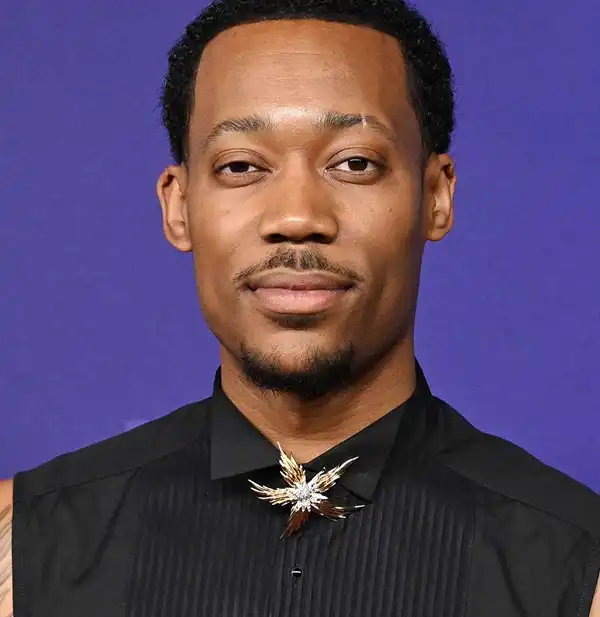
Tyler James Williams was born on October 9, 1992, in Westchester County, New York, and grew up in Yonkers, just north of New York City. His father, Le'Roy Williams, worked as a New York City police officer and sergeant, while his mother, Angela Williams, was a singer, songwriter, and minister who helped guide her children's entertainment careers. Tyler grew up in a household where creativity and performance were encouraged, and he demonstrated an interest in entertaining people remarkably early. His two younger brothers, Tyrel Jackson Williams and Tylen Jacob Williams, also became actors, making the Williams family something of a small entertainment company. Family gatherings must occasionally resemble casting auditions, although presumably somebody still has to wash the dishes.
Williams became interested in acting after watching Will Smith in the science-fiction comedy Men in Black. The film helped convince him that performing was something he wanted to pursue, and his mother supported his enthusiasm. He began auditioning as a young child, landing commercial work before establishing himself on television. One of his earliest assignments involved the long-running children's program Sesame Street, where he gained experience working with professional performers, production crews, and some of television's most recognizable puppets. It was an unusual introduction to show business, but one that offered excellent preparation for a career in comedy. After all, if an actor can remain professional while sharing a scene with a large yellow bird, most future co-stars should present relatively few difficulties.
His early television work also included appearances on Little Bill and Saturday Night Live, giving him opportunities to develop his timing and confidence in front of the camera. Williams displayed a natural ability to deliver dialogue without sounding rehearsed, an especially valuable quality for a child performer. His expressive face, careful reactions, and understated humor distinguished him from youngsters who relied on exaggerated gestures or excessive enthusiasm. He seemed comfortable allowing a joke to develop naturally, frequently producing laughter through a skeptical glance or a moment of silent disbelief. These qualities would become central to his breakthrough television role and remain recognizable throughout his adult career.
That breakthrough arrived in 2005 when Williams was selected to portray a fictionalized younger version of comedian Chris Rock in the sitcom Everybody Hates Chris. Created by Rock and Ali LeRoi, the series drew inspiration from Rock's childhood experiences growing up in Brooklyn during the 1980s. Williams played Chris, an intelligent and frequently bewildered teenager navigating family expectations, school difficulties, friendships, and the everyday frustrations of adolescence. Rock himself narrated the episodes as the adult Chris, providing sarcastic observations about the experiences portrayed on screen. The arrangement allowed Williams to deliver the physical comedy and emotional reactions while Rock supplied the hindsight of someone who had survived childhood and was finally in a position to complain about it professionally.
The series premiered on UPN in September 2005 before moving to The CW following the formation of the new network. Set primarily in Brooklyn's Bedford-Stuyvesant neighborhood, it followed Chris as he attended a predominantly white school and struggled with the complications of family life. His father, Julius, portrayed by Terry Crews, worked tirelessly to support the household and possessed an almost supernatural ability to calculate the cost of anything. His mother, Rochelle, played by Tichina Arnold, maintained strict discipline and regularly reminded her children that she did not need to tolerate foolishness. Chris's younger siblings, Drew and Tonya, portrayed by Tequan Richmond and Imani Hakim, contributed additional complications, particularly when Chris found himself blamed for problems he had not necessarily caused.
Williams became the emotional center of the series, portraying Chris as a youngster who desperately wanted an ordinary life but seemed destined to encounter extraordinary levels of embarrassment. Whether dealing with school bullies, awkward romantic situations, or his mother's formidable temper, Chris frequently discovered that good intentions offered little protection against disaster. Williams excelled at communicating the character's frustration through carefully timed facial expressions and reactions. His ability to appear simultaneously intelligent, hopeful, and completely defeated helped make the character sympathetic. Audiences could recognize their own childhood difficulties in Chris's experiences, even if their parents had been slightly less enthusiastic about calculating the electricity bill down to the penny.
One of the show's greatest strengths was its willingness to combine comedy with observations about race, economic hardship, education, and family relationships. Chris frequently encountered discrimination and social misunderstandings, but the series approached these subjects through humor without pretending that the underlying problems were insignificant. Williams's performance was particularly effective because he portrayed the character as a real person rather than simply a vehicle for jokes. His frustrations mattered, his victories felt earned, and his mistakes were believable. The show's humor emerged from recognizable human behavior, allowing viewers to laugh while appreciating the challenges facing its central character.
The chemistry between Williams and his television family contributed significantly to the program's popularity. Terry Crews brought warmth and exaggerated thriftiness to Julius, while Tichina Arnold created a memorable portrayal of Rochelle's fierce determination to maintain order. Vincent Martella played Chris's loyal friend Greg Wuliger, whose friendship provided occasional relief from the daily complications of school. Williams held his own alongside these experienced performers, demonstrating a level of confidence and comic discipline that attracted considerable critical attention. The ensemble created a believable family dynamic in which affection and irritation frequently occupied the same room, sometimes within the same sentence.
His work on Everybody Hates Chris earned several NAACP Image Award nominations, and in 2007 he won Outstanding Actor in a Comedy Series. The achievement made him the youngest recipient of that particular honor at the time, establishing his reputation as one of television's most promising young performers. He also received recognition from the Young Artist Awards. The series ran for four seasons, concluding in 2009, and became a lasting favorite through reruns and streaming. For Williams, the experience provided a remarkable professional education, requiring him to carry a network comedy while balancing the responsibilities of growing up.
The conclusion of Everybody Hates Chris presented a challenge familiar to many successful child actors: how to establish an adult career after becoming closely associated with a beloved childhood character. Audiences often find it difficult to separate performers from the roles that first made them famous, particularly when those characters remain popular in syndication. Williams approached the transition by accepting different kinds of assignments, expanding his abilities, and avoiding the temptation to reproduce the same performance indefinitely. He understood that growing professionally required audiences to see him as more than the perpetually unfortunate schoolboy who had spent four seasons being blamed for everything.
During the years following the sitcom, Williams appeared in programs including True Jackson, VP, House, and Batman: The Brave and the Bold. In the animated Batman series, he provided the voice of Jason Rusch, one of the individuals associated with the superhero Firestorm. Voice acting offered another opportunity to develop his performance skills, requiring him to communicate character and emotion without relying on facial expressions or physical movement. These varied appearances helped maintain his presence in the industry while allowing him to explore roles outside the family sitcom format.
In 2012, Williams starred in the Disney Channel original movie Let It Shine, portraying Cyrus DeBarge, a talented but shy young songwriter and rapper who struggles to express his feelings openly. Inspired partly by the story of Cyrano de Bergerac, the musical film followed Cyrus as he secretly wrote songs that helped his more confident friend attract the attention of a young singer named Roxie, played by Coco Jones. The resulting misunderstandings created romantic complications and musical opportunities, allowing Williams to demonstrate his abilities as a performer beyond conventional acting. His character possessed considerable musical talent but lacked the confidence to claim credit for his own work, a predicament that becomes increasingly difficult when the person receiving the applause is standing directly beside you.
The film's soundtrack featured Williams performing several songs, including "Don't Run Away," "Me and You," and "Let It Shine." His contributions demonstrated his interest in rap, songwriting, and music production, expanding the public's understanding of his creative abilities. The movie became popular with Disney Channel audiences and introduced Williams to viewers who had not necessarily followed Everybody Hates Chris. It also provided an opportunity to portray a character whose principal challenge involved finding his voice rather than surviving the indignities of school and family life.
That same year, Williams joined the NBC comedy series Go On, starring Matthew Perry as Ryan King, a sports radio personality attending group therapy after the death of his wife. Williams portrayed Owen Lewis, a quiet young man dealing with the loss of his brother. The role required a more restrained emotional performance than his earlier sitcom work, balancing moments of humor with the sadness underlying the character's experiences. Working alongside Perry and an ensemble of accomplished comic actors gave Williams another opportunity to develop his adult screen presence. Although the series lasted only one season, it demonstrated his ability to contribute to comedy built around difficult emotional subjects.
Williams continued expanding his film career with the 2013 comedy Peeples, appearing alongside Craig Robinson, Kerry Washington, and David Alan Grier. The film explored the complications that arise when a man attempts to impress his girlfriend's wealthy and demanding family during a holiday gathering. Williams portrayed Simon Peeples, contributing to an ensemble comedy involving secrets, misunderstandings, and uncomfortable family encounters. The role allowed him to participate in a broader adult comedy while continuing to refine the timing and character work that had made him successful as a child performer.
A particularly important career development came in 2014 when Williams appeared in the independent satirical drama Dear White People, directed by Justin Simien. The film examined racial identity, campus politics, and cultural expectations at a fictional predominantly white university. Williams portrayed Lionel Higgins, a socially awkward student journalist whose experiences explored questions of belonging, personal identity, and the difficulty of finding a place within competing social groups. Lionel was intelligent and observant but frequently uncomfortable in social situations, allowing Williams to communicate much of the character's emotional life through subtle reactions and restrained dialogue.
Dear White People premiered at the Sundance Film Festival, where it received significant attention and won the Special Jury Award for Breakthrough Talent. The film's combination of satire and social commentary attracted critical discussion, while Williams's performance demonstrated his growing maturity as an actor. Lionel Higgins was a very different character from Chris Rock's fictional childhood self, although both shared an ability to observe the absurdities surrounding them. The distinction lay in the emotional complexity of the material and Williams's increasingly sophisticated approach to character development. He had successfully moved into independent cinema without abandoning the understated humor that remained one of his strengths.
Later in 2014, Williams entered an entirely different television universe when he joined AMC's enormously popular horror drama The Walking Dead. He portrayed Noah, a young survivor introduced during the show's fifth season. Noah had endured captivity at Grady Memorial Hospital in Atlanta and became connected with several members of the central group of survivors. Unlike the comic situations that had defined much of Williams's earlier work, The Walking Dead required him to communicate fear, desperation, loyalty, and determination in a world where civilization had collapsed. The series also presented a practical challenge that few conventional sitcoms encounter: avoiding the attention of large numbers of extremely unpleasant people who refuse to remain dead.
Noah's storyline became particularly memorable because of his friendship with Beth Greene, played by Emily Kinney, and his later involvement with Glenn Rhee, portrayed by Steven Yeun. Williams presented Noah as a sympathetic young man attempting to rebuild his life amid extraordinary danger. The character's experiences reflected the show's recurring themes of survival, sacrifice, and the difficulty of preserving humanity under desperate circumstances. His eventual death during a particularly gruesome encounter with walkers became one of the season's most shocking moments, leaving a lasting impression on viewers. It was certainly a dramatic departure from the relatively manageable difficulties of Everybody Hates Chris. Being grounded by Rochelle suddenly seemed like a rather attractive alternative.
His appearance in The Walking Dead helped establish Williams as a performer capable of handling serious dramatic material. The role attracted attention from audiences who might otherwise have associated him exclusively with comedy, demonstrating that he could create an emotionally engaging character within a demanding ensemble production. Although Noah's time on the series was relatively brief, his storyline became an important part of the fifth season and contributed to Williams's growing reputation for versatility.
In 2016, Williams joined the CBS crime drama Criminal Minds: Beyond Borders, portraying Russ "Monty" Montgomery, a technical analyst working with the FBI's International Response Team. The series followed agents investigating crimes involving American citizens overseas, combining criminal investigations with international settings. Williams's character provided technological expertise and analytical support, often assisting colleagues from the team's operational base. The role allowed him to portray a capable professional whose intelligence and specialized skills contributed directly to investigations. After surviving a zombie apocalypse, working with the FBI must have seemed comparatively civilized, although the office equipment was probably less cooperative than expected.
The series ran for two seasons, providing Williams with experience in a conventional network procedural drama. His performance emphasized intelligence, professionalism, and occasional humor, demonstrating that he could contribute effectively to a format quite different from the character-driven comedy of his earlier career. The role also helped reinforce his transition into adult television, where he was increasingly recognized for his versatility rather than simply his childhood success.
Williams continued accepting film assignments that explored serious historical and social subjects. In Kathryn Bigelow's 2017 drama Detroit, he portrayed Leon, a character connected to the film's depiction of the 1967 Detroit unrest and the events surrounding the Algiers Motel incident. The production examined racial injustice, police violence, and the consequences of historical conflict through an intense dramatic narrative. Williams's involvement placed him within a distinguished ensemble and provided another opportunity to contribute to a film addressing difficult subjects. His willingness to participate in such productions reflected an interest in material that could challenge audiences as well as entertain them.
In 2019, Williams joined the ABC action-comedy series Whiskey Cavalier, starring Scott Foley and Lauren Cohan. He portrayed Edgar Standish, a highly intelligent NSA analyst whose technological abilities made him a valuable member of an international intelligence team. Edgar's nervous personality and occasional social awkwardness provided comic contrast to the more physically adventurous agents surrounding him. Williams excelled at presenting a character who possessed extraordinary technical knowledge but sometimes appeared deeply concerned about the practical consequences of everyone else's decisions. It was another example of his ability to make intelligence and discomfort entertaining without turning either quality into an exaggerated caricature.
Although Whiskey Cavalier lasted only one season, Williams's performance received favorable attention and added another distinctive character to his television credits. He also appeared in films including The Wedding Year (2019), opposite Sarah Hyland, and The Argument (2020), an independent comedy exploring romantic relationships and disagreements. These projects demonstrated his continuing interest in varied material, from romantic comedy to ensemble drama. His career had become increasingly difficult to categorize, which was precisely the point: Williams was establishing himself as an actor rather than a performer permanently attached to one particular genre.
In 2021, Williams portrayed jazz saxophonist Lester Young in The United States vs. Billie Holiday, a biographical drama starring Andra Day as the legendary singer. Lester Young, affectionately known as "Prez," was an important figure in jazz history and a close friend of Holiday. The role allowed Williams to participate in a production exploring American music, celebrity, racial discrimination, and the personal challenges faced by one of the twentieth century's most influential vocalists. His involvement also connected with his own musical interests, bringing together different aspects of his creative background.
The most significant development in Williams's adult television career arrived later in 2021 with the premiere of ABC's workplace comedy Abbott Elementary. Created by and starring Quinta Brunson, the mockumentary-style series follows teachers and administrators working at an underfunded public elementary school in Philadelphia. Williams portrays Gregory Eddie, a substitute teacher who eventually becomes a permanent member of the faculty. Gregory is intelligent, organized, ambitious, and sometimes spectacularly uncomfortable with the unpredictable behavior of his colleagues. He initially approaches teaching with a carefully structured understanding of how things should operate, only to discover that actual schoolchildren have apparently never read the instructions.
Gregory's personality provides an effective contrast to the more exuberant characters surrounding him. Janine Teagues, portrayed by Brunson, approaches teaching with boundless enthusiasm and an almost heroic determination to solve every problem. Barbara Howard, played by Sheryl Lee Ralph, brings experience and traditional classroom discipline, while Melissa Schemmenti, portrayed by Lisa Ann Walter, relies on practical knowledge and a formidable network of Philadelphia acquaintances. Chris Perfetti's Jacob Hill contributes idealistic energy, while Janelle James's Principal Ava Coleman introduces a level of administrative unpredictability that would challenge even the most experienced educational professional. Williams's Gregory frequently responds to this chaos with carefully controlled expressions of disbelief, providing some of the show's funniest moments without requiring a single spoken word.
One of Gregory's defining characteristics is his preference for order, routine, and carefully planned behavior. He approaches classroom management with considerable seriousness and often struggles to understand why his colleagues are willing to improvise. His dry humor and reserved manner make him a natural observer of the school's daily absurdities. Williams uses the mockumentary format particularly effectively, frequently communicating directly with the audience through a glance toward the documentary camera. These reactions have become a recognizable part of his performance, allowing viewers to share Gregory's private thoughts without interrupting the scene. Sometimes one raised eyebrow can communicate more than an entire staff meeting, particularly when the meeting is being conducted by Ava Coleman.
Gregory's professional development forms an important part of the series. Initially uncertain about his place in education, he gradually discovers that teaching offers opportunities for meaningful personal and professional growth. His relationships with students help him develop greater patience, flexibility, and emotional understanding, while his colleagues encourage him to reconsider some of his rigid expectations. Williams portrays this transformation gradually, allowing Gregory's confidence and compassion to emerge without abandoning the personality traits that make him distinctive. The character's development reflects the show's broader appreciation of teachers who continue learning while helping their students succeed.
The relationship between Gregory and Janine has become one of Abbott Elementary's central storylines. Their contrasting personalities create an appealing romantic dynamic, with Janine's enthusiasm frequently challenging Gregory's carefully controlled approach to life. Both characters share a commitment to education and a desire to improve their students' experiences, but they often disagree about how best to accomplish those goals. Williams and Brunson communicate their developing affection through awkward conversations, hesitant gestures, and moments of emotional honesty. Their chemistry has contributed significantly to the series' popularity, demonstrating that a workplace romance can remain entertaining without relying entirely on exaggerated misunderstandings.
The success of Abbott Elementary also reflects its affectionate but realistic portrayal of public education. The series addresses inadequate funding, administrative difficulties, classroom supplies, professional exhaustion, and the extraordinary dedication required of teachers. Its humor frequently emerges from situations familiar to educators, including malfunctioning equipment, unexpected student behavior, and the challenge of balancing institutional requirements with individual needs. Williams's performance contributes to this balance by portraying Gregory as someone who genuinely cares about his work, even when his efforts are undermined by circumstances beyond his control. The character's seriousness makes his occasional moments of enthusiasm particularly satisfying.
Williams's performance earned widespread critical recognition, including the Golden Globe Award for Best Supporting Actor in a Television Series at the 2023 ceremony. He also received recognition from the Screen Actors Guild as part of the show's ensemble and earned multiple Primetime Emmy Award nominations for Outstanding Supporting Actor in a Comedy Series. By 2026, he had accumulated four Emmy nominations for his portrayal of Gregory Eddie. The honors represented an important professional achievement, confirming that his transition from successful child actor to respected adult performer had been exceptionally successful. <Cite refs={["turn913478search2","turn913478search4"]}/>
The recognition was especially meaningful because Williams had spent years developing his career through supporting roles, independent films, and short-lived television productions. Although he had achieved considerable fame as a child, sustained adult success required patience and a willingness to accept different professional challenges. His performance in Abbott Elementary brought together many of the qualities developed throughout those experiences: precise comic timing, emotional restraint, believable characterization, and the ability to create humor through subtle reactions. Gregory Eddie became another memorable television character, but one that belonged entirely to Williams's adult career.
The connection between Williams and Quinta Brunson began before Abbott Elementary. They worked together on A Black Lady Sketch Show, where Brunson recognized his comic abilities and later developed the role of Gregory with him specifically in mind. This creative relationship helped establish the natural chemistry between their characters and contributed to the show's distinctive humor. Brunson's decision reflected an understanding of Williams's ability to communicate personality through understated performance, making him particularly effective as the reserved teacher surrounded by considerably more expressive colleagues. <Cite refs={["turn913478search0","turn913478search1"]}/>
Williams also expanded his responsibilities behind the camera, making his directorial debut on Abbott Elementary during its fourth season. The move into directing represented another stage in his professional development, allowing him to apply decades of experience in television production to the creative process from a different perspective. Having spent much of his life working on sets, he possessed firsthand knowledge of acting, timing, production schedules, and the collaborative demands of television comedy. Directing provided an opportunity to combine those experiences while contributing to a series in which he had already become an essential performer. <Cite refs={["turn913478search0","turn913478search23"]}/>
His work outside Abbott Elementary has continued, including an appearance in the comedy series History of the World, Part II, a continuation of Mel Brooks's irreverent approach to historical storytelling. Williams also appeared in the 2024 thriller Amber Alert, further demonstrating his interest in roles beyond network comedy. These projects allowed him to maintain a varied professional identity while continuing his successful portrayal of Gregory Eddie. His ability to move between comedy, drama, and suspense reflects the versatility he has developed since his earliest television appearances. <Cite refs={["turn913478search23","turn913478search11"]}/>
In another entertaining connection between his television careers, Williams participated in the crossover between Abbott Elementary and It's Always Sunny in Philadelphia. The collaboration brought together two very different portrayals of life in Philadelphia, allowing the earnest teachers of Abbott to encounter the spectacularly irresponsible personalities associated with Paddy's Pub. The contrast provided considerable comic potential, particularly for Gregory, whose preference for order and professional behavior was unlikely to survive prolonged exposure to the gang's questionable decision-making. The crossover demonstrated the growing cultural popularity of Abbott Elementary and its ability to participate in playful experiments with television storytelling.
Williams's career has also included work as a musician, songwriter, and producer. His performances in Let It Shine demonstrated his abilities as a rapper, while his involvement in musical projects reflected interests that extend beyond acting. Although television remains his principal professional focus, his musical background contributes to a broader understanding of performance and rhythm. Comedy, like music, depends heavily on timing, pauses, and the relationship between individual contributions. Williams's ability to control these elements has been one of the most consistent features of his screen work.
An important part of Williams's public identity has been his willingness to discuss the challenges of growing up in the entertainment industry. Child actors often experience unusual professional expectations while still developing their personal identities, and the transition into adult roles can be difficult. Williams has spoken about the importance of establishing boundaries, maintaining a sense of self, and resisting the pressure to remain permanently associated with childhood success. His career illustrates the value of developing skills and interests that allow an actor to evolve naturally rather than attempting to reproduce a familiar character indefinitely.
He has also spoken publicly about living with Crohn's disease, a chronic inflammatory bowel condition that required significant medical treatment and changes to his lifestyle. Williams has discussed his experiences in interviews, helping raise awareness of a condition that can affect daily life and professional responsibilities. His openness has encouraged conversations about chronic illness and the importance of recognizing that health challenges are not always visible. While his medical experiences do not define his career, they form part of his public advocacy and demonstrate a willingness to discuss subjects that may help others facing similar circumstances.
Family has remained an important part of Williams's life, particularly his relationships with his younger brothers. Tyrel Jackson Williams became known for his work in the Disney XD series Lab Rats, while Tylen Jacob Williams appeared in the sitcom Instant Mom. The brothers have occasionally shared professional experiences, including appearances connected with Everybody Hates Chris. Their individual careers demonstrate the creative environment in which they were raised and the encouragement they received to pursue entertainment professionally. Having three actors in one family must make holiday conversations interesting, particularly when everyone believes they have the best interpretation of what happened at dinner.
One of Williams's most distinctive qualities as a performer is his ability to communicate humor without exaggeration. Many of his best moments involve silence, hesitation, or a carefully measured reaction to another character's behavior. This approach was visible in Everybody Hates Chris, where the young Chris frequently appeared overwhelmed by circumstances beyond his control, and it remains central to his portrayal of Gregory Eddie. Williams understands that audiences often find restrained disbelief funnier than an elaborate speech. He can make a character's discomfort entertaining while preserving the emotional reality of the situation.
His dramatic work demonstrates a similar commitment to believable characterization. Whether portraying Lionel Higgins in Dear White People, Noah in The Walking Dead, or Lester Young in The United States vs. Billie Holiday, Williams approaches characters through their motivations and emotional experiences rather than relying on familiar performance habits. This flexibility has allowed him to develop a career spanning children's entertainment, family sitcoms, independent cinema, historical drama, horror, crime procedurals, and workplace comedy. The variety is particularly impressive for someone who became famous before completing his school education.
The lasting appeal of Everybody Hates Chris has also contributed to Williams's continued recognition among audiences who grew up watching the series. Its humor, family relationships, and observations about childhood remain accessible to new viewers, while its memorable characters have become familiar through streaming and social media. Williams's performance as Chris continues attracting admiration, but his success in Abbott Elementary has ensured that he is no longer defined by that earlier achievement. He now occupies the unusual position of having played central roles in two widely appreciated television comedies separated by different stages of his life.
The contrast between Chris Rock's fictional childhood and Gregory Eddie's professional experiences offers an amusing illustration of Williams's development as an actor. Chris struggled to survive school as a student, while Gregory attempts to maintain order as a teacher. Both characters encounter unpredictable authority figures, complicated relationships, and situations that seem determined to undermine their best intentions. Both also rely on intelligence, patience, and occasional sarcasm to navigate their surroundings. The difference is that Gregory can theoretically send troublesome students to the principal's office, although anyone familiar with Principal Ava Coleman might question whether that represents a meaningful improvement.
Williams's accomplishments demonstrate the importance of versatility and persistence in an industry where early success does not guarantee a lasting career. His professional journey has involved celebrated television series, independent films, musical performances, dramatic supporting roles, and creative responsibilities behind the camera. Each stage has contributed to his development, allowing him to build an identity that extends beyond the characters audiences first associated with him. His Golden Globe victory and Emmy recognition reflect the quality of his adult performances, while his continued involvement in new projects suggests an enduring interest in exploring different creative opportunities.
Tyler James Williams has established himself as one of the recognizable faces of contemporary American television, admired for his understated humor, expressive performances, and ability to move between comedy and drama. From the school corridors of Everybody Hates Chris to the unpredictable classrooms of Abbott Elementary, he has created characters whose frustrations and aspirations resonate with audiences. His work demonstrates that memorable comedy often emerges from recognizable human experiences rather than exaggerated situations alone. On October 9, admirers celebrate an actor who began entertaining audiences as a child and developed into an award-winning adult performer with a remarkably varied career. He has survived fictional family chaos, international criminal investigations, a zombie apocalypse, and the American public school system. At this point, Tyler James Williams has surely earned the right to request a role in which absolutely nothing goes wrong. Although, admittedly, that would probably make for a rather short television series.