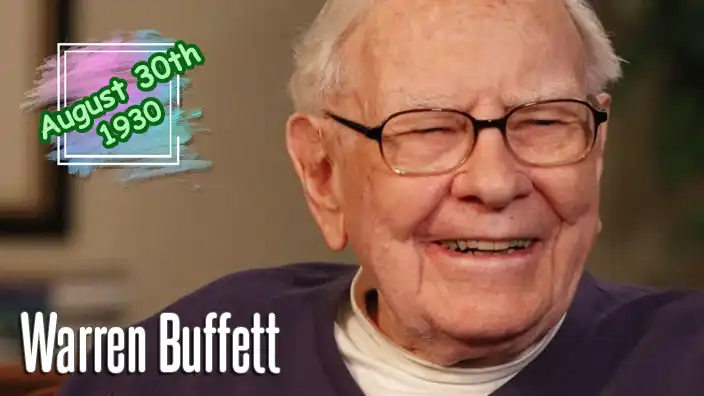
August 30, 1930, in Omaha, Nebraska
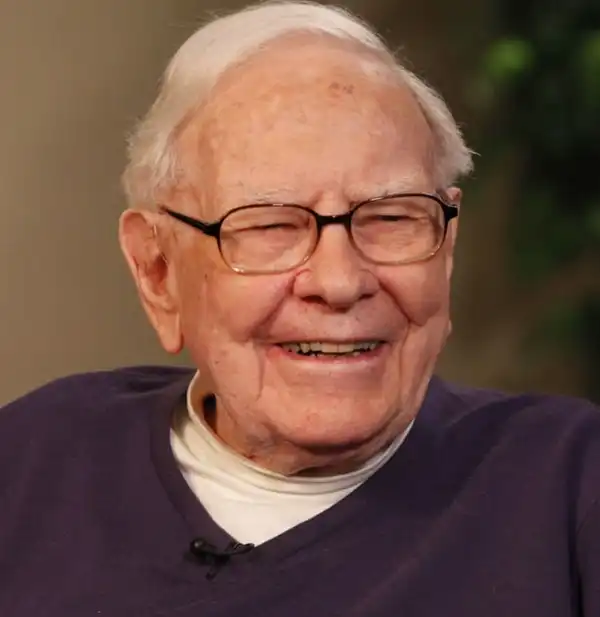
Warren Edward Buffett was born on August 30, 1930, in Omaha, Nebraska, the second of three children of Leila Stahl Buffett and Howard Buffett, a stockbroker who later served four terms in the U.S. House of Representatives. Long before Warren had billions of dollars to worry about, he was fascinated by numbers and by the possibilities of turning a little money into considerably more money. As a boy he sold chewing gum, Coca-Cola bottles and magazines door to door, and he famously bought his first stock when he was 11 years old. While most children that age were concentrating on baseball cards and finding new ways to avoid homework, Buffett had already begun what would become one of the longest investment careers in history.
His entrepreneurial instincts were equally apparent during his teenage years. Buffett delivered newspapers, sold used golf balls and operated various small ventures. One of his better-known enterprises involved buying used pinball machines and placing them in barbershops, sharing the proceeds with the shop owners and reinvesting the profits into additional machines. It wasn't Berkshire Hathaway, admittedly, but everybody has to start somewhere. By the time he finished high school, Buffett had accumulated several thousand dollars—a substantial amount for a teenager in the 1940s—and had already developed the habit of treating money as capital that could be put back to work.
Buffett attended the Wharton School at the University of Pennsylvania before transferring to the University of Nebraska, where he completed his undergraduate degree. The educational turning point came when he enrolled at Columbia Business School specifically because Benjamin Graham taught there. Graham and fellow Columbia professor David Dodd pioneered the disciplined approach that became known as value investing: examining the underlying worth of a business rather than simply guessing where its stock price might go next. Buffett earned his master's degree in economics from Columbia in 1951 and has repeatedly credited Graham as one of the greatest influences on his life. Columbia describes Buffett as perhaps the most prominent practitioner of the investment philosophy developed there.
After Columbia, Buffett eventually went to work for Graham's investment partnership, Graham-Newman Corp. When Graham retired, Buffett returned to Omaha and established investment partnerships of his own. His approach was remarkably straightforward in principle, although considerably more difficult to reproduce in practice: find businesses whose genuine economic value exceeded the price the market was asking, buy intelligently, and have enough patience to allow the investment to work. Buffett wasn't interested in treating stocks like lottery tickets. To him, purchasing shares meant purchasing part of an actual business.
Then came Berkshire Hathaway, although not initially in anything resembling its modern form. Berkshire was a struggling New England textile manufacturer when Buffett began accumulating its shares during the 1960s. He eventually took control of the company in 1965. The textile operation itself proved to be a poor business, and Buffett later regarded the original purchase as a mistake. Most people respond to a bad investment by selling it and trying to forget the entire embarrassing episode. Buffett instead transformed his mistake into the corporate vehicle through which he would build one of the world's most extraordinary collections of businesses.
Insurance became particularly important. Through businesses such as National Indemnity and GEICO, Berkshire gained access to insurance "float"—money collected in premiums that could be invested before claims had to be paid. Buffett used that capital, combined with earnings from Berkshire's growing collection of companies, to purchase businesses and securities he believed offered attractive long-term value. Over the decades Berkshire expanded far beyond textiles into insurance, railroads, energy, manufacturing, retailing and numerous other industries. Columbia Business School notes that Buffett transformed the struggling textile company into a conglomerate eventually valued at more than $1 trillion.
Buffett's investment philosophy also evolved. Graham had emphasized purchasing securities sufficiently cheaply to provide a "margin of safety." Buffett retained that discipline but, influenced substantially by his longtime friend and Berkshire vice chairman Charlie Munger, increasingly concentrated on buying outstanding businesses with durable competitive advantages and capable management rather than merely buying mediocre companies because their shares looked cheap. Buffett summarized the evolved philosophy memorably: it was preferable to acquire a wonderful business at a fair price than a merely fair business at a wonderful price.
That philosophy led Berkshire into some of America's most recognizable businesses and investments. Coca-Cola became one of Buffett's signature holdings after Berkshire began accumulating shares in the late 1980s. American Express became another longtime investment. GEICO eventually became wholly owned by Berkshire. The company acquired BNSF Railway, built a vast energy operation, and owned businesses ranging from See's Candies and Dairy Queen to Benjamin Moore, Fruit of the Loom and numerous industrial companies. Buffett's willingness to hold excellent businesses for decades became almost as famous as his ability to identify them in the first place.
His partnership with Charlie Munger became one of the great double acts of American business, albeit with fewer tap shoes and considerably more discussion about return on capital. Munger joined Berkshire as vice chairman in 1978 and became Buffett's intellectual sparring partner, adviser and closest business associate. Their annual appearances at Berkshire shareholder meetings in Omaha became legendary, with tens of thousands of shareholders traveling to Nebraska to hear hours of questions and answers. Buffett supplied stories and homespun analogies; Munger frequently supplied a devastatingly concise observation and then waited for everyone else to catch up. Munger died in November 2023 at the age of 99.
Buffett himself became an unusual kind of billionaire celebrity. He continued living for decades in the Omaha house he purchased in 1958, cultivated an affection for Coca-Cola and hamburgers, and generally avoided the conspicuous trappings associated with enormous wealth. His annual letters to Berkshire shareholders became required reading well beyond the company's investors because Buffett explained complicated financial ideas with unusual clarity, humor and an occasional willingness to admit that he had done something spectacularly foolish.
That willingness to discuss mistakes has been an important part of his reputation. Buffett has never pretended that every investment worked. Berkshire held onto its original textile operation too long, missed opportunities in technology, made acquisitions that disappointed and occasionally paid too much for businesses. His shareholder letters repeatedly examined those errors rather than quietly burying them beneath corporate vocabulary. For Buffett, an investment mistake could be expensive tuition provided you actually learned something from the course.
His relationship with Microsoft co-founder Bill Gates also became important outside business. Buffett announced in 2006 that he would gradually give away virtually all of his Berkshire Hathaway shares to philanthropic foundations, with a large portion initially directed toward the Gates Foundation. In 2010, Buffett, Bill Gates and Melinda French Gates launched the Giving Pledge, encouraging extremely wealthy individuals and families to commit at least half of their fortunes to charitable purposes. Buffett's own commitment goes considerably further: he has pledged that more than 99 percent of his wealth will ultimately go to philanthropy.
For decades, one unavoidable question hovered over Berkshire Hathaway: what happens after Warren? Buffett had discussed succession openly for years, and in 2021 he confirmed that Greg Abel, then Berkshire's vice chairman responsible for non-insurance operations, was his expected successor. At Berkshire's 2025 annual meeting, Buffett announced that he intended to step down as chief executive at the end of that year. Greg Abel formally became President and CEO on January 1, 2026, while Buffett remained Chairman of the Board.
The change brought an extraordinary era to an end. Buffett had effectively led Berkshire for six decades, transforming a failing textile company into one of the world's most valuable corporations. Yet retirement, Buffett-style, has not meant disappearing to a beach and developing strong opinions about shuffleboard. He remains Berkshire's chairman and continues to be involved in major capital-allocation discussions with Abel. In August 2026, Berkshire reported that Buffett remained involved in company decision-making even as Abel established himself as the new chief executive.
Perhaps Buffett's greatest influence, however, isn't any individual investment. Generations of investors have absorbed his insistence that shares represent ownership in businesses, that price and value are different things, that emotional discipline matters, that extraordinary results often require extraordinary patience, and that investors don't receive bonus points for making something unnecessarily complicated. His philosophy has survived booms, crashes, bubbles, recessions, technological revolutions and approximately seventeen billion television pundits announcing that everything has changed forever.
On August 30, 2026, Warren Buffett turns 96. He is no longer Berkshire Hathaway's CEO, but the company remains inseparable from the investment philosophy, corporate culture and unusually long-term thinking he spent six decades developing. The boy from Omaha who bought his first shares at 11 ultimately became the Oracle of Omaha, accumulated one of history's great fortunes, promised almost all of it to philanthropy, and demonstrated that sometimes the most remarkable thing an investor can do is identify something genuinely valuable—and then have the patience to leave it alone.