October 4, 1923, in Evanston, Illinois
 April 5, 2008, in Beverly Hills, California
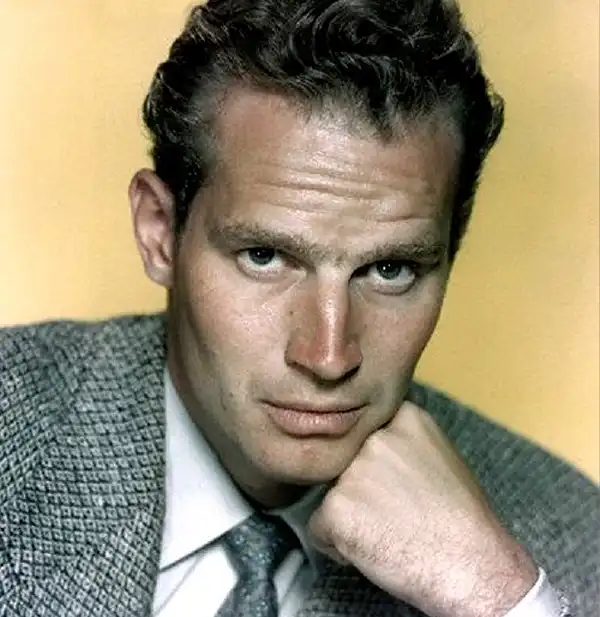
Charlton Heston was the sort of actor Hollywood called when the script contained several thousand extras, an empire in trouble and at least one speech requiring a mountain. From Moses and Ben-Hur to astronauts, soldiers and survivors of assorted catastrophes, Heston rarely seemed interested in having a quiet afternoon.
Charlton Heston was born John Charles Carter on October 4, 1923, in Illinois and spent part of his childhood in rural Michigan. Long before he became associated with biblical prophets, Roman chariots and civilizations experiencing serious management problems, he developed an interest in acting that eventually took him from school productions to the stage and then into the emerging world of television.
Following his parents' divorce and his mother's remarriage, the family moved to the Chicago area, where he attended New Trier High School. He later studied drama at Northwestern University. During World War II, Heston served in the United States Army Air Forces, an interruption that placed his developing acting career on hold while considerably larger events occupied everyone's attention.
After the war, Heston and his wife, Lydia Clarke, moved to New York, where both pursued acting. Heston found work in theater and live television, including the dramatic programs that flourished during television's early years. Those productions demanded actors who could learn substantial amounts of material and perform convincingly under the pressure of live broadcasting. It was excellent preparation for a man who would eventually be asked to deliver some of the most imposing dialogue in Hollywood.
His motion-picture career accelerated when director Cecil B. DeMille cast him as circus manager Brad Braden in The Greatest Show on Earth, released in 1952. The film won the Academy Award for Best Picture and placed Heston squarely inside the sort of large-scale production that would become increasingly associated with him. He had the physical presence, strong voice and seriousness required for epic filmmaking, and Hollywood soon discovered that he looked entirely comfortable while surrounded by hundreds of extras.
The defining early role arrived when DeMille cast Heston as Moses in The Ten Commandments. Released in 1956, the enormous biblical production followed Moses from his upbringing in Egypt through his confrontation with Pharaoh and the Exodus. Yul Brynner played Rameses, providing Heston with an opponent who was equally unlikely to disappear quietly into the scenery.
Heston's performance as Moses became one of the most recognizable portrayals in American film. His commanding voice, physical presence and deliberately formal performance suited DeMille's monumental style. The film required something larger than everyday realism. Moses was not going to wander into Pharaoh's court, mumble something about letting his people go and hope everyone could discuss the matter over lunch.
The Ten Commandments became closely associated with Heston for the remainder of his career. Its enormous sets, crowds, costumes and visual effects represented Hollywood spectacle on a scale that became increasingly uncommon. The film also became a perennial television favorite, introducing Heston's Moses to generations who had never seen the original theatrical release.
If playing Moses might have been enough epic filmmaking for one career, Heston was only warming up.
Three years later he starred as Judah Ben-Hur in William Wyler's Ben-Hur. The 1959 production was another immense historical spectacle, following a Jewish prince whose life is destroyed after betrayal by his former friend Messala. Enslavement, revenge, faith and redemption unfold against the backdrop of the Roman Empire and the life of Jesus Christ.
At the center of the film sits one of cinema's most famous action sequences: the chariot race. The production used an enormous arena set, teams of horses and carefully coordinated stunt work to create a sequence that remains thrilling because so much of what appears on screen was physically happening in front of the cameras. Heston trained extensively for the sequence, while legendary stunt specialist Yakima Canutt supervised its demanding action.
The race is filmmaking on an extraordinary scale. Chariots collide, horses thunder around the track and competitors attempt to destroy one another while Heston spends much of the sequence doing something modern insurance companies would probably prefer not to discuss. The result became one of the defining sequences of Hollywood's epic era.
Ben-Hur achieved enormous critical and commercial success. It won 11 Academy Awards, then an unprecedented total, including Best Picture, Best Director for William Wyler and Best Actor for Charlton Heston. Heston's Academy Award permanently established him among Hollywood's leading stars.
The remarkable thing about Heston's career, however, is how much followed.
He appeared in Orson Welles' Touch of Evil in 1958 as Mexican narcotics official Miguel Vargas. The film was very different from Heston's enormous historical productions: dark, morally complicated and visually adventurous. Heston played an important role in bringing Welles aboard as director, and he later regarded the experience as one of the most significant of his career.
Heston continued through the 1960s with films that seemed determined to keep him away from anything resembling an ordinary office. He portrayed the title character in El Cid, appeared in 55 Days at Peking, played Major Amos Dundee for director Sam Peckinpah and portrayed General Charles “Chinese” Gordon in Khartoum. Historical conflict remained good business for Charlton Heston.
He also appeared in westerns including Will Penny, a quieter and more character-driven film than many of his epics. Heston considered the role among his favorites. The movie demonstrated that his screen presence did not depend entirely upon thousands of extras and an orchestra playing at maximum volume. He could portray weariness, loneliness and vulnerability as effectively as monumental determination.
Then, in 1968, Heston climbed aboard a spacecraft and helped change science-fiction cinema.
Planet of the Apes cast him as astronaut George Taylor, who lands with his crew on a strange world dominated by intelligent apes. Humans occupy a subordinate position and are regarded as primitive animals. The film combined adventure, satire and social commentary with groundbreaking makeup effects and an increasingly unsettling story.
Heston's Taylor was cynical, abrasive and considerably different from the noble historical figures with which audiences associated him. He spends much of the film trying to understand a society that considers him an inferior creature. Eventually he escapes, only to discover the truth about the planet in one of the most famous endings in motion-picture history.
The final image of Taylor confronting the ruined Statue of Liberty transformed the movie from an imaginative adventure into something much darker. The strange planet was Earth, devastated by humanity itself. Heston's anguished reaction completed an ending that became permanently embedded in popular culture.
Planet of the Apes was a major success and produced sequels, television series, remakes and later reboots. Heston returned briefly for Beneath the Planet of the Apes, but his first journey through ape civilization remained the defining entry of the original series.
His science-fiction period continued with The Omega Man in 1971, loosely based on Richard Matheson's novel I Am Legend. Heston played Robert Neville, apparently one of the few surviving humans following a biological catastrophe. By day he travels through an abandoned Los Angeles; by night he confronts infected survivors who have developed their own society.
Then came Soylent Green in 1973. Set in an overcrowded and environmentally devastated future, the film stars Heston as police detective Robert Thorn investigating the murder of a wealthy businessman. His investigation gradually uncovers the disturbing truth behind Soylent Green, a processed food upon which much of the desperate population depends.
The film's final revelation produced another line inseparably associated with Heston. Once again, he had somehow found himself responsible for discovering that humanity had made a dreadful mess of things. By this stage, if Charlton Heston appeared in the future, audiences could reasonably assume that the future required immediate attention.
His 1970s work also included disaster cinema. Heston appeared in Earthquake, released during the decade's enthusiasm for films in which large casts of recognizable actors faced fires, earthquakes, sinking ships and other events capable of making audiences reconsider leaving the house.
Heston's commanding presence made him particularly suited to these films. He could communicate authority without requiring lengthy explanation. When Charlton Heston entered a scene and announced that there was a problem, nobody needed a second opinion.
Yet his career extended well beyond leading roles in spectacles. Heston worked extensively in theater and had a particular interest in Shakespeare. He played Mark Antony several times, including in film adaptations of Julius Caesar and Antony and Cleopatra. The latter also gave him an opportunity to direct, demonstrating an ambition that reached beyond simply performing in front of the camera.
Heston also became deeply involved in the professional organizations surrounding American film. He served multiple terms as president of the Screen Actors Guild and later held important leadership positions with the American Film Institute. His relationship with the industry therefore extended far beyond his filmography.
His public life included political and civic activism that changed substantially over the decades. During the civil rights era, Heston participated in the 1963 March on Washington and publicly supported civil rights legislation. Later in life he became increasingly associated with conservative causes and served as president of the National Rifle Association. Those activities made him a prominent and sometimes controversial political figure outside the film industry.
Whatever audiences thought about his politics, Heston's screen career occupied a remarkable stretch of American filmmaking. He worked with directors including Cecil B. DeMille, William Wyler, Orson Welles and Sam Peckinpah and appeared in films ranging from biblical epics and westerns to Shakespeare adaptations and dystopian science fiction.
There was also a useful contradiction in Heston's screen image. He looked like a man capable of commanding armies, yet many of his memorable characters were actually men losing control of their circumstances. Judah Ben-Hur is betrayed and enslaved. Taylor discovers that his assumptions about civilization are disastrously wrong. Robert Neville is isolated in a nearly empty world. Robert Thorn discovers a horrifying truth about the society he serves.
Even Moses, perhaps Heston's most monumental character, spends much of The Ten Commandments confronting forces far larger than himself.
That tension helped prevent Heston's strongest performances from becoming merely statuesque. His characters often possessed enormous determination, but determination did not guarantee victory. The world could still surprise them, defeat them or reveal something they desperately wished they had never discovered.
Heston continued acting through later decades, appearing in films and television productions and occasionally making appearances that deliberately played upon his established screen image. His unmistakable voice and appearance made even relatively brief performances memorable.
In 2002, Heston publicly announced that he had symptoms consistent with Alzheimer's disease and subsequently withdrew from much of public life. He died on April 5, 2008, at his home in Beverly Hills, California.
By then, Charlton Heston had become inseparable from several different eras of Hollywood. To one generation he was Moses descending from Mount Sinai. To another he was Judah Ben-Hur driving four horses around a Roman arena. To another he was Taylor staring at the remains of the Statue of Liberty. And to yet another he was the desperate detective discovering exactly what was in Soylent Green.
Few actors become strongly identified with one genuinely famous movie. Heston managed it repeatedly.
His films also provide a tour through changing Hollywood tastes. The enormous biblical and historical spectacles of the 1950s gave way to darker and more skeptical movies during the 1960s and 1970s. Heston successfully crossed that divide. The actor who once portrayed heroic figures from ancient history later became one of the most recognizable faces of dystopian science fiction.
That range helps explain why Charlton Heston remains such a recognizable figure in film history. He possessed the voice and physical presence required by Hollywood's largest productions, but he was also willing to enter stranger and less comfortable territory as cinema changed around him.
Charlton Heston could lead an exodus, drive a chariot, survive an ape civilization, wander through an abandoned Los Angeles and uncover the world's most unpleasant food-processing secret. Hollywood gave him civilizations to save, civilizations to discover and civilizations that had already made an almighty mess of themselves.
Fortunately, he had the voice for it.