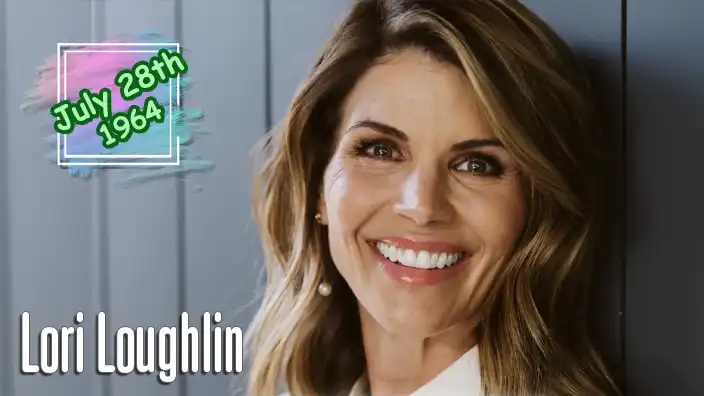
July 28, 1964, in New York City, New York
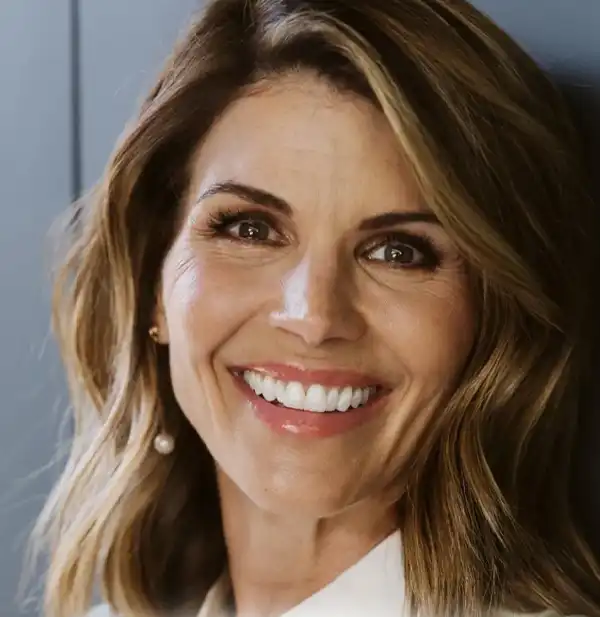
For millions of television viewers, Lori Loughlin will always be Rebecca Donaldson Katsopolis, better known as Aunt Becky, the calm, capable, and frequently amused woman who entered the wonderfully chaotic Tanner household and somehow made it even more lovable. Yet that enduring sitcom role represents only one chapter in a career that began when Loughlin was still a child and eventually encompassed daytime drama, theatrical films, television movies, family series, romantic dramas, producing, and the creation of her own television program. Her career has also included a deeply damaging public scandal, criminal conviction, imprisonment, and a gradual return to acting. It is not a simple story of uninterrupted celebrity success, nor should it be presented as one. Instead, it is the complicated account of a performer whose work brought comfort and entertainment to generations of viewers, whose personal decisions caused serious consequences, and whose life afterward became a public test of accountability, punishment, and whether a career can continue after disgrace.
Lori Anne Loughlin was born in New York City and raised primarily on Long Island. She became interested in performing while still very young and began working as a print model at approximately 11 years old. Modeling introduced her to auditions, cameras, professional schedules, and the unusual experience of being expected to appear completely natural while several adults adjusted lights and discussed where she should place her elbows. It also opened the door to acting, and by her mid-teens she had secured a substantial role on the ABC daytime drama *The Edge of Night*. From 1980 until 1983, she portrayed Jody Travis, an aspiring dancer whose life became entangled in the mysteries, romances, betrayals, and dangers that are considered fairly ordinary daily business in the world of soap opera. The role gave Loughlin several years of disciplined professional experience and taught her how to handle emotional scenes, complicated dialogue, and the demanding production rhythm of daytime television while many people her age were still trying to remember their locker combinations.
After leaving *The Edge of Night*, Loughlin built her résumé through television guest appearances and film roles. She appeared in projects including *Amityville 3-D*, *The New Kids*, *Secret Admirer*, and the 1986 BMX film *Rad*, which did not become a major critical success upon release but later developed a loyal cult following. These years were important because they prevented Loughlin from being confined to a single kind of character. She moved between horror, youth-oriented drama, romance, action, and television, steadily becoming the sort of dependable working actress who could enter an unfamiliar production and quickly understand what was required. Fame had not yet arrived on the enormous scale that awaited her, but she had already spent years developing the relaxed camera presence and emotional accessibility that would make her ideal for family television.
That transformation came in 1988 when Loughlin joined the cast of ABC’s *Full House*. Her character, Rebecca Donaldson, was introduced as Danny Tanner’s professional co-host on the television program *Wake Up, San Francisco*. She was intelligent, confident, ambitious, and more than capable of challenging the men around her without losing the warmth required by the series. The role was initially intended to last only a limited number of episodes, but the character’s popularity and Loughlin’s chemistry with the cast led to Rebecca becoming a regular presence. She soon developed a romance with Jesse Katsopolis, played by John Stamos, and the relationship became one of the show’s central emotional threads. Their courtship, wedding, marriage, and eventual arrival of twin sons gave the series another family within the family, which was quite an achievement for a house that already seemed to contain more residents than a moderately successful hotel.
Aunt Becky served an important purpose within *Full House*. The original arrangement centered on three men—Danny, Jesse, and Joey—raising Danny’s three daughters after the death of their mother. The premise created comedy and sentiment, but Rebecca brought a necessary female adult perspective into the home. She could advise D.J., Stephanie, and Michelle while also challenging Jesse’s vanity, Danny’s obsessive habits, and Joey’s tendency to treat every available household object as the beginning of a comedy routine. Loughlin played the role with an appealing combination of patience and spirited independence. Rebecca was affectionate without becoming sugary, sensible without becoming dull, and strong without being stripped of humor. Those qualities helped make her one of the program’s most beloved characters and ensured that audiences remembered her as more than simply Jesse’s wife.
The enormous popularity of *Full House* did not arise from sophisticated plots or realism. Few real families conclude every argument with gentle music and a perfectly phrased life lesson before the final commercial break. The series succeeded because viewers became attached to its characters, and Loughlin contributed substantially to that emotional connection. She and Stamos created a convincing screen partnership, balancing romance, comedy, and the frustrations of married life in a manner suited to family audiences. Loughlin remained with the program until its conclusion in 1995, appearing across most of its eight-season run and becoming permanently associated with one of the most recognizable American sitcoms of its era. The show later found new generations through syndication and streaming, meaning that children who had not been born when *Full House* ended could still discover Aunt Becky calmly explaining why Uncle Jesse had once again behaved like a handsome man who knew perfectly well that he was handsome.
Following *Full House*, Loughlin continued to work steadily. She appeared opposite Tony Danza in the sitcom *Hudson Street*, starred in numerous television films, and accepted guest roles across a broad range of series. Although no immediate project duplicated the cultural reach of *Full House*, Loughlin avoided becoming entirely trapped by her best-known character. She played women facing family crises, professional conflicts, romantic complications, mysteries, and dramatic upheavals, developing a particularly strong presence in television productions designed around emotionally accessible storytelling. Her natural warmth made her well suited to such projects, but she also demonstrated an interest in taking greater creative control over her work.
That ambition led to *Summerland*, a family drama that Loughlin co-created, produced, and starred in from 2004 to 2005. She played Ava Gregory, a fashion designer whose carefree California life changed dramatically when she became responsible for raising her late sister’s three children. The premise allowed Loughlin to explore grief, unexpected parenthood, personal sacrifice, and the complicated adjustments required when a group of people must create a new family after tragedy. Although *Summerland* lasted only two seasons, it represented a significant achievement because Loughlin was not merely performing someone else’s material. She had helped originate the series and was involved in shaping its tone and direction. It also introduced audiences to a young cast that included Jesse McCartney and Zac Efron, long before Efron became famous enough to make standing beside him on a red carpet a potential threat to nearby camera equipment.
Loughlin later joined the cast of *90210*, the CW continuation of the *Beverly Hills, 90210* franchise, portraying Debbie Wilson from 2008 through 2011 and returning briefly in 2012. Once again, she played the adult anchor within a program dominated by younger characters experiencing romantic turmoil, social conflict, and the sort of dramatic emergencies that television teenagers encounter before lunch. The role demonstrated how effectively Loughlin had transitioned from youthful performer to television mother without losing the approachable qualities that had defined her earlier work. Rather than seeming disconnected from the younger cast, she brought stability and credibility to the family storylines around her.
During the following decade, Loughlin became closely associated with Hallmark television. She starred as antiques enthusiast and amateur investigator Jennifer Shannon in the *Garage Sale Mystery* film series, in which ordinary secondhand objects displayed an alarming tendency to lead directly to murder. She also played Abigail Stanton in the frontier drama *When Calls the Heart*, becoming one of the program’s central figures. Abigail was compassionate, resilient, and deeply involved in the life of the fictional community of Hope Valley. The character suited Loughlin’s established screen persona exceptionally well: she was nurturing without weakness, principled without self-righteousness, and capable of offering emotional support while confronting hardship directly. These projects gave Loughlin another substantial period of television success and connected her with an audience that valued reassuring stories, close communities, romance, and mysteries solved without requiring anyone to endure an excessively gloomy forensic laboratory.
In 2016, Loughlin returned to the role that had made her famous when Netflix launched *Fuller House*. The sequel shifted attention toward the now-adult Tanner daughters but regularly welcomed familiar members of the original cast. Loughlin’s appearances as Aunt Becky carried considerable nostalgic appeal, allowing viewers to revisit the character while seeing how the Tanner family had changed. She appeared in the program from 2016 through 2018. Her return demonstrated the unusual durability of *Full House*, whose audience remained attached to the fictional family decades after the original series had ended. It also showed how completely Aunt Becky had become woven into Loughlin’s public identity.
That identity was severely damaged in 2019 when Loughlin and her husband, fashion designer Mossimo Giannulli, were charged in the federal college-admissions investigation commonly known as Operation Varsity Blues. Prosecutors alleged that the couple paid $500,000 to secure the admission of their two daughters to the University of Southern California by having them falsely presented as crew recruits. The allegations generated enormous public anger because the scheme appeared to illustrate how wealth and influence could be used to undermine an admissions process already criticized for inequality. Loughlin initially contested the charges but later pleaded guilty to conspiracy to commit wire and mail fraud. In August 2020, she was sentenced to two months in federal prison, two years of supervised release, 100 hours of community service, and a $150,000 fine. She served the prison term and was released in December 2020. Giannulli received a separate five-month sentence.
The consequences extended far beyond the courtroom. Hallmark ended its relationship with Loughlin, her scenes were removed from *When Calls the Heart*, and she did not appear in the final season of *Fuller House*. Advertising relationships also ended, and her public reputation shifted almost overnight from trusted television mother to one of the most recognizable faces of a national scandal. Any honest account of her life must acknowledge the seriousness of what occurred. It was not merely an unfortunate misunderstanding or a harmless celebrity embarrassment. Loughlin admitted participating in fraud intended to obtain an unfair advantage within an educational system where admission can alter the course of a young person’s life. She was prosecuted, convicted, punished, and publicly disgraced.
At the same time, a biography must also continue beyond its subject’s worst decision. After completing her sentence, Loughlin gradually resumed acting. In 2021, she reprised Abigail Stanton in *When Hope Calls*, a related series airing outside Hallmark. She subsequently starred in Great American Family television films including *Fall Into Winter* and *Blessings of Christmas*. In 2024, she returned to *Blue Bloods* as Grace Edwards and appeared as a fictionalized version of herself in an episode of *Curb Your Enthusiasm*, where the comedy drew directly upon her damaged public image rather than pretending the scandal had never happened. In 2025, she took a prominent dramatic role as Lieutenant Bishop in the police series *On Call*, demonstrating a willingness to move beyond the gentle maternal characters with which she had long been associated.
Loughlin’s career therefore presents an unusually complicated legacy. She remains genuinely beloved by many viewers for *Full House*, *Fuller House*, *When Calls the Heart*, and the numerous television movies through which she became a familiar presence in American homes. Her performances often communicated kindness, humor, reassurance, and emotional steadiness. Those qualities were real elements of her work, even though the public image they created later came into painful conflict with her conduct away from the screen. Audiences are left to decide how they relate the art to the artist, how much weight to place upon punishment and remorse, and whether professional rehabilitation should follow legal accountability.
What cannot be disputed is the endurance of her television career. Beginning as a young model, progressing through daytime drama, achieving international recognition through *Full House*, creating and producing *Summerland*, becoming a dependable television-film lead, and eventually returning to acting after a life-altering scandal, Lori Loughlin has spent more than four decades before the camera. Her story contains success, familiarity, failure, consequence, and attempted renewal. It is more complicated than the cheerful life lessons delivered in the Tanner living room, where nearly every problem could be settled with an embrace before the credits rolled. Real life seldom provides such tidy endings.
As Lori Loughlin celebrates another birthday, viewers may remember her differently. To some, she remains Aunt Becky, one of the most affectionate and sensible figures in a classic television household. Others associate her primarily with the admissions scandal and the privilege it exposed. Many hold both images at once, recognizing the entertainment she provided while refusing to dismiss the seriousness of her actions. That tension is now inseparable from her public life. Her continuing career does not erase what occurred, but neither does one criminal chapter erase every performance that came before or every choice that follows. The unfinished portion of her story will depend not only upon the roles she accepts but upon the humility, responsibility, and judgment with which she carries the lessons of the past.