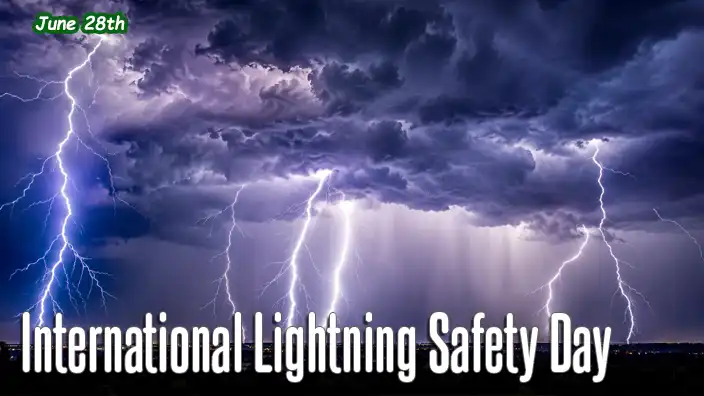
Thunderstorms have a way of reminding us who's really in charge of the weather. One minute you're...
National Women's History Month is like the Oscars for the unsung heroines of history, except...
World Gin Day raises a glass to gin, juniper and the astonishing human ability to turn a small...
If there’s ever been a holiday that combines deep history, meaningful tradition, and the...
Sipping a spritz is like getting a refreshing hug from an orange grove while lounging on a cloud of...
Tracing your family roots is like playing an epic game of hide-and-seek with your ancestors. You...
On October 20, 1803, the United States Senate approved the treaty authorizing the Louisiana Purchase, one of the most significant land acquisitions in American history. The agreement transferred an enormous territory from France to the United States for approximately $15 million, nearly doubling the nation's size. Originally claimed by France and later controlled by Spain, the region stretched westward from the Mississippi River and encompassed lands inhabited by numerous Native American nations long before European colonization. Spain's decision to return Louisiana to French control under Napoleon Bonaparte alarmed American leaders, who feared that a powerful European rival might restrict trade and westward expansion.
President Thomas Jefferson initially hoped to secure New Orleans and access to the Mississippi River, both essential to American commerce. He dispatched James Monroe to assist American minister Robert R. Livingston in negotiations with France. However, Napoleon's plans for a North American empire were unraveling amid military difficulties in the Caribbean and the growing threat of renewed war with Britain. Seeking funds and unwilling to risk losing Louisiana to British forces, Napoleon unexpectedly offered to sell the entire territory. Recognizing an extraordinary opportunity, the American negotiators accepted the proposal, even though it exceeded their original instructions.
Jefferson initially questioned whether the Constitution authorized the federal government to acquire such an extensive territory, but he ultimately supported the agreement. On October 20, 1803, the Senate ratified the purchase treaty by a vote of 24–7, clearing a major obstacle to American expansion. The acquisition opened vast opportunities for settlement and commerce while also intensifying conflicts over Native American sovereignty, land rights, and the expansion of slavery. The Louisiana Purchase remains a defining achievement of Jefferson's presidency, dramatically reshaping the geographical and political future of the United States.
On October 20, 1944, General Douglas MacArthur returned to the Philippines, wading ashore on the island of Leyte and fulfilling a promise made more than two years earlier. When Japanese forces invaded the Philippines in December 1941, MacArthur commanded the American and Filipino defenders but faced overwhelming enemy strength and dwindling supplies. In March 1942, President Franklin D. Roosevelt ordered him to escape to Australia, leaving thousands of troops fighting on Bataan and Corregidor. Their eventual surrender led to widespread suffering, including the infamous Bataan Death March, during which thousands of American and Filipino prisoners died. Upon reaching Australia, MacArthur publicly declared, “I shall return,” a pledge that became a powerful symbol of hope for the occupied Philippines.
As commander of Allied forces in the Southwest Pacific, MacArthur directed a series of campaigns through New Guinea and neighboring islands, gradually weakening Japanese positions and advancing toward the Philippines. Although American military planners considered alternative routes toward Japan, MacArthur strongly advocated liberating the Philippine islands, emphasizing their strategic importance and America's obligations to the Filipino people. With support from Admiral Chester Nimitz's Pacific Fleet, the invasion of Leyte began on October 20, 1944. Shortly after American forces landed, MacArthur stepped ashore and announced over the radio, “People of the Philippines, I have returned!” His arrival marked the beginning of a major campaign to end Japanese occupation.
The liberation continued into 1945 as Allied forces advanced across the Philippines, including the invasion of Luzon in January and the recapture of Manila in March following devastating urban combat. Corregidor and Bataan were also retaken, bringing a measure of justice and relief to places associated with the catastrophic defeats of 1942. Although MacArthur declared the Luzon campaign effectively completed in June, Japanese resistance continued in parts of the archipelago until Japan's surrender in August. The liberation came at an enormous human cost, particularly for Filipino civilians, but MacArthur's return became one of World War II's most enduring moments, symbolizing the fulfillment of a promise made during one of America's darkest military setbacks.
On October 20, 1962, Bobby “Boris” Pickett and the Crypt-Kickers reached No. 1 on the Billboard Hot 100 with “Monster Mash,” a delightfully spooky novelty song that arrived just in time for Halloween. Inspired by Pickett's talent for impersonating horror movie legend Boris Karloff, the recording combined a catchy dance rhythm with a humorous tale of monsters gathering for a party. Pickett developed the song with Leonard Capizzi, turning a playful idea into an unexpected musical sensation. Its popularity was so enormous that it remained at the top of the charts for the final two weeks of October, proving that even creatures from the graveyard appreciated a good dance number.
Getting the song onto the radio was nearly as challenging as escaping a haunted castle. Several record labels initially rejected the recording, apparently unconvinced that a singing mad scientist and his monstrous companions represented the future of popular music. However, radio airplay generated enthusiastic listener interest, and the song quickly became a commercial success. Its popularity wasn't universal, though. The BBC reportedly considered the recording too morbid for British radio audiences and banned it from airplay. Fortunately, American listeners were considerably less concerned about the musical activities of fictional monsters.
Unlike many novelty recordings that disappear after their initial popularity fades, “Monster Mash” developed an extraordinary afterlife. It returned to the Billboard Hot 100 in 1970 and again in 1973, while Pickett followed his original success with additional recordings, including “Monster's Holiday” and “Graduation Day.” Over the decades, the song became a Halloween tradition, appearing at parties, school celebrations, and seasonal events across the United States. More than six decades after its original success, “Monster Mash” remains one of the most recognizable Halloween songs ever recorded. Apparently, when it comes to musical immortality, being a graveyard smash has certain advantages.
On October 20, 1973, Queen Elizabeth II officially opened the Sydney Opera House, unveiling one of the world's most extraordinary architectural achievements. Situated on Bennelong Point overlooking Sydney Harbour, the spectacular performing arts complex had taken approximately 14 years to build, considerably longer than originally anticipated. Designed by Danish architect Jørn Utzon, the building became famous for its sweeping, sail-like roof shells, which transformed Sydney's waterfront into an internationally recognized landmark. Construction costs eventually reached approximately A$102 million, far exceeding the original estimate of A$7 million, with much of the expense financed through government-operated lotteries. Apparently, creating an architectural masterpiece required not only extraordinary engineering but also a considerable number of Australians hoping to pick the winning numbers.
The Opera House was conceived as a major cultural center capable of hosting opera, concerts, theater, dance, and other performances. Its construction involved formidable engineering challenges, particularly the creation of its distinctive roof structures, while disagreements over design, costs, and administration led Utzon to resign from the project in 1966. Despite these difficulties, the completed building offered multiple performance spaces and quickly established itself as the centerpiece of Australia's cultural landscape. The Australian Opera's production of Sergei Prokofiev's War and Peace opened in the Opera Theatre on September 28, 1973, several weeks before the royal inauguration.
Today, the Sydney Opera House welcomes millions of visitors annually and hosts an extensive program of concerts, theatrical productions, festivals, and cultural events. Its remarkable architecture earned it a place on the UNESCO World Heritage List in 2007, recognizing its outstanding contribution to modern architectural design. More than half a century after its opening, the building remains one of Australia's most celebrated attractions and an enduring symbol of Sydney. Its construction may have tested budgets, patience, and engineering ingenuity, but the finished result certainly gave the city something worth singing about.
On October 20, 1977, tragedy struck the Southern rock band Lynyrd Skynyrd when its chartered aircraft crashed in a wooded area near Gillsburg, Mississippi. The band was traveling from Greenville, South Carolina, to Baton Rouge, Louisiana, for another performance on what was expected to be a highly successful national tour. The Convair CV-240 ran out of fuel while the pilots attempted to reach an emergency landing site, crashing before it could reach an airport. Six people died, including lead singer Ronnie Van Zant, guitarist Steve Gaines, backing vocalist Cassie Gaines, assistant road manager Dean Kilpatrick, and both pilots. Twenty others survived, many suffering serious injuries. The disaster devastated the music world and abruptly ended one of Southern rock's most influential bands at the height of its popularity.
Lynyrd Skynyrd's story had begun in Jacksonville, Florida, during the 1960s, when a group of teenage musicians formed a band originally known as My Backyard. After several name changes and years of performing, they adopted the unusual name Lynyrd Skynyrd, inspired by Leonard Skinner, a former high school physical education teacher. Their breakthrough came with their 1973 debut album, Pronounced 'Lĕh-'nérd 'Skin-'nérd, which introduced audiences to the enduring rock anthem “Free Bird.” The following year's Second Helping featured “Sweet Home Alabama,” further establishing the band's reputation for powerful guitar arrangements, distinctive Southern storytelling, and energetic live performances. Their fifth studio album, Street Survivors, was released on October 17, 1977, just three days before the fatal accident. The aircraft they chartered had reportedly been considered by Aerosmith earlier that year, but concerns about its condition and operation led that band to make different arrangements.
During the October 20 flight, the aircraft developed serious problems as its fuel supply dwindled. The pilots contacted air traffic control requesting urgent directions to an airport near McComb, Mississippi, but the plane lost power and descended into dense woodland before reaching safety. Investigators later attributed the accident to fuel exhaustion and the flight crew's inadequate fuel management. The surviving musicians and crew members faced a long and painful recovery, while the deaths of Van Zant and the Gaines siblings left an irreplaceable absence in the band. Lynyrd Skynyrd eventually returned to performing in 1987, with Ronnie Van Zant's younger brother Johnny taking over lead vocals. Although the group continued recording and touring, the 1977 crash remains one of rock music's most heartbreaking tragedies, forever linking October 20 with the loss of three musicians whose influence continues to resonate through generations of fans.
On October 20, 2011, Libya's former leader Muammar al-Qaddafi was captured and killed near his hometown of Sirte, bringing a violent end to more than four decades of authoritarian rule. Born into a Bedouin family in 1942, Qaddafi rose through the military and seized power on September 1, 1969, when a group of young officers overthrew King Idris in a largely bloodless coup. His revolutionary government expelled foreign military forces, expanded state control over Libya's oil industry, and promoted a political ideology outlined in his Green Book. Although oil revenues helped finance infrastructure, education, and public services, his government also became notorious for political repression, arbitrary imprisonment, torture, and the persecution of opponents. Qaddafi cultivated an unmistakable public image through elaborate uniforms, colorful clothing, Bedouin-style tents, and an entourage that included female bodyguards, but behind the theatrical appearances stood a government that tolerated little political opposition.
Relations between Libya and Western nations deteriorated considerably during the 1970s and 1980s as Qaddafi's government supported armed organizations and became associated with international terrorist attacks. Libya was implicated in the 1986 bombing of a West Berlin nightclub frequented by American military personnel, prompting retaliatory U.S. airstrikes against Libyan targets. International condemnation intensified following the December 1988 destruction of Pan Am Flight 103 over Lockerbie, Scotland, which killed 270 people, including 11 residents on the ground. Libyan agents were subsequently accused of involvement, and United Nations sanctions placed growing economic and diplomatic pressure on Qaddafi's government. Libya eventually surrendered two Lockerbie suspects for trial, accepted responsibility for the actions of its officials, and agreed to compensate victims' families. In 2003, Qaddafi also announced the abandonment of Libya's weapons of mass destruction programs, helping restore diplomatic relations with Western governments. Despite these changes, his domestic political system remained firmly authoritarian.
Qaddafi's rule began collapsing in February 2011 as demonstrations inspired by the wider Arab Spring spread across Libya. Government forces responded with violence, and the confrontation escalated into a civil war between loyalist troops and opposition fighters. A NATO-led military intervention, authorized by the United Nations Security Council to protect civilians, supported operations against Qaddafi's forces, while rebel groups gradually captured major cities, including Tripoli in August. Qaddafi fled the capital and eventually sought refuge around Sirte, where he was captured on October 20 after his convoy came under attack. He died shortly afterward in circumstances that prompted international calls for an investigation into a possible unlawful killing. His death ended 42 years of personal rule but did not bring lasting stability to Libya, which subsequently experienced political fragmentation, competing armed factions, and further conflict. The events of October 20, 2011, marked the conclusion of one of the modern Arab world's longest dictatorships and the beginning of a deeply uncertain chapter in Libya's history.