September 27, 1958, in Los Angeles, California
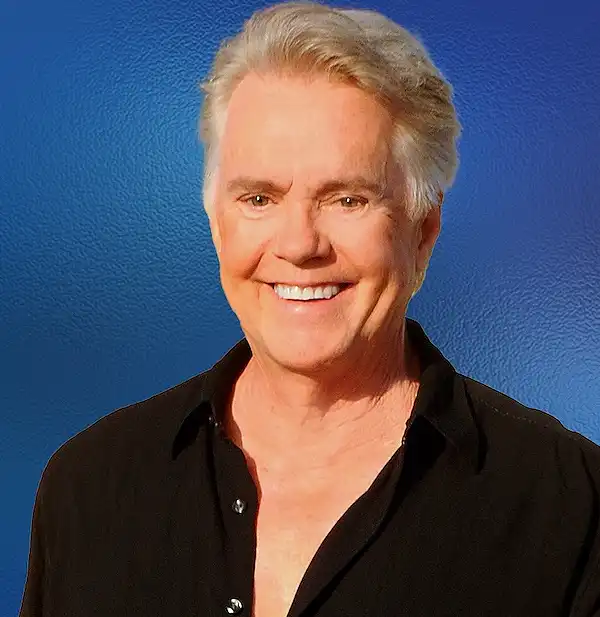
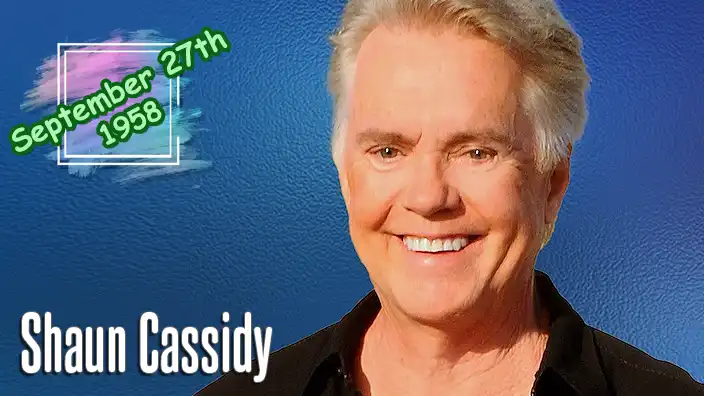
Shaun Paul Cassidy was born on September 27, 1958, in Los Angeles, California, into a family with show business thoroughly embedded in its DNA. His mother was Academy Award-winning actress Shirley Jones, while his father was actor and singer Jack Cassidy. His older half-brother David Cassidy became one of the biggest teen idols of the early 1970s through The Partridge Family, which also starred Jones. Shaun therefore had an unusually close view of fame before experiencing it himself, including the extraordinary phenomenon of watching his brother become the object of mass teenage devotion.
Cassidy attended Beverly Hills High School while beginning to develop his own musical career. Record producer Michael Lloyd became involved in his early recordings, and Cassidy initially found considerable success outside the United States. His version of “Da Doo Ron Ron,” the 1963 hit written by Jeff Barry, Ellie Greenwich and Phil Spector and originally recorded by The Crystals, became the song that transformed Cassidy into a major American recording star.
Released in the United States in 1977, Cassidy's “Da Doo Ron Ron” reached No. 1 on the Billboard Hot 100. Suddenly the younger Cassidy had followed his famous half-brother directly into teen-idol territory. His self-titled debut album became a major seller, and photographs of the blond-haired singer began appearing throughout the teen magazines of the period. For anyone running a bedroom-wall poster company in 1977, business conditions were excellent.
His next major single was “That's Rock 'n' Roll,” written by Eric Carmen. It reached the upper reaches of the American charts and further established Cassidy as a recording star. Another Carmen composition, “Hey Deanie,” followed and became another substantial hit. Cassidy's early records were polished pop designed for the teenage market, and for a period he was among the most visible young performers in American entertainment.
The success was not confined to records. Cassidy's concerts attracted the kind of enthusiastic audiences traditionally associated with teen idols, and his face appeared on magazine covers, posters and merchandise. Comparisons with David Cassidy were inevitable, but Shaun was developing his career in a different television landscape. Rather than fronting a fictional family band, he was about to become one half of one of literature's most famous teenage detective teams.
In 1977, Cassidy was cast as Joe Hardy in The Hardy Boys/Nancy Drew Mysteries, based on the long-running series of juvenile mystery novels. Parker Stevenson played his older brother, Frank Hardy, while Pamela Sue Martin portrayed Nancy Drew. The program initially alternated between Hardy Boys stories and Nancy Drew mysteries, occasionally bringing the characters together for crossover adventures. For Cassidy, the series combined acting with the enormous popularity he was already experiencing as a singer.
The Hardy brothers had been solving crimes in print since the 1920s, but Cassidy and Stevenson introduced them to a new television generation. Joe was the younger of the two brothers, and Cassidy's established teen-idol appeal made him an obvious attraction for the series. The mysteries involved haunted houses, suspicious characters, criminal conspiracies and other dangers that might have encouraged more sensible teenagers simply to stay home. Frank and Joe, fortunately for network television, were not sensible teenagers.
The series evolved during its run, eventually placing greater emphasis on the Hardy Boys before becoming The Hardy Boys Mysteries. Cassidy's recording career and television role reinforced each other, giving him extraordinary visibility during the late 1970s. He was simultaneously selling records, performing concerts and starring in a network television series — a workload that demonstrated the considerable machinery behind teen-idol fame as well as the pressures placed upon the young performers at its center.
Cassidy continued recording after his initial burst of chart success, but his musical interests began moving beyond the carefully polished pop that had made him famous. His albums included Born Late, Under Wraps, Room Service and Wasp. The latter, released in 1980, represented a particularly interesting departure. Produced by Todd Rundgren, Wasp included material associated with artists including David Bowie, Talking Heads and Ian Dury, reflecting Cassidy's desire to explore contemporary rock and new-wave influences rather than simply continue reproducing his teenage hits.
The transition was commercially difficult. Teen audiences are famously capable of moving on with alarming speed, while established listeners do not always follow a performer attempting to reinvent himself. Cassidy's period as a major recording star gradually ended, but he continued acting and increasingly turned toward theater. This phase ultimately helped him separate himself from the teen-idol image that had defined his early career.
Cassidy appeared on Broadway and in other theatrical productions, including Mass Appeal and Bus Stop. Stage acting offered something very different from performing in front of screaming concert audiences or solving weekly mysteries on television. It also allowed Cassidy to continue developing as a performer after the extraordinary celebrity of his teenage years had subsided.
The most remarkable portion of his career, however, came when he began writing for television. Rather than spending decades attempting to recreate his 1970s fame, Cassidy moved behind the camera and developed a second professional identity that many viewers never connected with the singer of “Da Doo Ron Ron.”
Cassidy created the television series American Gothic, which premiered on CBS in 1995. The supernatural drama, starring Gary Cole as the sinister Sheriff Lucas Buck, was considerably darker than anything associated with Cassidy's teen-idol years. Although the series had a relatively short original run, it developed a cult following and established Cassidy as a serious television creator and producer. Anyone expecting Joe Hardy to reappear with a guitar was definitely watching the wrong program.
He subsequently created or developed additional television projects, including Roar, which starred a young Heath Ledger, and The Agency, a CBS drama centered on the CIA. Cassidy also became involved as a writer and executive producer with numerous other series, building a substantial career in television production that stretched across genres including drama, science fiction, mystery and horror.
His production credits have included work on series such as Cold Case, Invasion, Ruby & the Rockits, Blue Bloods, Emerald City and New Amsterdam. The progression demonstrated that Cassidy's move behind the scenes was not a celebrity side project but a genuine second career. Writing, developing and producing network television requires a rather different collection of skills from singing pop songs while thousands of teenagers attempt to dismantle their vocal cords.
Ruby & the Rockits provided an especially amusing collision between Cassidy's two professional worlds. The 2009 comedy starred his brother Patrick Cassidy and his half-brother David Cassidy and revolved around former rock musicians dealing with family life. Shaun served as creator and executive producer. A family that had spent decades in show business had effectively reached the point where it could begin manufacturing television about families who had spent decades in show business.
Cassidy has occasionally returned to performing his music, allowing audiences who first encountered him during the 1970s to revisit the songs that began his career. Those appearances have also given him an opportunity to reflect on the peculiar experience of becoming internationally famous while still very young. Unlike many performers permanently identified with a brief period of teenage success, however, Cassidy had long since constructed another career outside the spotlight.
His family connections remain one of the more remarkable entertainment pedigrees in American popular culture. Shirley Jones had already enjoyed major film and stage success before becoming television's Shirley Partridge. Jack Cassidy was an accomplished stage performer and actor. David Cassidy became a defining teen idol of the early 1970s, while Shaun repeated that phenomenon later in the decade before establishing himself as a television creator. Shaun's brothers Patrick and Ryan Cassidy also pursued entertainment careers.
Yet Shaun Cassidy's professional history ultimately becomes more interesting when viewed beyond that famous family. Reaching No. 1 on the Billboard Hot 100 would be enough to define many careers. Starring as Joe Hardy during the same period would make the story even more notable. Reinventing himself years later as the creator of American Gothic and a producer and writer of network television makes his career unusually difficult to summarize with the words “former teen idol.”
The screaming crowds eventually quieted, the Hardy Boys solved their television mysteries and the posters undoubtedly came down from millions of bedroom walls. Shaun Cassidy simply moved to another part of the building. His career is a rare example of someone who experienced the full force of teenage celebrity and then successfully developed a substantial working life largely outside it. “Da Doo Ron Ron” may have made him famous, but there turned out to be considerably more to Shaun Cassidy than three doo rons and a very impressive head of 1970s hair.