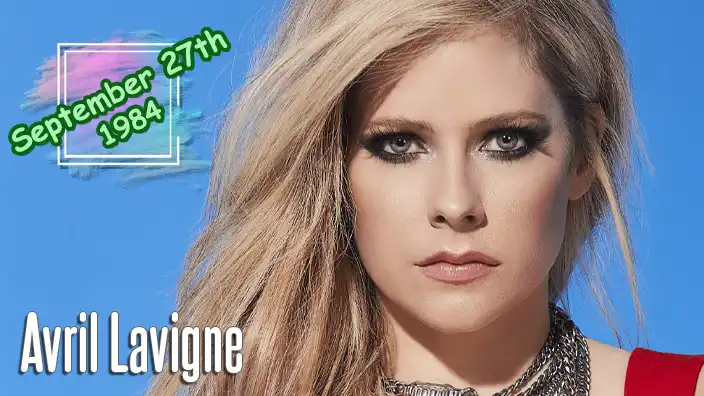
September 27, 1984, in Belleville, Canada
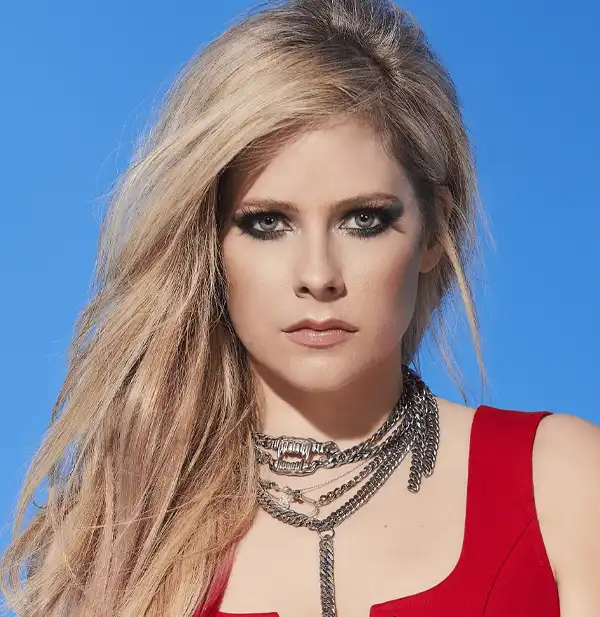
Avril Ramona Lavigne was born on September 27, 1984, in Belleville, Ontario, Canada, and grew up in the small community of Napanee. Music became part of her life early, with Lavigne singing at church and performing country songs at local events and fairs. Her parents recognized her interest and encouraged it, providing musical equipment and space for her to practice. Long before international tours and platinum records arrived, she was performing around Ontario and developing the voice and stage confidence that would eventually take her considerably farther than Napanee.
One particularly useful break came after Lavigne won a radio contest that allowed her to perform with Canadian country star Shania Twain during a concert in Ottawa. The young singer joined Twain onstage for “What Made You Say That,” an extraordinary opportunity for an aspiring performer who was still years away from releasing her own debut album. Lavigne continued performing and writing, and her talent eventually attracted professional management and record-company interest. She signed a recording agreement with Arista Records and began the difficult business of determining exactly what kind of artist she wanted to become.
The answer became apparent in 2002 with the release of Let Go. Lavigne's debut album combined pop melodies with rock guitars and a youthful rebellious streak that distinguished her from much of the mainstream pop landscape of the period. Its first single, “Complicated,” became an enormous international hit, built around frustration with someone who changes his personality around other people. The song introduced listeners to Lavigne's distinctive vocal style while the accompanying music video established the casual, skateboard-friendly image that quickly became associated with her.
Then came “Sk8er Boi,” the tale of a rejected skateboarder, a ballet girl who fails to recognize his potential and the singer who ultimately ends up with him. It was catchy, cheeky and gloriously unconcerned with whether anyone's English teacher approved of spelling “skater boy” that way. The song became another international success and remains one of Lavigne's signature recordings. “I'm with You,” a considerably more vulnerable ballad, demonstrated that she could move beyond adolescent swagger, while “Losing Grip” brought a harder rock edge to the album.
Let Go became a huge commercial success and established Lavigne internationally almost immediately. The album sold millions of copies worldwide and earned multi-platinum certifications in numerous markets. It also produced Grammy Award nominations and made Lavigne one of the most prominent young performers in popular music. Her combination of pop accessibility and punk-inspired presentation helped provide an alternative to the carefully choreographed teen-pop image that had dominated much of the preceding period.
Rather than simply reproduce her debut, Lavigne adopted a darker and heavier sound for her second album, Under My Skin, released in 2004. The record included “Don't Tell Me,” “Nobody's Home” and “My Happy Ending,” the latter becoming another of her most enduring songs. The album reached No. 1 on the Billboard 200 in the United States and topped charts in several other countries. It demonstrated that her initial success had not depended entirely upon skateboards, neckties or an unusually successful argument against complicated boyfriends.
Her third studio album, The Best Damn Thing, arrived in 2007 with a brighter, louder and deliberately playful approach. Its lead single, “Girlfriend,” became one of Lavigne's biggest international hits and reached No. 1 on the Billboard Hot 100. The song's infectious chorus and cheerleader-style energy introduced another variation of Lavigne's musical personality, while the album also produced songs including “When You're Gone” and “Hot.” By this stage she had moved comfortably between pop-punk, alternative rock, power ballads and straightforward pop without entirely abandoning the attitude that had distinguished her debut.
Lavigne continued developing her sound with Goodbye Lullaby in 2011, an album featuring songs including “What the Hell,” “Smile” and “Wish You Were Here.” Her self-titled Avril Lavigne followed in 2013 and included “Here's to Never Growing Up,” “Rock n Roll” and a duet with Chad Kroeger titled “Let Me Go.” Kroeger, the lead singer of fellow Canadian rock band Nickelback, married Lavigne in 2013. The couple separated in 2015 and later divorced, although they continued to speak positively about one another and remained connected professionally.
A far more serious challenge interrupted Lavigne's career when she developed Lyme disease. She later spoke publicly about being severely ill and spending considerable time away from music while recovering. Her experience influenced the intensely personal song “Head Above Water,” which became the title track of her 2019 album. The song addressed her struggle during the illness through imagery of fighting to remain above water and marked a notably different emotional territory from the mischievous teenage rebellion that had introduced her to audiences years earlier.
In 2022, Lavigne returned conspicuously to her pop-punk roots with Love Sux. The album arrived during a renewed wave of interest in the genre she had helped bring into mainstream pop two decades earlier. Working with musicians and producers including Travis Barker, she embraced loud guitars, rapid tempos and the energetic attitude associated with her earlier records. The result connected her original musical identity with a younger generation of artists and listeners who had rediscovered pop-punk or encountered it for the first time.
Her influence has become particularly noticeable as performers from subsequent generations have cited Lavigne as an inspiration. The mixture of punk styling and highly accessible pop songwriting that once made her difficult for record companies to categorize eventually became part of the musical vocabulary of later artists. She was hardly the inventor of pop-punk — bands had been combining punk energy and melodic hooks long before her arrival — but her extraordinary commercial success helped bring that sound and aesthetic to an enormous mainstream audience, particularly among young women.
Lavigne has also occasionally stepped outside music. She launched the Abbey Dawn clothing line, named after a childhood nickname, and has appeared in film and television projects. She provided the voice of Heather in the animated film Over the Hedge and made an appearance in Richard Linklater's Fast Food Nation. She has also supported charitable causes through The Avril Lavigne Foundation, which has worked with organizations helping people facing serious illnesses and disabilities.
Her career has included changing musical fashions, personal upheaval, serious illness and the peculiar experience of watching the style she helped popularize disappear from fashion and then come roaring back again. Through it all, Lavigne has maintained a recognizable musical identity while allowing enough room to move between aggressive rock songs, polished pop singles and emotional ballads.
Avril Lavigne's place in early 21st-century popular music ultimately begins with a remarkably successful debut album and extends considerably beyond it. “Complicated,” “Sk8er Boi,” “I'm with You,” “My Happy Ending” and “Girlfriend” remain closely associated with their era, yet her continuing career has prevented her from becoming merely an exercise in early-2000s nostalgia. The teenager from Ontario who once sang alongside Shania Twain became a multi-platinum international recording artist whose influence can still be heard in younger performers. And somewhere along the way, she proved that sometimes the necktie really does work better with a T-shirt.