November 12, 1980, in London, Canada

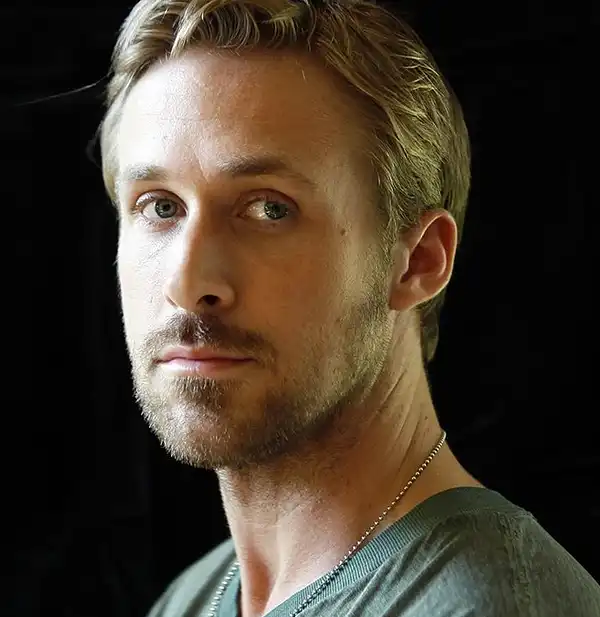
Ryan Thomas Gosling was born on November 12, 1980, in London, Ontario, Canada, and grew up in a working-class family far removed from the glittering lights of Hollywood. His father, Thomas Gosling, worked as a traveling salesman, while his mother, Donna, was a secretary who later became a teacher. Much of his childhood was spent in Cornwall and Burlington, Ontario, where he developed an early fascination with performing. Although he would eventually become one of Hollywood's most admired actors, his school years were not particularly easy. He struggled academically, experienced bullying, and sometimes found it difficult to fit in. Fortunately, the young Gosling discovered that entertaining people offered an escape from everyday frustrations and provided an outlet for his considerable imagination.
Ryan Gosling's journey into show business began with childhood talent competitions and local performances, often alongside his older sister, Mandi. He enjoyed singing, dancing, and imitating entertainers, demonstrating a natural enthusiasm for the spotlight long before anyone in Hollywood knew his name. His big break arrived in 1993 when he successfully auditioned for The All-New Mickey Mouse Club, joining a remarkable group of young performers that included Britney Spears, Christina Aguilera, and Justin Timberlake. Gosling spent two seasons on the Disney Channel program, gaining experience in singing, dancing, comedy, and television production. Although he received less screen time than some of his fellow Mouseketeers, the experience gave him a valuable introduction to professional entertainment. It also meant that, years before he was nominated for Academy Awards, he was already learning how to survive show business while wearing mouse ears.
Following his Disney experience, Gosling continued developing his acting career through Canadian and American television productions. He appeared in family-oriented series such as Are You Afraid of the Dark?, Goosebumps, and Breaker High, gradually building a résumé that demonstrated his versatility. In 1998, he landed the starring role in Young Hercules, a television series exploring the adventures of the mythological hero during his teenage years. The production was filmed in New Zealand and gave Gosling valuable experience carrying a television series as its leading actor. Although Young Hercules was hardly the sort of production that attracts serious Academy Award consideration, it provided a stepping stone toward more demanding roles and allowed the young Canadian performer to establish himself as a dependable professional actor.
A significant turning point came with the 2001 independent drama The Believer, in which Gosling portrayed Daniel Balint, a young Jewish man who embraces neo-Nazi ideology while struggling with profound contradictions surrounding his identity. The disturbing and psychologically complex performance represented a dramatic departure from his earlier television work. Gosling's portrayal earned widespread critical attention, and the film received the Grand Jury Prize for Dramatic Feature at the Sundance Film Festival. His willingness to tackle such difficult material demonstrated that he was interested in more than conventional leading-man roles. Rather than simply relying on good looks and youthful charm, Gosling was establishing a reputation as an actor prepared to explore uncomfortable subjects and morally complicated characters.
Ryan Gosling became an international romantic leading man with the release of The Notebook in 2004, the film adaptation of Nicholas Sparks's bestselling novel. Starring opposite Rachel McAdams, Gosling portrayed Noah Calhoun, a passionate young man whose enduring love for Allie Hamilton survives class differences, family opposition, and the passage of time. Directed by Nick Cassavetes, the romantic drama became a cultural phenomenon and helped establish Gosling as a Hollywood heartthrob. The film's emotional intensity, memorable rain-soaked reunion, and powerful chemistry between its stars made it a favorite among romance enthusiasts. Interestingly, Gosling and McAdams reportedly experienced considerable friction during filming before eventually developing a romantic relationship offscreen. Apparently, even one of cinema's most celebrated love stories required a little turbulence before reaching its happy ending.
Rather than spending the rest of his career playing romantic heroes, Gosling pursued challenging dramatic roles that demonstrated his considerable range. In Half Nelson (2006), he portrayed Dan Dunne, a troubled middle-school teacher struggling with drug addiction while developing an unlikely friendship with one of his students. His restrained, deeply human performance earned him his first Academy Award nomination for Best Actor. The recognition established Gosling as a serious dramatic performer and demonstrated his ability to portray deeply flawed characters without sacrificing their humanity. He followed this success with Lars and the Real Girl (2007), playing a painfully shy man who develops an emotional attachment to a life-sized doll. What could easily have become a ridiculous comedy instead emerged as a surprisingly compassionate exploration of loneliness, acceptance, and community. Gosling's sensitive performance earned him a Golden Globe nomination and proved that he could make audiences sympathize with almost anyone, including a gentleman whose girlfriend arrived in a shipping crate.
Gosling continued exploring complicated relationships in Blue Valentine (2010), starring opposite Michelle Williams in a raw examination of a marriage falling apart. The film moved between the hopeful beginnings of a romance and the painful realities of its deterioration, requiring both actors to deliver emotionally demanding performances. In 2011, Gosling appeared in three notably different films: Crazy, Stupid, Love., Drive, and The Ides of March. In Crazy, Stupid, Love., he demonstrated his comedic abilities alongside Steve Carell and Emma Stone, portraying a confident ladies' man who unexpectedly discovers the complications of genuine affection. In Drive, he played a nearly silent Hollywood stunt driver who moonlights as a getaway driver, delivering a performance built around controlled intensity and minimal dialogue. Meanwhile, The Ides of March placed him in the world of political ambition and campaign intrigue opposite George Clooney. Few actors could convincingly move between romantic comedy, violent crime thriller, and political drama in a single year, but Gosling managed it without appearing to break a sweat.
His collaboration with director Derek Cianfrance continued in The Place Beyond the Pines (2012), a multigenerational crime drama in which Gosling portrayed Luke Glanton, a motorcycle stunt rider whose desperate attempts to provide for his young son lead to tragic consequences. The film explored fatherhood, responsibility, and the lasting effects of personal choices. Gosling subsequently appeared in Gangster Squad (2013), Only God Forgives (2013), and The Big Short (2015), the latter using dark humor and unconventional storytelling to examine the financial crisis of 2007–2008. He also made his feature directorial debut with Lost River (2014), an atmospheric fantasy thriller that divided critics but demonstrated his interest in filmmaking beyond acting. Throughout this period, Gosling consistently resisted being confined to a single genre, choosing projects that ranged from mainstream entertainment to unconventional independent cinema.
One of Ryan Gosling's most celebrated performances arrived with La La Land (2016), Damien Chazelle's musical romantic drama co-starring Emma Stone. Gosling portrayed Sebastian Wilder, a passionate jazz pianist determined to preserve traditional jazz while pursuing his dream of opening a nightclub. The film combined elaborate musical sequences, romantic comedy, and bittersweet reflections on ambition and sacrifice. Gosling undertook extensive piano training to perform his character's musical passages convincingly, an impressive achievement considering the technical demands of the compositions. His performance earned him the Golden Globe Award for Best Actor in a Motion Picture – Musical or Comedy and his second Academy Award nomination for Best Actor. La La Land became one of the year's most acclaimed films, earning 14 Academy Award nominations and winning six. It also demonstrated that Gosling could sing, dance, play piano, and break hearts in the same production, an inconveniently impressive collection of talents for the rest of mankind.
In 2017, Gosling stepped into the world of science fiction with Blade Runner 2049, directed by Denis Villeneuve. Playing Officer K, a replicant employed by the Los Angeles Police Department, he delivered an understated performance in a visually spectacular continuation of Ridley Scott's influential 1982 film. Opposite Harrison Ford, Gosling explored questions surrounding memory, identity, humanity, and the meaning of existence. Although the film did not achieve the commercial success initially anticipated, it received considerable critical praise and won Academy Awards for cinematography and visual effects. Gosling followed this with First Man (2018), portraying astronaut Neil Armstrong in Damien Chazelle's biographical drama about the mission to land humans on the Moon. His quiet, emotionally restrained portrayal emphasized Armstrong's personal sacrifices and determination, offering audiences a more intimate perspective on one of history's greatest technological achievements.
After a period away from major theatrical releases, Gosling returned to action filmmaking in The Gray Man (2022), a Netflix thriller directed by Anthony and Joe Russo. He portrayed Court Gentry, a highly skilled CIA operative pursued by dangerous enemies, including a ruthless assassin played by Chris Evans. The film reunited Gosling with large-scale action sequences, elaborate stunts, and international locations. However, his most widely discussed role of the following year involved considerably less military equipment and considerably more pink clothing.
In Greta Gerwig's Barbie (2023), Ryan Gosling portrayed Ken opposite Margot Robbie's Barbie, transforming a supporting toy character into one of the film's most memorable personalities. His version of Ken was insecure, enthusiastic, hilariously misguided, and desperately eager to establish an identity beyond being Barbie's accessory. Gosling embraced the absurdity of the role while giving the character unexpected emotional depth, particularly through the musical number I'm Just Ken. His performance earned him an Academy Award nomination for Best Supporting Actor, while the song became an international sensation. At the 2024 Academy Awards ceremony, Gosling performed I'm Just Ken in an elaborate pink-themed production that became one of the evening's most memorable moments. The performance demonstrated that a serious dramatic actor could also command a stage while wearing an outrageous pink suit and singing about the emotional difficulties of being a plastic boyfriend.
Gosling continued balancing comedy and action with The Fall Guy (2024), directed by David Leitch and co-starring Emily Blunt. Inspired by the 1980s television series, the film featured Gosling as Colt Seavers, a professional stunt performer drawn into a dangerous mystery while attempting to rekindle a relationship with a film director. The production celebrated the often-overlooked contributions of stunt professionals, combining elaborate action sequences with romantic comedy and Hollywood satire. Gosling's physical comedy and willingness to participate in demanding stunt work helped make the film an affectionate tribute to the people who risk their safety to create cinematic excitement. It also served as a reminder that while leading actors receive the applause, stunt performers frequently do the dangerous work that makes those actors look heroic.
Beyond acting, Ryan Gosling has maintained a longstanding interest in music. He formed the indie rock duo Dead Man's Bones with musician Zach Shields, releasing a self-titled album in 2009. The project featured atmospheric music, theatrical storytelling, and contributions from a children's choir, reflecting the pair's fascination with ghosts, monsters, and supernatural folklore. Unlike a conventional celebrity vanity project, Dead Man's Bones developed a distinctive musical identity and attracted listeners interested in experimental indie rock. Gosling has also demonstrated his musical abilities through his film performances, particularly La La Land and Barbie. His musical interests reveal another dimension of an entertainer who has never seemed entirely satisfied with remaining in one creative lane.
Ryan Gosling's personal life has attracted considerable public interest, although he generally prefers to keep family matters private. He has been in a long-term relationship with actress Eva Mendes, whom he worked with on The Place Beyond the Pines. The couple have two daughters and have largely avoided exposing their children to unnecessary publicity. Gosling has occasionally spoken about the importance of fatherhood and how becoming a parent changed his priorities. Mendes has also been supportive of his professional achievements, and Gosling has publicly acknowledged her influence on his life and career. Despite his international fame, he has maintained a reputation for valuing family life and personal privacy over the constant attention that frequently accompanies Hollywood celebrity.
Throughout his career, Ryan Gosling has received multiple Academy Award nominations, Golden Globe recognition, and widespread critical acclaim for performances that combine emotional sensitivity with an understated sense of humor. His career is particularly remarkable for its variety: a romantic hero in The Notebook, a troubled teacher in Half Nelson, a mysterious driver in Drive, a jazz musician in La La Land, a replicant in Blade Runner 2049, an astronaut in First Man, and a spectacularly confused Ken doll in Barbie. Each role has demonstrated his willingness to challenge audience expectations rather than simply repeat previous successes.
Ryan Gosling's lasting appeal comes from his ability to make unusual characters feel recognizably human. Whether portraying heartbreak, ambition, loneliness, courage, or comic insecurity, he brings an emotional authenticity that allows audiences to connect with characters living extraordinarily different lives. His journey from Canadian childhood performer to internationally celebrated actor illustrates the rewards of persistence, versatility, and creative curiosity. And if Hollywood ever runs out of roles for him, he can always return to playing piano, singing with a band, or explaining to the world that he is, in fact, Kenough.