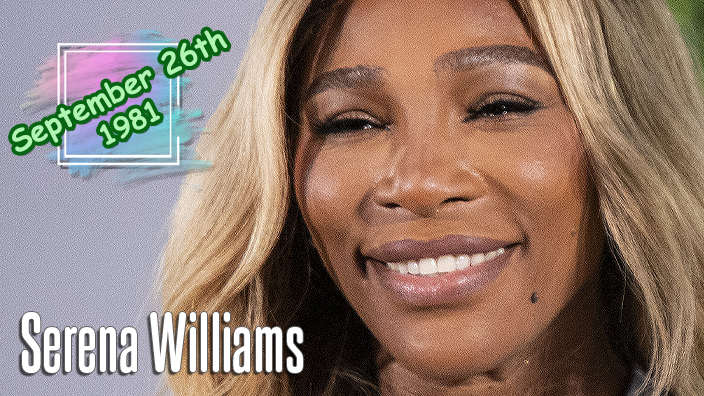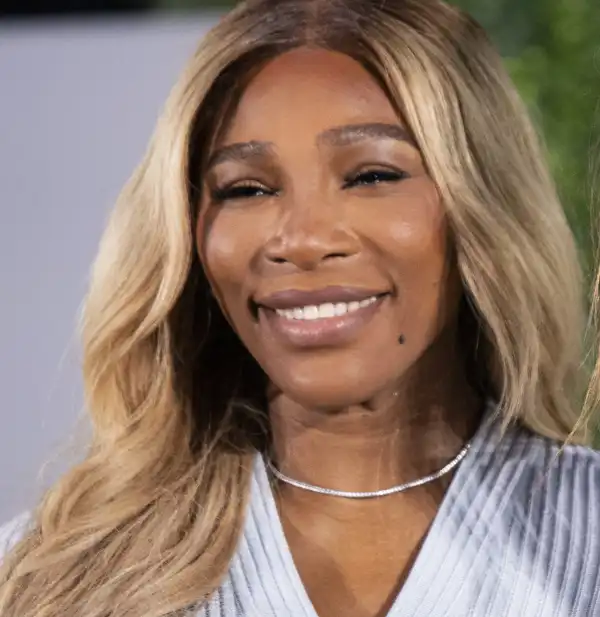
Born on September 26, 1981, in Saginaw, Michigan, Serena Jameka Williams was the youngest of five daughters born to Oracene Price and Richard Williams. While Serena was still young, the family lived in Compton, California, where she and her older sister Venus began learning tennis on public courts. Richard and Oracene both played important roles in coaching their daughters, with Richard developing an ambitious plan for Venus and Serena long before either had established herself professionally. What might have sounded wildly optimistic eventually proved to have underestimated what the sisters would accomplish.
The Williams sisters trained on public courts in Compton under circumstances far removed from the private clubs traditionally associated with elite tennis. Their father emphasized both tennis and education and deliberately limited the amount of junior tournament competition they played. The family later moved to Florida, where Serena and Venus continued developing their games. Even before Serena became a professional, the two sisters were attracting attention because of their power, athletic ability and the enormous expectations surrounding them.
Serena turned professional in 1995. Her early appearances offered glimpses of what was coming, but one of the clearest warnings arrived at the 1997 Ameritech Cup in Chicago. Still a teenager and ranked well outside the world's elite, Williams defeated highly ranked opponents Mary Pierce and Monica Seles before reaching the semifinals. Suddenly, the younger Williams sister was not simply being discussed as a future prospect. She could already beat some of the best players in the world.
Her first Grand Slam singles breakthrough came at the 1999 US Open. Williams defeated Martina Hingis in the final to claim her first major singles championship. The victory made her the first Black woman since Althea Gibson in 1958 to win a Grand Slam singles title. Serena was still near the beginning of her career, but the championship announced that women's tennis had acquired a formidable new force.
What followed was not simply sustained success but several distinct periods of dominance. In 2002, Williams won the French Open, Wimbledon and the US Open, defeating Venus in all three finals. She then won the 2003 Australian Open, again beating her sister in the championship match. Holding all four major singles titles simultaneously became known as the "Serena Slam." Unlike the traditional calendar-year Grand Slam, the four victories stretched across two seasons, but possessing every major trophy at the same time left little doubt about who controlled women's tennis.
The rivalry between Serena and Venus created one of the most unusual relationships in professional sports. They were sisters, training partners, doubles partners and opponents in some of the biggest matches in tennis. They met repeatedly in Grand Slam finals, forcing two people who were exceptionally close away from the court to compete against each other for the sport's most important trophies. There was no convenient family rule allowing them to share Wimbledon and take turns keeping it on the mantelpiece.
Together, however, Serena and Venus became an extraordinary doubles team. They won 14 Grand Slam women's doubles titles together and never lost a Grand Slam doubles final. Their championships included victories at the Australian Open, French Open, Wimbledon and US Open, giving them a career Grand Slam in doubles. Their combination of power, reach, athleticism and familiarity with one another made them exceptionally difficult opponents. Knowing what your doubles partner is thinking becomes somewhat easier when you have known her since birth.
The sisters also enjoyed remarkable Olympic success. Serena won the women's doubles gold medal with Venus at the 2000 Sydney Olympics, repeated the achievement in Beijing in 2008 and again in London in 2012. At the 2012 London Games, Serena added the singles gold medal, defeating Maria Sharapova in the final. That victory completed a career Golden Slam in singles—winning all four Grand Slam tournaments and Olympic singles gold during a career.
Williams' playing style helped reshape women's tennis. Her serve became one of the greatest weapons the women's game had seen, combining speed, placement and reliability under pressure. Her groundstrokes were powerful from both sides, while her movement allowed her to turn defensive positions into attacks. Just as important was her ability to raise her level when matches became difficult. Opponents could play extraordinarily well against Serena Williams and still discover, usually at an inconvenient moment, that she had another gear available.
Her career was not an uninterrupted march through trophy presentations. Injuries and health problems repeatedly removed her from competition, sometimes for lengthy periods. Williams underwent knee surgery, and in 2011 she revealed that she had suffered a pulmonary embolism after being treated for a foot injury. The medical emergency and subsequent recovery created uncertainty about whether she could return to her previous level.
She did considerably more than return. Williams produced another extraordinary stretch of tennis during her thirties, an age when many professional players have already retired or begun declining. Under coach Patrick Mouratoglou, she added numerous major championships and returned to world No. 1. In 2013, she completed one of the strongest seasons of her career, winning the French Open and US Open among a remarkable collection of tournament victories.
During 2014 and 2015, Williams again held all four Grand Slam singles championships simultaneously. She won the 2014 US Open and followed it with the 2015 Australian Open, French Open and Wimbledon. The sequence produced her second "Serena Slam." At the 2015 US Open she came within two victories of completing the calendar-year Grand Slam before Roberta Vinci defeated her in the semifinals, producing one of the great upsets in modern tennis.
Williams won Wimbledon again in 2016, tying Steffi Graf's Open Era record of 22 Grand Slam singles championships. She moved beyond Graf at the 2017 Australian Open, defeating Venus in the final to claim her 23rd major singles title. Williams later revealed that she had been pregnant during the tournament. Winning a Grand Slam championship is generally considered sufficient activity for one fortnight without adding early pregnancy to the list.
Her daughter, Alexis Olympia Ohanian Jr., was born later in 2017. Williams experienced serious medical complications following childbirth, including blood clots, and later spoke publicly about the experience. Her eventual return to professional tennis became another significant chapter in her career. After months away from competition, she worked back toward the highest level of the sport while balancing training and motherhood.
Williams subsequently reached four additional Grand Slam singles finals: Wimbledon and the US Open in both 2018 and 2019. Although she did not add another major singles championship, reaching those finals after childbirth and serious health complications demonstrated the extraordinary longevity of her career. She remained capable of competing for the sport's biggest prizes against players who had grown up watching her dominate them.
Her 23 Grand Slam singles titles are the most won by any woman during the Open Era. They comprise seven Australian Open titles, three French Open championships, seven Wimbledon titles and six US Open victories. Add the 14 major women's doubles titles she won with Venus, two mixed doubles majors, four Olympic gold medals and long periods as the world's top-ranked player, and the trophy cabinet begins to require structural engineering.
Williams spent 319 weeks ranked world No. 1 in singles, including 186 consecutive weeks, tying Graf's record for the longest uninterrupted reign at the top of the WTA rankings. She also completed a career Grand Slam in singles and doubles. Her accomplishments stretched across different surfaces, opponents and generations, from the late 1990s through the 2020s.
Her importance extended well beyond statistics. Serena and Venus entered elite tennis as two Black sisters from Compton in a sport historically associated with predominantly white and affluent institutions. Their success broadened perceptions of who could dominate professional tennis and inspired younger players around the world. Serena also became known for bringing distinctive fashion to the court, sometimes testing both tennis traditions and tournament dress expectations in the process.
Fashion eventually became a significant business interest away from tennis. Williams studied fashion and launched her own clothing ventures while also developing an extensive portfolio of business investments. Through Serena Ventures, she became involved in backing early-stage companies, with particular attention given to founders who have historically received less venture-capital funding. Her business career developed alongside endorsements and commercial partnerships that made her one of the world's most recognizable athletes.
In 2022, Williams announced in an essay for Vogue that she was "evolving away from tennis," deliberately avoiding the word retirement. Her final tournament that year was the US Open, where enormous crowds gathered to watch what was understood to be the closing stage of her professional career. She won her first two singles matches, including a victory over second-seeded Anett Kontaveit, before losing to Ajla Tomljanović in the third round.
The farewell was fittingly competitive. Williams did not simply appear for a ceremonial goodbye; she fought through one more series of matches in the stadium where she had captured her first Grand Slam singles title more than two decades earlier. Her career had effectively traveled full circle, from the young champion at the 1999 US Open to an athlete whose influence had become inseparable from the modern history of the tournament.
Debates about the greatest athletes in any sport inevitably depend upon the criteria being used and the eras being compared. Serena Williams' documented achievements, however, require no embellishment. Twenty-three Grand Slam singles championships in the Open Era, 14 major women's doubles titles, four Olympic gold medals and 319 weeks at world No. 1 place her among the most accomplished players tennis has produced.
Perhaps the most remarkable feature of her career was its length. Opponents changed, equipment evolved and an entirely new generation arrived, yet Serena Williams continued appearing at the far end of the court with that unmistakable serve. For more than two decades, professional tennis kept producing talented new challengers. Unfortunately for quite a few of them, it also kept producing Serena Williams.