September 25, 1965, in Hamburg, Arkansas
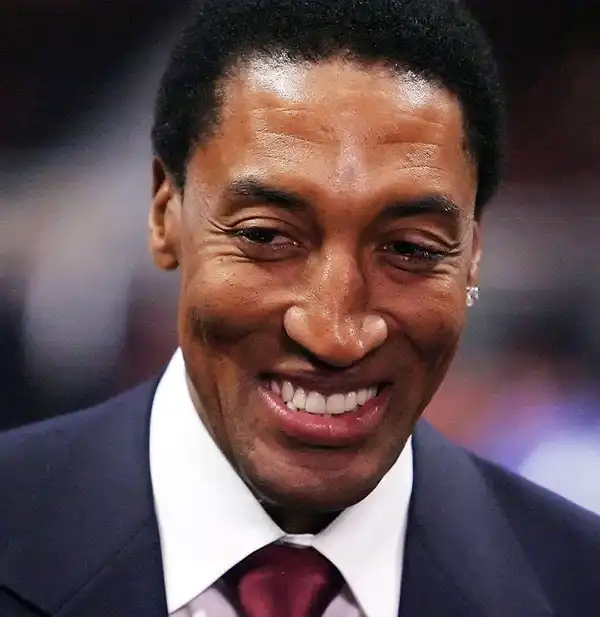
Scottie Maurice Pippen was born on September 25, 1965, in Hamburg, Arkansas, a small town in the southeastern part of the state. He was the youngest of 12 children born to Preston and Ethel Pippen, growing up in circumstances far removed from the bright lights and packed arenas that would eventually become familiar surroundings. Basketball was part of his youth, but nothing about Pippen's early career suggested that professional scouts should immediately begin fighting over him.
At Hamburg High School, Pippen played basketball and earned all-conference honors, but he was considerably smaller than the imposing athlete basketball fans would later recognize. Major college programs did not arrive bearing scholarship offers, and Pippen instead attended the University of Central Arkansas in Conway. He initially joined the basketball program as a walk-on, an inauspicious beginning for a man who would eventually require considerably more room in the trophy cabinet.
Something rather useful then happened: Pippen grew.
During his college years, he developed from an unheralded guard into a tall, athletic and exceptionally versatile player. Eventually standing about 6 feet 8 inches, Pippen retained many of the ball-handling and passing abilities he had developed when he was smaller. That combination would become fundamental to his professional game. He could handle the ball like a guard while possessing the reach and size of a forward, creating precisely the sort of positional headache that opposing coaches generally prefer somebody else to deal with.
Pippen's performances at Central Arkansas eventually attracted NBA attention, and by the 1987 NBA Draft he was no longer an anonymous college walk-on. The Seattle SuperSonics selected him with the fifth overall pick, but his Seattle career lasted approximately as long as it took the paperwork to make its way across the desk. A prearranged draft-night trade sent Pippen to the Chicago Bulls, while Olden Polynice headed to Seattle as part of the deal.
Chicago already possessed Michael Jordan, who was establishing himself as one of the NBA's extraordinary talents. What the Bulls needed was a roster capable of transforming Jordan's brilliance into sustained team success. Pippen gradually became an essential part of that transformation. Under coach Phil Jackson and within assistant coach Tex Winter's triangle offense, the Bulls developed into a team capable of challenging the powerful Eastern Conference clubs that had repeatedly blocked their path.
Pippen's value went well beyond scoring. He could bring the ball up the court, create opportunities for teammates, rebound, attack the basket and defend several positions. His combination of long arms, quick feet and anticipation made him particularly dangerous defensively. Pippen could harass ball handlers, disrupt passing lanes and switch assignments without requiring the Bulls to reorganize their entire defense every time an opponent tried something clever.
The breakthrough arrived during the 1990-91 season. Chicago won 61 regular-season games and advanced through the Eastern Conference playoffs before facing Magic Johnson and the Los Angeles Lakers in the NBA Finals. After losing the opening game, the Bulls won four straight to claim the franchise's first NBA championship. Pippen's defense was particularly important during the series, with his ability to pressure Johnson giving Chicago another option against the Lakers' legendary playmaker.
One championship quickly became three. The Bulls defeated the Portland Trail Blazers in the 1992 NBA Finals and the Phoenix Suns in 1993, completing what became the franchise's first three-peat. Pippen was integral throughout the run, providing a remarkably broad collection of skills alongside Jordan. If Jordan was Chicago's most spectacular weapon, Pippen was frequently the man doing whatever unpleasant job happened to be necessary at that particular moment.
The partnership inevitably led to Pippen sometimes being described as Jordan's supporting player, but that description can obscure just how accomplished Pippen was independently. His opportunity to demonstrate that came dramatically when Jordan retired from basketball before the 1993-94 season.
With Jordan gone, Pippen became Chicago's central figure. Rather than collapsing without its superstar, the defending champion Bulls finished the regular season with a 55-27 record. Pippen averaged 22 points, 8.7 rebounds and 5.6 assists per game, earned All-NBA First Team and All-Defensive First Team honors and finished third in voting for the league's Most Valuable Player award. He also produced 29 points and 11 rebounds in the 1994 NBA All-Star Game and was named the game's Most Valuable Player.
That season did contain one of the most controversial episodes of Pippen's career. During Game 3 of the Eastern Conference semifinals against the New York Knicks, coach Phil Jackson designed the final play for rookie Toni Kukoč rather than Pippen. An unhappy Pippen remained on the bench for the play. Kukoč made the winning shot. Pippen subsequently apologized to his teammates, but the incident became permanently attached to discussions of his career, demonstrating once again that sporting history has an irritating habit of remembering the uncomfortable bits along with the championships.
Jordan returned to basketball late in the following season, and by 1995-96 the Bulls had assembled another extraordinary team. Dennis Rodman joined Jordan and Pippen, giving Chicago a combination of scoring, defense, rebounding and personalities large enough to require reinforced locker-room walls. The Bulls finished the regular season 72-10, at the time the best regular-season record in NBA history, before defeating the Seattle SuperSonics in the Finals.
Chicago repeated as champion in 1997, defeating the Utah Jazz, then faced Utah again in the 1998 NBA Finals. By this stage Pippen was dealing with significant back problems, particularly during the sixth game of the Finals. He nevertheless remained on the court as Chicago secured its sixth championship of the decade. The victory completed the Bulls' second three-peat and effectively marked the end of the dynasty.
Pippen's Bulls career produced an extraordinary collection of honors. He was selected to seven NBA All-Star Games, earned seven All-NBA selections and was named to the NBA All-Defensive First Team eight consecutive times. In 1994 he was the NBA All-Star Game MVP, and during the 1994-95 season he led the league in steals. His defensive reputation became particularly significant because Pippen could guard opponents across several positions rather than merely concentrating on one type of player.
His career also extended onto the international stage. Pippen was selected for the United States team at the 1992 Barcelona Olympics, joining Michael Jordan, Magic Johnson, Larry Bird, Charles Barkley, David Robinson and other NBA stars on the celebrated "Dream Team." It was the first U.S. Olympic basketball team to feature active NBA players, and its collection of talent transformed the tournament into a global spectacle.
The Dream Team dominated its opponents on the way to the gold medal, winning all eight Olympic games by enormous margins. Pippen and Jordan even found themselves particularly interested in defending Croatian star Toni Kukoč, whose NBA rights belonged to the Bulls and whose impending arrival in Chicago had become tangled in contract negotiations involving Pippen. Apparently even the greatest basketball team ever assembled could find room for a little workplace grievance.
Pippen returned to Olympic competition at the 1996 Atlanta Games and won another gold medal. His combination of NBA championships and Olympic success meant that by the middle of the decade he had accumulated an impressive collection of gold in several different forms.
Following the breakup of the Bulls championship roster after the 1997-98 season, Pippen was traded to the Houston Rockets. There he joined fellow stars Hakeem Olajuwon and Charles Barkley, creating a veteran lineup with impressive credentials but without the championship success Houston hoped would follow. Pippen spent only the shortened 1998-99 season with the Rockets before being traded again.
His next destination was the Portland Trail Blazers, where Pippen became an experienced leader on a deep and talented team. Portland came agonizingly close to reaching the 2000 NBA Finals, taking the Los Angeles Lakers to Game 7 of the Western Conference Finals. The Trail Blazers held a substantial fourth-quarter lead before the Lakers rallied to win, ending Pippen's best opportunity to return to the Finals without the Bulls.
Pippen remained with Portland through the 2002-03 season before returning to Chicago for one final NBA campaign. Injuries limited his appearances, and he retired after the 2003-04 season. His NBA career included 1,178 regular-season games and averages of 16.1 points, 6.4 rebounds and 5.2 assists. Those figures capture his remarkable consistency, although numbers alone struggle to describe a player whose greatest value frequently involved preventing opponents from doing what they wanted to do.
The Chicago Bulls retired Pippen's No. 33 jersey in December 2005, placing it permanently among the franchise's honored numbers. In 2010, he received basketball's highest individual recognition when he was inducted into the Naismith Memorial Basketball Hall of Fame. Remarkably, Pippen entered the Hall twice during the same year: once for his individual career and again as a member of the 1992 United States Olympic Dream Team.
His place in basketball history was reinforced through other honors. Pippen was selected as one of the NBA's 50 Greatest Players when the league celebrated its 50th anniversary in 1996, and he was later named to the NBA 75th Anniversary Team. Such recognition reflects the breadth of his career rather than merely the championship rings he accumulated in Chicago.
Discussions about the Bulls dynasty understandably return again and again to Michael Jordan, whose scoring, competitiveness and global fame made him the central figure of the era. Yet the construction of those championship teams depended heavily on Pippen's unusual abilities. He could initiate the offense when Jordan played away from the ball, defend the opposing team's strongest perimeter threat, rebound in traffic and create scoring opportunities without requiring the offense to revolve around him.
That versatility also helped influence later generations of NBA forwards. The idea of a tall player functioning as a ball handler, facilitator, scorer and elite defender has become increasingly familiar in modern basketball, but Pippen was performing that collection of jobs decades earlier. His statistics were impressive; his usefulness was considerably harder to fit into a box score.
Scottie Pippen's journey remains one of professional basketball's more remarkable developments. He went from an overlooked high-school player to a college walk-on, grew into an NBA prospect, became the fifth selection in the draft and ultimately helped build one of the most recognizable dynasties in sports history. Six NBA championships, two Olympic gold medals, seven All-Star selections and Hall of Fame induction followed.
Michael Jordan may have provided many of the Chicago Bulls' most famous photographs, shots and headlines, but Scottie Pippen was beside him for every one of those six championship seasons. He defended, passed, rebounded, scored and did much of the work that championship basketball demands when nobody is preparing a highlight reel.
Not bad for a college walk-on nobody offered a scholarship.