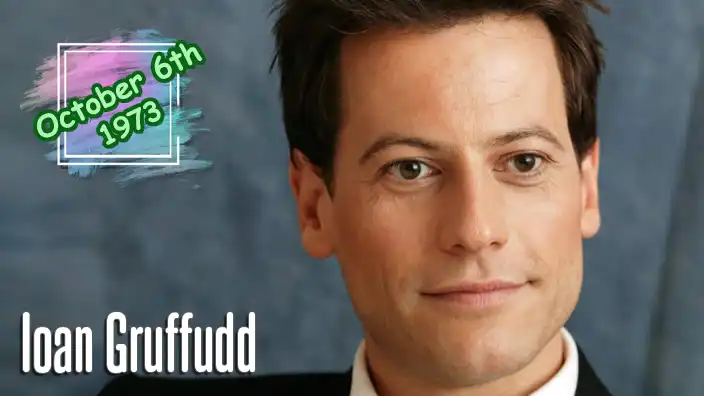
October 6, 1973, in Cardiff, Wales
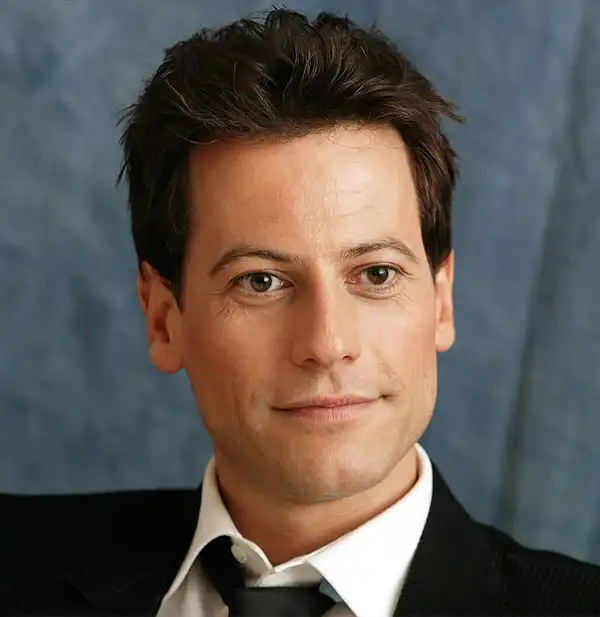
Ioan Gruffudd was born on October 6, 1973, in Cardiff, Wales, and grew up in a Welsh-speaking family. His parents, Peter and Gillian Gruffudd, were both teachers, and Welsh was his first language. That background became important almost immediately when his acting career began in Welsh-language television, long before Hollywood asked him to become a superhero capable of stretching his limbs into extremely inconvenient places.
Gruffudd spent part of his childhood in Cardiff before his family moved to Aberdare. Music played an important role in his early years. He sang as a boy soprano, performed with the South Glamorgan Youth Orchestra and became an accomplished oboist. He also competed successfully in singing at the National Eisteddfod, an important celebration of Welsh language and culture. For somebody who would later spend much of his career acting in English, his Welsh identity and language remained fundamental parts of his background.
His professional acting career began remarkably early. Gruffudd appeared in the Welsh television film Austin and subsequently joined the long-running Welsh-language soap opera Pobol y Cwm. Broadcast by S4C, Pobol y Cwm provided valuable professional experience while Gruffudd was still a teenager and placed him within one of the most important institutions in Welsh-language broadcasting.
Acting eventually became the clear direction of travel. Gruffudd moved to London and trained at the Royal Academy of Dramatic Art, better known as RADA. The school has produced generations of prominent British actors, and Gruffudd's classical training there prepared him particularly well for the period dramas that would soon become an important part of his career.
One of his first major international film appearances was brief but extremely memorable. Gruffudd played Fifth Officer Harold Lowe in James Cameron's Titanic, released in 1997. Lowe was one of the officers aboard RMS Titanic and participated in the rescue effort after the ship sank. Gruffudd's character is seen returning with a lifeboat searching for survivors in the freezing Atlantic.
It was not a large role, but appearing in Titanic was hardly an inconspicuous addition to a young actor's résumé. The film became a worldwide phenomenon, won 11 Academy Awards and spent years among the highest-grossing movies ever made. Gruffudd had therefore managed to appear in one of cinema's biggest productions before the role that would truly establish him had even arrived.
That breakthrough came at sea again, although this time Gruffudd was considerably higher up the chain of command.
Beginning in 1998, he starred as Horatio Hornblower in a series of television films based on C. S. Forester's celebrated novels. The stories follow a Royal Navy officer during the Napoleonic Wars, beginning when Hornblower is a young midshipman and continuing as he rises through the service.
The role suited Gruffudd remarkably well. Hornblower is intelligent and courageous but frequently plagued by self-doubt. He must project authority to the sailors under his command even while privately questioning his own decisions. Gruffudd captured that combination of bravery, intelligence, uncertainty and duty, making Hornblower considerably more human than a conventional square-jawed adventure hero.
The productions featured elaborate naval battles, period ships and the dangerous realities of eighteenth- and early-nineteenth-century life at sea. Gruffudd starred alongside Robert Lindsay as Captain Sir Edward Pellew, whose relationship with the young Hornblower became one of the series' central elements. Pellew recognized Hornblower's potential long before Hornblower himself appeared entirely convinced of it.
The Hornblower films became extremely popular and received considerable critical recognition, including Emmy Awards. Gruffudd's performance brought him widespread attention in Britain and internationally and remains one of the roles most closely associated with him. For many viewers, particularly admirers of historical naval fiction, Ioan Gruffudd simply is Horatio Hornblower.
The role also established him as a natural performer in period drama, something Hollywood and British filmmakers were quick to notice. He appeared in the 1999 adaptation of Charles Dickens' Great Expectations and subsequently took roles in a wide variety of historical and literary productions.
Gruffudd played architect John Gray in the 2001 film Another Life and appeared in the television adaptation of The Forsyte Saga. He also joined an impressive cast for Black Hawk Down, Ridley Scott's 2001 war film about the 1993 Battle of Mogadishu. Gruffudd played Lieutenant John Beales in a cast that included Josh Hartnett, Ewan McGregor, Eric Bana, Tom Sizemore and William Fichtner.
In 2004 he entered another legendary historical world with King Arthur. Gruffudd played Lancelot opposite Clive Owen's Arthur and Keira Knightley's Guinevere. The film attempted to give the Arthurian legend a more historically grounded interpretation, presenting Arthur and his knights as warriors operating during the decline of Roman Britain rather than inhabitants of the familiar medieval world of Camelot.
Gruffudd's Lancelot was a skilled and somewhat cynical warrior, and the role moved him considerably closer to Hollywood action cinema. He had now served aboard the Titanic, commanded Royal Navy ships during the Napoleonic Wars, fought in Somalia and ridden alongside King Arthur. Naturally, the next sensible career move was becoming made of rubber.
In 2005, Gruffudd was cast as Reed Richards, better known as Mr. Fantastic, in Fantastic Four. Based on the Marvel Comics superhero team, the film starred Gruffudd alongside Jessica Alba as Sue Storm, Chris Evans as Johnny Storm and Michael Chiklis as Ben Grimm.
Reed Richards is a brilliant scientist whose exposure to cosmic radiation gives him the ability to stretch and reshape his body. He is also the intellectual leader of the Fantastic Four, although his tendency to become absorbed in scientific problems occasionally makes him somewhat less successful at ordinary human interaction.
The movie introduced Gruffudd to an enormous international audience and became a commercial success. He returned as Reed Richards in the 2007 sequel Fantastic Four: Rise of the Silver Surfer, which introduced the mysterious Silver Surfer and placed the team against a threat considerably larger than anything they had faced previously.
Playing Mr. Fantastic created one of the more curious contrasts in Gruffudd's career. Audiences accustomed to seeing him buttoned into Royal Navy uniforms and navigating wooden sailing ships suddenly encountered him wearing a blue superhero suit while stretching his arms across laboratories. Fortunately, RADA apparently prepares its graduates for everything.
Between the two Fantastic Four films, Gruffudd took one of the most significant dramatic roles of his career in Amazing Grace. Released in 2006, the historical drama told the story of British politician William Wilberforce and his campaign against the transatlantic slave trade.
Gruffudd played Wilberforce, whose decades-long political struggle contributed to the passage of the Slave Trade Act 1807, which abolished the slave trade throughout the British Empire. The film also starred Albert Finney as John Newton, the former slave-ship captain who became an Anglican clergyman and wrote the hymn “Amazing Grace,” along with Benedict Cumberbatch as William Pitt the Younger.
The role gave Gruffudd an opportunity to carry a substantial historical drama centered on political conviction rather than physical adventure. His portrayal followed Wilberforce through years of parliamentary defeats, illness and determined campaigning, demonstrating a very different sort of heroism from the sword fights and naval battles that had featured in some of Gruffudd's earlier work.
Gruffudd continued moving between mainstream Hollywood films, independent productions and television. He appeared in W., Oliver Stone's film about George W. Bush, playing British Prime Minister Tony Blair. He also appeared in The Secret of Moonacre, Sanctum and Horrible Bosses.
Animation added another dimension to his résumé. Gruffudd provided voices for several animated productions and children's programs, taking advantage of the distinctive voice and precise delivery that had served him so well in period drama.
Television became increasingly important in the next stage of his career. Gruffudd appeared in the CW drama Ringer alongside Sarah Michelle Gellar, playing Andrew Martin, the wealthy husband of one of the identical twin sisters at the center of the show's complicated story. As is generally the case whenever television introduces identical twins, matters rapidly became considerably more complicated than simply checking everyone's identification.
In 2014, Gruffudd took the lead in the ABC series Forever. He played Dr. Henry Morgan, a New York City medical examiner with a rather unusual problem: he cannot die permanently. Whenever Henry is killed, he disappears and returns to life naked in a nearby body of water. This naturally makes commuting inconvenient but provides him with an extraordinary understanding of death.
Henry has lived for more than two centuries and uses the knowledge accumulated during his extraordinarily long existence to investigate crimes. Judd Hirsch played Abe, Henry's elderly adopted son, creating the amusing situation in which a man who appears to be in his forties has a son considerably older than he looks.
Forever developed a loyal following despite lasting only one season. Fans responded strongly to Gruffudd's performance and the relationship between Henry and Abe, and the series retained a devoted audience long after its cancellation. For Gruffudd, it provided another leading role that combined procedural television with fantasy and allowed him to play a character carrying centuries of personal history beneath an apparently ordinary exterior.
He subsequently starred in the Australian television drama Harrow, beginning in 2018. Gruffudd played Dr. Daniel Harrow, a brilliant forensic pathologist with little respect for authority and a complicated personal life. Once again, his character investigated suspicious deaths, although unlike Henry Morgan, Harrow did not have the useful professional advantage of being personally unable to stay dead.
Gruffudd also appeared in the psychological thriller series Liar, starring opposite Joanne Froggatt. The British series explored the aftermath of a date between surgeon Andrew Earlham, played by Gruffudd, and teacher Laura Nielson, played by Froggatt. After Laura accuses Andrew of rape, the story examines conflicting accounts, secrets and the consequences spreading through their lives.
The role was intentionally uncomfortable and very different from Gruffudd's heroic characters. Andrew's polished professional appearance and charm became central to a story designed to make viewers question what they believed and why they believed it. The series demonstrated Gruffudd's willingness to take on darker material rather than relying on the honorable leading-man image established by Hornblower and Amazing Grace.
His later film and television work has continued across British, American and Australian productions, reinforcing the international nature of a career that began in Welsh-language television. Gruffudd has also remained closely associated with Wales despite spending much of his professional life elsewhere.
His Welsh heritage is particularly important because Gruffudd belongs to a generation of Welsh actors who achieved international success without abandoning the language in which they grew up. He has spoken Welsh publicly throughout his career and has participated in Welsh-language broadcasting and cultural events.
The pronunciation of his name has inevitably caused occasional difficulties outside Wales. Ioan is approximately pronounced “YO-an,” while Gruffudd presents rather more of a challenge to anyone unfamiliar with Welsh pronunciation. Gruffudd has endured countless interviewers wrestling with it over the years, presumably developing the patience of Horatio Hornblower waiting for a favorable wind.
Gruffudd's career is notable for how successfully he has moved between very different kinds of leading man. Hornblower was reserved, dutiful and uncertain. Reed Richards was an awkward scientific genius. William Wilberforce was driven by moral and political conviction. Henry Morgan carried two centuries of memories, while Daniel Harrow possessed a considerably more rebellious attitude toward authority.
Those roles also demonstrate why Gruffudd has enjoyed such longevity. He looks entirely at home in a period costume but never became imprisoned by period drama. He became a superhero without spending the rest of his career chasing comic-book franchises. He has carried television series while continuing to appear in film, and he has moved among productions in Britain, America and Australia.
Yet Horatio Hornblower remains special. The young Royal Navy officer gave Gruffudd his international breakthrough and allowed him to develop a character across multiple television films rather than a single production. Decades later, viewers continue to associate Gruffudd with Forester's reluctant naval hero.
Others will always see Reed Richards first. Fantastic Four arrived before superhero cinema became the enormous interconnected industry it later became, and Gruffudd's Mr. Fantastic remains part of Marvel's cinematic history. Chris Evans, amusingly, would eventually leave Johnny Storm behind and become Captain America, meaning Gruffudd once commanded a superhero team containing the future Steve Rogers.
From Welsh-language television to Hollywood blockbusters, from wooden warships to superhero laboratories, Ioan Gruffudd has built a career around adaptability. He can command a ship, argue in Parliament, investigate a corpse, confront King Arthur's enemies or stretch an arm halfway across the room.
Although, after all those years as Hornblower, one suspects he would still prefer a proper ship.