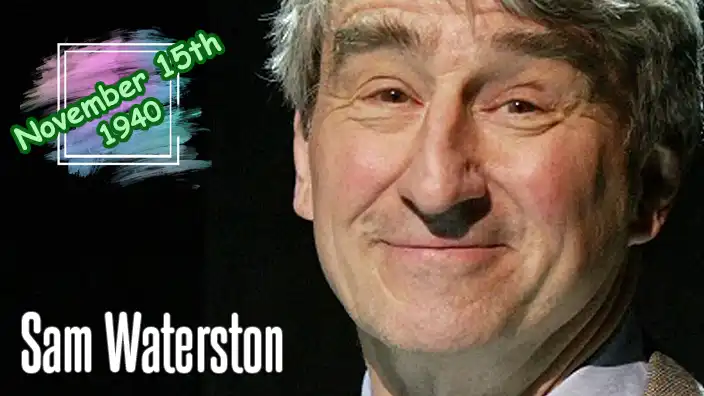
November 15, 1940, in Cambridge, Massachusetts

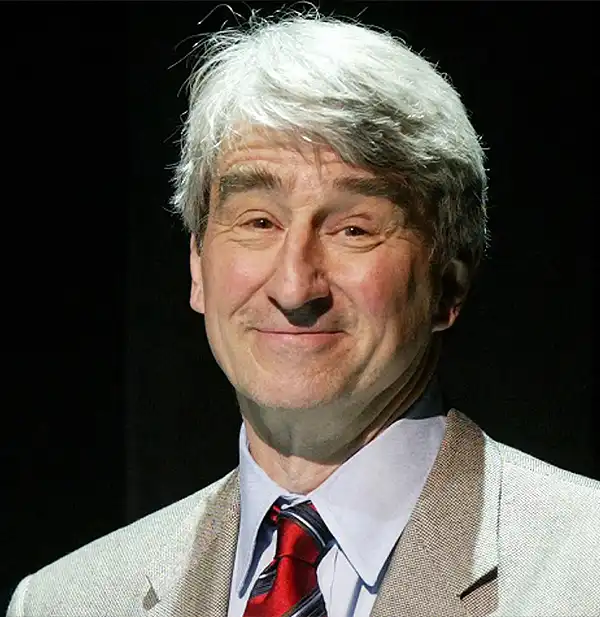
Sam Waterston, whose full name is Samuel Atkinson Waterston, was born on November 15, 1940, in Cambridge, Massachusetts. His father, George Chychele Waterston, was a language teacher and semanticist of Scottish heritage, while his mother, Alice Tucker Atkinson, was an American landscape painter. Growing up in a household where language, education, literature, and art were important parts of everyday life helped shape his intellectual curiosity and appreciation for creative expression. His childhood environment encouraged thoughtful discussion and an interest in storytelling, qualities that would later become essential to his acting career. With a language expert for a father, young Sam probably discovered quite early that arguing over the precise meaning of a word was unlikely to be a winning strategy at the dinner table.
Waterston developed an interest in acting during childhood, participating in amateur theatrical productions and school performances. His father was involved in local theater and reportedly cast him in a production of the ancient Greek tragedy Antigone when Sam was seven. These early experiences introduced him to classical drama and the challenge of portraying characters whose motivations and emotions differed from his own. He later attended the Groton School in Massachusetts, where he continued participating in theatrical activities while pursuing his academic education. Unlike many future Hollywood performers who discover acting through television or movies, Waterston developed his appreciation for performance through the traditional discipline of live theater.
After completing his secondary education, Waterston attended Yale University, where he studied liberal arts and became increasingly involved in dramatic productions. He graduated in 1962 with a Bachelor of Arts degree, having also pursued theatrical studies abroad, including time in Paris. His university experiences strengthened his interest in classical literature, dramatic interpretation, and the technical demands of professional acting. During this period, he became convinced that performing was more than an enjoyable extracurricular activity and decided to pursue acting as a career. It was a decision that would eventually place him before millions of television viewers, although his early professional ambitions were centered primarily on the stage rather than Hollywood fame.
Waterston began his professional theatrical career in New York during the early 1960s, appearing in productions that allowed him to develop his skills before live audiences. His New York stage debut came in 1962 in Arthur Kopit's unusually titled play Oh Dad, Poor Dad, Mamma's Hung You in the Closet and I'm Feelin' So Sad. The production offered an introduction to the experimental theatrical environment of the period, where unconventional storytelling and unusual characters were becoming increasingly popular. The title alone was enough to make anyone responsible for printing theater programs question their career choices, but the experience provided valuable professional training for a young actor determined to establish himself.
Throughout the 1960s and 1970s, Waterston became a respected figure in American theater, appearing in productions of works by Shakespeare, Henrik Ibsen, and other important playwrights. His performances included roles in Hamlet, A Doll's House, Measure for Measure, and The Trial of the Catonsville Nine. He became closely associated with New York's Public Theater and the Shakespeare in the Park program, where his intelligence, expressive voice, and disciplined approach to characterization earned considerable praise. Classical theater demanded a particular combination of technical precision and emotional authenticity, and Waterston developed a reputation for bringing complicated characters to life without relying on exaggerated gestures or theatrical tricks. His experience with Shakespeare would also prove useful later when Hollywood required him to deliver lengthy courtroom speeches without appearing to need a glass of water every thirty seconds.
His early film career began during the 1960s, including an appearance in The Plastic Dome of Norma Jean in 1965. Although his initial screen roles attracted relatively limited attention, they provided opportunities to develop a different style of performance suited to the intimacy of film cameras. Unlike theater, where actors must project their emotions to audiences seated at the back of an auditorium, film acting often requires subtle expressions and carefully controlled movements. Waterston adapted effectively to these demands while continuing to maintain an active theatrical career. His willingness to work across different entertainment mediums helped establish the versatility that would become one of his defining professional characteristics.
A significant breakthrough came in 1974 when Waterston portrayed Nick Carraway in the film adaptation of F. Scott Fitzgerald's celebrated novel The Great Gatsby. Directed by Jack Clayton, the movie starred Robert Redford as the mysterious millionaire Jay Gatsby and Mia Farrow as Daisy Buchanan. Waterston played Nick, the observant young man whose experiences provide the narrative perspective through which audiences encounter the glamorous but troubled world of wealthy Americans during the Jazz Age. His performance required a delicate balance between participation and observation, as Nick becomes increasingly aware of the dishonesty, ambition, and emotional complications surrounding his wealthy acquaintances. It was a role ideally suited to Waterston's thoughtful screen presence, particularly because Nick frequently appeared to be the only person in the room capable of recognizing that everyone else was behaving rather badly.
The Great Gatsby became an important milestone in Waterston's career, earning him Golden Globe nominations for Best Supporting Actor and New Star of the Year. His performance attracted attention from critics and filmmakers, establishing him as a promising dramatic actor capable of holding his own alongside established Hollywood stars. The film's elaborate costumes, luxurious settings, and exploration of American wealth provided a striking contrast to the relatively modest theatrical productions that had shaped much of his earlier career. Nevertheless, Waterston's restrained performance helped anchor the story in recognizable human emotions rather than allowing the spectacular visual presentation to overwhelm the characters.
During the late 1970s, Waterston continued appearing in films and television productions, including the 1978 drama Interiors, directed by Woody Allen. The film explored complicated family relationships, emotional dissatisfaction, and the difficulties of communication among members of a troubled household. Waterston's participation demonstrated his growing reputation as an actor capable of handling sophisticated dramatic material. He also appeared in Capricorn One in 1977, a conspiracy thriller about a fictional government effort to conceal the failure of a space mission. The movie provided an opportunity to work within a suspenseful commercial production while exploring themes involving political deception and institutional power. Apparently, even before Law & Order, Waterston was finding himself surrounded by people whose honesty could reasonably be questioned.
In 1980, Waterston portrayed physicist J. Robert Oppenheimer in the British television miniseries Oppenheimer, which explored the life and work of the scientist who played a central role in developing the atomic bomb during the Second World War. The production examined Oppenheimer's scientific achievements, moral conflicts, and complicated relationship with the United States government during the early Cold War. Waterston's performance required him to portray a highly intelligent historical figure facing enormous ethical and political responsibilities. His thoughtful characterization earned critical praise and a BAFTA nomination, further establishing his reputation for portraying complex individuals whose personal beliefs become entangled with major historical events.
The early 1980s also brought appearances in films such as Hopscotch and Heaven's Gate, demonstrating Waterston's willingness to explore different genres and collaborate with prominent filmmakers. Although these productions varied considerably in style and commercial success, they provided opportunities to work alongside established actors and directors while continuing to develop his screen career. Waterston's performances were frequently characterized by intelligence, sincerity, and an understated emotional quality that made his characters believable even within unusual circumstances. These attributes helped distinguish him from performers who relied primarily on physical action or exaggerated dramatic intensity.
One of Waterston's most important film achievements came in 1984 with The Killing Fields, the acclaimed historical drama directed by Roland Joffé. The movie portrayed the experiences of American journalist Sydney Schanberg and Cambodian photographer and interpreter Dith Pran during the rise of the Khmer Rouge in Cambodia. Waterston played Schanberg, a New York Times correspondent reporting on the country's devastating political and humanitarian crisis, while Haing S. Ngor portrayed Dith Pran. The film explored friendship, professional responsibility, war, political violence, and the terrible consequences of Cambodia's descent into mass suffering. Waterston's performance required emotional restraint and sensitivity, particularly when portraying a journalist confronting the limits of his ability to protect a trusted colleague.
The Killing Fields received widespread critical acclaim and earned seven Academy Award nominations, winning three Oscars. Waterston received a nomination for Best Actor, while Haing S. Ngor won Best Supporting Actor for his extraordinary performance. The film became one of the most important historical dramas of the decade, bringing international attention to the experiences of Cambodian civilians during the Khmer Rouge period. Waterston's portrayal of Schanberg demonstrated his ability to communicate guilt, determination, and moral uncertainty without excessive dramatization. His performance helped establish the emotional relationship at the center of the story, showing how friendship and professional responsibility can become inseparable during extraordinary historical events.
Waterston continued exploring demanding dramatic roles during the 1980s, appearing in several films directed by Woody Allen, including Hannah and Her Sisters in 1986, September in 1987, and Crimes and Misdemeanors in 1989. These productions explored relationships, personal responsibility, morality, and the often contradictory behavior of ordinary people. Waterston's thoughtful performance style suited the director's dialogue-heavy storytelling, allowing him to portray characters whose emotional conflicts emerged through conversation rather than elaborate action sequences. His ability to communicate complicated ideas naturally would later become especially valuable in television legal dramas, where characters frequently spend considerable time explaining why someone else's interpretation of the facts is completely wrong.
In 1988, Waterston portrayed President Abraham Lincoln in the television miniseries Lincoln, adapted from Gore Vidal's historical novel. His performance explored the president's leadership during the American Civil War, including the enormous political and personal pressures surrounding the preservation of the Union. Waterston's tall stature, distinctive facial features, and thoughtful manner made him a convincing choice for the role, while his theatrical background helped him deliver the demanding historical dialogue. His portrayal received critical recognition and strengthened his association with characters representing moral seriousness, intelligence, and public responsibility. It also demonstrated that he could convincingly portray a president whose speeches were considerably longer and more complicated than the average modern television interview.
Waterston returned to television prominence in 1991 with the NBC drama I'll Fly Away, portraying Forrest Bedford, a Southern district attorney and widowed father living during the civil rights era. The series explored racial inequality, family relationships, and social change in the American South during the late 1950s and early 1960s. Waterston starred alongside Regina Taylor, who portrayed Lilly Harper, a Black housekeeper whose experiences and growing involvement in the civil rights movement formed an important part of the narrative. The program received considerable critical acclaim for its thoughtful treatment of historical issues and complicated personal relationships. Waterston's portrayal of Bedford earned him a Golden Globe Award for Best Actor in a Television Drama Series in 1993, confirming his standing as one of television's most accomplished dramatic performers.
The success of I'll Fly Away helped prepare Waterston for the role that would eventually define much of his television career. In 1994, he joined the NBC crime drama Law & Order, created by Dick Wolf, portraying Executive Assistant District Attorney Jack McCoy. The series followed criminal investigations and prosecutions in New York City, dividing its episodes between police detectives gathering evidence and prosecutors presenting cases in court. Waterston replaced Michael Moriarty as the program's principal courtroom attorney, bringing a different personality and performance style to the legal proceedings. His arrival introduced audiences to a character whose commitment to justice was frequently accompanied by stubborn determination, sharp arguments, and a willingness to challenge almost anyone who disagreed with him.
Jack McCoy quickly became one of the most recognizable characters in American television drama. Waterston portrayed him as an intelligent, passionate, and occasionally uncompromising prosecutor who believed deeply in the importance of the law while sometimes struggling with its practical and ethical limitations. McCoy's courtroom performances frequently involved powerful closing arguments, confrontations with defense attorneys, and difficult decisions concerning evidence and prosecutorial discretion. Waterston's distinctive voice and controlled intensity made these scenes particularly memorable, creating a character whose authority came from conviction rather than physical intimidation. If Jack McCoy announced that he had one final question for a witness, audiences could generally assume that somebody's afternoon was about to become considerably less pleasant.
Throughout his original tenure on Law & Order, Waterston worked alongside numerous accomplished performers, including Jerry Orbach, S. Epatha Merkerson, Steven Hill, Jill Hennessy, Carey Lowell, Angie Harmon, and Elisabeth Röhm. The show's rotating ensemble allowed different professional relationships to develop, while Waterston's McCoy provided continuity through changing investigations and courtroom personnel. His character eventually became district attorney, moving from the direct prosecution of cases into a senior leadership role. The transition allowed Waterston to explore new aspects of McCoy's personality, including the challenges of managing younger attorneys and balancing legal principles with political responsibilities. After years of arguing with his superiors, McCoy finally became the person everyone else had to argue with, which was probably exactly what he had wanted all along.
Law & Order became one of the most influential crime dramas in television history, inspiring numerous spin-offs and helping establish the modern police procedural format. Its distinctive opening narration, dramatic musical cues, and stories inspired by contemporary legal controversies became familiar to millions of viewers. Waterston's portrayal of Jack McCoy was central to the program's popularity, particularly because his character embodied the tension between pursuing justice and respecting the legal procedures designed to protect individual rights. The show frequently presented cases without simple moral answers, requiring McCoy to confront difficult decisions that could affect defendants, victims, witnesses, and the wider community.
Waterston's work on Law & Order earned numerous award nominations, including Primetime Emmy and Golden Globe recognition. He also won a Screen Actors Guild Award for Outstanding Performance by a Male Actor in a Drama Series in 1999. His performance helped establish Jack McCoy as a television institution, a character whose presence became almost as recognizable as the program's famous opening sound effect. For viewers who followed the series regularly, McCoy's courtroom speeches and determined expressions became an essential part of the viewing experience. The character also helped make legal terminology surprisingly familiar to audiences who might otherwise have preferred to avoid any contact with the criminal justice system.
Although Law & Order occupied a substantial part of his professional schedule, Waterston continued pursuing film, television, and theatrical projects. In 1993, he appeared on Broadway in Abe Lincoln in Illinois, portraying the future president during the years preceding his election. His performance earned a Tony Award nomination for Best Actor in a Play, adding another important achievement to his extensive theatrical career. The production demonstrated his continuing commitment to live performance, even as television brought him widespread recognition. Returning to the stage allowed him to explore demanding material without the interruptions and technical complexities associated with television production, although remembering lengthy speeches without the possibility of a second take probably required considerable concentration.
Waterston also appeared in the 1994 dark comedy Serial Mom, directed by John Waters and starring Kathleen Turner. The film follows a seemingly respectable suburban mother whose obsession with maintaining proper social behavior conceals a disturbing tendency toward murder. Waterston portrayed Eugene Sutphin, the unsuspecting husband of Turner's increasingly dangerous character. The role offered a humorous contrast to his more serious dramatic work, allowing him to participate in a satirical story where ordinary family life becomes spectacularly abnormal. For an actor associated with courtroom justice, portraying a man married to a serial killer was an entertaining change of pace, although Jack McCoy would probably have advised him to pay considerably more attention to the evidence.
In 2010, Waterston received a star on the Hollywood Walk of Fame, recognizing his contributions to television and entertainment. The ceremony celebrated a career that had already included acclaimed film performances, prestigious theatrical productions, and one of the most recognizable characters in television history. That same year, the original run of Law & Order concluded after twenty seasons, bringing an end to Waterston's initial sixteen-season tenure as Jack McCoy. His departure from the weekly series created opportunities to pursue other projects, although his association with the character remained firmly established. After spending so many years working within fictional New York courtrooms, he had probably earned the right to avoid hearing the words "objection, Your Honor" for a little while.
Waterston returned to television in 2012 with HBO's acclaimed drama The Newsroom, created by Aaron Sorkin. He portrayed Charlie Skinner, the president of a fictional cable news division who supports an ambitious effort to produce more responsible and informative journalism. The series starred Jeff Daniels as news anchor Will McAvoy, alongside Emily Mortimer, Alison Pill, John Gallagher Jr., and other ensemble performers. Waterston's character served as a mentor and defender of the newsroom staff, frequently confronting corporate executives and professional obstacles while encouraging journalists to maintain high standards. His performance combined authority, humor, warmth, and occasional frustration, demonstrating that he could portray a powerful administrator who was genuinely interested in doing the right thing.
The Newsroom ran for three seasons, concluding in 2014, and attracted attention for its rapid dialogue, political themes, and examination of contemporary journalism. Waterston's portrayal of Charlie Skinner became one of the show's most admired performances, particularly because the character balanced idealism with a realistic understanding of the pressures facing modern news organizations. His scenes frequently involved passionate speeches about journalistic responsibility and the importance of accurate information, delivered with the same controlled intensity that had made Jack McCoy famous. The principal difference was that Charlie Skinner generally wanted to protect his journalists rather than send someone to prison, although his management style could occasionally make staff members wonder whether the distinction mattered.
In 2015, Waterston joined the Netflix comedy series Grace and Frankie, starring Jane Fonda and Lily Tomlin. He portrayed Sol Bergstein, a successful lawyer who reveals that he has been involved in a long-term romantic relationship with his business partner, Robert Hanson, played by Martin Sheen. The revelation dramatically changes the lives of their wives, Grace and Frankie, who must confront the end of their marriages while developing an unexpected friendship. Waterston's portrayal of Sol combined warmth, emotional vulnerability, confusion, and gentle humor, creating a character whose complicated personal circumstances were treated with both sensitivity and comedy. After decades of playing serious lawyers, he had finally found a role in which the most difficult arguments frequently occurred around the family dinner table.
Grace and Frankie became one of Netflix's most successful original comedy series, running for seven seasons until 2022. Its popularity reflected the chemistry between its principal performers and its willingness to explore relationships, aging, friendship, family, and personal reinvention through humor. Waterston's Sol was particularly memorable because he was affectionate and compassionate but also frequently uncertain about how to manage the emotional consequences of his decisions. His relationship with Robert provided an important part of the show's central storyline, while his continuing friendship with Frankie created additional complications. Waterston demonstrated a lighter and more vulnerable side of his acting abilities, proving that he could make audiences laugh without delivering a courtroom objection or threatening someone with a subpoena.
The success of Grace and Frankie introduced Waterston to a new generation of television viewers who might have known him primarily through Law & Order reruns. His performance alongside Martin Sheen also created an entertaining partnership between two veteran actors whose careers had included numerous serious political and dramatic roles. Their characters frequently found themselves navigating ordinary domestic problems with considerably less confidence than they had demonstrated in their professional lives. The series allowed Waterston to explore comedy built around human relationships rather than exaggerated situations, making Sol's mistakes and emotional uncertainties recognizable to audiences. It also demonstrated that even highly educated lawyers can become completely bewildered when confronted with the practical complications of love and family.
Waterston continued working in dramatic television during this period, appearing in the 2017 Netflix Western miniseries Godless. He portrayed Marshal John Cook, a law enforcement officer investigating the activities of a dangerous outlaw gang in the American frontier. The series featured an ensemble cast including Jeff Daniels, Michelle Dockery, Merritt Wever, and Jack O'Connell, exploring violence, survival, and community relationships in the nineteenth-century American West. Waterston's participation added another law enforcement character to his extensive collection of professional roles, although this particular marshal operated in an environment where courtroom procedures were considerably less reliable than a loaded revolver.
His film work also continued with appearances in productions such as Miss Sloane in 2016 and On the Basis of Sex in 2018. In Miss Sloane, starring Jessica Chastain, Waterston portrayed George Dupont, a powerful lobbying executive involved in the complicated political world of Washington, D.C. The film examined ambition, influence, and the ethical compromises surrounding professional lobbying. In On the Basis of Sex, starring Felicity Jones as Ruth Bader Ginsburg, Waterston portrayed Erwin Griswold, a legal scholar and government official involved in the landmark legal arguments surrounding gender discrimination. These roles reflected his continuing suitability for characters operating within institutions where law, politics, and personal conviction intersect.
In 2022, Waterston appeared in the Hulu miniseries The Dropout, portraying former United States Secretary of State George Shultz. The series dramatized the rise and collapse of the blood-testing company Theranos, founded by Elizabeth Holmes, played by Amanda Seyfried. Waterston's character became involved with the company through its influential board of directors, providing an opportunity to explore the complicated relationship between reputation, trust, ambition, and corporate accountability. The production received critical acclaim and attracted considerable attention for its examination of one of the most notorious business scandals in recent American history. Waterston's performance contributed to the portrayal of respected public figures whose confidence in an ambitious entrepreneur ultimately proved misplaced.
That same year, Waterston returned to his most famous television role when NBC revived Law & Order after a lengthy absence. His return as Jack McCoy delighted longtime viewers who associated the character with the program's most memorable courtroom confrontations. Now serving as district attorney, McCoy continued supervising prosecutors and confronting difficult legal decisions in a changing social and political environment. Waterston's return provided continuity between the original series and its modern revival, demonstrating the enduring popularity of the character. After more than a decade away from the fictional district attorney's office, McCoy apparently discovered that New York City had continued producing enough legal problems to keep everyone extremely busy.
Waterston remained with the revived Law & Order until February 2024, when he made his final appearance as Jack McCoy. His departure concluded a remarkable association with the character spanning three decades, including more than four hundred episodes. Tony Goldwyn subsequently joined the series as the new district attorney, marking another transition in the long-running program's history. Waterston's final appearance attracted considerable attention from viewers and entertainment journalists, many of whom reflected on his importance to the show's identity. His portrayal had become so closely associated with the series that imagining Law & Order without Jack McCoy seemed almost as strange as watching a courtroom drama in which nobody objected to anything.
Beyond acting, Waterston has maintained a longstanding interest in environmental conservation and humanitarian causes. He has supported organizations including Oceana, which works to protect and restore the world's oceans, and Refugees International, which advocates for people displaced by conflict and humanitarian emergencies. His involvement has included public appearances, advocacy campaigns, and organizational leadership. Waterston has frequently used his public recognition to draw attention to issues he considers important, demonstrating an interest in civic responsibility beyond his professional entertainment career. His environmental work is particularly significant because ocean conservation involves complicated international challenges requiring cooperation among governments, scientific organizations, and local communities.
Waterston has also maintained strong connections to theater throughout his career, returning regularly to classical productions and supporting organizations dedicated to live performance. His work with Shakespeare has included portrayals of Hamlet, King Lear, and Prospero, demonstrating his continued enthusiasm for some of the most demanding roles in English-language drama. In 2012, he was inducted into the American Theater Hall of Fame, recognizing his contributions to theatrical performance. His commitment to the stage reflects a belief in the importance of live storytelling and the unique relationship between performers and audiences. Unlike television, where a scene can be repeated until everyone is satisfied, theater requires actors to deliver the performance successfully while the audience is watching, a challenge Waterston has embraced throughout his career.
His personal life has generally remained less publicized than his professional achievements. Waterston married Barbara Rutledge Johns in 1964, and the couple had a son, James, before their marriage ended. In 1976, he married Lynn Louisa Woodruff, with whom he has three children, including actresses Katherine and Elisabeth Waterston. Several members of the family have pursued careers in entertainment, continuing the artistic interests that shaped Waterston's own upbringing. His daughter Katherine has become particularly well known for performances in films including Inherent Vice, Fantastic Beasts and Where to Find Them, and Alien: Covenant. The family's continued involvement in acting suggests that a talent for dramatic expression may be one of the more enduring Waterston family traditions.
In 2024, Waterston appeared in the historical drama The Six Triple Eight, directed by Tyler Perry, portraying President Franklin D. Roosevelt. The film told the story of the 6888th Central Postal Directory Battalion, a predominantly Black unit of the Women's Army Corps that served overseas during the Second World War. The production highlighted the women's efforts to process an enormous backlog of military mail while confronting discrimination and challenging working conditions. Waterston's portrayal of Roosevelt added another American president to his collection of historical characters, reinforcing his reputation for bringing intelligence and authority to roles involving important public figures.
Waterston's contributions to acting and public service received further recognition when he was named the recipient of the 2025 Lincoln Leadership Prize, presented by the Lincoln Presidential Foundation. The honor acknowledged his distinguished career, his portrayals of Abraham Lincoln, and his involvement in humanitarian and environmental causes. It provided a particularly appropriate recognition for an actor whose performances have frequently explored questions of justice, leadership, responsibility, and moral conviction. His association with Lincoln through television and theater has remained an important part of his artistic identity, demonstrating how historical drama can help introduce audiences to the complexities of national leadership.
Throughout his extraordinary career, Waterston has demonstrated a rare ability to portray characters who are intelligent, principled, flawed, compassionate, and occasionally stubborn enough to make everyone around them reconsider their choices. His distinctive voice and thoughtful delivery have made him particularly effective in roles involving legal arguments, political leadership, and moral responsibility. Yet his performances in Grace and Frankie, Serial Mom, and other lighter productions have shown that he is equally comfortable exploring comedy and ordinary human confusion. His versatility has allowed him to remain a respected performer across changing entertainment trends, from classical theater and major motion pictures to network television and streaming productions.
Sam Waterston's achievements include an Academy Award nomination, a Golden Globe Award, a Primetime Emmy Award, a Screen Actors Guild Award, a Tony Award nomination, and recognition from numerous theatrical organizations. These honors reflect a career distinguished by artistic discipline, professional longevity, and a willingness to explore challenging material. His work has contributed to some of the most influential films and television programs of modern entertainment history, while his continued involvement in theater demonstrates a commitment to the traditional foundations of acting. Few performers have successfully balanced such a wide range of professional opportunities while maintaining a consistently recognizable artistic identity.
Sam Waterston remains one of America's most respected actors, remembered for performances that combine intelligence, humanity, and remarkable emotional authenticity. From his early theatrical work and acclaimed portrayal of Sydney Schanberg in The Killing Fields to his unforgettable years as Jack McCoy and his affectionate performance as Sol Bergstein, he has entertained audiences while exploring complicated questions about justice, relationships, and personal responsibility. His career demonstrates that memorable acting depends not simply on dramatic speeches or recognizable characters but on the ability to make audiences believe in the people appearing before them. And although he has finally surrendered Jack McCoy's district attorney's office, generations of television viewers will probably continue hearing his voice whenever someone announces that the prosecution is ready to proceed.
References & Sources