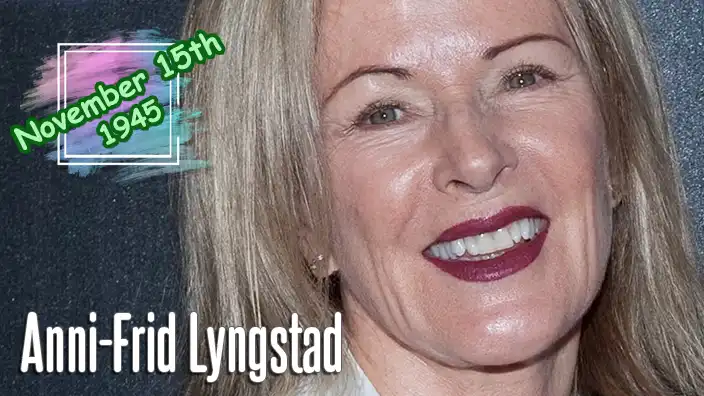
November 15, 1945, in Bjørkåsen, Norway

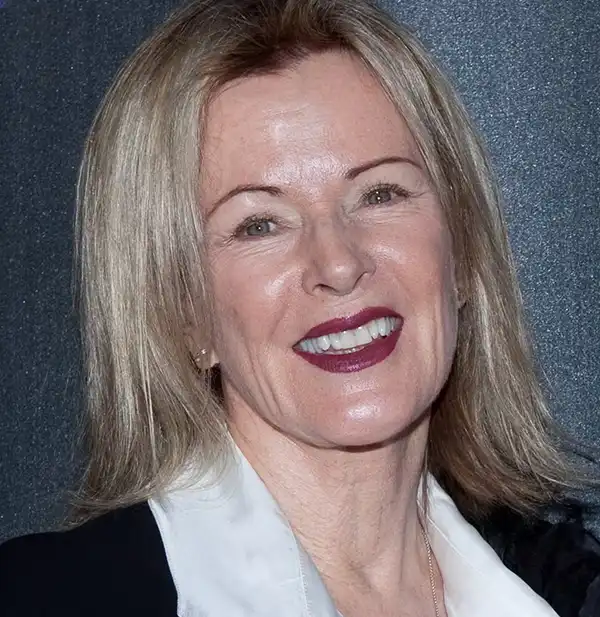
Anni-Frid Synni Lyngstad was born on November 15, 1945, in Bjørkåsen, a small village near Narvik in northern Norway, during the difficult months immediately following the Second World War. Her mother, Synni Lyngstad, was a young Norwegian woman, while her father, Alfred Haase, was a German soldier stationed in occupied Norway. Frida's early life was shaped by the complicated social circumstances surrounding children born to Norwegian mothers and German servicemen during the war. In the aftermath of the German occupation, many such families faced hostility and discrimination, creating an uncertain environment for young children who had played absolutely no part in the conflict.
When Frida was still very young, her grandmother, Arntine Lyngstad, took her to Sweden, where they eventually settled in Torshälla, near Eskilstuna. Her mother died in 1947, leaving Frida to be raised primarily by her grandmother. Although her childhood included considerable personal loss, her grandmother provided a loving home and encouraged her interest in music. Frida grew up surrounded by traditional Norwegian songs, popular music, and the melodies that would eventually inspire her career. Long before anyone imagined her performing before enormous international audiences, she was a little girl discovering that singing could bring happiness into a world that had already presented her with more than its fair share of difficulties.
Music quickly became an important part of Frida's childhood, and she began singing publicly while still at school. Her grandmother introduced her to traditional songs, while Frida developed an interest in jazz, swing, and the popular singers of the era. She particularly admired performers such as Ella Fitzgerald and Peggy Lee, whose expressive vocal styles influenced her developing technique. Unlike many aspiring pop singers who dream of instant fame, Frida initially approached music through careful listening, practice, and performances at local events. Her naturally rich voice and ability to interpret a song attracted attention, suggesting that the quiet young girl from Torshälla possessed an unusually promising musical future.
At thirteen, Frida began performing professionally with a dance band, gaining experience singing in front of live audiences. During the following years, she worked with several Swedish groups, including orchestras led by Bengt Sandlund and Gunnar Sandevärn. These performances exposed her to jazz standards, dance music, and popular entertainment, helping her develop the versatility that would later become essential to ABBA's distinctive sound. Performing in dance halls and local venues required stamina, professionalism, and the ability to keep audiences entertained through lengthy musical programs. It was an excellent education for someone who would eventually spend years singing to enormous crowds, although the average Swedish dance hall probably had fewer screaming fans than a packed international arena.
In 1963, Frida married musician Ragnar Fredriksson, with whom she had two children, Hans and Ann Lise-Lotte. Balancing motherhood, marriage, and a developing musical career presented considerable challenges, but she continued performing and pursuing opportunities within Sweden's entertainment industry. Her early professional life was far removed from the international fame she would later experience, involving local engagements, modest recording opportunities, and the ordinary responsibilities of family life. Nevertheless, her determination to continue singing demonstrated how important music had become to her identity. Even before ABBA, Frida was already learning the complicated art of managing a demanding schedule without allowing her ambitions to disappear beneath everyday obligations.
Her first major breakthrough came in 1967 when she entered and won a Swedish national talent competition called New Faces, held at the Skansen open-air museum in Stockholm. Her winning performance of the song En ledig dag attracted the attention of record industry professionals and earned her an appearance on Swedish television. The timing proved particularly fortunate because Sweden had recently changed from driving on the left side of the road to driving on the right, an event that dominated national attention. Frida's television appearance reached an unusually large audience, introducing her voice to viewers across the country. While Swedish motorists were busy remembering which side of the road to use, Frida was quietly beginning her journey toward international stardom.
Following her competition victory, Frida signed with EMI's Swedish recording division and released her first single, En ledig dag, in 1967. During the late 1960s, she recorded several additional songs and appeared on television, gradually establishing herself as a promising solo performer. Her early recordings often reflected her interest in jazz-influenced popular music and sophisticated vocal arrangements. Although these releases did not immediately transform her into a major recording star, they provided valuable studio experience and helped her develop relationships within Sweden's relatively small but increasingly ambitious music industry. The country would soon become one of the world's most influential exporters of popular music, although nobody yet realized just how many glittering costumes would be involved.
In 1969, Frida participated in Melodifestivalen, Sweden's national competition to select its entry for the Eurovision Song Contest. She performed Härlig är vår jord, finishing fourth in the competition. Although she did not win, the event proved enormously important for reasons extending beyond the music. During this period, she met Benny Andersson, a successful musician and former member of the Swedish pop group the Hep Stars. The two developed a romantic relationship and began collaborating musically, establishing a partnership that would eventually become one of the central relationships within ABBA. It was a meeting that would help change the direction of popular music, although at the time it probably seemed considerably less dramatic than it does in retrospect.
Meanwhile, another important musical partnership was developing between Björn Ulvaeus, formerly of the Hootenanny Singers, and songwriter Benny Andersson. Björn was also romantically involved with singer Agnetha Fältskog, creating a social and musical connection between four talented Swedish performers. By the early 1970s, Frida, Benny, Björn, and Agnetha had begun recording and performing together, initially experimenting with arrangements that combined their individual strengths. Their voices blended particularly well, with Agnetha's bright soprano complementing Frida's deeper, warmer vocal tone. The contrast became one of the defining characteristics of ABBA's music, giving the group a distinctive sound that would eventually become recognizable within seconds of a song beginning.
The quartet's first significant recordings appeared under the lengthy name Björn & Benny, Agnetha & Anni-Frid, a title that was accurate but hardly convenient for concert posters. In 1972, they released People Need Love, a song that achieved success in Sweden and encouraged further collaboration. The group subsequently adopted the name ABBA, formed from the first letters of the members' given names. It was a considerably more practical choice, particularly for anyone responsible for printing record sleeves. The new name also proved remarkably memorable, helping establish an identity that would soon become familiar to audiences around the world.
ABBA's international breakthrough came in 1974 when the group represented Sweden at the Eurovision Song Contest in Brighton, England, performing Waterloo. The energetic song combined catchy melodies, lively instrumentation, and memorable vocal harmonies with an elaborate stage presentation that immediately distinguished the group from many traditional Eurovision performers. Dressed in flamboyant costumes, the quartet delivered a performance that captured the attention of television viewers across Europe. ABBA won the competition, giving Sweden its first Eurovision victory and launching the group toward international fame. Napoleon may have lost at Waterloo in 1815, but ABBA managed to turn the same name into one of the most successful victories in pop music history.
Following their Eurovision triumph, ABBA faced the challenge of proving that Waterloo was not simply a one-hit success. The group continued recording and gradually developed a sophisticated pop sound built around strong songwriting, layered harmonies, and increasingly polished production techniques. Hits such as SOS, Mamma Mia, and Fernando helped establish their international reputation during the mid-1970s. Frida's voice played an essential role in these recordings, providing warmth, emotional depth, and a distinctive contrast to Agnetha's higher vocal register. Together, the two singers created harmonies that became central to ABBA's identity, transforming carefully constructed pop songs into performances that audiences could recognize immediately.
In 1976, ABBA released Arrival, an album that included some of their most enduring recordings. Among its songs was Dancing Queen, a sparkling disco-influenced pop masterpiece featuring Frida and Agnetha's celebrated harmonies. The single became ABBA's only number-one hit on the United States Billboard Hot 100 and achieved enormous international popularity. Other songs from the album, including Money, Money, Money and Knowing Me, Knowing You, demonstrated the group's ability to combine memorable melodies with stories about relationships, ambition, and disappointment. Frida's expressive vocal contributions helped give these songs their emotional character, while the group's increasingly sophisticated production established ABBA as one of the most accomplished pop acts of the decade.
Although ABBA became famous for upbeat melodies and colorful stage performances, many of their songs explored surprisingly complicated emotional themes. Frida's vocal performances were particularly effective in songs involving heartbreak, uncertainty, and personal reflection. Her deeper voice could communicate sadness and vulnerability while maintaining the polished musical style associated with the group. This ability became especially important as ABBA's songwriting developed beyond straightforward romantic pop songs into more mature explorations of relationships. Audiences might have arrived expecting cheerful music and extravagant costumes, only to discover that the lyrics were quietly examining the collapse of someone's marriage. ABBA had perfected the unusual art of making heartbreak sound wonderfully danceable.
The group's popularity continued growing with albums such as ABBA: The Album in 1977 and Voulez-Vous in 1979. Songs including Take a Chance on Me, The Name of the Game, Chiquitita, and Does Your Mother Know demonstrated their ability to move between different musical styles while maintaining a recognizable identity. ABBA's success extended across Europe, Australia, Japan, and numerous other international markets, making them one of the world's most commercially successful recording acts. Australia became particularly enthusiastic about the group, with ABBA enjoying extraordinary popularity through record sales, television appearances, and concert performances. For four musicians from Sweden, the prospect of having entire continents singing along to their songs must have been both astonishing and immensely satisfying.
Frida's personal life became increasingly connected with ABBA's public image when she married Benny Andersson in October 1978. Their relationship had already lasted several years, and their marriage appeared to reinforce the romantic partnerships at the heart of the group. However, maintaining personal relationships while managing international fame, recording schedules, and constant professional demands proved difficult. The couple separated in 1980 and divorced in 1981, creating emotional complications within the band. Agnetha and Björn had also separated and divorced, meaning that ABBA eventually consisted of two former married couples continuing to work together. Considering the circumstances, their ability to produce sophisticated music without turning every recording session into a family argument was a remarkable professional achievement.
The emotional experiences of the group's members influenced some of ABBA's most memorable later recordings. Frida delivered a particularly powerful lead vocal on The Winner Takes It All's companion-era masterpiece When All Is Said and Done, released on the 1981 album The Visitors. The song explored the aftermath of a relationship with maturity and resignation, and Frida's personal circumstances added emotional resonance to her performance. Although listeners often interpreted ABBA's later songs through the experiences of the group's members, the music remained carefully crafted artistic work rather than straightforward autobiography. Nevertheless, the combination of real emotional experiences and sophisticated songwriting gave the group's final studio albums a depth that distinguished them from their earlier recordings.
One of Frida's most celebrated ABBA performances came with Super Trouper, the title track of the group's 1980 album. Featuring her as lead vocalist, the song explores the loneliness and emotional exhaustion that can accompany life as a successful touring performer. Its cheerful melody contrasts with lyrics describing the difficulties of being constantly surrounded by crowds while longing for someone familiar. Frida's warm delivery gave the song a sense of intimacy despite its elaborate production. The recording became another international hit and remains one of the most recognizable examples of her vocal contribution to ABBA's success. It also provided a useful reminder that even enormously successful pop stars occasionally grow tired of airports, hotels, and people asking them to smile for another photograph.
By the early 1980s, ABBA's music had become increasingly introspective, with albums such as Super Trouper and The Visitors exploring mature themes and more experimental arrangements. The group continued achieving commercial success, but its members were also developing individual interests and considering future projects. Following the release of The Visitors in 1981 and several additional recordings in 1982, ABBA gradually stopped working together as a performing group. Although the members never announced a dramatic formal breakup, their extended pause eventually became a lengthy separation. For fans, the absence of new ABBA recordings was disappointing, but the group's existing catalog continued attracting listeners around the world.
Frida had already established herself as a solo recording artist before ABBA's international success, releasing her debut album Frida in 1971. Produced by Benny Andersson, the album featured Swedish-language recordings and demonstrated her abilities outside the developing group. In 1975, she released Frida ensam, another Swedish-language solo album that included her interpretation of Fernando. Her version appeared before ABBA released its internationally successful recording of the song in 1976. These early solo projects revealed that Frida possessed an established musical identity independent of ABBA, even though the group's extraordinary popularity would eventually overshadow much of her individual work.
In 1982, Frida launched a new phase of her solo career with the English-language album Something's Going On, produced by Phil Collins. The album marked a deliberate departure from ABBA's familiar musical style, incorporating contemporary rock and pop production with prominent drums and a more forceful sound. Its most successful single, I Know There's Something Going On, became an international hit and reached number thirteen on the Billboard Hot 100 in the United States. The recording demonstrated that Frida could achieve commercial success independently while adapting to the changing musical tastes of the early 1980s. Working with Collins also meant that the drums were unlikely to remain politely in the background.
Her next English-language solo album, Shine, appeared in 1984 and was produced by Steve Lillywhite. The recording explored a more atmospheric and experimental pop sound, reflecting Frida's interest in developing beyond the musical expectations associated with ABBA. Although it did not achieve the same commercial success as Something's Going On, the album demonstrated her willingness to take creative risks and collaborate with different producers. Following its release, Frida gradually reduced her recording activities and concentrated more attention on personal interests, family life, and charitable work. After years of international fame and demanding professional schedules, a quieter lifestyle offered opportunities that had been difficult to enjoy during ABBA's busiest period.
In 1992, Frida married Prince Heinrich Ruzzo Reuss of Plauen, a German nobleman, becoming Princess Reuss by marriage. The couple lived in Switzerland, where Frida developed a relatively private lifestyle away from the constant publicity of her ABBA years. Her marriage introduced another remarkable chapter in a life that had already taken her from a small Norwegian village to international pop stardom. However, her personal life was marked by tragedy when her daughter, Ann Lise-Lotte, died following a car accident in 1998. The following year, her husband died of cancer. These devastating losses profoundly affected Frida, who subsequently maintained a more private public profile while continuing to support causes important to her.
Despite these personal difficulties, Frida remained connected to music and occasionally returned to recording. In 1996, she released Djupa andetag, a Swedish-language album whose title translates as Deep Breaths. The recording marked her return to solo album releases after more than a decade and reflected a mature musical direction influenced by her personal experiences. She also participated in selected collaborations and special projects, although she generally avoided returning to the demanding schedule of a full-time international recording career. Her selective approach demonstrated that she valued creative satisfaction and personal independence more than maintaining a constant presence in the entertainment industry.
Frida has also devoted considerable attention to environmental protection and charitable activities. Living in Switzerland encouraged her appreciation for natural landscapes and environmental conservation, and she became involved in organizations promoting ecological awareness. She has supported initiatives addressing environmental responsibility, children's welfare, and humanitarian concerns, using her public recognition to draw attention to issues beyond entertainment. Her charitable involvement reflects a longstanding interest in contributing to causes that improve people's lives and protect natural resources. After spending years performing under powerful stage lights, she developed an equally strong appreciation for the considerably quieter attractions of the natural world.
ABBA's music experienced an extraordinary revival during the 1990s, particularly following the release of the compilation album ABBA Gold: Greatest Hits in 1992. The collection introduced the group's recordings to a new generation of listeners and became one of the bestselling compilation albums in music history. Its success demonstrated that ABBA's carefully constructed melodies and distinctive harmonies had lost little of their appeal. The revival gained further momentum through the stage musical Mamma Mia!, which premiered in London in 1999 and incorporated numerous ABBA songs into an original romantic comedy. The production became an international theatrical phenomenon, proving that songs written decades earlier could still inspire enthusiastic audiences, elaborate dance routines, and occasional outbreaks of singing in public.
The 2008 film adaptation of Mamma Mia!, starring Meryl Streep, Pierce Brosnan, Amanda Seyfried, and Colin Firth, introduced ABBA's music to another enormous audience. Frida attended the film's premiere alongside her former bandmates, providing fans with a rare opportunity to see all four ABBA members together. The film's commercial success, followed by Mamma Mia! Here We Go Again in 2018, further strengthened the group's cultural legacy. Although Frida did not return to full-time performing during this period, she remained an important part of the continuing ABBA story. The enduring popularity of the music demonstrated that the group's songs had become far more than nostalgic reminders of the 1970s.
In 2010, ABBA was inducted into the Rock and Roll Hall of Fame, recognizing the group's extraordinary influence on international popular music. Frida attended the ceremony with Benny Andersson, accepting the honor on behalf of the group alongside other representatives. The recognition acknowledged ABBA's achievements as songwriters, recording artists, and performers whose music had influenced generations of musicians. Their sophisticated vocal arrangements, memorable melodies, and polished production techniques helped establish standards that continued influencing popular music long after the original recordings were released. For a group once dismissed by some critics as lightweight commercial entertainment, induction into one of music's most prestigious institutions represented a particularly satisfying acknowledgment.
Perhaps the most surprising chapter in ABBA's history arrived in 2021 when the group released Voyage, its first studio album of new material in approximately forty years. Frida reunited with Agnetha, Benny, and Björn to record songs that retained elements of their familiar sound while reflecting the maturity of their voices and experiences. The album included I Still Have Faith in You and Don't Shut Me Down, both of which attracted considerable international attention. The announcement delighted longtime fans who had spent decades hoping for new music from the original quartet. It also demonstrated that ABBA could still generate excitement without relying entirely on nostalgia, elaborate costumes, or the questionable hairstyles of the 1970s.
The Voyage project also introduced an innovative concert experience in London, where digital versions of the ABBA members perform alongside a live band. Developed using sophisticated motion-capture technology and visual effects, ABBA Voyage opened in 2022 at a purpose-built arena in Queen Elizabeth Olympic Park. Frida and her bandmates participated in creating the digital performances, allowing audiences to experience a concert presentation resembling the group during its earlier years. Although the real musicians did not perform live on stage, the production combined modern technology with the group's classic recordings and newly created visual elements. It was an unusual solution to the problem of recreating a legendary pop concert without requiring four established musicians to spend another year living out of suitcases.
Frida's contribution to ABBA's musical identity remains especially important because of the distinctive relationship between her voice and Agnetha Fältskog's. While Agnetha often provided bright, soaring lead vocals, Frida contributed a warmer and deeper tone that enriched the group's harmonies. Their voices blended so effectively that listeners sometimes struggled to distinguish individual parts within the finished recordings. This vocal combination became one of ABBA's most recognizable characteristics, helping transform relatively simple melodies into rich and memorable arrangements. Frida's lead performances on songs such as Fernando, Super Trouper, Money, Money, Money, and When All Is Said and Done remain outstanding examples of her expressive abilities.
Throughout her life, Anni-Frid Lyngstad has experienced remarkable contrasts between personal hardship and extraordinary professional achievement. Born during the aftermath of war, raised largely by her grandmother, and introduced to music through local performances, she eventually became one of the most recognizable singers in international pop history. Her journey involved determination, natural talent, and the ability to adapt to changing circumstances while remaining connected to her musical identity. Alongside her ABBA bandmates, she helped create recordings that continue attracting listeners across generations, languages, and national boundaries.
Anni-Frid Lyngstad's enduring popularity reflects far more than the commercial success of ABBA. Her rich voice, expressive performances, and contribution to the group's distinctive harmonies helped create songs that remain central to popular culture. From the energetic excitement of Waterloo to the emotional complexity of When All Is Said and Done, her recordings capture an extraordinary range of human experiences. And although the original ABBA costumes might occasionally cause modern fashion designers to raise an eyebrow, the music itself has proved remarkably resistant to the passage of time. After all, nearly everyone knows an ABBA song, and a surprising number of people are prepared to demonstrate that knowledge at the slightest encouragement.
References & Sources