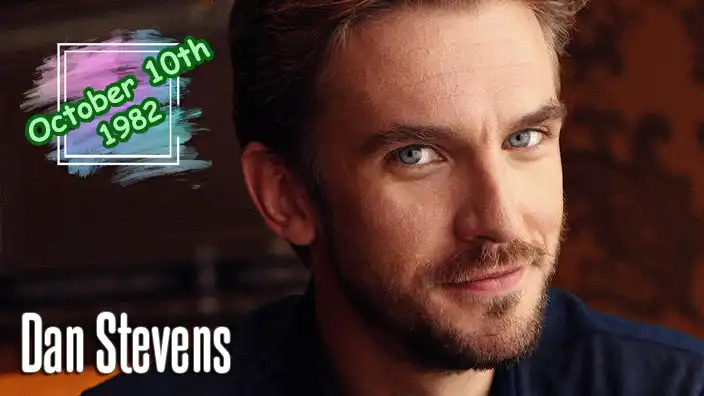
October 10, 1982, in Croydon, England
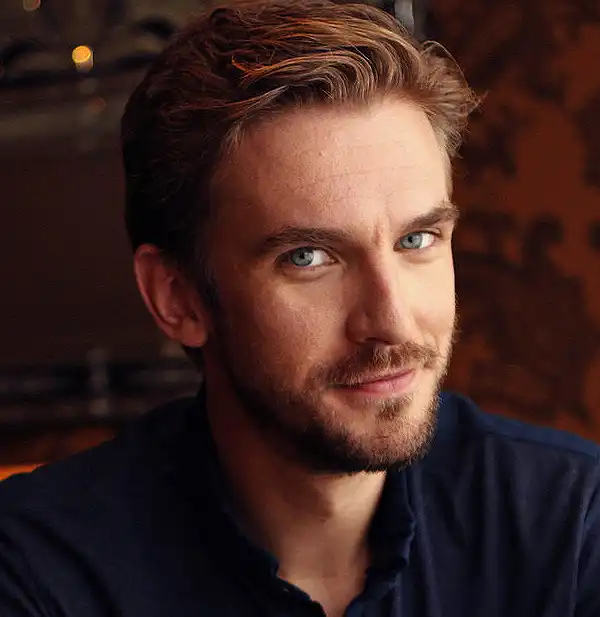
Daniel Jonathan Stevens, born October 10, 1982, in Croydon, London, England, is a British actor whose career has encompassed acclaimed television dramas, Hollywood blockbusters, independent films, theater, and voice acting. Best known for portraying Matthew Crawley in the internationally successful British period drama Downton Abbey and the Beast in Disney's live-action adaptation of Beauty and the Beast, Stevens has established himself as one of the most versatile performers of his generation. His willingness to move between romantic leading roles, psychological thrillers, supernatural adventures, and unconventional comedy has made his filmography particularly unpredictable. Audiences who first encountered him as a polite Edwardian gentleman have subsequently discovered that he is equally comfortable portraying a dangerous stranger, a troubled mutant, or a character whose personal grooming routine involves an alarming quantity of computer-generated fur.
Stevens was adopted at birth by parents who worked as teachers and grew up in southeast England and Wales. His childhood included a strong emphasis on education, literature, and creative expression, although he has acknowledged that his school years were not always characterized by perfect behavior. He attended Tonbridge School, an independent boarding school in Kent, where his interest in acting developed through participation in school theatrical productions. Like many young performers, Stevens discovered that the stage offered an opportunity to channel energy, curiosity, and imagination into something considerably more productive than irritating teachers. His experiences in school productions encouraged him to consider acting seriously, setting him on a professional path that would eventually take him from British repertory theater to major international film productions.
Stevens subsequently attended Emmanuel College, Cambridge, where he studied English literature and became involved in the university's active theatrical community. His academic education exposed him to a broad range of literary works, from classical drama to contemporary fiction, helping develop the interpretive skills that would become central to his acting. During his university years, he participated in productions with the Footlights and other student theater groups, gaining experience in comedy, drama, and experimental performance. His involvement in university theater also brought him into contact with professional directors and performers who recognized his potential. Studying literature while performing regularly provided a particularly useful foundation for a career involving adaptations of novels, historical dramas, and characters whose dialogue occasionally required considerably more thought than the average conversation about the weather.
An important early influence was the distinguished British theater director Sir Peter Hall, who recognized Stevens's talent while he was still developing his professional career. Hall cast him in a touring production of Shakespeare's As You Like It, providing an opportunity to perform classical theater under the guidance of one of Britain's most respected directors. Stevens's portrayal of Orlando earned critical attention and helped establish his reputation as a promising young actor. His performance received recognition at the Ian Charleson Awards, which celebrate outstanding classical stage performances by young actors. The experience demonstrated his ability to handle Shakespearean dialogue while maintaining the emotional clarity and physical presence necessary for live theater. It also reinforced the value of classical training, particularly for a performer who would later spend considerable time portraying characters required to express romantic devotion without the assistance of modern text messaging.
Stevens continued developing his stage career through appearances in productions including The Romans in Britain, Hay Fever, and The Vortex. These roles allowed him to explore different theatrical traditions, from historical drama to sophisticated comedy. His work on stage required the discipline of repeated performances, close collaboration with fellow actors, and an ability to communicate directly with audiences without the advantages of cinematic editing. Theater also encouraged him to develop a strong command of language, an attribute that would later prove valuable in both period dramas and voice performances. Although his eventual television success would introduce him to a much larger audience, his early stage experiences established the technical foundation that enabled him to approach increasingly varied screen roles.
His early television appearances included the BBC miniseries The Line of Beauty, adapted from Alan Hollinghurst's award-winning novel. Stevens portrayed Nick Guest, a young man who becomes involved with a wealthy Conservative family during 1980s Britain. The production explored class divisions, sexuality, political ambition, and the cultural tensions of the period, providing Stevens with a demanding leading role. His performance demonstrated a capacity for emotional subtlety and complex characterization, attracting attention from critics and television producers. The series represented an important step in his transition from stage actor to screen performer, establishing him as a talent capable of carrying sophisticated literary adaptations.
Stevens also appeared in the television adaptations Sense & Sensibility in 2008 and The Turn of the Screw in 2009. In Sense & Sensibility, based on Jane Austen's novel, he portrayed Edward Ferrars, a reserved gentleman whose romantic feelings are complicated by family expectations and personal obligations. The role suited his ability to communicate restrained emotion through subtle expressions and carefully measured dialogue. Austen adaptations require performers to convey intense romantic feelings while observing social conventions that discourage openly discussing them, a challenge Stevens handled with considerable skill. His performance reinforced his reputation as a convincing interpreter of historical characters, particularly those whose greatest difficulties involve deciding whether expressing affection might constitute a breach of etiquette.
The defining breakthrough of Stevens's early career arrived in 2010 when he was cast as Matthew Crawley in Downton Abbey, created by Julian Fellowes. The series follows the aristocratic Crawley family and their servants during a period of profound social change in early twentieth-century Britain. Stevens's character, a middle-class solicitor unexpectedly positioned to inherit the family estate, initially struggles to adapt to the elaborate traditions and expectations of aristocratic society. Matthew's practical outlook and reluctance to embrace inherited privilege create tensions with established members of the household, particularly the formidable Dowager Countess of Grantham, portrayed by Maggie Smith. Stevens brought warmth, intelligence, and understated humor to the role, establishing Matthew as an appealing contrast to the rigid social conventions surrounding him.
Matthew Crawley's relationship with Lady Mary Crawley, portrayed by Michelle Dockery, became one of the central storylines of Downton Abbey. Their complicated romance developed through misunderstandings, family expectations, personal pride, and the considerable inconvenience of historical events. Stevens and Dockery developed convincing on-screen chemistry, helping transform the relationship into a major attraction for viewers. Their characters' emotional journey unfolded against the backdrop of the First World War, changing social attitudes, and the decline of traditional aristocratic authority. Matthew's experiences during the war also provided opportunities for Stevens to explore the psychological and physical consequences of military service, adding dramatic complexity to a character initially introduced as a comparatively ordinary young solicitor.
The enormous international success of Downton Abbey transformed Stevens into a widely recognized television star. The series attracted audiences across Britain, the United States, and numerous other countries, earning critical recognition for its performances, production design, historical atmosphere, and storytelling. Stevens became particularly popular among viewers who appreciated Matthew's combination of decency, romantic sincerity, and occasional frustration with aristocratic customs. His portrayal helped establish the character as one of the emotional foundations of the series, particularly as Matthew's relationship with Mary developed into marriage and family life. For a performer who had spent years working in theater and smaller television productions, the sudden international attention represented a significant change in professional circumstances.
Stevens's departure from Downton Abbey at the conclusion of its third season in 2012 became one of the most widely discussed developments in the show's history. His character was killed in a motor accident shortly after the birth of his son, leaving audiences shocked and heartbroken. The dramatic exit generated considerable public reaction, particularly because Matthew had become such an important figure in the series. Stevens subsequently explained that his decision to leave reflected a desire to explore different professional opportunities rather than remain associated indefinitely with a single character. Although the decision surprised viewers, it demonstrated his determination to pursue a varied acting career. From the audience's perspective, however, it also established a useful rule for watching historical television dramas: never become too comfortable when a beloved character climbs into a motorcar.
Following his departure from Downton Abbey, Stevens relocated to the United States with his family and began pursuing a broader range of film and television opportunities. Rather than concentrating exclusively on romantic leading roles, he deliberately explored characters that contrasted sharply with Matthew Crawley. His willingness to challenge audience expectations became a defining feature of this period, allowing him to demonstrate physical transformation, psychological intensity, and comic versatility. The transition was not without professional risks, since leaving an internationally successful television series offered no guarantee of comparable opportunities elsewhere. Nevertheless, Stevens approached the change as an opportunity to develop a more unpredictable and creatively satisfying career.
One of his most striking performances came in the 2014 psychological thriller The Guest, directed by Adam Wingard. Stevens portrayed David Collins, a mysterious former soldier who arrives at the home of a family grieving the death of their son. Initially charming, polite, and apparently helpful, David gradually reveals a far more dangerous personality. The role required Stevens to combine physical intensity with unsettling charisma, presenting a character whose pleasant manners conceal increasingly disturbing intentions. His performance represented a dramatic departure from the gentlemanly image associated with Downton Abbey, demonstrating that his carefully cultivated charm could become considerably more frightening when placed in the wrong circumstances. The film subsequently developed a strong cult following, with Stevens receiving praise for his ability to make David simultaneously appealing and deeply threatening.
The same year, Stevens appeared in A Walk Among the Tombstones, starring Liam Neeson, and the family adventure Night at the Museum: Secret of the Tomb. In the latter, he portrayed Sir Lancelot, a legendary knight brought to life through the museum's magical exhibits. The role allowed him to combine heroic appearance with comedy, particularly as Lancelot attempted to understand a modern world far removed from Arthurian legend. Working alongside Ben Stiller, Robin Williams, and an ensemble of established comedy performers provided Stevens with another opportunity to demonstrate his versatility. His portrayal embraced the character's noble confidence while finding humor in the absurdity of a medieval knight wandering through contemporary museums and entertainment venues.
Stevens achieved another major international breakthrough when he was cast as the Beast in Disney's 2017 live-action adaptation of Beauty and the Beast, directed by Bill Condon. The production starred Emma Watson as Belle and featured a distinguished supporting cast including Luke Evans, Kevin Kline, Ewan McGregor, Ian McKellen, Emma Thompson, and Stanley Tucci. Based on Disney's beloved 1991 animated musical, the film combined live-action performances with elaborate computer-generated imagery and musical sequences. Stevens portrayed the cursed prince transformed into a monstrous creature whose redemption depends on learning compassion and earning genuine affection. The role required an unusual combination of dramatic acting, singing, physical performance, and extensive digital technology.
Bringing the Beast to life presented considerable technical challenges. Stevens performed in a motion-capture suit and elevated footwear to establish the creature's enormous physical presence, while facial performance technology helped translate his expressions into the digitally created character. The process required him to deliver emotional scenes while wearing equipment that bore little resemblance to the finished creature audiences would see on screen. His performance also involved singing, including the musical number "Evermore," which became an important addition to the live-action adaptation. Stevens approached the role by emphasizing the Beast's emotional vulnerability beneath his intimidating appearance, helping audiences connect with a character whose outward appearance was almost entirely computer-generated. It was a remarkable professional assignment, particularly for an actor whose previous television wardrobe had consisted largely of elegant suits and carefully arranged collars.
Beauty and the Beast became an enormous commercial success, earning more than $1.2 billion worldwide and introducing Stevens to a new generation of viewers. His portrayal contributed to the film's romantic and emotional appeal, demonstrating that a digitally transformed character could still communicate recognizable human feelings. The production also allowed Stevens to reconnect with his musical abilities, which had received less attention during his earlier screen career. Although the Beast's appearance was created through sophisticated visual effects, the character's personality depended heavily on Stevens's performance, particularly his vocal delivery and emotional interpretation. The success confirmed that his departure from Downton Abbey had opened the door to opportunities extending far beyond traditional British period drama.
During the same period, Stevens took on another unconventional leading role in the FX television series Legion, created by Noah Hawley and inspired by characters from Marvel Comics. He portrayed David Haller, a troubled young man who discovers that his unusual psychological experiences may be connected to extraordinary mutant abilities. The series combined superhero storytelling with psychological drama, surreal imagery, science fiction, and experimental narrative techniques. Unlike conventional superhero productions centered on straightforward battles between heroes and villains, Legion explored questions of identity, perception, power, and the reliability of human experience. Stevens's performance required him to navigate a character whose understanding of reality was constantly challenged, often leaving audiences equally uncertain about what was actually happening.
The series ran for three seasons from 2017 to 2019 and attracted critical praise for its originality, visual style, and ambitious storytelling. Stevens's portrayal of David Haller demanded considerable emotional range, shifting between vulnerability, confusion, humor, anger, and increasingly troubling expressions of power. The character's development challenged traditional expectations of superhero protagonists, presenting a central figure whose actions became progressively more difficult to justify. Stevens embraced the complexity of the role, creating a performance that was frequently unpredictable and emotionally unsettling. For viewers accustomed to seeing him as Matthew Crawley, the transformation was particularly striking. The polite gentleman who once worried about the future of an English country estate was now navigating psychic battles, alternate realities, and problems that no amount of afternoon tea could reasonably resolve.
Stevens continued expanding his filmography with appearances in Marshall, The Man Who Invented Christmas, and Permission. In The Man Who Invented Christmas, he portrayed Charles Dickens during the creation of A Christmas Carol, exploring the writer's financial pressures, creative struggles, and imaginative relationship with his fictional characters. The film presented Dickens as an energetic and sometimes difficult artist whose inspiration emerged from personal experiences and the social conditions of Victorian London. Stevens's literary education and theatrical background proved particularly appropriate for the role, allowing him to portray a famous writer with enthusiasm and emotional complexity. His performance also demonstrated that he could return to historical drama without simply repeating the mannerisms that had made Matthew Crawley so recognizable.
His career continued into comedy with Eurovision Song Contest: The Story of Fire Saga, starring Will Ferrell and Rachel McAdams. Stevens portrayed Alexander Lemtov, an extravagant Russian singer competing in the fictionalized Eurovision Song Contest. The character combined flamboyant costumes, theatrical confidence, and a personality seemingly designed to occupy every available inch of the stage. Stevens embraced the absurdity of the role, delivering a performance that contrasted dramatically with his more restrained dramatic characters. The film celebrated the eccentric spectacle of Eurovision while gently parodying its traditions, and Stevens's enthusiastic portrayal became one of its memorable comic elements. After playing aristocrats, dangerous soldiers, and supernatural beings, he had finally discovered a character for whom subtlety was clearly an optional extra.
Stevens also appeared in the 2020 supernatural comedy Blithe Spirit, based on Noël Coward's play, alongside Judi Dench, Leslie Mann, and Isla Fisher. The story follows a writer whose domestic life becomes complicated when a séance accidentally summons the ghost of his deceased wife. Stevens portrayed Charles Condomine, a man whose attempts to manage the competing demands of his living and deceased spouses lead to increasingly chaotic circumstances. The role allowed him to return to the sophisticated British comedy tradition associated with Coward, combining polished dialogue with farcical situations. His performance demonstrated an ability to navigate theatrical material that depends heavily on timing, verbal precision, and the gradual collapse of respectable behavior.
Another notable performance came in the German science-fiction romantic comedy I'm Your Man, directed by Maria Schrader. Stevens portrayed Tom, a humanoid robot programmed to become the ideal romantic partner for a skeptical scientist, played by Maren Eggert. The film explored artificial intelligence, loneliness, emotional attachment, and the meaning of human relationships, using an unusual romantic premise to examine philosophical questions. Stevens delivered much of his performance in German, demonstrating his linguistic abilities and willingness to undertake demanding international projects. His portrayal required a delicate balance between artificial perfection and emerging emotional complexity, creating a character who was simultaneously charming, unsettling, and unexpectedly sympathetic. For an actor whose career had already included playing a digitally created Beast, portraying a technologically manufactured boyfriend represented another interesting development in the relationship between performance and artificial humanity.
Stevens's more recent film work has continued exploring unusual characters and genres. In Godzilla x Kong: The New Empire, he portrayed Trapper, an eccentric veterinarian specializing in enormous prehistoric creatures. The role allowed him to combine action, adventure, and comedy within a major Hollywood production featuring some of cinema's most recognizable monsters. His character's relaxed personality and unconventional professional expertise provided moments of humor amid spectacular battles involving creatures capable of destroying entire cities. It was another example of Stevens choosing a role that resisted easy categorization, particularly since veterinary medicine becomes considerably more complicated when the patient is taller than a skyscraper.
He also appeared in the 2024 horror film Abigail, directed by Matt Bettinelli-Olpin and Tyler Gillett. The film follows a group of criminals who kidnap a young girl, only to discover that their intended victim possesses terrifying supernatural abilities. Stevens portrayed Frank, a former detective whose increasingly desperate attempts to survive reveal darker aspects of his personality. The production combined horror, violence, and dark comedy, providing another opportunity for Stevens to explore morally questionable characters. His performance reinforced his growing association with unconventional genre films, where charming appearances frequently conceal unpleasant intentions and apparently straightforward situations tend to deteriorate spectacularly.
In 2024, Stevens also starred in Cuckoo, portraying the sinister Herr König, a resort operator whose seemingly respectable establishment conceals disturbing secrets. The film combined psychological horror, mystery, and surreal imagery, allowing Stevens to develop another eccentric antagonist. His performance embraced the character's unsettling mannerisms and ambiguous motivations, demonstrating an increasing enthusiasm for roles that challenge conventional expectations of leading men. The film's unusual atmosphere and disturbing storyline provided a suitable setting for an actor who had become particularly accomplished at transforming ordinary charm into something considerably more threatening.
Beyond his film and television work, Stevens has maintained an interest in literature, narration, and voice performance. He has narrated numerous audiobooks, including literary classics and contemporary fiction, earning recognition for his expressive reading style and ability to distinguish characters through vocal performance. His narration of works such as Mary Shelley's Frankenstein and Agatha Christie's And Then There Were None demonstrates his appreciation for storytelling beyond the visual medium. Audiobook narration requires a different form of acting, relying entirely on vocal expression to communicate personality, atmosphere, and emotional development. For Stevens, whose theatrical training emphasized clarity and control of language, the format provides an opportunity to explore literary characters without elaborate costumes, visual effects, or the inconvenience of being chased by imaginary monsters.
His voice acting has also extended to animation, including work in the animated series Solar Opposites. Stevens took over the role of Korvo beginning with the show's fourth season, bringing a distinctly British interpretation to the irritable extraterrestrial character. The change introduced a new vocal personality while preserving the series' established humor and science-fiction absurdity. His performance demonstrated an ability to adapt his voice to animated comedy, where exaggerated emotions and rapid dialogue often replace the subtle physical expressions available in live-action acting. It also added yet another unusual character to his professional collection, although an argumentative alien remains relatively ordinary when compared with some of his previous assignments.
Away from his professional commitments, Stevens has built a family life with his wife, South African jazz singer and vocal coach Susie Hariet, whom he married in 2009. The couple have three children and have maintained a relatively private family life despite his international recognition. Hariet's musical background has complemented Stevens's own interests in performance, and he has acknowledged her influence and support throughout his career. Their family relocated to the United States as his professional opportunities expanded, balancing the demands of international film production with the responsibilities of raising children. Stevens has generally avoided making his private life a central feature of his public personality, preferring to allow his performances to attract attention rather than his domestic arrangements.
Stevens's interests extend beyond acting into literature, writing, music, and cultural commentary. He has contributed articles and reviews to publications, demonstrating the continuing influence of his academic background in English literature. His enthusiasm for books and storytelling reflects an intellectual curiosity that has shaped many of his professional choices, particularly his involvement in literary adaptations and experimental productions. He has also participated in theatrical readings and other cultural events, maintaining connections with the literary and dramatic traditions that helped establish his career. These interests provide a useful explanation for the variety of roles he has pursued, since his work frequently involves characters whose stories challenge familiar narrative conventions.
One of the most distinctive features of Stevens's career is his willingness to resist the limitations of a recognizable public image. Following the success of Downton Abbey, he could easily have concentrated on romantic dramas and aristocratic characters, building a career around the qualities that initially made him famous. Instead, he deliberately pursued psychologically complicated individuals, supernatural creatures, eccentric villains, and unconventional comic personalities. This approach has occasionally produced films that divide critics and audiences, but it has also established him as a performer whose next project is rarely predictable. His willingness to accept creative risks demonstrates an interest in developing his abilities rather than simply repeating commercially successful formulas.
His performances frequently explore the contrast between outward appearance and underlying personality. Matthew Crawley appeared conventional but challenged the traditions of aristocratic society, while David Collins in The Guest used charm to conceal dangerous intentions. The Beast in Beauty and the Beast possessed a frightening exterior that concealed emotional vulnerability, while David Haller in Legion struggled to understand the relationship between extraordinary power and personal identity. These characters differ enormously in genre and presentation, yet each involves questions of identity, perception, and the difference between what individuals appear to be and what they actually are. Stevens's ability to communicate these contradictions has become one of his most valuable qualities as an actor.
Dan Stevens's career illustrates the possibilities available to a performer willing to move beyond the expectations created by early success. From classical theater and literary adaptations to international television stardom, Disney musicals, psychological thrillers, science-fiction adventures, and unconventional comedy, he has developed an impressive body of work characterized by variety and experimentation. His portrayal of Matthew Crawley in Downton Abbey introduced him to millions of viewers, while Beauty and the Beast, Legion, The Guest, and numerous later productions demonstrated the breadth of his abilities. Whether appearing as a romantic gentleman, a terrifying stranger, a troubled mutant, or an eccentric monster specialist, Stevens brings intelligence, energy, and a willingness to embrace the unusual to his performances. And while his departure from Downton Abbey may still trouble viewers who remember Matthew Crawley's unfortunate encounter with a motorcar, his subsequent career has proved that leaving the family estate was only the beginning of a much more adventurous journey.
Stevens's career has continued to develop in unexpected directions. In 2025, he appeared in the supernatural horror film The Ritual, portraying Father Joseph Steiger, and further expanded his television work with the political thriller Zero Day. His growing reputation for playing unsettling characters also led to his casting as the Five Borough Killer in the second season of Dexter: Resurrection, announced in April 2026. The character is a serial killer who terrorizes New York City, marking another substantial departure from Stevens's early romantic roles. Evidently, the gentleman from Downton Abbey has become a particularly attractive prospect for casting directors searching for someone who can smile pleasantly while making audiences deeply suspicious.
In August 2026, another major career development was announced when Stevens was selected to play the title character in Amazon Prime Video's planned RoboCop television series. The eight-episode production reimagines the familiar science-fiction story of a fallen police officer whose consciousness is implanted into a powerful robotic body. The casting represents another intriguing addition to Stevens's collection of physically transformed characters, following his performances as the Beast and several supernatural or psychologically complicated figures. From Edwardian aristocrat to mechanical law enforcement officer is quite a professional journey, although at least RoboCop is unlikely to be troubled by the etiquette of an aristocratic dinner party.