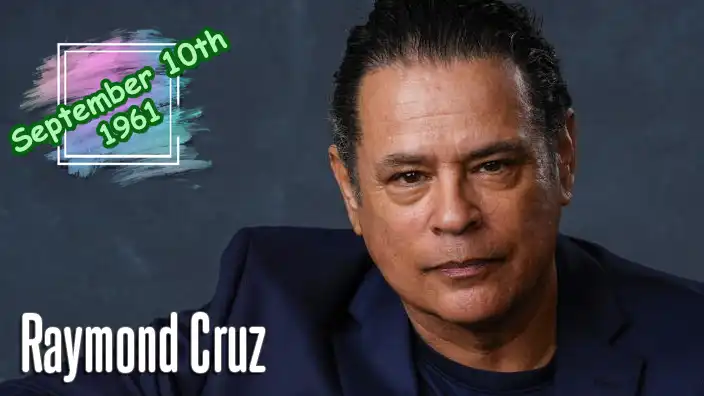
September 10, 1961, in Los Angeles, California
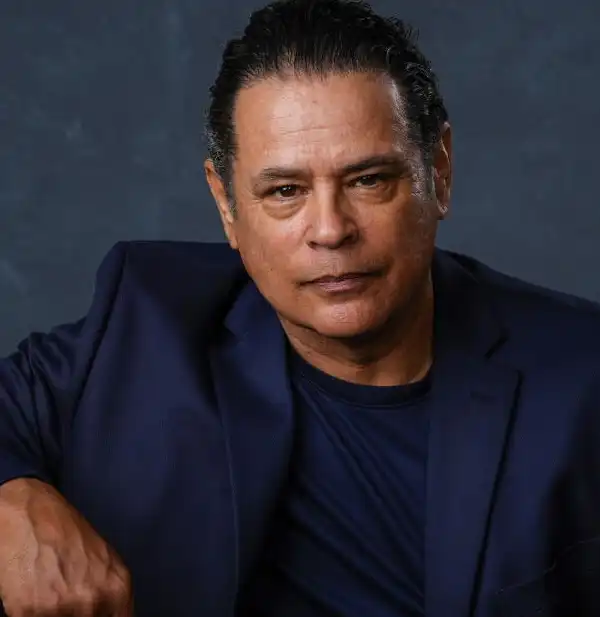
Raymond Cruz was born on September 10, 1961, in Los Angeles, California, and grew up in East Los Angeles. His upbringing exposed him to a community with a rich cultural identity, but also to the realities of neighborhood violence and the challenges faced by many working-class families. Cruz has spoken about witnessing violence during his childhood and how those experiences influenced his understanding of the characters he would later portray. Rather than romanticizing the criminal world, he developed an awareness of its consequences, an understanding that would eventually help him bring authenticity to some of television’s most intimidating fictional figures.
Cruz’s path into acting began with an interest in performance and the opportunities available through theater. He studied at East Los Angeles College and became involved in acting, discovering a profession that allowed him to explore personalities and experiences very different from his own. His early career involved the familiar challenges faced by aspiring actors: auditions, small roles, uncertain employment, and the need to convince casting directors that he could bring something distinctive to a production. The process required patience and persistence, qualities that are not always obvious when watching him portray a character who appears to have very little patience with anyone.
His professional screen career began in the late 1980s, and he gradually established himself through supporting roles in film and television. Early appearances included projects such as Maid to Order and Twice Dead, followed by a growing number of parts in crime dramas, action films, and other productions. Cruz’s appearance, voice, and ability to convey intensity made him a natural choice for characters operating in dangerous or high-pressure environments. However, his career would eventually demonstrate that he was capable of considerably more than simply looking threatening in the background of a police investigation.
One of his early notable film appearances came in Gremlins 2: The New Batch in 1990, where he played a messenger. The film’s mixture of horror, comedy, and elaborate creature effects provided a very different environment from the realistic crime dramas that would later become associated with his name. He also appeared in The Death of the Incredible Hulk and continued building his résumé through a variety of television and film projects. These early roles may not have made him famous, but they provided valuable experience and helped establish him as a reliable working actor.
Cruz appeared in Under Siege in 1992, the action thriller starring Steven Seagal, and in Clear and Present Danger in 1994, based on the Tom Clancy novel. He also had a role in The Rock in 1996, the Michael Bay action film starring Sean Connery and Nicolas Cage. These productions placed him alongside major Hollywood performers and introduced him to audiences who may not yet have recognized his name. His ability to fit convincingly into military, law-enforcement, and criminal settings made him a valuable presence in films where the stakes were high and the dialogue was frequently interrupted by explosions.
His film work during the 1990s also included Blood In Blood Out, released in 1993, in which he played Chuey. The crime drama explored the lives of three Chicano relatives and the consequences of their involvement in gangs, prison, and family conflict. The film developed a lasting following, particularly among audiences who appreciated its portrayal of Mexican-American identity and its examination of loyalty and violence. Cruz’s participation in the production formed part of a broader career in which he frequently portrayed characters connected to the social environments he had known while growing up, although his own life had taken a very different direction.
In 1997, Cruz appeared in Alien Resurrection, the fourth film in the Alien franchise, playing Distephano, a soldier aboard the USM Auriga. The production offered him an opportunity to work in science fiction, surrounded by elaborate sets, futuristic technology, and one of cinema’s most unpleasant extraterrestrial species. His character became part of the film’s increasingly desperate struggle for survival, demonstrating that even a disciplined soldier can find his professional training somewhat inadequate when confronted with a creature whose principal interests include acid blood and eating the crew.
Cruz continued appearing in television dramas throughout the late 1990s and early 2000s, building a reputation for convincing performances in guest and recurring roles. His credits included series such as The X-Files, NYPD Blue, ER, The Practice, 24, and CSI: Miami. These appearances allowed him to work across different genres and production styles, from medical drama to science fiction and police procedurals. Character actors often develop their careers through precisely this kind of work, becoming familiar faces to audiences long before a single role makes their names widely recognizable.
A major turning point came in 2005 when Cruz was cast as Detective Julio Sanchez in The Closer, the TNT crime drama starring Kyra Sedgwick as Deputy Chief Brenda Leigh Johnson. Sanchez was a member of the Los Angeles Police Department’s Priority Homicide Division, a skilled detective whose tough exterior concealed a more complicated personality. The role gave Cruz the opportunity to portray a character over an extended period, allowing audiences to see his professional competence, loyalty, personal struggles, and relationships with colleagues develop across multiple seasons.
The Closer became a major success for TNT, running for seven seasons from 2005 to 2012. Cruz’s portrayal of Sanchez was an important part of the ensemble, and the character became known for his direct manner, investigative ability, and occasional difficulty controlling his temper. Unlike many of the criminals Cruz had portrayed earlier in his career, Sanchez operated on the side of the law, although he was not always the easiest person to have in a meeting. The role demonstrated Cruz’s ability to combine toughness with vulnerability, creating a character who could be intimidating in one scene and unexpectedly sympathetic in the next.
When The Closer concluded, Cruz continued playing Julio Sanchez in the spin-off series Major Crimes, which premiered in 2012. The new program followed many of the same characters under the leadership of Captain Sharon Raydor, played by Mary McDonnell. Sanchez remained a central member of the team, and the series explored additional aspects of his personal life, including grief, anger, and his efforts to build a family. Cruz’s long association with the character gave him the opportunity to develop a more nuanced performance than would have been possible in a single film or guest appearance.
Major Crimes ran for six seasons, concluding in 2018, and Cruz’s work across the two series made Julio Sanchez one of his most substantial television roles. The character’s development illustrated the value of long-form storytelling, in which an actor can gradually reveal different aspects of a personality rather than establishing everything in a few minutes of screen time. For viewers who knew Cruz primarily as Tuco Salamanca, Sanchez offered a useful reminder that the actor was perfectly capable of playing a man who could conduct an investigation without immediately threatening to rearrange the furniture.
The role that brought Cruz his greatest international recognition arrived in 2008, when he appeared as Tuco Salamanca in Breaking Bad. Created by Vince Gilligan, the AMC series followed chemistry teacher Walter White, played by Bryan Cranston, as he entered the criminal drug trade after receiving a cancer diagnosis. Tuco was introduced as a volatile and dangerous distributor whose unpredictable behavior made him a terrifying figure for Walter and his partner Jesse Pinkman, played by Aaron Paul. Cruz’s performance immediately established the character as someone whose presence could transform an ordinary conversation into a life-threatening situation.
Tuco Salamanca was memorable not simply because he was violent, but because Cruz portrayed him with an extraordinary level of energy and unpredictability. The character could shift from apparent friendliness to explosive rage with almost no warning, leaving both the other characters and the audience uncertain about what might happen next. His physical movements, facial expressions, and sudden changes in tone created a sense of danger that extended beyond the dialogue. Cruz made Tuco frightening because he seemed capable of doing anything, including something that made absolutely no sense to anyone else in the room.
One of Tuco’s most recognizable moments involved his enthusiastic reaction to the quality of Walter White’s methamphetamine, accompanied by the exclamation “Tight! Tight! Tight!” The line became a popular quotation among fans and helped establish the character’s place in the cultural memory of the series. Cruz’s delivery turned a relatively simple expression into something both comic and deeply unsettling, a combination that Breaking Bad frequently used to remarkable effect. It is difficult to imagine many other characters who could make a compliment sound as though it might be followed by a serious workplace safety incident.
Cruz appeared in the first two seasons of Breaking Bad, with Tuco’s storyline concluding in 2009. The character’s departure was dramatic, but his impact on the series was considerable. Tuco helped establish the danger of the criminal world into which Walter and Jesse had entered, demonstrating that their decisions could expose them to people whose behavior was far beyond their ability to control. His presence also contributed to the development of the Salamanca family, whose members would become increasingly important to the wider story of Breaking Bad and its eventual prequel.
The physical and emotional demands of playing Tuco were significant. Cruz has described the role as exhausting, particularly because the character required such sustained intensity. He has also explained that he approached Tuco as a person whose behavior was shaped by drug use and a distorted sense of power, rather than simply playing him as a conventional villain. This attention to the character’s internal logic helped make the performance convincing, even when Tuco’s actions were extreme. The actor’s ability to understand the character without endorsing his behavior is an important distinction, especially when portraying someone whose principal method of conflict resolution appears to involve shouting and physical destruction.
Cruz returned to the role in Better Call Saul, the prequel series created by Vince Gilligan and Peter Gould. The show premiered in 2015 and explored the earlier life of lawyer Jimmy McGill, played by Bob Odenkirk, before his transformation into Saul Goodman. Tuco appeared in the series’ opening episodes, providing an immediate connection to the world of Breaking Bad and reminding viewers that the Salamanca family had been causing problems long before Walter White entered the picture. Cruz’s return was welcomed by fans who appreciated the opportunity to see the character in a different stage of the fictional timeline.
His appearances in Better Call Saul also allowed the writers to explore Tuco’s relationships with other members of the Salamanca family, including his uncle Hector Salamanca, played by Mark Margolis. The family’s criminal activities and internal loyalties became an important part of the prequel’s narrative, and Tuco’s presence helped establish the dangerous environment surrounding Jimmy McGill and Mike Ehrmantraut. Although Cruz did not appear throughout the entire series, his performance remained an important part of the shared fictional universe, demonstrating how a relatively limited amount of screen time can create a lasting impression.
The popularity of Tuco Salamanca has sometimes led audiences to associate Cruz almost exclusively with violent or intimidating characters. This is a familiar challenge for character actors whose most recognizable performances are particularly distinctive. Cruz has spoken about the differences between himself and Tuco, emphasizing that the character’s behavior is not a reflection of his own personality. His broader career, particularly his long-running work as Julio Sanchez, demonstrates a much wider range of abilities. The fact that an actor can convincingly portray a dangerous criminal does not mean he spends his weekends practicing threatening expressions in the bathroom mirror.
Cruz’s film career continued alongside his television success. He appeared in Training Day in 2001, the crime thriller starring Denzel Washington and Ethan Hawke, playing a gang member named Sniper. The film’s depiction of corruption and violence in Los Angeles provided another opportunity for Cruz to contribute to a gritty urban drama. He also appeared in Collateral Damage in 2002 and Havoc in 2005, continuing to build a résumé that included both major studio productions and smaller independent projects.
In 2019, Cruz took on the title role in The Curse of La Llorona, a supernatural horror film inspired by the Latin American legend of the weeping woman. He played Rafael Olvera, a former priest who becomes involved in helping a family confront the supernatural threat. The role offered a different kind of intensity from his crime-drama work, combining spiritual knowledge, determination, and the familiar horror-movie problem of discovering that ordinary household security measures are not particularly effective against a malevolent spirit. His performance brought a grounded presence to a story built around folklore and supernatural terror.
His other screen work has included appearances in Cleveland Abduction, The Blue Mauritius, and additional independent film projects. Cruz has continued to seek roles that allow him to explore different characters and genres, rather than relying entirely on the reputation established by his most famous television performances. His career reflects the versatility required of a working actor, particularly one who has spent decades moving between supporting film roles, guest appearances, and long-running television series.
Beyond acting, Cruz has maintained a relatively private personal life. He is married to Simi Mehta, and he has generally kept his family relationships away from the more intrusive aspects of celebrity publicity. He has also spoken about his interest in motorcycles and other activities outside the entertainment industry. His public interviews often reveal a thoughtful, measured personality that contrasts sharply with the explosive characters for which he is best known. This difference is perhaps one of the clearest demonstrations of his professional skill: the man who can make an audience fear Tuco Salamanca is not required to behave like Tuco Salamanca when the cameras stop rolling.
Cruz’s career has also been significant in the representation of Latino performers in American film and television. While many of his early roles involved criminals, gang members, or other stereotypical characters, his later work provided opportunities to portray more complex individuals, particularly through Julio Sanchez. He has discussed the importance of authenticity and the challenges of working within an industry that has historically offered limited opportunities to actors from certain backgrounds. His success demonstrates both the value of persistence and the continuing need for a wider range of stories and characters.
The distinction between a leading actor and a character actor is sometimes misunderstood. A character actor may not always receive top billing or appear on every promotional poster, but their contribution can be essential to the success of a production. Cruz has built a career around creating memorable people within larger stories, often bringing intensity and credibility to roles that might otherwise have been less distinctive. His work illustrates how a supporting performance can become one of the elements audiences remember most clearly long after the credits have finished.
On September 10, Raymond Cruz’s birthday offers an opportunity to celebrate a performer whose career extends far beyond one unforgettable television villain. From early film appearances and major Hollywood productions to The Closer, Major Crimes, Breaking Bad, and Better Call Saul, he has demonstrated versatility, persistence, and a remarkable ability to command attention. Tuco Salamanca may remain his most famous creation, but Julio Sanchez and his many other characters reveal the breadth of his talent. And if you happen to meet him in person, there is no need to be nervous. Just remember that asking him to shout “Tight! Tight! Tight!” for the hundredth time may not be the most original way to begin a conversation.