October 19, 1945, in Rochester, New York

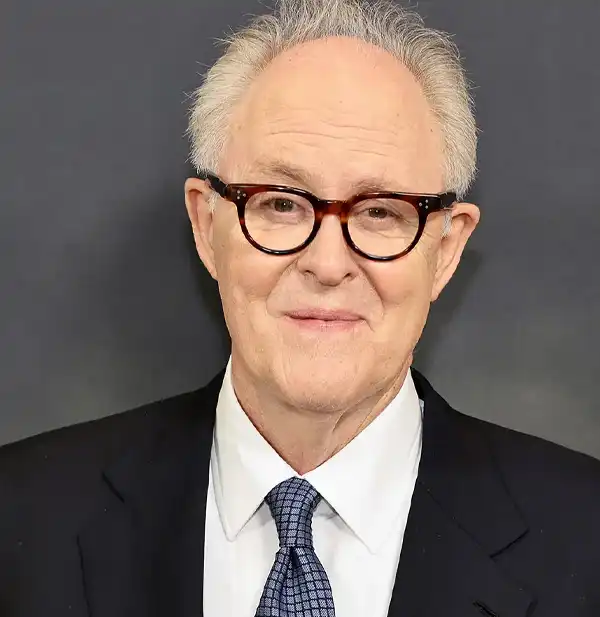
John Lithgow is one of those rare performers who can make audiences laugh uncontrollably, terrify them into silence, and then convince them that he really ought to be running the British government. Born John Arthur Lithgow on October 19, 1945, in Rochester, New York, the American actor has enjoyed an extraordinary career spanning theater, television, film, literature, and music. Best known to television audiences for his wonderfully eccentric portrayal of Dick Solomon in 3rd Rock from the Sun and his commanding performance as Winston Churchill in The Crown, Lithgow has demonstrated a remarkable ability to transform himself into characters who could scarcely be more different. Whether playing an alien struggling to understand human behavior, a ruthless serial killer, or one of history's most recognizable political leaders, he brings intelligence, humor, and an unmistakable theatrical presence to every performance.
Acting was practically a family business for John Lithgow, although nobody handed him a guaranteed starring role with his breakfast cereal. His mother, Sarah Jane Price, was an actress, while his father, Arthur Washington Lithgow III, worked as a theatrical producer and director. The family moved frequently during John's childhood as his father established and managed regional theaters and Shakespeare festivals across the United States. Growing up surrounded by rehearsals, performances, and backstage activity gave young Lithgow an unusual introduction to the performing arts. While other children were learning the rules of baseball, he was becoming familiar with the peculiar world of actors, directors, and people who considered pretending to be someone else a perfectly respectable occupation.
Despite his theatrical upbringing, Lithgow did not immediately decide to pursue acting professionally. He attended Harvard University, graduating magna cum laude in 1967 with a degree in history and literature. During his university years, however, his enthusiasm for performing developed into something considerably more serious. A Fulbright scholarship subsequently took him to England, where he studied at the London Academy of Music and Dramatic Art. This combination of academic education, classical theatrical training, and practical experience provided an excellent foundation for his career. It also gave him the ability to deliver Shakespeare with tremendous authority, although television audiences would eventually discover that he was equally capable of falling off furniture for comic effect.
John Lithgow's professional theatrical career developed rapidly during the 1970s, and his Broadway debut in The Changing Room brought him a Tony Award in 1973 for Best Featured Actor in a Play. The achievement established him as a serious theatrical talent and opened the door to numerous demanding stage roles. He subsequently appeared in productions including Requiem for a Heavyweight, M. Butterfly, and Beyond Therapy, earning admiration for his emotional range and commanding stage presence. In 2002, he received another Tony Award for his performance in the musical Sweet Smell of Success, demonstrating that his abilities extended beyond conventional dramatic acting. For Lithgow, the stage remained an essential artistic home even as Hollywood and television increasingly competed for his attention.
His transition into film introduced John Lithgow to a much broader audience, particularly through two acclaimed performances during the early 1980s. In The World According to Garp (1982), starring Robin Williams, Lithgow portrayed Roberta Muldoon, a transgender former football player whose warmth, dignity, and humanity made her one of the film's most memorable characters. The performance earned him an Academy Award nomination for Best Supporting Actor and demonstrated his willingness to approach unconventional roles with sincerity rather than caricature. The following year, he received another Oscar nomination for Terms of Endearment (1983), portraying Sam Burns, a married banker who becomes romantically involved with Debra Winger's character. These performances established Lithgow as an actor capable of bringing depth and emotional credibility to supporting characters who might otherwise have been overshadowed by the stars around them.
Throughout the 1980s and 1990s, Lithgow became a familiar presence in Hollywood productions, frequently playing characters who were eccentric, intimidating, or spectacularly unpleasant. In Footloose (1984), he portrayed Reverend Shaw Moore, the stern minister determined to protect his community from the supposed dangers of teenage dancing. Unfortunately for the reverend, the teenagers had other ideas, and popular music proved considerably more difficult to suppress than he anticipated. Lithgow also appeared in The Adventures of Buckaroo Banzai Across the 8th Dimension (1984), bringing gloriously exaggerated energy to the villainous Dr. Emilio Lizardo. In Cliffhanger (1993), opposite Sylvester Stallone, he played the ruthless criminal Eric Qualen, proving that a distinguished theatrical education could be put to excellent use while threatening people on the side of a mountain.
Not every John Lithgow film required him to frighten the audience, however. In Harry and the Hendersons (1987), he portrayed George Henderson, a family man whose encounter with a gentle Bigfoot creates considerable domestic confusion. The film allowed Lithgow to display his talent for physical comedy and heartfelt family entertainment, balancing slapstick humor with genuine affection. His voice performance as Lord Farquaad in the animated film Shrek (2001) introduced him to another generation of viewers. As the pompous, power-hungry ruler of Duloc, Lithgow delivered a deliciously arrogant performance that helped make Farquaad one of the film's most entertaining villains. The character's obsession with his own importance was particularly amusing considering that Lithgow himself is notably tall, while Lord Farquaad most certainly was not.
For many television viewers, John Lithgow's defining role arrived in 1996 with the NBC sitcom 3rd Rock from the Sun. Created by Bonnie and Terry Turner, the series followed a group of extraterrestrials who traveled to Earth and disguised themselves as an ordinary American family. Lithgow starred as Dr. Dick Solomon, the aliens' High Commander, who assumed the identity of a college physics professor while attempting to understand human civilization. Unfortunately, Dick's considerable scientific intelligence did not extend to understanding human emotions, relationships, social conventions, or the proper way to behave in a supermarket. His attempts to master everyday life frequently produced disasters of astonishing proportions, usually accompanied by Lithgow's spectacular facial expressions and magnificent disregard for personal dignity.
Running from 1996 to 2001, 3rd Rock from the Sun became a popular and critically acclaimed sitcom, with Lithgow's performance providing much of its comic energy. His supporting cast included Kristen Johnston as Sally, French Stewart as Harry, Joseph Gordon-Levitt as Tommy, and Jane Curtin as Dr. Mary Albright, Dick's colleague and romantic interest. The comedy worked because the alien characters examined ordinary human behavior from an outsider's perspective, exposing the absurdity of customs most people accept without question. Lithgow approached Dick Solomon with complete commitment, transforming every misunderstanding into an opportunity for physical comedy, verbal fireworks, or an emotional explosion that could probably be detected from the aliens' home planet. His work earned him three Primetime Emmy Awards for Outstanding Lead Actor in a Comedy Series and a Golden Globe Award, firmly establishing him as one of television's great comic performers.
One particularly enjoyable aspect of 3rd Rock from the Sun was Lithgow's opportunity to work alongside his son, Ian Lithgow, who played Leon, one of Dick Solomon's students. Their scenes brought an additional family connection to a series already concerned with the peculiarities of family relationships. Although John Lithgow's theatrical background had prepared him for demanding dramatic performances, the sitcom demonstrated just how effectively he could combine classical technique with outrageous comedy. Few actors could deliver an absurd declaration with the authority of a Shakespearean king while simultaneously behaving like a man who had only recently discovered the existence of trousers.
After the success of 3rd Rock from the Sun, Lithgow continued moving between comedy and drama, refusing to become permanently associated with a single type of character. One of his most chilling performances came in the fourth season of Showtime's crime drama Dexter in 2009, when he portrayed Arthur Mitchell, the seemingly respectable family man secretly operating as the Trinity Killer. The character's outward appearance of normality concealed a deeply disturbing personality, allowing Lithgow to exploit the contrast between reassuring familiarity and terrifying brutality. His performance earned him another Primetime Emmy Award and a Golden Globe, while demonstrating that the same actor who had once played television's most bewildered alien could become one of its most frightening villains. Anyone who remembered Dick Solomon's harmless enthusiasm for discovering Earth suddenly had a very good reason to feel nervous.
John Lithgow achieved another remarkable television success with his portrayal of British Prime Minister Winston Churchill in Netflix's historical drama The Crown. Appearing during the series' early seasons, Lithgow played Churchill opposite Claire Foy's Queen Elizabeth II, capturing the aging statesman's authority, political experience, stubbornness, and growing awareness of his own limitations. His performance required more than an imitation of Churchill's distinctive voice and mannerisms; it demanded an understanding of the complicated relationship between an experienced political leader and a young monarch finding her place in a rapidly changing world. Lithgow's portrayal earned him the Primetime Emmy Award for Outstanding Supporting Actor in a Drama Series in 2017, adding another distinguished achievement to his television career.
The casting of an American actor as Winston Churchill might initially have surprised some British viewers, particularly given the abundance of accomplished British performers available for the role. Nevertheless, Lithgow's interpretation received widespread critical praise, demonstrating that convincing historical characterization depends on more than nationality. Through careful attention to Churchill's physical movements, speech patterns, and emotional contradictions, he created a believable portrait of a man who had helped lead Britain through its darkest wartime years but was now confronting the uncomfortable realities of political change. For an actor previously celebrated for portraying an alien unfamiliar with Earth, becoming one of Britain's most recognizable historical figures was quite a promotion.
Lithgow's later television work further demonstrated his impressive versatility. In HBO's Perry Mason (2020), he portrayed attorney Elias Birchard "E.B." Jonathan, bringing humanity and vulnerability to the period legal drama. He also appeared in the FX thriller The Old Man, alongside Jeff Bridges, playing FBI official Harold Harper, a character whose complicated history becomes entangled with the show's espionage storyline. These performances allowed Lithgow to explore morally complex characters whose motivations could not always be divided neatly into right and wrong. His ability to communicate uncertainty, intelligence, and concealed emotion has remained one of his greatest strengths, whether delivering a dramatic confrontation or allowing a carefully timed silence to speak for itself.
His film career has remained equally varied, with appearances in productions such as Rise of the Planet of the Apes (2011), Interstellar (2014), Love Is Strange (2014), Bombshell (2019), Killers of the Flower Moon (2023), and Conclave (2024). In Interstellar, directed by Christopher Nolan, Lithgow portrayed Donald, the father-in-law of Matthew McConaughey's character, Cooper, contributing to the film's emotional portrait of a family facing extraordinary circumstances. In Bombshell, he portrayed Fox News executive Roger Ailes, undergoing a significant physical transformation for the role. These projects illustrate how comfortably Lithgow moves between intimate family dramas, historical stories, political controversies, and ambitious science-fiction productions.
The theater has continued to provide some of John Lithgow's most demanding work. His portrayal of children's author Roald Dahl in Mark Rosenblatt's play Giant explored the troubling contradictions between Dahl's literary achievements and his antisemitic statements. Lithgow received the Laurence Olivier Award for Best Actor for the London production and subsequently reprised the role on Broadway. In 2026, his performance earned him a third Tony Award, this time for Best Leading Actor in a Play. The achievement reinforced his reputation as an actor willing to tackle difficult material and complex personalities rather than relying solely on the familiar characters that made him famous.
Beyond acting, John Lithgow has developed a successful career as an author, musician, and entertainer for children. His picture books include The Remarkable Farkle McBride, Marsupial Sue, and Micawber, imaginative stories that celebrate creativity, individuality, and the joy of discovering new interests. He has also recorded children's music and performed concerts with major American orchestras, bringing his distinctive voice and theatrical enthusiasm to younger audiences. His work in children's entertainment reflects a playful imagination that has remained evident throughout his career. Apparently, playing aliens, serial killers, politicians, and assorted eccentrics was not enough to occupy his time, so he decided to write books and sing songs as well.
Lithgow has also published works for adult readers, including his memoir Drama: An Actor's Education, which explores his early life, theatrical upbringing, and development as a performer. His writing offers insight into the experiences that shaped his career and the lessons learned from working alongside other artists. Outside his professional accomplishments, Lithgow has maintained a long marriage to Mary Yeager, an academic whom he married in 1981. He has three children, including actor Ian Lithgow. Despite his considerable public recognition, his personal story remains closely connected to the theatrical world in which he was raised, and his continuing enthusiasm for performance suggests that retirement from the stage has never been particularly appealing.
Over the course of his career, John Lithgow has received numerous honors, including Academy Award nominations, Primetime Emmy Awards, Golden Globe Awards, Tony Awards, and recognition for his contributions to American theater and television. He has also been honored with a star on the Hollywood Walk of Fame and elected to the American Academy of Arts and Sciences. Yet his achievements cannot be measured solely by trophies and nominations. His enduring appeal lies in his extraordinary ability to make audiences believe in characters who range from completely ridiculous to deeply unsettling, often using the same distinctive voice, expressive face, and commanding physical presence to achieve entirely different effects.
John Lithgow's birthday on October 19 provides an opportunity to celebrate an entertainer whose career has crossed genres, generations, and artistic boundaries. From Broadway stages to Hollywood films, from the chaotic household of 3rd Rock from the Sun to the solemn corridors of Buckingham Palace in The Crown, he has repeatedly demonstrated that great acting requires curiosity, courage, and a willingness to embrace the unexpected. Whether audiences remember him as Dick Solomon, Winston Churchill, Arthur Mitchell, or Lord Farquaad, they are celebrating a performer who has made an extraordinary variety of characters unforgettable. And if extraterrestrials ever do arrive on Earth looking for someone to explain human behavior, perhaps they should ask John Lithgow. After all, he has already spent six television seasons researching the subject.