September 10, 1950, in Lawrence, Massachusetts
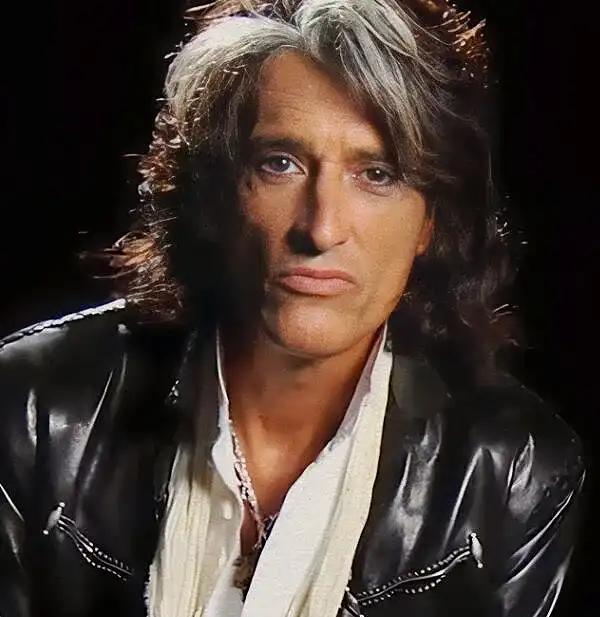
Joe Perry was born Joseph Anthony Pereira on September 10, 1950, in Lawrence, Massachusetts, and grew up in Hopedale. His family background included Portuguese ancestry on his father’s side and Italian ancestry on his mother’s side. Long before he became one of rock music’s most recognizable guitarists, he was a young man fascinated by the sound of the electric guitar and the possibilities it offered. The blues, British rock, and the raw energy of performers such as Chuck Berry and the Rolling Stones helped shape his musical interests. While some teenagers were carefully planning respectable careers, Perry was discovering that a guitar, an amplifier, and a sufficiently enthusiastic audience could provide an entirely different sort of education.
His early musical development was not the story of a child prodigy effortlessly mastering every instrument placed before him. Perry had to work at his craft, and his fascination with music eventually became more compelling than conventional academic pursuits. He played in local bands, including Chimes of Freedom, and developed the blues-based approach that would become central to his identity. His playing favored memorable riffs, expressive phrasing, and a sense of rhythm that could make a relatively simple musical idea sound enormous. It was not necessary to play fifty notes when five could make the entire room pay attention.
The beginnings of Aerosmith took shape in 1970, when Perry and bassist Tom Hamilton joined forces with singer Steven Tyler, drummer Joey Kramer, and guitarist Ray Tabano. Brad Whitford replaced Tabano in 1971, establishing the lineup that would become famous around the world. The band formed in Boston, although several members had roots elsewhere in Massachusetts and New England. Their early years involved rehearsals, modest venues, difficult living arrangements, and the familiar financial realities of musicians who had plenty of ambition but considerably less money. The group’s chemistry, however, was unmistakable, particularly the relationship between Perry’s guitar and Tyler’s flamboyant vocals.
Aerosmith’s self-titled debut album arrived in 1973 and introduced the world to songs including “Dream On,” which would eventually become one of the band’s defining recordings. The album did not immediately transform the group into international superstars, but it established their sound and provided the foundation for what followed. Perry’s guitar work combined blues influences with a harder, more aggressive edge, while Tyler’s voice supplied the theatrical intensity. Together, they created a musical partnership that could sound dangerous, emotional, and occasionally as though someone had left a powerful engine running in the living room.
The band’s breakthrough accelerated with Get Your Wings in 1974, followed by Toys in the Attic in 1975 and Rocks in 1976. These albums helped establish Aerosmith as one of the leading American hard rock bands of the decade. Songs such as “Sweet Emotion,” “Walk This Way,” “Back in the Saddle,” and “Last Child” demonstrated the group’s ability to combine memorable songwriting with a muscular, blues-influenced sound. Perry’s riffs were particularly important to that identity. The opening of “Walk This Way,” for example, became one of the most recognizable guitar figures in rock history, proving that a short sequence of notes can have a longer cultural life than many entire albums.
Perry’s relationship with Steven Tyler became one of rock music’s most famous creative partnerships. The two were sometimes described as the “Toxic Twins,” a nickname associated with their hard-living reputation during Aerosmith’s turbulent years. Their musical connection was powerful, but their personal relationship could be volatile, and the band’s success brought pressures that were not always handled particularly well. Drug and alcohol problems, exhaustion, financial difficulties, and internal disagreements contributed to an increasingly unstable atmosphere. The glamorous image of rock stardom often concealed a reality that involved considerably more arguments, missed opportunities, and people wondering where the guitarist had gone.
In 1979, Perry left Aerosmith following a period of mounting tension. A backstage incident involving members of the musicians’ families became part of the story surrounding his departure, although the split was the result of broader problems rather than one isolated disagreement. He formed the Joe Perry Project and released Let the Music Do the Talking in 1980, followed by I’ve Got the Rock’n’Rolls Again in 1981 and Once a Rocker, Always a Rocker in 1983. The records allowed him to pursue his own musical direction and remain active as a performer, even though the project did not achieve the commercial success of Aerosmith’s biggest releases. The title Once a Rocker, Always a Rocker was also a fairly clear indication that Perry was not considering a sudden career change into accountancy.
The separation proved temporary. Perry and Brad Whitford returned to Aerosmith in 1984, reuniting the classic lineup and beginning a new chapter in the band’s history. The reunion did not instantly solve every problem, and the group still had to confront the consequences of its earlier excesses. Nevertheless, the musicians gradually rebuilt their working relationships and careers. The return of the original guitar partnership gave Aerosmith an opportunity to recover its distinctive sound, while changes in management, production, and personal circumstances helped prepare the band for a remarkable commercial resurgence.
One of the most important moments in that comeback came in 1986, when Run-D.M.C. recorded a new version of “Walk This Way” featuring Perry and Tyler. The collaboration brought together rock and hip-hop in a way that reached audiences far beyond either group’s established fan base. Its accompanying music video became a defining image of the era, with the two musical worlds literally separated by a wall before joining forces. The recording helped introduce Aerosmith to a younger generation and demonstrated that a great riff can travel remarkably well between genres. Perry’s guitar part, already a classic, suddenly had a second life in a musical landscape that had changed considerably since 1975.
Aerosmith’s commercial revival continued with Permanent Vacation in 1987 and Pump in 1989. Songs such as “Dude (Looks Like a Lady),” “Angel,” “Love in an Elevator,” and “Janie’s Got a Gun” brought the band renewed radio and television exposure. The success continued into the 1990s with Get a Grip and Nine Lives, producing hits including “Cryin’,” “Crazy,” “Amazing,” and “Livin’ on the Edge.” The band had managed something relatively rare in popular music: returning from a difficult period to become commercially successful with an entirely new generation of listeners. Perry’s guitar remained a central part of the sound, even as Aerosmith’s production and songwriting adapted to changing tastes.
The group reached another enormous audience with “I Don’t Want to Miss a Thing,” recorded for the 1998 film Armageddon. Written by Diane Warren, the ballad became Aerosmith’s first number-one single on the Billboard Hot 100 and earned an Academy Award nomination for Best Original Song. It also demonstrated the band’s ability to move beyond its hard rock origins without entirely abandoning its identity. Perry’s contribution to Aerosmith’s broader catalog helped make the group recognizable across several decades, from the raw guitar-driven recordings of the 1970s to the polished arena rock and power ballads of later years.
Aerosmith’s achievements include more than 150 million records sold worldwide, four Grammy Awards, and induction into the Rock and Roll Hall of Fame in 2001. The band also became a major presence in music videos, concert films, and popular culture. Its longevity was particularly striking given the difficulties that had threatened its survival. Perry’s contribution was not limited to playing lead guitar; he was also a principal songwriter, co-producer, and an important part of the band’s musical direction. His ability to create a riff that listeners could recognize almost immediately became one of Aerosmith’s greatest assets.
Outside the band, Perry continued to develop his own musical projects. His self-titled solo album, Joe Perry, appeared in 2005, followed by Have Guitar, Will Travel in 2009. The latter was written and produced by Perry and allowed him to explore a more personal version of his blues and rock influences. He later released Sweetzerland Manifesto in 2018 and Sweetzerland Manifesto MKII in 2023, collaborating with a variety of musicians and demonstrating that his interests extended well beyond reproducing Aerosmith’s familiar sound. His solo recordings offered an opportunity to experiment, work with different voices, and pursue ideas that might not have fitted naturally into the band’s established identity.
Perry also became a member of Hollywood Vampires, the rock supergroup associated with Alice Cooper and Johnny Depp. The project took its name from a celebrity drinking club Cooper had established in the 1970s, but the modern band developed into a musical tribute to rock history and the artists who helped shape it. Hollywood Vampires released its self-titled debut album in 2015 and Rise in 2019, combining original material with interpretations of classic songs. The group gave Perry another outlet for his guitar playing and allowed him to share the stage with musicians who approached rock and roll from different backgrounds. It also proved that a band containing several famous personalities can occasionally agree on something other than who gets the largest dressing room.
His work has extended into film and television as well. IMDb credits Perry as a musician, composer, performer, and occasional actor, reflecting the many ways his music has appeared beyond the concert stage. He contributed guitar to the soundtrack of Captain America: The Winter Soldier and has been associated with music for the animated Spider-Man television series. He also appeared as a DEA agent in an episode of Homicide: Life on the Street in 1998. While acting never replaced his musical career, these appearances added another dimension to a public life already filled with recording sessions, tours, and the occasional need to explain why there were so many guitars in the house.
Perry’s influence has also reached the world of video games. Guitar Hero: Aerosmith, released in 2008, introduced the band’s music and history to players who could experience the excitement of performing its songs with a plastic guitar controller. The game was the first in the Guitar Hero series devoted to a single band and became a notable commercial success. For a musician whose career began in an era of vinyl records and small clubs, the idea that people would one day pretend to play his riffs in their living rooms using a video-game accessory must have seemed like a particularly imaginative prediction.
Away from music, Perry has pursued interests that include cooking and spicy food. He developed his own line of hot sauces, Joe Perry’s Rock Your World, with flavors including The Boneyard and Mango-Peach Tango. The venture reflected a genuine enthusiasm for food rather than simply attaching his name to an unrelated product. It also offered a convenient way to ensure that even dinner could come with a certain amount of heat. His personal life has included his marriage to Billie Paulette Montgomery in 1985, and he has spoken about the importance of family, personal stability, and the changes that came with moving beyond the more destructive aspects of his earlier years.
In 2014, Perry published his autobiography, Rocks: My Life in and out of Aerosmith, written with David Ritz. The book explored his upbringing, musical influences, relationships, career, and the complicated history of Aerosmith. It offered readers a perspective from the guitarist who had experienced both the band’s greatest successes and its most difficult periods. Autobiographies by rock musicians are rarely short of dramatic material, but Perry’s story is particularly notable for the contrast between the extraordinary achievements onstage and the personal challenges that accompanied them.
Aerosmith’s later years brought further touring, recordings, and changes in the band’s plans. In 2024, the group announced its retirement from touring after Steven Tyler’s vocal injury prevented a full recovery suitable for the demands of a major tour. The announcement marked a significant change for a band whose live performances had been central to its identity for more than five decades. Perry, however, has continued to pursue musical opportunities through his own projects and collaborations, demonstrating that the end of one touring chapter does not necessarily mean the end of a musician’s creative life.
Joe Perry’s legacy rests on more than his reputation as a guitar hero. He helped create a sound that became part of the vocabulary of American hard rock, contributed to songs that have remained popular across generations, and demonstrated the resilience required to rebuild a career after serious setbacks. His playing is recognizable not because it is always the fastest or most complicated, but because it has character, rhythm, and an instinct for the right musical moment. A great guitarist can impress an audience with technical ability; Perry has spent much of his career making audiences recognize a song before the singer has even opened his mouth.
From the early days of Aerosmith to his solo recordings and work with Hollywood Vampires, Perry has remained closely associated with the energy and attitude of rock and roll. His career includes triumphs, mistakes, reinventions, and enough memorable riffs to keep guitar shops busy for generations. On September 10, his birthday offers a fitting opportunity to celebrate a musician who helped define the sound of a band that refused to disappear quietly. Turn up “Sweet Emotion,” revisit Rocks, or discover one of his solo albums. Just remember that if you attempt the guitar solo yourself, the neighbors may be entitled to a brief warning.