September 10, 1960, in Grayshott, England
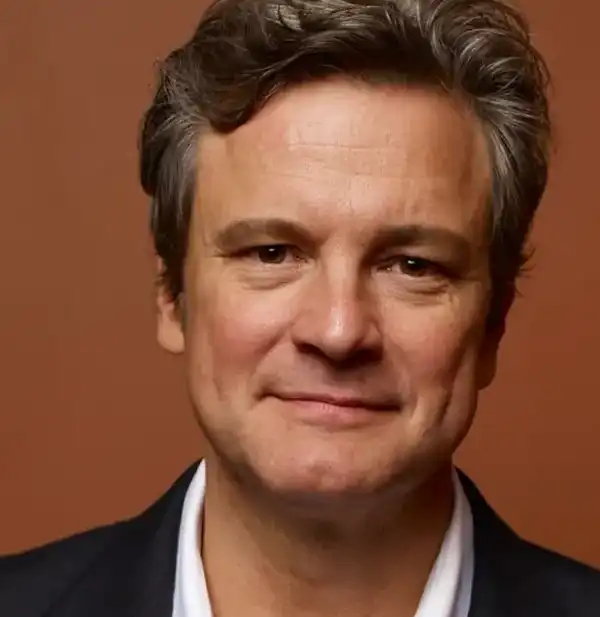
Colin Andrew Firth was born on September 10, 1960, in Grayshott, Hampshire, England. His parents, Shirley and David Firth, were both educators, and his childhood was shaped by an international family background. His maternal grandparents were missionaries, and Firth spent part of his early childhood in Nigeria, where his father was teaching. The family later lived in the United States before returning to England. These experiences exposed him to different cultures and environments, although his early years were not always easy. He has spoken about feeling unsettled by frequent moves and about the difficulties he experienced adapting to school life.
Firth’s interest in acting developed during his school years, when he discovered that performance offered an outlet for his imagination and a way to express himself. He attended Montgomery of Alamein Secondary School in Winchester and later Barton Peveril Sixth Form College, but he did not find conventional academic life particularly satisfying. His enthusiasm for drama eventually led him to pursue acting professionally, and he moved to London to study at the Drama Centre London. The training provided him with a strong foundation in classical and contemporary performance, preparing him for a career in which he would eventually be required to portray everything from a nineteenth-century gentleman to a secret agent with a surprisingly dangerous umbrella.
His early professional work included theater, where he developed the discipline and technical skills that would become central to his acting style. In 1983, he appeared in the West End production of Another Country, replacing Rupert Everett in the role of Guy Bennett. The play explored class, sexuality, and political identity within an English public school during the 1930s, and it provided Firth with an important opportunity to demonstrate his abilities on a professional stage. His performance attracted attention and helped establish him as a promising young actor.
Firth made his feature-film debut in the 1984 adaptation of Another Country, although he played a different character from the one he had portrayed onstage. In the film, he appeared as Tommy Judd, a politically committed student whose friendship with Guy Bennett, played by Rupert Everett, forms an important part of the story. The role introduced Firth to cinema and demonstrated his ability to portray an intelligent, serious character with emotional complexity. It also marked the beginning of a career in which he would frequently be cast as men who appeared outwardly composed while experiencing considerably more complicated feelings beneath the surface.
During the remainder of the 1980s, Firth continued building his career through film and television. He appeared in A Month in the Country in 1987, alongside Kenneth Branagh, portraying a young man involved in the restoration of a medieval church mural after the First World War. The film explored memory, trauma, friendship, and the quiet process of recovery, providing Firth with an opportunity to demonstrate a restrained and thoughtful acting style. He also appeared in Valmont in 1989, directed by Miloš Forman, playing the seductive Vicomte de Valmont in an adaptation of Les Liaisons dangereuses.
Valmont offered Firth a role that contrasted with the more reserved characters for which he would later become famous. His portrayal of the aristocratic seducer required charm, confidence, and a willingness to manipulate the emotions of others, qualities that would eventually reappear in a rather different form in some of his romantic comedies. The film did not achieve the same level of commercial success as other adaptations of the novel, but it provided valuable experience and demonstrated his versatility. It also proved that Firth could play a man whose romantic intentions were considerably less honorable than those of Mr. Darcy, although the latter had not yet arrived to complicate his public image.
The role that transformed Firth into an international star came in 1995, when he played Fitzwilliam Darcy in the BBC television adaptation of Jane Austen’s Pride and Prejudice. The six-part series, adapted by Andrew Davies and starring Jennifer Ehle as Elizabeth Bennet, became a major success in Britain and attracted audiences around the world. Firth’s portrayal of Darcy combined pride, reserve, intelligence, and gradually revealed emotional vulnerability, creating a character who became one of the most celebrated romantic figures in television history.
The series’ famous lake scene, in which Darcy emerges from the water wearing a wet shirt, became an enduring cultural image. Although the moment was not taken directly from Austen’s novel, it captured the imagination of viewers and contributed to the extraordinary popularity of the adaptation. Firth later expressed some bemusement at the attention the scene received, particularly given the amount of work involved in developing the character across the entire series. Nevertheless, it became one of the most recognizable moments of his career and established a standard of romantic television imagery that has proved remarkably difficult to escape.
Firth’s performance as Darcy was important because it conveyed the character’s emotional development without relying on excessive dialogue or overt displays of feeling. Much of the role depended on subtle changes in expression, posture, and tone, allowing audiences to recognize the gradual transformation of a man who initially appears arrogant and emotionally inaccessible. The performance demonstrated Firth’s ability to make restraint dramatically compelling, a quality that would become central to many of his later roles. It also helped create a public image of him as the quintessential English gentleman, an association that would prove both professionally useful and occasionally limiting.
Following the success of Pride and Prejudice, Firth continued working in a variety of film and television projects. He appeared in The English Patient in 1996, playing Geoffrey Clifton, the husband of Katharine Clifton, portrayed by Kristin Scott Thomas. The film, directed by Anthony Minghella, became a major critical and commercial success, winning nine Academy Awards, including Best Picture. Firth’s role was relatively small but emotionally significant, contributing to the film’s exploration of love, betrayal, and the consequences of personal choices during wartime.
He also appeared in Shakespeare in Love in 1998, playing Lord Wessex, the wealthy and unpleasant suitor of Viola de Lesseps, portrayed by Gwyneth Paltrow. The film won the Academy Award for Best Picture and became one of the most successful romantic comedies of its era. Firth’s character provided an effective obstacle to the central romance, demonstrating that the actor could portray a gentleman whose manners were impeccable but whose personality left considerably to be desired. It was a useful reminder that wearing expensive period clothing does not automatically make a person agreeable.
In 2001, Firth appeared as Mark Darcy in Bridget Jones’s Diary, the romantic comedy based on Helen Fielding’s bestselling novel. The film starred Renée Zellweger as Bridget Jones and Hugh Grant as Daniel Cleaver, with Firth playing the reserved and apparently judgmental barrister who becomes one of Bridget’s romantic interests. The character’s name was a deliberate reference to Austen’s Mr. Darcy, and Fielding had acknowledged the influence of the 1995 Pride and Prejudice adaptation on her writing. Casting Firth therefore created a particularly satisfying connection between the two works.
Bridget Jones’s Diary became a major international success and introduced Firth to a new generation of audiences. His performance balanced awkwardness, dry humor, and emotional sincerity, allowing Mark Darcy to develop beyond his initially stiff appearance. The film’s romantic rivalry between Darcy and Daniel Cleaver became one of its most entertaining elements, particularly because the two men represented very different approaches to charm. Hugh Grant’s character could talk his way into almost any situation, while Firth’s Darcy often appeared to be considering whether speaking at all was strictly necessary.
Firth reprised the role in Bridget Jones: The Edge of Reason in 2004 and Bridget Jones’s Baby in 2016, continuing the character’s complicated relationship with Bridget. The films became an important part of his popular career, allowing him to explore romantic comedy while maintaining the restrained style that audiences associated with him. His performances also demonstrated a willingness to make fun of his own image, particularly the idea of the emotionally reserved English gentleman who must eventually learn to express himself. In the world of Bridget Jones, this process generally involved a considerable amount of embarrassment, misunderstanding, and the occasional disastrous social occasion.
During the early 2000s, Firth appeared in several other notable films, including The Importance of Being Earnest in 2002, Girl with a Pearl Earring in 2003, and Love Actually in 2003. In Girl with a Pearl Earring, he portrayed the Dutch painter Johannes Vermeer opposite Scarlett Johansson, delivering a quiet and controlled performance that suited the film’s visual elegance. In Love Actually, he played Jamie, a writer who retreats to France after discovering his girlfriend’s infidelity and develops a relationship with his Portuguese housekeeper, Aurélia, played by Lúcia Moniz.
The storyline in Love Actually became one of the film’s most beloved romantic narratives, particularly because the two characters initially struggle to communicate in each other’s languages. Firth’s performance relied on awkwardness, sincerity, and the gradual development of affection, culminating in a memorable proposal delivered in imperfect Portuguese. The film’s ensemble cast and interconnected stories made it a seasonal favorite, while Firth’s character demonstrated that romantic success sometimes requires a willingness to make a complete fool of oneself in front of an entire restaurant. Fortunately, the results were rather more encouraging than they might have been in real life.
Firth also appeared in Nanny McPhee in 2005, playing Cedric Brown, a widowed father struggling to manage his seven unruly children. The family fantasy, starring Emma Thompson in the title role, allowed him to explore a more openly comic and paternal character. He followed this with roles in Then She Found Me, When Did You Last See Your Father?, and Mamma Mia! in 2008, demonstrating his willingness to move between drama, comedy, and musical entertainment. His appearance in Mamma Mia! as Harry Bright introduced audiences to the unexpected spectacle of Colin Firth singing ABBA songs, an experience that was considerably more cheerful than most of his earlier period dramas.
In Mamma Mia!, Firth joined Meryl Streep, Pierce Brosnan, Stellan Skarsgård, Amanda Seyfried, and other performers in a musical built around the songs of ABBA. The film became a major commercial success despite mixed critical reviews, and its exuberant tone offered a striking contrast to Firth’s reputation for restrained performances. He returned for Mamma Mia! Here We Go Again in 2018, once again embracing the musical’s cheerful disregard for the usual rules of dramatic realism. The films demonstrated that an actor known for quiet emotional intensity can also participate in a production where the principal solution to almost every problem is to sing loudly on a Greek island.
A major turning point in Firth’s career came with A Single Man in 2009, directed by fashion designer Tom Ford in his feature-film debut. Firth played George Falconer, a British college professor living in Los Angeles in 1962 who is struggling with grief following the death of his longtime partner. The film followed George through a single day as he contemplated his future and attempted to navigate the emotional isolation of his life. Firth’s performance was widely praised for its subtlety, emotional depth, and ability to convey profound grief beneath an outwardly controlled appearance.
The role earned Firth his first Academy Award nomination for Best Actor and a BAFTA Award for Best Actor in a Leading Role. It also marked an important development in his career, demonstrating that the qualities associated with his earlier romantic roles could be used to explore much darker and more complex emotional material. His portrayal of George Falconer required a delicate balance between restraint and vulnerability, allowing audiences to understand the character’s internal suffering without relying on excessive dialogue. The performance was widely regarded as one of the finest of his career.
Firth followed this achievement with The King’s Speech in 2010, the film that would bring him his greatest individual recognition. Directed by Tom Hooper, the historical drama told the story of King George VI and his struggle to overcome a severe stammer with the assistance of speech therapist Lionel Logue, played by Geoffrey Rush. Helena Bonham Carter portrayed Queen Elizabeth, while the film explored the personal and political pressures surrounding the abdication crisis and the approach of the Second World War.
Firth’s portrayal of George VI required extensive preparation, including work with a speech specialist to understand the physical and emotional difficulties associated with stammering. The performance avoided treating the king’s speech difficulties as a simple obstacle that could be overcome through determination alone, instead emphasizing the frustration, anxiety, and vulnerability involved. Firth also had to convey the pressures of royal duty and the complicated relationship between the king and his unconventional therapist. The result was a performance that combined dignity, humor, and emotional honesty, allowing audiences to connect with a historical figure who might otherwise have seemed remote.
The King’s Speech became a major critical and commercial success, winning four Academy Awards, including Best Picture, Best Director, Best Original Screenplay, and Best Actor for Firth. He also received a Golden Globe Award, a BAFTA Award, and a Screen Actors Guild Award for his performance. The film’s success established him as one of the leading actors of his generation and demonstrated the power of a story centered on communication, friendship, and personal courage. It also created the unusual situation in which an actor who had spent years being admired for his ability to say very little won an Oscar for portraying a man struggling to say anything at all.
Following his Academy Award victory, Firth continued to pursue a wide range of roles rather than concentrating exclusively on prestigious historical dramas. He appeared in Tinker Tailor Soldier Spy in 2011, the adaptation of John le Carré’s espionage novel, playing Bill Haydon alongside Gary Oldman, Tom Hardy, and an ensemble of British actors. The film’s restrained atmosphere and complex narrative suited Firth’s ability to convey hidden motives and emotional ambiguity. His performance contributed to a story in which almost everyone appeared to know something they were not prepared to explain, a situation that would have been considerably easier to resolve if the characters had simply agreed to speak plainly.
In 2013, Firth starred in The Railway Man, portraying Eric Lomax, a British Army officer who had been held as a prisoner of war by the Japanese during the Second World War. The film explored the lasting effects of trauma and Lomax’s eventual confrontation with one of the men involved in his wartime suffering. Nicole Kidman played his wife, Patti, while the story was based on Lomax’s memoir. Firth’s performance required him to portray a man struggling with painful memories and the possibility of reconciliation, continuing his interest in characters whose emotional lives are shaped by experiences they find difficult to express.
A very different role arrived in 2014 with Kingsman: The Secret Service, directed by Matthew Vaughn. Firth played Harry Hart, also known as Galahad, a highly skilled secret agent who recruits a young man, Eggsy, played by Taron Egerton, into an elite intelligence organization. The film combined spy-movie conventions with comic-book action, dark humor, and elaborate fight sequences. Firth’s casting was particularly effective because his established image as a refined English gentleman made the character’s sudden displays of extraordinary combat ability both surprising and entertaining.
The film’s famous church fight sequence became one of its most discussed moments, featuring Harry Hart in an extended and highly stylized action scene. Firth underwent substantial physical training for the role, learning choreography and combat techniques that were far removed from the requirements of playing Mr. Darcy. The performance demonstrated his willingness to challenge audience expectations and embrace a more physically demanding genre. It also proved that a gentleman can remain impeccably dressed while causing an astonishing amount of damage, although the dry-cleaning bill afterward would presumably be considerable.
Kingsman: The Secret Service became a commercial success, and Firth returned as Harry Hart in Kingsman: The Golden Circle in 2017. The sequel expanded the fictional spy universe and introduced new characters played by actors including Julianne Moore, Halle Berry, Jeff Bridges, and Channing Tatum. Firth’s return allowed him to continue exploring the combination of elegance, humor, and action that had made Harry Hart so popular. The franchise introduced him to audiences who might have known him primarily from romantic dramas, demonstrating that his screen persona could be adapted to a very different kind of entertainment.
Firth’s later work included Genius in 2016, in which he portrayed literary editor Maxwell Perkins opposite Jude Law as Thomas Wolfe. He also appeared in The Mercy in 2017, playing Donald Crowhurst, the British amateur sailor whose attempt to compete in a solo round-the-world yacht race ended in tragedy. The film explored ambition, deception, and psychological pressure, offering Firth another opportunity to portray a man whose outward determination concealed increasingly serious personal difficulties. His performance reflected his continuing interest in complex characters whose lives are shaped by the tension between public expectations and private reality.
In 2018, Firth appeared in Mary Poppins Returns, playing the banker William Weatherall Wilkins, and in Mamma Mia! Here We Go Again. The two films demonstrated his ability to move comfortably between family entertainment and musical comedy, while his more serious work continued alongside them. He later appeared in 1917 in 2019, directed by Sam Mendes, playing General Erinmore in the acclaimed First World War drama. Although his role was relatively brief, it contributed to the film’s opening sequence and helped establish the mission that drives the story.
Firth received further critical acclaim for his performance in Supernova in 2020, starring opposite Stanley Tucci. The film followed a couple traveling through England as one partner experiences early-onset dementia, exploring love, memory, and the difficult decisions faced by people confronting serious illness. Firth’s performance was praised for its emotional restraint and sensitivity, while the chemistry between the two actors gave the film much of its power. The role demonstrated his ability to portray intimate relationships with depth and authenticity, continuing a career-long interest in characters whose emotions are often expressed through what they do not say.
In 2021, Firth appeared in The Electrical Life of Louis Wain, portraying the publisher Sir William Ingram, and in Operation Mincemeat, released in 2022, playing intelligence officer Ewen Montagu. The latter film dramatized the extraordinary British deception operation during the Second World War that used a dead body and fabricated documents to mislead German intelligence about Allied invasion plans. Firth’s performance brought his familiar combination of intelligence, authority, and dry humor to a story that was both historically significant and almost too improbable to have been invented by a screenwriter.
He also starred in the HBO miniseries The Staircase in 2022, portraying Michael Peterson, the American novelist accused of murdering his wife Kathleen, played by Toni Collette. The series explored the investigation, trial, and complicated personal relationships surrounding the case, drawing upon the real-life events that had previously been examined in a documentary series. Firth’s performance required him to portray a controversial figure whose behavior and credibility remained central to the story’s ambiguity. The role earned him further award recognition and demonstrated his willingness to take on morally complex contemporary material.
Firth’s work has extended beyond acting into production and humanitarian interests. He co-founded the production company Raindog Films with Ged Doherty, supporting projects including Eye in the Sky and Loving. The latter film, released in 2016, told the story of Richard and Mildred Loving and their legal challenge to laws prohibiting interracial marriage in the United States. Firth has also been involved in charitable and advocacy work, including support for Oxfam and organizations concerned with refugees, human rights, and environmental issues. These activities reflect interests that extend beyond his professional career, although he has generally approached them without the theatricality associated with some celebrity campaigns.
In his personal life, Firth has three sons. He has a son, William, from his relationship with actress Meg Tilly, and two sons, Luca and Matteo, from his marriage to Italian film producer Livia Giuggioli. Firth and Giuggioli married in 1997 and announced their separation in 2019. He has generally maintained a relatively private approach to family life, despite the public attention that has accompanied his career. His experiences living in different countries and his long association with Italy have also contributed to his international outlook.
Firth’s achievements have been recognized through numerous awards and honors. In addition to his Academy Award, he has received BAFTA, Golden Globe, and Screen Actors Guild recognition, and he was appointed Commander of the Order of the British Empire in 2011 for services to drama. His career has included major commercial successes, critically acclaimed independent films, and television performances that have become part of popular culture. The range of his work is particularly striking because he has managed to maintain a recognizable acting identity while repeatedly challenging the expectations associated with it.
His influence on the portrayal of romantic leading men is especially significant. The success of Pride and Prejudice and Bridget Jones’s Diary helped establish a particular image of the reserved, intelligent, emotionally complicated English gentleman, but Firth’s later performances demonstrated that this image represented only one aspect of his abilities. His work in A Single Man, The King’s Speech, The Railway Man, and Supernova revealed a capacity for profound emotional depth, while Kingsman and Mamma Mia! showed that he could embrace action and comedy with equal enthusiasm.
Colin Firth’s legacy rests on his ability to make complex characters feel human, whether they are historical figures, fictional detectives, romantic heroes, or ordinary people confronting extraordinary circumstances. His performances often rely on subtlety rather than spectacle, but he has also demonstrated a willingness to take risks and explore genres far removed from the period dramas that first made him famous. From the restrained elegance of Mr. Darcy to the emotional vulnerability of King George VI and the unexpected combat skills of Harry Hart, he has created a body of work that continues to attract audiences across generations.
On September 10, his birthday offers an opportunity to celebrate an actor whose career has combined intelligence, versatility, and a remarkable ability to communicate emotion without unnecessary fuss. Revisit Pride and Prejudice, enjoy the romantic complications of Bridget Jones’s Diary, experience the moving performances of A Single Man and The King’s Speech, or watch him demonstrate that a well-tailored suit can be surprisingly effective in an action film. Whatever the choice, Colin Firth remains a performer who can make an audience laugh, cry, or sit quietly waiting for him to say something. And when he finally does, it is usually worth the wait.