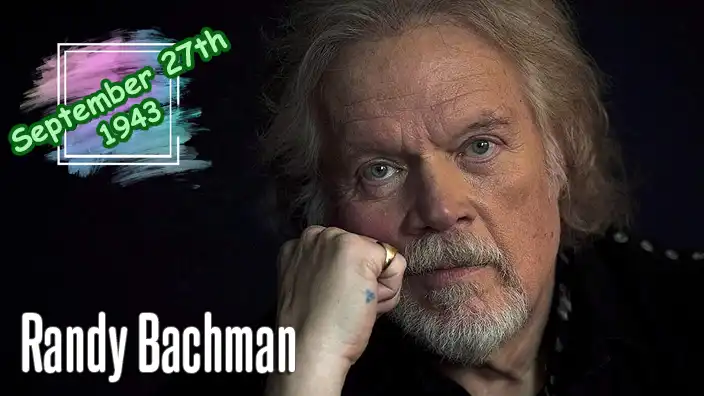
September 27, 1943, in Winnipeg, Canada
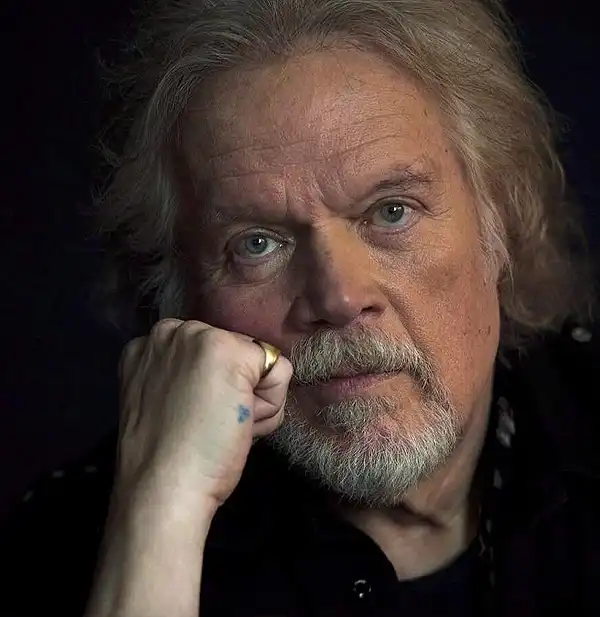
Randolph Charles Bachman was born on September 27, 1943, in Winnipeg, Manitoba, Canada, and displayed musical ability from childhood. He studied violin through the Royal Toronto Conservatory system before becoming fascinated by the guitar and the emerging sounds of rock and roll. Like countless young musicians of his generation, Bachman was strongly influenced by guitarists including Les Paul, Scotty Moore and Chet Atkins. Unlike countless young musicians attempting to imitate their heroes in bedrooms and garages, however, Bachman eventually developed a sound that millions of other guitarists would try to imitate.
During the early 1960s, Bachman became a founding member of the Winnipeg band that evolved into The Guess Who. The group developed from Chad Allan and the Reflections through several name changes before settling permanently on the name that became famous. Bachman's guitar playing and songwriting became central to the band's sound, while Burton Cummings emerged as its distinctive lead vocalist. Together, Bachman and Cummings formed an important songwriting partnership during the group's breakthrough years.
The Guess Who achieved international recognition during the late 1960s with songs including “These Eyes,” “Laughing” and “No Time.” “These Eyes,” written by Bachman and Cummings, became the band's first major American hit and helped open the enormous U.S. market to a Canadian group that had spent years developing its audience at home. More successful recordings followed, transforming The Guess Who into one of Canada's most important rock exports.
Their biggest breakthrough came with “American Woman,” released in 1970. The song grew from a spontaneous guitar riff developed during a live performance after Bachman broke a string and began playing while tuning his replacement guitar. The other musicians joined in, Cummings improvised lyrics, and an audience member reportedly captured the developing jam on tape. The band later reconstructed the song from that recording. It was hardly the traditional songwriting method, but the resulting record worked rather well.
“American Woman,” paired with “No Sugar Tonight,” reached No. 1 on the Billboard Hot 100, making The Guess Who the first Canadian rock band to achieve that distinction with a single in the United States. The unmistakable opening guitar riff became one of Bachman's signature contributions to rock music. The song has subsequently been covered by numerous performers, with Lenny Kravitz recording a particularly successful version decades later.
Despite the band's success, Bachman's time with The Guess Who was nearing its end. Differences over lifestyle, musical direction and the relentless demands of touring contributed to increasing tension. Bachman had converted to the Church of Jesus Christ of Latter-day Saints and avoided alcohol and drugs, putting him increasingly at odds with aspects of the rock-and-roll environment surrounding the band. He left The Guess Who in 1970, shortly after the enormous success of “American Woman.”
Leaving a band just as it reaches the top of the American charts would ordinarily qualify as spectacularly unfortunate timing. Bachman, however, was not finished.
After a short-lived group called Brave Belt, formed with former Guess Who singer Chad Allan, Bachman began developing a heavier and more guitar-driven sound. His brothers Robbie and Tim Bachman became involved, along with bassist and vocalist Fred Turner. The group eventually became Bachman-Turner Overdrive, a name inspired partly by a trucking magazine and perfectly suited to music that frequently sounded as though it ought to be played while something large was traveling down a highway.
Bachman-Turner Overdrive released its self-titled debut album in 1973, followed later that year by Bachman-Turner Overdrive II. The second album provided the band's commercial breakthrough with “Let It Ride” and “Takin' Care of Business.” The latter became one of BTO's defining songs, built around an instantly recognizable guitar riff and a chorus seemingly designed for entire arenas to sing whether or not anyone in attendance had actually taken care of any business that day.
“Takin' Care of Business” had roots in an earlier song Bachman had developed while still associated with The Guess Who. After reworking the idea and adding the phrase that became its title, BTO recorded the song for Bachman-Turner Overdrive II. It became a durable rock anthem, surviving changing musical fashions to become a fixture of classic-rock radio, sporting events, films, television programs and almost any occasion requiring people to feel unusually productive for approximately four minutes.
BTO became even bigger with the 1974 album Not Fragile. Its title jokingly responded to Yes's album Fragile, with Bachman's band apparently deciding there was no need for ambiguity about the sturdiness of their music. The album included “Roll On Down the Highway” and “You Ain't Seen Nothing Yet,” the latter becoming Bachman-Turner Overdrive's biggest hit.
“You Ain't Seen Nothing Yet” has one of rock music's more unlikely origin stories. Bachman originally recorded the song partly as a joke for his brother Gary, who had a stutter. Bachman deliberately stuttered through the chorus — “B-b-b-baby, you just ain't seen n-n-n-nothin' yet” — and initially had little intention of releasing that version. Record executive Charlie Fach heard the recording and believed it had hit potential. He was correct. The song reached No. 1 on the Billboard Hot 100 in 1974 and became BTO's signature international hit.
The success of Not Fragile placed Bachman-Turner Overdrive among the biggest rock bands of the mid-1970s. Their formula was straightforward but remarkably effective: heavy guitar riffs, strong rhythms, accessible melodies and songs that sounded particularly comfortable emerging from car radios at unreasonable volume. Further recordings included “Hey You,” “Take It Like a Man” and “Lookin' Out for #1,” while the band's albums sold millions of copies.
Internal disagreements eventually affected BTO just as they had The Guess Who. Bachman left the group in 1977 and pursued a variety of musical projects, including Ironhorse and later versions of Bachman-Turner Overdrive. Over subsequent decades, both The Guess Who and BTO experienced reunions, personnel changes and the complicated histories that tend to accompany successful bands whose former members still know how to play the songs audiences want to hear.
Bachman's relationship with Burton Cummings also continued long after their original Guess Who partnership ended. The two musicians reunited for performances and recording projects, celebrating the body of songs they had created together. Their musical history remains closely intertwined with the development of Canadian rock, particularly during the period when Canadian artists were beginning to achieve substantial international commercial success.
Beyond performing, Bachman became a familiar broadcasting voice in Canada. His CBC Radio program Vinyl Tap allowed him to combine music with stories drawn from decades in the recording industry. Bachman's firsthand knowledge gave the program a distinctive character: he could discuss classic recordings not simply as a fan or historian but frequently as someone who had played alongside the musicians, shared stages with them or experienced the same musical era from inside the business.
He has also been an enthusiastic collector of guitars, with a particular interest in instruments associated with influential guitarists. One guitar, however, carried extraordinary personal significance. Bachman's 1957 Gretsch 6120 Chet Atkins guitar, used during his years with The Guess Who and in the writing of numerous songs, was stolen from a Toronto hotel in 1976. He spent decades searching for it.
The story eventually produced an ending worthy of a particularly improbable movie. Internet sleuthing traced what appeared to be Bachman's missing Gretsch to Japanese musician Takeshi, who had unknowingly acquired it. Serial numbers and distinctive markings confirmed that it was the long-lost instrument. In 2022, Bachman traveled to Tokyo and was reunited with the guitar after more than four decades. Takeshi received another Gretsch of the same model in exchange. For a musician who had described the stolen instrument as exceptionally important to him, its return closed a remarkably long chapter.
Recognition of Bachman's contributions has accumulated throughout his career. As a member of The Guess Who, he was inducted into the Canadian Music Hall of Fame, and Bachman-Turner Overdrive later received the same honor. The Guess Who were also inducted into Canada's Walk of Fame, while Bachman's work as a musician, songwriter and contributor to Canadian culture has received additional honors.
His catalog alone provides an extraordinary summary of his influence. “These Eyes,” “No Time,” “American Woman,” “Takin' Care of Business,” “Let It Ride,” “Roll On Down the Highway” and “You Ain't Seen Nothing Yet” have remained familiar long after the era in which they were recorded. Their durability owes much to Bachman's particular gift for constructing guitar riffs that are uncomplicated enough to remember immediately but distinctive enough to identify within seconds.
Randy Bachman's career is consequently not the story of one successful band but two. He helped take The Guess Who from Winnipeg into the international charts, walked away near the height of their success, and then built Bachman-Turner Overdrive into another enormously successful rock group. Either accomplishment would have made for a respectable career. Doing both suggests that perhaps he really was taking care of business after all.