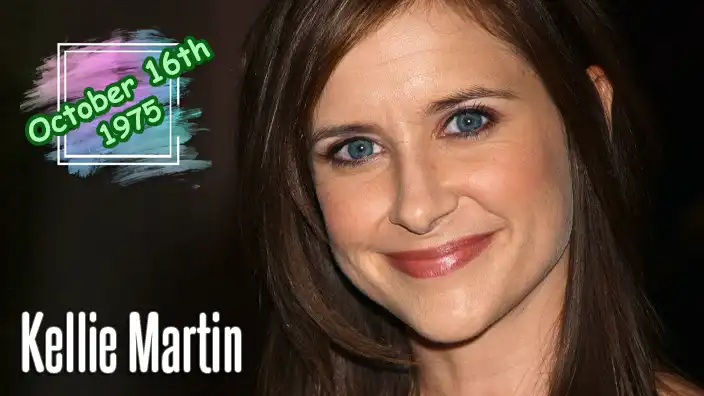
October 16, 1975, in Riverside, California
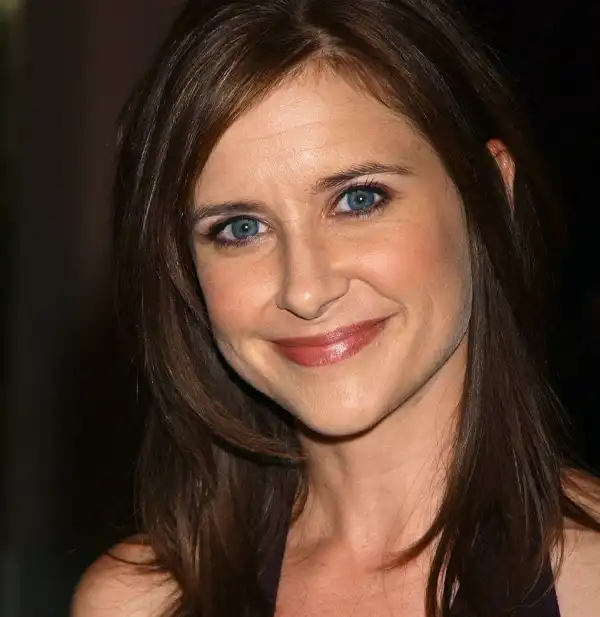
Kellie Noelle Martin was born on October 16, 1975, in Riverside, California, United States. An accomplished American actress, producer, director, and author, Martin began her entertainment career as a child and became widely recognized for her portrayal of Rebecca "Becca" Thatcher in the ABC family drama Life Goes On. She later achieved further television success as medical student Lucy Knight in NBC's ER, while her starring roles in the Mystery Woman and Hailey Dean Mysteries film franchises established her as a familiar favorite among viewers of television mystery dramas. Her career has encompassed comedy, family entertainment, animation, historical drama, medical television, suspense films, and romantic productions, demonstrating an unusual ability to move between genres while maintaining a natural and approachable screen presence.
Martin grew up in Southern California in a family that valued education and encouraged her developing interest in performing. Her father, Doug Martin, worked in retail management, while her mother, Debbie, was a kindergarten teacher. Although she did not come from a traditional Hollywood acting family, an unexpected connection to one of television's most recognizable performers helped launch her career. Her aunt worked as a nanny for the children of actor and producer Michael Landon, the beloved star of Bonanza, Little House on the Prairie, and Highway to Heaven. Through that family connection, Martin received an opportunity to audition for the television series Father Murphy, which Landon produced. What began as a childhood acting opportunity eventually developed into a professional career that would keep her in front of television cameras for decades.
Martin made her television debut in Father Murphy in 1982, beginning a series of appearances in popular programs throughout the decade. Her early credits included Highway to Heaven, The Hogan Family, and other family-oriented productions that introduced her to the demanding schedules and professional expectations of television acting. Unlike many young performers who struggle to balance education with entertainment work, Martin remained strongly committed to her studies. She developed a reputation for being hardworking, prepared, and remarkably comfortable in front of cameras. These qualities helped her secure increasingly substantial roles as she moved from occasional guest appearances into regular television work.
One of Martin's early film appearances came in the comedy Jumpin' Jack Flash (1986), starring Whoopi Goldberg. The film combined espionage, mistaken identities, and comic misunderstandings in a story about a computer operator who becomes involved in international intrigue. Although Martin's role was relatively small, the production provided valuable experience working within a major Hollywood feature film. She subsequently appeared in Troop Beverly Hills (1989), the comedy starring Shelley Long as a wealthy Beverly Hills mother who becomes the unlikely leader of a wilderness troop. Martin portrayed Emily Coleman, one of the young troop members whose adventures involved considerably more fashionable clothing than most traditional camping expeditions. The film became a nostalgic favorite for audiences who enjoyed its combination of friendship, humor, and exaggerated Southern California luxury.
Martin also established herself as a talented voice actress during the late 1980s. She provided the voice of Daphne Blake in A Pup Named Scooby-Doo, the animated series that reimagined the familiar mystery-solving characters as children. The program premiered in 1988 and featured younger versions of Scooby-Doo, Shaggy, Fred, Daphne, and Velma investigating supernatural mysteries that invariably involved someone wearing an elaborate disguise. Martin's portrayal of Daphne introduced her voice to a generation of young viewers, even if many did not immediately recognize the actress behind the animated character. The role demonstrated her ability to communicate personality and humor through vocal performance alone, a skill she would continue developing through later animation projects.
Her major television breakthrough arrived in 1989 when she was cast as Rebecca "Becca" Thatcher in Life Goes On, an ABC family drama that became one of the most socially significant television programs of its era. Created by Michael Braverman, the series followed the Thatcher family as they navigated everyday relationships, personal challenges, and social issues in suburban Chicago. The cast included Bill Smitrovich and Patti LuPone as parents Drew and Libby Thatcher, Chris Burke as their son Corky, and Martin as their daughter Becca. The program distinguished itself from conventional family dramas by addressing disability, discrimination, illness, relationships, and social acceptance with unusual sensitivity.
A defining feature of Life Goes On was its portrayal of Corky Thatcher, a young man with Down syndrome played by Chris Burke, who himself has Down syndrome. The series helped challenge prevailing stereotypes by presenting Corky as a fully developed character with ambitions, relationships, frustrations, and personal independence. Rather than treating disability as an occasional educational storyline, the program integrated Corky's experiences into the everyday life of the Thatcher family. Martin's character Becca frequently provided an important perspective on the challenges and rewards of growing up alongside a sibling whose experiences differed from those of many other teenagers. Their relationship included affection, embarrassment, sibling disagreements, and the familiar frustrations of family life, making it recognizable rather than artificially sentimental.
As Life Goes On developed, Becca Thatcher became increasingly central to its dramatic storytelling. Initially portrayed as an intelligent, somewhat awkward teenager attempting to establish her identity, Becca gradually confronted complicated questions about friendship, romance, independence, and social responsibility. Martin brought a natural vulnerability to the role, capturing the mixture of confidence and insecurity that often characterizes adolescence. Her performance avoided the exaggerated mannerisms sometimes associated with teenage television characters, instead emphasizing emotional honesty and believable reactions. Audiences watched Becca mature through experiences that ranged from ordinary school difficulties to serious personal challenges.
One of the series' most important storylines involved Becca's relationship with Jesse McKenna, portrayed by Chad Lowe, a young man living with HIV. At a time when public misunderstanding and discrimination surrounding HIV and AIDS remained widespread, Life Goes On presented their relationship with compassion and emotional complexity. The storyline explored fear, stigma, love, and the importance of treating individuals with dignity regardless of their medical circumstances. Martin's performance helped communicate the emotional realities of a young woman who loved someone facing a serious illness while confronting the prejudices of those around them. The storyline contributed to the program's reputation for addressing difficult subjects that many mainstream television productions had previously avoided.
Life Goes On aired for four seasons, from 1989 until 1993, and became an important milestone in Martin's career. Her portrayal of Becca Thatcher earned a Primetime Emmy Award nomination for Outstanding Supporting Actress in a Drama Series in 1993. She also received recognition from the Young Artist Awards and Viewers for Quality Television. The series established her as a respected dramatic performer capable of handling emotionally challenging material, while its themes of inclusion and social understanding gave her work a significance extending beyond conventional entertainment. For many viewers, Becca Thatcher remained one of the most relatable teenage characters of early 1990s television.
Following the conclusion of Life Goes On, Martin continued building her career through television films and dramatic productions. In 1994, she starred in Christy, the CBS historical drama adapted from Catherine Marshall's bestselling novel. Set in the Appalachian Mountains during the early twentieth century, the series followed Christy Huddleston, a young woman who leaves her comfortable upbringing to teach children in an isolated mountain community. Martin portrayed the title character, bringing determination, compassion, and youthful idealism to a story examining education, poverty, religious faith, and cultural differences. The series also starred Tyne Daly and explored the challenges faced by a teacher attempting to improve opportunities for children in a community with limited resources.
Although Christy had a relatively brief network television run, the program developed a devoted following and became particularly popular among viewers who appreciated its emphasis on traditional storytelling, personal responsibility, and community relationships. Martin's portrayal of Christy reflected her ability to communicate sincerity without allowing the character to become overly sentimental. The young teacher faced difficult decisions, unfamiliar customs, and personal disappointments while learning that good intentions alone were not always sufficient to solve complicated problems. The series provided Martin with another substantial leading role and strengthened her reputation as an actress particularly effective in thoughtful, character-driven family dramas.
During the mid-1990s, Martin appeared in several television movies that explored suspense, psychological conflict, and emotionally demanding situations. One notable production was A Friend to Die For (1994), also known as Death of a Cheerleader, in which she portrayed Angela Delvecchio, a socially awkward teenager whose desire for popularity leads to tragedy. The film, inspired by a real criminal case, examined the destructive consequences of peer pressure, jealousy, and social exclusion. Martin's performance required her to portray a deeply troubled young woman whose actions were both disturbing and psychologically understandable. The role demonstrated her willingness to explore darker characters rather than remain confined to the sympathetic personalities that had initially established her popularity.
Another significant television film was The Face on the Milk Carton (1995), adapted from Caroline B. Cooney's popular young-adult novel. Martin portrayed Janie Jessmon, a teenager who recognizes her childhood photograph on a milk carton identifying a missing child. The discovery forces her to question her identity, family history, and everything she believes about her upbringing. The film explored the emotional consequences of kidnapping, family secrets, and the complicated relationships between biological and adoptive families. Martin's performance emphasized confusion, fear, and determination as Janie attempted to uncover the truth about her past. The production became a memorable adaptation for viewers familiar with the novel and further strengthened Martin's association with emotionally compelling television storytelling.
In 1995, Martin returned to voice acting with Disney's animated musical comedy A Goofy Movie. She provided the voice of Roxanne, the teenage girl admired by Max Goof, the son of Disney's famously accident-prone Goofy. The film followed Max and his father on a chaotic road trip involving embarrassing parental behavior, musical performances, and the familiar difficulties of teenage romance. Roxanne became an important character in Max's efforts to impress his classmates and establish his independence. Martin's vocal performance helped create a warm and approachable character whose presence contributed to the film's emotional appeal. Over time, A Goofy Movie developed a devoted following, particularly among viewers who grew up with its memorable songs and affectionate portrayal of father-son relationships.
Despite her increasingly successful acting career, Martin remained determined to pursue higher education. She enrolled at Yale University, one of America's most prestigious academic institutions, and studied art history. Balancing university life with professional acting commitments proved challenging, particularly as new television opportunities continued arriving. Nevertheless, Martin regarded education as an important personal achievement rather than something to abandon once her entertainment career became established. Her academic interests reflected a curiosity about visual culture, history, and artistic expression that extended beyond the immediate demands of television production.
In 1998, Martin accepted one of the most significant roles of her career when she joined the cast of NBC's enormously successful medical drama ER. Created by Michael Crichton, the series followed the physicians, nurses, and medical personnel working in the emergency department of the fictional County General Hospital in Chicago. Known for its fast-paced storytelling, realistic medical terminology, and emotionally intense emergencies, ER had become one of television's most popular dramas. Martin joined the cast during its fifth season, portraying Lucy Knight, an intelligent and ambitious medical student attempting to establish herself within the demanding hospital environment.
Lucy Knight quickly became a recognizable member of the ER ensemble, particularly through her complicated professional relationship with Dr. John Carter, portrayed by Noah Wyle. Carter served as one of Lucy's supervisors, and their interactions frequently involved disagreements, misunderstandings, and the challenges of medical training. Lucy possessed considerable intelligence and determination but sometimes struggled with practical procedures and the overwhelming pressures of emergency medicine. Martin portrayed these difficulties with believable uncertainty, showing a young physician learning that academic knowledge and real-world medical experience were not always the same thing. Her character's development reflected the demanding transition from medical education to direct responsibility for patients.
The relationship between Lucy and Carter became an important element of the series, combining professional tension with occasional romantic undertones. Their differing personalities and expectations created opportunities for both humor and emotional conflict. Martin's performance helped make Lucy a sympathetic character whose mistakes reflected inexperience rather than incompetence. As she became more confident, Lucy developed stronger relationships with patients and colleagues, demonstrating the compassion and dedication necessary for a successful medical career. Her storylines also addressed the challenges of recognizing psychiatric conditions and providing appropriate care to vulnerable patients.
Martin's departure from ER in 2000 produced one of the series' most shocking and memorable storylines. In the sixth-season episode Be Still My Heart, Lucy and Carter were attacked by a patient experiencing a severe psychiatric crisis. The episode concluded with a devastating discovery, leading directly into All in the Family, in which the hospital staff struggled to save their injured colleagues. Lucy's death became an emotionally powerful moment for the series, particularly because viewers had followed her development from an uncertain student into a promising young physician. The storyline also highlighted the dangers medical professionals can face when treating patients experiencing serious psychiatric emergencies, although its dramatic presentation was designed primarily to create suspense and emotional impact.
Martin's performance as Lucy Knight contributed to the continuing success of ER during one of its most celebrated periods. As a member of the ensemble, she shared in the cast's Screen Actors Guild Award for Outstanding Performance by an Ensemble in a Drama Series in 1999. Her departure allowed her to return to Yale University, where she completed her degree in art history in 2001. The decision reflected her determination to fulfill an educational ambition that had remained important despite the demands of a successful acting career. While many performers might have considered leaving a major television production to finish university an unusual choice, Martin regarded her academic achievement as a meaningful part of her personal development.
Following her graduation, Martin returned to acting and increasingly became associated with television mystery productions. In 2003, she starred in Mystery Woman, a Hallmark television movie introducing Samantha Kinsey, the owner of a mystery bookstore who becomes involved in solving crimes. The character combined literary enthusiasm, curiosity, and amateur detective skills, making her an appealing protagonist for viewers who enjoyed traditional mystery storytelling. The original film proved successful enough to inspire a continuing series of television movies, with Martin returning as Samantha to investigate murders, suspicious circumstances, and complicated personal secrets.
The Mystery Woman franchise developed into a popular collection of Hallmark productions between 2003 and 2007. Martin's character operated a bookstore specializing in mystery fiction, providing a particularly appropriate setting for someone who repeatedly found herself investigating real-life crimes. Samantha's investigations often involved local relationships, hidden motives, and apparently respectable individuals with inconvenient secrets. Martin brought warmth, intelligence, and a sense of humor to the character, creating a detective who relied on observation and determination rather than conventional law-enforcement authority. Her portrayal helped establish the formula that would later become familiar to audiences of Hallmark mystery films: an appealing amateur investigator, an inviting community, and a suspiciously high number of murders for such pleasant surroundings.
Martin's involvement in the Mystery Woman productions also extended behind the camera. She directed several installments of the franchise, demonstrating an interest in filmmaking that had developed alongside her acting career. Directing required her to coordinate performances, interpret scripts visually, and work closely with production crews to establish the pacing and atmosphere of each story. Her transition into directing reflected a broader professional ambition to participate in the creative process beyond performing individual roles. It also provided valuable experience managing the practical demands of television production, where schedules and budgets often require filmmakers to make quick decisions without sacrificing storytelling quality.
In 2004, Martin was accepted into the American Film Institute's Directing Workshop for Women, a program designed to support female filmmakers and encourage greater opportunities for women working behind the camera. Through the workshop, she directed her first short film, further developing her technical understanding of visual storytelling. Her participation reflected an awareness of the limited opportunities historically available to women directors in the entertainment industry. By gaining experience in both acting and directing, Martin expanded her professional options while strengthening her appreciation for the collaborative nature of filmmaking.
Throughout the 2000s and 2010s, Martin continued appearing in television movies and guest roles across several popular series. Her credits included Grey's Anatomy, Private Practice, Ghost Whisperer, Drop Dead Diva, and Mad Men. These appearances allowed her to portray characters outside the family dramas and mystery franchises most closely associated with her career. She also appeared in Malibu's Most Wanted (2003), a comedy starring Jamie Kennedy, demonstrating her willingness to participate in lighter entertainment. Her ability to move comfortably between dramatic television, comedy, suspense, and family-oriented productions helped sustain a remarkably varied career.
Martin later appeared in the Lifetime military drama Army Wives, portraying Captain Nicole Galassini. The series followed military families confronting the challenges of deployment, relationships, professional obligations, and personal sacrifice. Her character contributed to the show's examination of service, identity, and the complicated relationships within military communities. The role provided another opportunity to explore emotionally grounded storytelling while portraying a woman balancing professional responsibilities with personal concerns. Martin's performance reflected the same naturalistic approach that had characterized her earlier dramatic work.
Another important phase of her career began with the Hailey Dean Mysteries, a Hallmark Movies & Mysteries franchise inspired by characters created by television personality and former prosecutor Nancy Grace. Martin portrayed Hailey Dean, a former prosecutor who becomes a therapist while retaining a remarkable talent for investigating suspicious deaths. The character's legal background and understanding of human behavior made her particularly effective at recognizing inconsistencies in criminal investigations. The franchise began in 2016 and developed into a series of films combining suspense, personal relationships, and traditional detective storytelling.
Hailey Dean differed from Samantha Kinsey in several important respects. While Samantha approached investigations as a bookstore owner with a fascination for mystery fiction, Hailey possessed professional experience within the criminal justice system. Her background as a prosecutor gave her a more informed understanding of evidence, legal procedures, and the motivations behind criminal behavior. Martin used these distinctions to create a character who was compassionate and approachable but also capable of confronting dangerous situations with determination. The films became popular with Hallmark mystery audiences, further establishing Martin as one of the network's recognizable leading performers.
The Hailey Dean Mysteries included productions such as Murder, with Love, Deadly Estate, Dating Is Murder, 2 + 2 = Murder, A Marriage Made for Murder, A Will to Kill, Death on Duty, A Prescription for Murder, and Killer Sentence. Across these stories, Hailey investigated crimes involving personal betrayals, professional conflicts, hidden relationships, and elaborate attempts to conceal wrongdoing. Martin's performances provided continuity across the franchise, allowing viewers to develop familiarity with the character's personality, relationships, and investigative methods. By this stage of her career, Martin had become so experienced at portraying amateur detectives that fictional criminals might reasonably have considered leaving town whenever she arrived.
Martin also became a familiar presence in Hallmark's romantic and holiday productions. Her credits included The Christmas Ornament (2013), So You Said Yes (2015), Hello, It's Me (2015), and Christmas in Montana (2019). These films offered a different form of storytelling from her mystery roles, emphasizing relationships, emotional healing, family connections, and the comforting traditions associated with seasonal entertainment. Martin's approachable screen personality made her particularly effective in productions where audiences expected warmth, sincerity, and reassuring conclusions. After years of fictional murders, medical emergencies, and teenage heartbreak, a Christmas romance probably represented a welcome opportunity to finish a production without anyone requiring emergency surgery.
In 2019, Martin starred in Lifetime's Death of a Cheerleader, a new adaptation of the real-life-inspired story previously dramatized in A Friend to Die For. The production created an unusual professional connection between two different stages of her career. In the 1994 version, Martin had portrayed the troubled teenager responsible for the central crime, while in the later adaptation she played a different character, an FBI agent involved in the investigation. The opportunity allowed her to revisit familiar material from a new perspective, demonstrating how an actress's relationship with a story can change through experience and professional development.
Beyond acting and directing, Martin has pursued interests in writing and business. In 2014, she published Madam: A Novel of New Orleans, co-written with Nina Foxx and released by Penguin Group. The historical novel explores the world of prostitution, ambition, and survival in New Orleans during the late nineteenth and early twentieth centuries. The project reflected Martin's interest in history and storytelling, connecting her academic background in art history with her experience creating dramatic characters. Writing fiction offered another opportunity to explore narrative development outside the practical constraints of television production.
Martin also became involved in children's retail, operating an online boutique called ROMP that specialized in toys and children's products. The business reflected her interest in family life and thoughtfully selected items for young children. Her involvement demonstrated an entrepreneurial side extending beyond entertainment, as she balanced professional acting commitments with business responsibilities and motherhood. Although operating a toy store might seem considerably less dangerous than investigating fictional murders, anyone familiar with the challenges of retail inventory, shipping deadlines, and customer expectations knows that suspense can arrive in many forms.
An important part of Martin's public life has been her advocacy for autoimmune disease awareness. Her younger sister, Heather, died at 19 following complications associated with lupus that had initially been misdiagnosed. The loss profoundly affected Martin and encouraged her to become involved in efforts to improve understanding, diagnosis, and treatment of autoimmune conditions. In 1999, she became a national spokesperson for the American Autoimmune Related Diseases Association, using her public recognition to draw attention to diseases that can be difficult to diagnose and are sometimes poorly understood.
Martin's advocacy included public speaking, meeting patients and families, and participating in discussions with policymakers about medical research and awareness. She also appeared before audiences concerned with women's health and the challenges associated with autoimmune conditions. In 2001, Reader's Digest recognized her as a national Health Hero, acknowledging her commitment to helping others through education and advocacy. She later received the Michael Wayne Public Service Award from Lupus LA in 2003. Her work demonstrated how a performer could use television recognition to support an issue with deeply personal significance while encouraging greater public understanding of medical conditions affecting many families.
Martin married Keith Christian in May 1999, and the couple have two daughters. She has generally maintained a relatively private family life while occasionally discussing the challenges and rewards of balancing parenting with professional commitments. Her experiences as a mother have influenced her interests in children's products, education, and family-oriented storytelling. Despite growing up within the entertainment industry, Martin has consistently emphasized the importance of maintaining interests and responsibilities beyond acting. Her decision to complete her university education, develop business projects, and support charitable causes reflects an approach to professional success that includes personal fulfillment and community involvement.
One of the distinctive features of Martin's career is her ability to retain the affection of audiences who first encountered her as Becca Thatcher while continually attracting new viewers through later productions. For some, she remains the thoughtful teenager from Life Goes On, a series that helped expand television's treatment of disability and serious illness. Others remember her as Lucy Knight, whose tragic departure from ER became one of the medical drama's most unforgettable moments. Younger viewers may recognize her voice from A Pup Named Scooby-Doo or A Goofy Movie, while Hallmark audiences associate her with the reassuring familiarity of Samantha Kinsey and Hailey Dean.
Her professional longevity reflects adaptability, discipline, and an understanding of the importance of strong characters in successful storytelling. Martin has rarely depended on extravagant performances or sensational publicity to maintain her career. Instead, she has developed a reputation for portraying intelligent, compassionate, and emotionally recognizable women confronting difficult circumstances. Her characters frequently display determination without being invulnerable, and their mistakes and uncertainties help make them believable. Whether playing a teenager confronting prejudice, a medical student struggling with responsibility, or a detective investigating a complicated murder, Martin brings a sense of sincerity that encourages audiences to become invested in the story.
Kellie Martin's achievements demonstrate the possibilities available to performers who successfully navigate the transition from child acting to mature dramatic roles. Her career includes a Primetime Emmy Award nomination, a Screen Actors Guild ensemble award, acclaimed television dramas, popular mystery franchises, voice acting, directing, writing, and public advocacy. She has contributed to programs that addressed important social issues while also providing audiences with lighthearted entertainment and traditional mystery storytelling. From the Thatcher family's living room to County General Hospital and the suspiciously crime-prone communities of Hallmark television, Martin has built a career characterized by versatility, intelligence, and emotional authenticity. And considering how many fictional mysteries she has solved, it seems only fair that someone eventually offer her a television role in which she can enjoy a quiet vacation without discovering a body before breakfast.