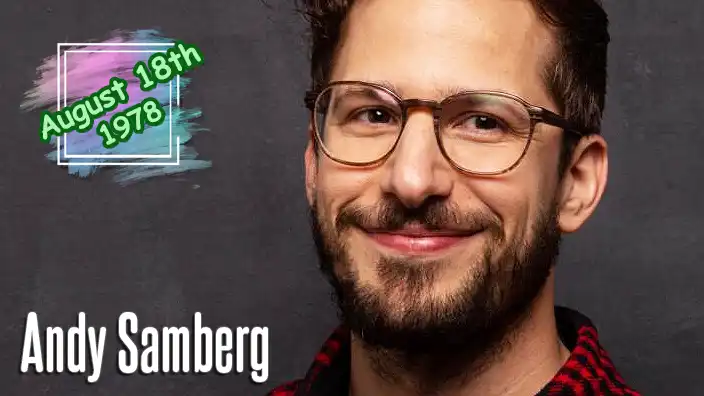
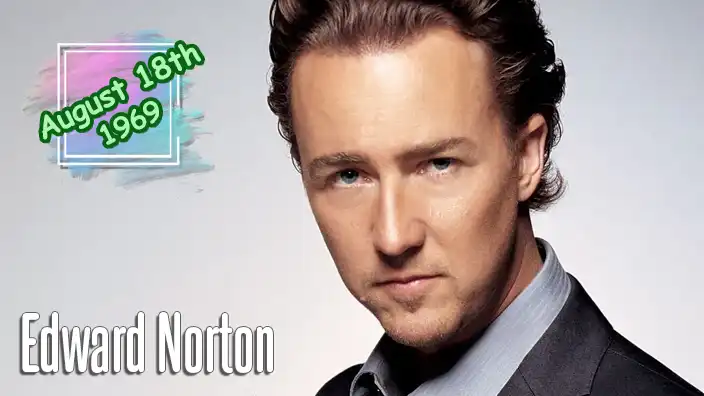
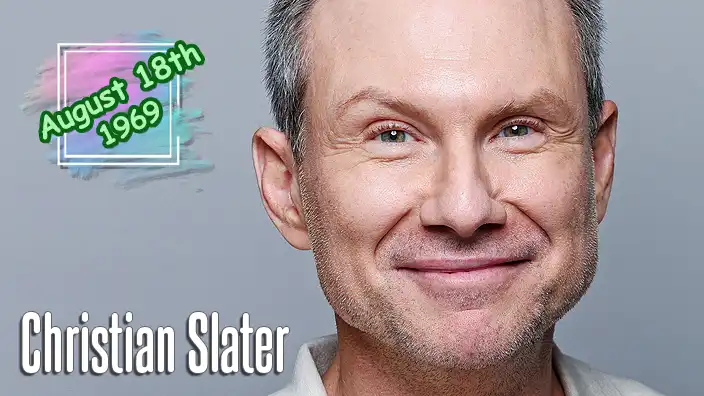
August 18, 1952, in Houston, Texas
 September 14, 2009, in Los Angeles, California
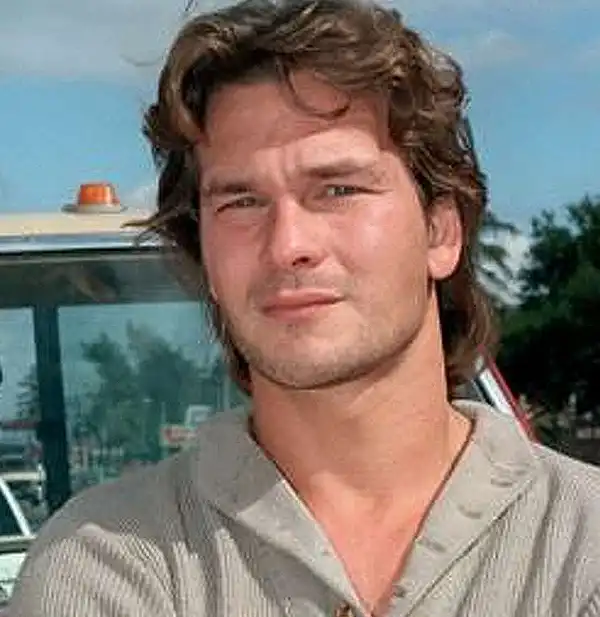
Patrick Wayne Swayze was born on August 18, 1952, in Houston, Texas. His father, Jesse Wayne Swayze, was an engineering draftsman, while his mother, Patsy Swayze, was a dancer, choreographer and dance instructor who operated a dance school in Houston. Growing up in that household meant Patrick was introduced to dance at an early age, although his interests were hardly confined to the studio. He also pursued gymnastics, swimming and football, developing the athletic ability that would later become an important part of his screen presence.
Swayze attended Waltrip High School in Houston and later studied at San Jacinto College. Although he had considerable athletic ability, dance increasingly became the focus of his professional ambitions. He eventually moved to New York City, where his training included study at the Harkness Ballet School and Joffrey Ballet School. His combination of strength, athleticism and classical training helped distinguish him as a dancer, but an old football injury and subsequent knee problems eventually complicated his prospects for a long-term ballet career.
Before Hollywood discovered him, Swayze worked professionally as a dancer. One of his early jobs was playing Prince Charming in Disney on Parade, which is an appropriately unusual starting point for a man who would eventually become famous for playing bouncers, bank robbers and romantic ghosts. He later performed as Danny Zuko in the original Broadway production of Grease, adding musical theater to an increasingly varied résumé.
Swayze made his movie debut in the roller-disco film Skatetown U.S.A. in 1979. His early television work included a memorable 1981 episode of MASH*, in which he played a wounded soldier who learns that he has leukemia. During the early 1980s, Swayze steadily accumulated screen roles, appearing in projects including The Renegades, Uncommon Valor and Francis Ford Coppola's The Outsiders. The latter placed him among an extraordinary group of emerging young actors that included Tom Cruise, Rob Lowe, Matt Dillon, Emilio Estevez and Ralph Macchio.
Television helped increase his profile when he appeared as Orry Main in the enormously successful 1985 miniseries North and South. The Civil War drama gave Swayze a substantial leading role and demonstrated that his appeal extended well beyond dancing and action. By the middle of the decade, he had established himself as a recognizable actor, but the film that transformed him into an international star was still ahead.
In 1987, Swayze starred opposite Jennifer Grey in Dirty Dancing. He played Johnny Castle, a working-class dance instructor at a Catskills resort who becomes romantically involved with Frances "Baby" Houseman. The production was not originally expected to become a cultural phenomenon, but audiences had other ideas. Dirty Dancing became a major box-office success, its soundtrack became enormously popular, and Swayze suddenly found himself transformed into one of Hollywood's biggest romantic stars.
His performance as Johnny Castle earned Swayze a Golden Globe nomination. More importantly for popular culture, Dirty Dancing produced scenes and lines that remained recognizable decades after its release. The climactic dance between Johnny and Baby became one of the defining movie moments of the 1980s, while Swayze's combination of professional dance ability and acting meant the filmmakers did not have to disguise what their leading man could actually do on the dance floor. Johnny Castle wasn't pretending to be a dancer. The fellow playing him really could dance.
Swayze also made an important musical contribution to the movie. He co-wrote and performed "She's Like the Wind," which appeared on the Dirty Dancing soundtrack. The song became a major hit, reaching No. 3 on the Billboard Hot 100 and No. 1 on the Adult Contemporary chart. It gave Swayze the unusual distinction of starring in one of the decade's most successful romantic films while simultaneously singing one of the songs associated with it. Apparently merely acting, dancing and becoming a heartthrob wasn't keeping him sufficiently occupied.
Rather than remain exclusively a romantic leading man, Swayze moved into considerably rougher territory with Road House in 1989. He played James Dalton, a professional "cooler" hired to bring order to an exceptionally troublesome Missouri bar. Dalton is philosophical, disciplined and remarkably calm considering how frequently people attempt to punch him. The movie was not greeted as a masterpiece by contemporary critics, but its reputation grew dramatically over time, eventually making it one of Swayze's most enduring films.
Then came Ghost in 1990. Swayze starred as Sam Wheat opposite Demi Moore, with Whoopi Goldberg playing psychic Oda Mae Brown. After Sam is murdered, his spirit remains behind as he attempts to protect Molly and uncover the truth about his death. The movie blended romance, supernatural drama, comedy and thriller elements in a combination that could easily have collapsed into nonsense but instead became an enormous international success.
Ghost was the highest-grossing movie worldwide of 1990 and earned Swayze another Golden Globe nomination. The pottery scene involving Swayze, Moore and the Righteous Brothers' recording of "Unchained Melody" became one of cinema's most famous romantic sequences. It also ensured that pottery wheels would never again be regarded entirely as innocent pieces of craft equipment.
Swayze followed Ghost with another role that became a cult favorite. In Kathryn Bigelow's 1991 action thriller Point Break, he played Bodhi, the charismatic leader of a group of surfers who also happen to rob banks. Keanu Reeves starred as FBI agent Johnny Utah, who infiltrates the surfing community while investigating the robberies. Bodhi allowed Swayze to combine physicality, charm, danger and philosophical intensity in a character who was considerably more complicated than a conventional action-movie villain.
His career during the 1990s continued across a wide range of genres. He appeared in City of Joy, Father Hood, Tall Tale and Black Dog, among other films. In 1995, he took another notable departure from the traditional leading-man image when he appeared alongside Wesley Snipes and John Leguizamo in To Wong Foo, Thanks for Everything! Julie Newmar. Swayze played drag queen Vida Boheme, and the performance earned him his third Golden Globe nomination.
Swayze never seemed particularly interested in remaining safely inside one Hollywood category. His résumé included romantic dramas, action movies, westerns, comedies, thrillers, dance films and television productions. His background as a dancer gave him unusual physical control as an actor, while his rugged appearance allowed filmmakers to cast him convincingly in roles that might otherwise have gone to conventional action stars. That combination became one of his defining professional characteristics.
Away from the screen, one of the most enduring relationships in Swayze's life was his marriage to dancer and actress Lisa Niemi. The two met through his mother's dance school when they were young and married on June 12, 1975. Their marriage lasted more than 34 years, until Swayze's death in 2009. They had no children, but shared interests in dancing, horses and ranch life, and Niemi became an important creative collaborator as well as his wife.
The couple worked together professionally on several occasions. Swayze and Niemi starred together in One Last Dance, released in 2003, which Niemi also directed and co-wrote. The project returned Swayze to the world of dance and gave the couple an opportunity to combine their professional and personal history in a film built around performers attempting to revive a dance company.
Swayze also returned to musical theater later in his career. In 2003, he joined the Broadway revival of Chicago as lawyer Billy Flynn, proving that the performer who had begun his professional career in dance had never entirely left the stage behind. He subsequently appeared in the production during its national tour.
In 2001, Swayze appeared in Donnie Darko as motivational speaker Jim Cunningham, a deliberately unsettling role that demonstrated his willingness to poke holes in his familiar screen image. Younger audiences who knew him primarily through his romantic and action films encountered a very different Patrick Swayze, while the movie itself gradually developed a devoted cult following.
His final major television role came in the A&E crime drama The Beast, which premiered in January 2009. Swayze played veteran FBI agent Charles Barker, a demanding undercover operative training a younger partner. What made the performance particularly remarkable was that Swayze was already seriously ill while making the series.
In January 2008, Swayze was diagnosed with pancreatic cancer. Despite undergoing treatment, he continued working and completed filming The Beast. His determination to remain professionally active while facing a particularly aggressive disease became an important final chapter of his career. Patrick Swayze died in Los Angeles on September 14, 2009, at the age of 57, approximately 20 months after his diagnosis.
His death brought an outpouring of tributes from colleagues and audiences who had followed a career stretching across three decades. In 2019, the documentary I Am Patrick Swayze examined his life and career through interviews with friends, relatives and colleagues, including Demi Moore, Rob Lowe and Sam Elliott. Appropriately, it premiered on August 18, which would have been Swayze's 67th birthday.
Swayze's legacy is unusually broad because there is no single movie that completely defines him. For some audiences, he will forever be Johnny Castle lifting Baby into the air in Dirty Dancing. For others, he is Sam Wheat desperately trying to reach Molly in Ghost. Action fans remember Dalton calmly cleaning up the Double Deuce in Road House, while Point Break devotees remember Bodhi chasing the perfect wave.
Those performances have remained popular because Swayze possessed a combination that Hollywood rarely produces. He could be masculine without seeming afraid of tenderness, graceful without losing physical strength, and romantic without becoming bland. His dance training influenced the way he moved on screen even when he wasn't dancing, while his willingness to take unconventional roles prevented his career from becoming predictable.
Patrick Swayze was born on August 18, 1952, and his relatively short life produced a remarkably durable body of work. More than three decades after Dirty Dancing and Ghost, new generations continue discovering his films, while Road House and Point Break have developed lives of their own as enduring favorites. He could dance, act, sing, fight convincingly on screen and ride a horse, which really does seem like one man was being unnecessarily greedy when the talents were handed out.