August 18, 1992, in Los Angeles, California
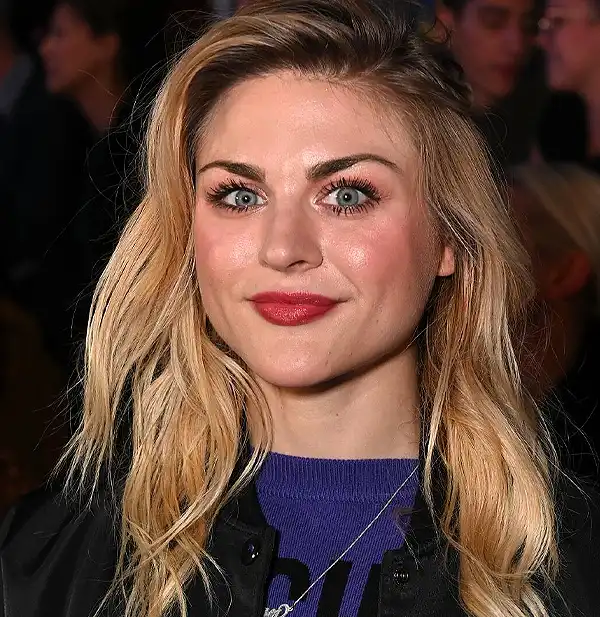
Frances Bean Cobain was born in Los Angeles, California, on August 18, 1992. Her father, Kurt Cobain, was the singer, guitarist and principal songwriter of Nirvana, while her mother, Courtney Love, was the singer and guitarist of Hole and also developed an acting career. Frances therefore arrived during one of the most turbulent and influential periods in alternative rock, when Nirvana's Nevermind had transformed her father from an underground musician into an international star.
Her unusual middle name has naturally generated plenty of curiosity over the years. Kurt Cobain reportedly said that "Bean" came from the way she appeared on an ultrasound, where he thought she resembled a kidney bean. It is difficult to argue with parental logic of that caliber, and the nickname became a permanent part of one of rock music's most recognizable family names.
Frances was not yet two years old when her father died on April 5, 1994, at the age of 27. Kurt Cobain's death meant that much of what Frances would eventually know about him came through family memories, recordings, photographs, letters, interviews and the enormous cultural legacy he left behind. For the public, Kurt Cobain became permanently associated with the music and mythology of the early 1990s. For Frances, however, the famous musician was also the father she barely had the opportunity to know.
Growing up as Kurt Cobain and Courtney Love's daughter inevitably brought extraordinary media attention. Her childhood was periodically reported in newspapers, magazines and entertainment publications, often because of circumstances involving her parents rather than anything Frances herself had done. Various relatives participated in her upbringing at different times, including her paternal grandmother, Wendy O'Connor, and her father's sister, Kimberly Cobain.
As she became an adult, Cobain increasingly demonstrated that she had little interest in recreating either parent's career. Despite possessing one of the most famous surnames in modern rock music, she did not launch herself as the lead singer of a band or attempt to become a new version of her father. Instead, her principal creative interest became visual art.
In 2010, at age 17, Cobain exhibited a collection of artwork at the La Luz de Jesus Gallery in Los Angeles. She initially displayed the work under the pseudonym "Fiddle Tim," allowing the art to receive attention without immediately attaching the Cobain name to it. Her drawings revealed an interest in dark, surreal and sometimes unsettling imagery, demonstrating a creative identity quite separate from the music for which her family was famous.
Cobain later exhibited artwork under her own name. In 2012, she participated in a group exhibition titled MiXTAPE, also at La Luz de Jesus Gallery, and in 2017 she presented a solo exhibition called Ghosts for Sale at Gallery 30 South in Pasadena, California. Her visual work has continued to provide an artistic outlet that does not require her to compete with one of the most influential rock catalogs of the last several decades.
Music, however, has never been entirely absent from her life. Cobain has occasionally shared snippets of herself singing and playing guitar through social media, inevitably generating speculation about whether she might pursue music professionally. She has generally resisted turning those glimpses into a conventional recording career. Given her father's place in music history, releasing an album would invite comparisons before anybody heard the first note, which is not exactly the most relaxing way to begin a musical career.
Cobain has also worked as a model. In 2017, designer Marc Jacobs selected her as the face of his Spring/Summer campaign. Photographer David Sims photographed the campaign, which presented Cobain in a high-fashion context while retaining the distinctive individuality that had already become part of her public image.
Her involvement with fashion was particularly notable because she had not pursued the conventional path of a professional model. Marc Jacobs explained that he had long wanted to work with her, and the campaign placed Cobain within another creative industry without suggesting that modeling would necessarily become her primary profession. She has subsequently remained selective about public appearances and commercial projects.
Cobain's relationship with her father's legacy became increasingly significant as she entered adulthood. In 2015, she served as an executive producer of Kurt Cobain: Montage of Heck, a documentary directed by Brett Morgen. The film used home movies, recordings, artwork, journal material and interviews to construct an intimate portrait of Kurt Cobain's life.
Her participation in Montage of Heck was especially important because it represented an adult Frances engaging directly with her father's story rather than simply being treated as part of it. She spoke publicly about wanting Kurt Cobain to be understood as a human being rather than merely as the almost mythical figure he had become after his death.
That distinction has appeared repeatedly in Cobain's comments about her father. To generations of Nirvana fans, Kurt Cobain represents the voice of grunge, the reluctant spokesman for a generation and the songwriter behind songs including "Smells Like Teen Spirit," "Come as You Are" and "Heart-Shaped Box." Frances has had to negotiate a considerably more personal relationship with that enormous public legacy.
She has also been refreshingly candid about her own musical tastes. In a widely discussed 2015 interview with Rolling Stone, Cobain admitted that she was not particularly fond of Nirvana. She expressed greater enthusiasm for artists including Mercury Rev, Oasis and Brian Jonestown Massacre. The admission was wonderfully effective at demonstrating that musical taste is not hereditary. Even being Kurt Cobain's daughter apparently does not automatically place Nevermind at the top of your playlist.
Her comments were sometimes treated as surprising, but Cobain also expressed admiration for her father's songwriting and acknowledged the emotional significance his music has for millions of listeners. Her perspective simply comes from a position unavailable to almost everyone else: she cannot experience Nirvana solely as a fan because the man singing is her father.
Cobain has also spoken openly about sobriety and personal growth. In 2018, she marked two years of sobriety in a social-media post and discussed her decision to keep that part of her life private while she worked through it. Her comments emphasized the importance of health, happiness and taking responsibility for her own life rather than allowing public expectations to define her.
Her personal life has nevertheless attracted considerable media attention. Cobain married musician Isaiah Silva in 2014. The marriage ended in divorce in 2017 following a widely publicized separation and legal proceedings. One particularly unusual point of dispute concerned a Martin D-18E guitar associated with Kurt Cobain's famous 1993 MTV Unplugged performance, which eventually remained with Silva as part of the divorce settlement. The instrument was later sold at auction in 2020 for more than $6 million.
In October 2023, Cobain married professional skateboarder Riley Hawk, the son of legendary skateboarder Tony Hawk. The marriage created a rather extraordinary combination of two families associated with 1990s youth culture. Michael Stipe of R.E.M., who is Frances's godfather, reportedly officiated the wedding. Somewhere, the 1990s quietly nodded in approval.
The couple welcomed their first child, a son named Ronin Walker Cobain Hawk, on September 17, 2024. Cobain announced his birth later that month through social media. Becoming a mother added another generation to two families with substantial cultural histories, although Frances and Riley have generally maintained a relatively private approach to their family life.
Cobain's connections to notable figures extend beyond her immediate family. R.E.M. frontman Michael Stipe is her godfather, while actress and musician Drew Barrymore has been identified as her godmother. These relationships reflect the extraordinary cultural environment surrounding Cobain from infancy, when many of the adults around her were already prominent figures in music and entertainment.
Financially, Cobain inherited rights connected to her father's estate after reaching adulthood. Reports have described her as controlling publicity rights associated with Kurt Cobain's name and image, while the complicated ownership of Nirvana's music publishing has changed over the years. Her inheritance has naturally attracted attention, but Cobain has also spoken about the uncomfortable emotional reality of receiving wealth because of a parent's death.
That willingness to discuss the contradictions surrounding her inheritance is characteristic of the way Cobain has approached public life. She has rarely attempted to romanticize her circumstances. Being the daughter of Kurt Cobain brought financial security and extraordinary opportunities, but it also meant growing up without her father while strangers around the world maintained deeply personal feelings about him.
Frances Bean Cobain occupies an unusual place in popular culture because she is simultaneously connected to an enormously famous musical legacy and determined not to let that legacy completely define her. She has worked as an artist, model and producer while occasionally exploring music, but she has resisted the easiest possible career route of simply turning the Cobain name into a permanent commercial attraction.
She has also matured under circumstances that would make privacy difficult for almost anyone. Photographs of her as a baby became part of rock history, her parents' lives were relentlessly documented, and her father's death became one of the defining events in modern music. Yet as an adult, Cobain has increasingly controlled how and when she participates in that story.
Frances Bean Cobain celebrates her birthday on August 18. Her life will always be connected to Kurt Cobain and Courtney Love, and there is no realistic way to separate her biography entirely from two of alternative rock's most recognizable figures. What has become increasingly clear, however, is that Frances has never been content simply to occupy the space between their names.
She has spent her adult life creating her own work, establishing her own family and deciding for herself which parts of the Cobain legacy she wishes to carry forward. That may not generate the deafening volume associated with Nirvana, but after being born into one of rock music's loudest stories, choosing your own volume seems entirely appropriate.