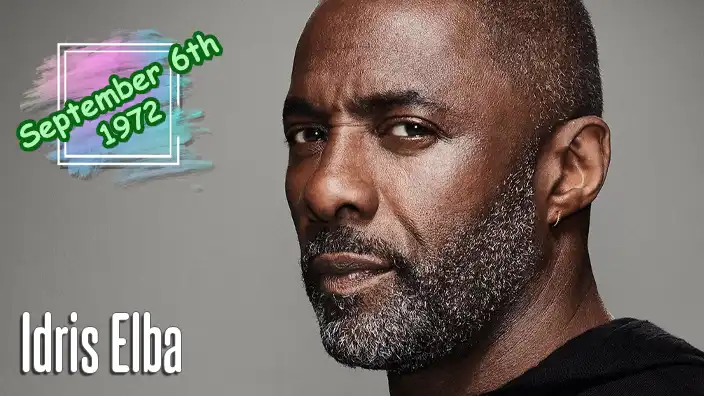
September 6, 1972, in London, England
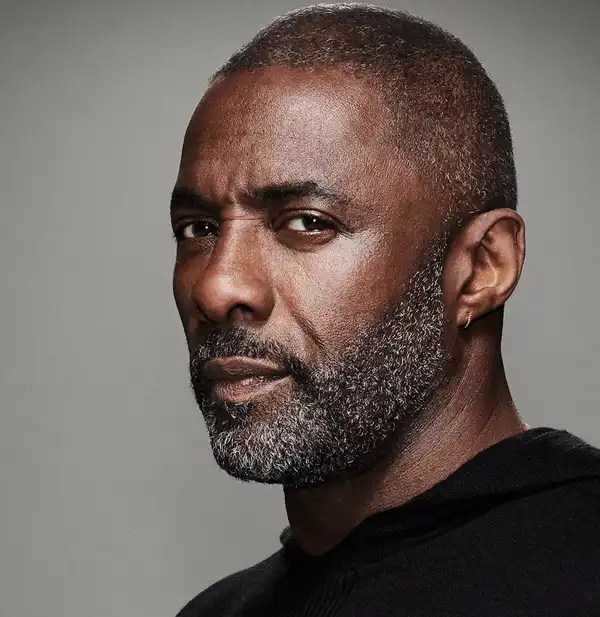
Idris Elba was born Idrissa Akuna Elba on September 6, 1972, in London, England. His father, Winston, was from Sierra Leone, while his mother, Eve, was from Ghana. He grew up in the London boroughs of Hackney and East Ham, long before Hollywood discovered that his combination of commanding presence, unmistakable voice and ability to look thoroughly unimpressed could be put to extremely profitable use.
The shortened name “Idris” came during his school years. Acting also began attracting his attention while he was young, and he eventually became involved with the National Youth Music Theatre. Winning a grant from the Prince's Trust helped him pursue his theatrical ambitions.
Success, however, did not immediately come knocking.
Like a great many actors, Elba supported himself with ordinary jobs while searching for professional work. He worked at Ford's Dagenham plant and took other jobs, including nightclub security. He also worked as a DJ, an interest that would remain an important part of his life even after acting made him famous.
Performing under names including DJ Big Driis and later simply Idris Elba, he worked London's club scene while auditioning for acting roles. Music wasn't merely something added to his biography after he became a celebrity; it was part of his working life from the beginning.
During the 1990s, Elba began accumulating roles on British television. His early credits included appearances in series such as The Bill, Absolutely Fabulous, Bramwell and Family Affairs. He also appeared in Ultraviolet, the British supernatural television series in which vampires were treated less like romantic creatures of the night and more like a public-health problem requiring immediate attention.
Elba eventually moved to the United States in pursuit of larger opportunities. Even there, success was hardly instantaneous. He later spoke about struggling financially while trying to establish himself as an actor in New York.
Then came Baltimore.
In 2002, Elba began playing Russell “Stringer” Bell in HBO's The Wire, created by David Simon. Stringer was the calculating second-in-command of the Barksdale drug organization, operating alongside his childhood friend Avon Barksdale, played by Wood Harris.
Stringer Bell was unlike the stereotypical television drug dealer. He studied economics, attended business classes and attempted to apply legitimate corporate principles to an illegal enterprise. Meetings had rules. Minutes were taken. Robert's Rules of Order somehow found their way into a Baltimore drug organization.
Elba gave Stringer an extraordinary mixture of intelligence, ambition, restraint and menace. The character wanted to move beyond street-level crime and become a legitimate businessman, but he could never entirely escape the violent organization that had given him his power.
The Wire was not an enormous ratings success during its original run, but its reputation grew dramatically afterward. It came to be regarded as one of the finest television dramas ever made, and Stringer Bell became one of its defining characters.
Many American viewers were surprised to discover that Elba was British. His Baltimore accent had been convincing enough that his London origins weren't immediately apparent. Elba later said he had concealed his British accent during the audition process because he believed it might count against him.
After The Wire, Hollywood began paying considerably more attention.
Elba appeared in films including American Gangster, The Unborn, Obsessed and Takers. He demonstrated an ability to move between crime drama, thrillers, action films and mainstream studio productions without becoming trapped by the enormous success of Stringer Bell.
Then Britain gave him another character who would become inseparable from his career.
In 2010, Elba began starring as Detective Chief Inspector John Luther in the BBC crime drama Luther. Brilliant, obsessive and emotionally volatile, Luther investigates exceptionally disturbing murders while repeatedly demonstrating that his own relationship with normal police procedure is, at best, negotiable.
Elba's intense performance became the center of the series. Luther could be compassionate, frightening, self-destructive and relentless, sometimes within the same scene. His complicated relationship with murderer Alice Morgan, played by Ruth Wilson, added another layer to a program already overflowing with psychological danger.
The role brought Elba major awards recognition. In 2012, he won the Golden Globe for Best Performance by an Actor in a Miniseries or Motion Picture Made for Television for Luther. He also received multiple Emmy nominations for the character.
Elba returned to Luther repeatedly as the series continued intermittently rather than following a conventional annual schedule. In 2023, the character made the move to feature-length streaming drama in Luther: The Fallen Sun, giving audiences another opportunity to watch London's most exhausted detective pursue people who really ought to consider less antisocial hobbies.
Between installments of Luther, Elba became increasingly prominent in major films.
He joined the Marvel Cinematic Universe as Heimdall, the all-seeing guardian of the Bifröst Bridge in 2011's Thor. With golden armor, an enormous sword and the ability to observe events across the Nine Realms, Heimdall was not exactly a subtle career change from Baltimore.
Elba reprised the character in Thor: The Dark World, Avengers: Age of Ultron, Thor: Ragnarok, Avengers: Infinity War and Thor: Love and Thunder. Heimdall became a recurring presence in the Marvel universe and introduced Elba to another enormous international audience.
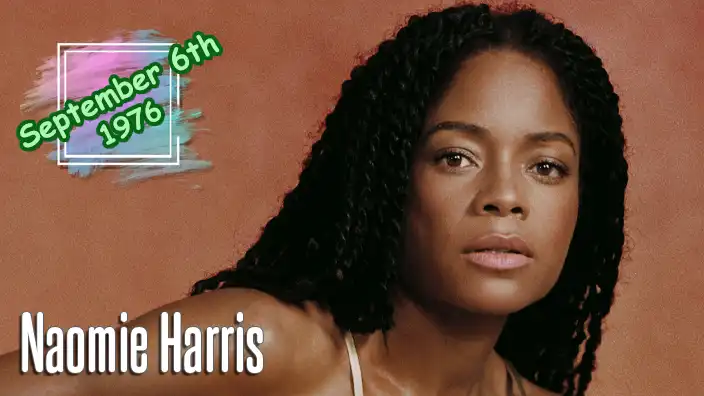
One of his most demanding roles arrived in 2013 when he portrayed Nelson Mandela in Mandela: Long Walk to Freedom. Naomie Harris—another September 6 birthday celebrant—played Winnie Mandela.
Elba portrayed Mandela across several decades, from his younger years through imprisonment and eventual release. The performance earned him a Golden Globe nomination and required considerably more than simply reproducing Mandela's recognizable voice and appearance. Elba attempted to capture the personality and emotional development of one of the twentieth century's most significant political figures.
His dramatic work continued with Beasts of No Nation in 2015. Elba played the Commandant, the charismatic and brutal leader of a group of child soldiers in an unnamed African country. The performance brought widespread critical acclaim and earned him Golden Globe, BAFTA and Screen Actors Guild recognition.
Elba won the Screen Actors Guild Award for Outstanding Performance by a Male Actor in a Supporting Role for Beasts of No Nation. He also won a SAG Award that year for his performance in Luther, making the ceremony a particularly productive evening.
His filmography became increasingly eclectic. He played Krall in Star Trek Beyond, appeared in The Dark Tower as Roland Deschain, joined The Mountain Between Us opposite Kate Winslet and played Brixton Lore in Fast & Furious Presents: Hobbs & Shaw.
He also discovered that a voice like his could be useful even when audiences couldn't see him.
Elba voiced Chief Bogo in Disney's Zootopia, Shere Khan in The Jungle Book and Fluke in Finding Dory, all released in 2016. Apparently Hollywood looked at one of the most distinctive voices in Britain and sensibly concluded that it should belong to as many animated animals as possible.
In 2021, Elba joined James Gunn's The Suicide Squad as Robert DuBois, better known as Bloodsport. The character was a highly skilled mercenary imprisoned for shooting Superman with a kryptonite bullet. He reluctantly joins Task Force X and spends much of the film surrounded by criminals, explosions and a gigantic alien starfish.
This was somehow considered superhero entertainment.
Elba's Bloodsport combined action-star toughness with dry humor and vulnerability, particularly in scenes involving his daughter. The role demonstrated again how comfortably he could move between serious drama and unapologetically enormous entertainment.
In 2022, he starred in Beast, playing a father attempting to protect his daughters from a rogue lion in South Africa. Once again, Idris Elba's fictional vacation plans proved considerably worse than everyone else's.
He also played the wish-granting Djinn opposite Tilda Swinton in George Miller's Three Thousand Years of Longing. The film offered another unconventional role in a career increasingly resistant to easy classification.
Meanwhile, Elba never abandoned music.
He has DJed internationally, performed at major festivals and released his own music. In 2019, he performed a DJ set at the Coachella Valley Music and Arts Festival. He has collaborated with numerous musicians and even appeared on tracks by other artists.
Elba's enthusiasm for testing himself has extended beyond entertainment. In his forties, he trained seriously in kickboxing for the documentary series Idris Elba: Fighter. Rather than merely pretending to learn the sport for television, he eventually competed in a professional kickboxing bout—and won.
Most people encountering a midlife crisis purchase something impractical. Idris Elba apparently decided being kicked professionally would be more interesting.
His many interests have occasionally made his acting career look like merely one department of a much larger operation. In addition to acting and music, he has worked as a producer, director and entrepreneur. His feature directorial debut, Yardie, premiered in 2018.
Elba has also become closely associated with one role he has never actually played: James Bond.
For years, his name appeared regularly in speculation about who might succeed Daniel Craig as 007. Elba repeatedly addressed the rumors, sometimes playfully and sometimes with understandable weariness. Despite enormous public enthusiasm for the idea, he never officially became Bond.
The speculation itself demonstrated how dramatically his career had developed. An actor who once struggled to find work in New York had become one of the most frequently suggested candidates to inherit one of cinema's most famous characters.
Elba was appointed an Officer of the Order of the British Empire, or OBE, in 2016 for services to drama. The recognition reflected a career that had successfully crossed British and American television, independent cinema and some of Hollywood's largest franchises.
What makes Idris Elba particularly interesting is that no single role completely defines him. Stringer Bell might be his most celebrated American television character, while John Luther made him a leading man and brought him a Golden Globe. Heimdall introduced him to Marvel audiences, Mandela demonstrated his dramatic ambition, and Bloodsport confirmed that he could be extremely funny while carrying enough weaponry to alarm a small government.
Then there is the DJing. And the directing. And the music. And the kickboxing.
Idris Elba has spent his career behaving as though somebody neglected to tell him actors were permitted to specialize. From East London to Baltimore, Asgard, South Africa and practically everywhere in between, he has built one of the most varied careers of his generation.
Stringer Bell wanted to become a businessman. Luther wanted to catch murderers. Heimdall guarded the Nine Realms. Bloodsport had to save the world. And Idris Elba, apparently dissatisfied with all of that, still found time to DJ at Coachella.
Some people really do make the rest of us look terribly lazy.