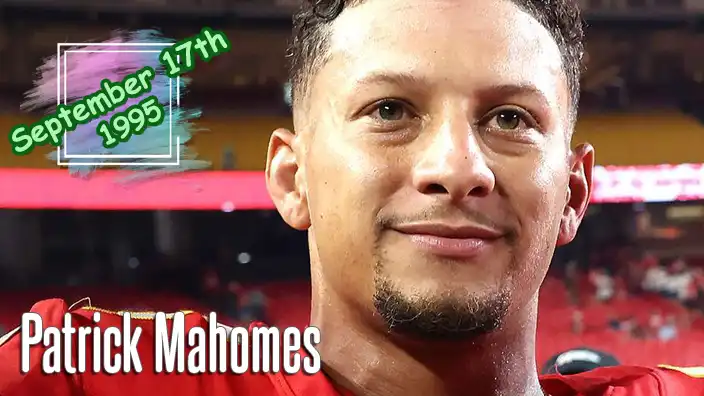
September 17, 1995, in Tyler, Texas
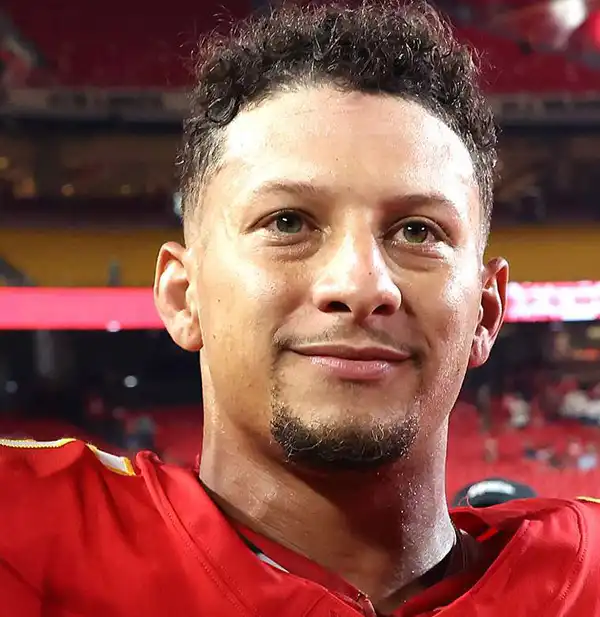
Patrick Lavon Mahomes II was born on September 17, 1995, in Tyler, Texas, into a family where professional sports were already familiar territory. His father, Pat Mahomes, was a Major League Baseball pitcher whose career included time with the Minnesota Twins, Boston Red Sox, New York Mets, Texas Rangers, Chicago Cubs and Pittsburgh Pirates. Growing up around professional baseball gave the younger Mahomes an unusually close view of what life as a professional athlete actually involved. It also helped produce a youngster who was extremely comfortable with a ball in his hand — although deciding which sort of ball he wanted to throw would take a little longer.
At Whitehouse High School in Texas, Mahomes excelled in football, baseball and basketball. Baseball was far more than a hobby. His powerful arm and athletic ability made him a genuine prospect, and for a time it was entirely reasonable to wonder whether the Mahomes name would continue in Major League Baseball rather than become synonymous with Sunday afternoons in the NFL.
Mahomes ultimately attended Texas Tech University, where he played both football and baseball before concentrating exclusively on football. That decision turned out rather well. During his final college season, he produced one of the most spectacular statistical performances in the country, throwing for 5,052 yards and 41 touchdowns while also rushing for 285 yards and another 12 scores. His college career demonstrated both the enormous strength of his arm and the improvisational style that would later become his NFL calling card.
One of the most remarkable performances of his Texas Tech career came against Oklahoma in October 2016. In a game that appeared to have been organized by people who regarded defense as an unnecessary interruption, Mahomes threw for an NCAA-record 734 yards and accounted for 819 yards of total offense. Texas Tech lost 66–59, proving that a quarterback can produce numbers resembling a typographical error and still leave the stadium without a victory.
Mahomes entered the 2017 NFL Draft, where the Kansas City Chiefs decided that waiting patiently for him to fall into their lap was entirely too risky. Kansas City traded up with the Buffalo Bills to obtain the tenth overall selection and used it on Mahomes. It was an aggressive move for a franchise that already had an established quarterback in Alex Smith, but head coach Andy Reid and the Chiefs clearly saw something worth pursuing.
Mahomes spent most of his rookie season learning behind Smith rather than immediately being thrown into the starting lineup. He made his first NFL start in the final regular-season game against the Denver Broncos, showing enough promise that Kansas City's long-term intentions became increasingly obvious. After the season, the Chiefs traded Smith to Washington and handed the offense to Mahomes.
Then things became ridiculous.
In his first full season as an NFL starter, Mahomes threw for 5,097 yards and 50 touchdowns. He became only the third quarterback in NFL history at that time to throw 50 touchdown passes in a season, joining Peyton Manning and Tom Brady. Even more remarkably, having already passed for more than 5,000 yards during a college season, Mahomes became the first quarterback to record 5,000-yard passing seasons in both college football and the NFL. His reward was the 2018 NFL Most Valuable Player Award, along with Offensive Player of the Year honors and First-Team All-Pro recognition.
For Kansas City supporters, however, the larger question was whether all those spectacular throws could finally bring another championship to a franchise that had not won the Super Bowl since the 1969 season.
The answer arrived following the 2019 season. The Chiefs reached Super Bowl LIV against the San Francisco 49ers and found themselves trailing 20–10 during the fourth quarter. Mahomes and the Kansas City offense then erupted for 21 unanswered points, winning 31–20. Mahomes was named Super Bowl MVP, becoming one of the youngest quarterbacks ever to win the championship and its Most Valuable Player award.
Kansas City returned to the Super Bowl the following season but lost to Tom Brady and the Tampa Bay Buccaneers. It was an important reminder that even Mahomes cannot manufacture a happy ending every February. The Chiefs nevertheless remained among the NFL's dominant teams, and Mahomes continued producing the sort of plays that cause defensive coordinators to stare into the middle distance and reconsider their career choices.
The 2022 season brought another extraordinary campaign. Mahomes passed for 5,250 yards and 41 touchdowns during the regular season, earning his second NFL MVP Award. Kansas City then advanced to Super Bowl LVII against the Philadelphia Eagles. Playing through an ankle injury, Mahomes helped lead the Chiefs to a 38–35 victory and collected his second Super Bowl MVP award.
A year later, the Chiefs did it again.
Kansas City faced the San Francisco 49ers in Super Bowl LVIII in Las Vegas. The game went into overtime, with San Francisco taking a 22–19 lead on a field goal. Mahomes then led Kansas City down the field, eventually finding Mecole Hardman for the championship-winning touchdown. The Chiefs won 25–22, Mahomes earned his third Super Bowl MVP award, and Kansas City became the NFL's first repeat Super Bowl champion since the New England Patriots accomplished the feat following the 2003 and 2004 seasons.
By that point, the list of quarterbacks with three Super Bowl MVP awards was remarkably short. Mahomes joined Tom Brady and Joe Montana as the only players to have reached that mark, placing him in historical company while his career was still very much underway.
The Chiefs reached another Super Bowl following the 2024 season, meeting the Philadelphia Eagles in Super Bowl LIX. This time Philadelphia controlled the game and defeated Kansas City 40–22, preventing the Chiefs from becoming the first team in the Super Bowl era to win three consecutive championships. It was a rare occasion when Mahomes and Kansas City's late-game magic could not rescue the situation.
Part of what makes Mahomes so distinctive is that his statistics tell only part of the story. Many quarterbacks possess strong arms, and many are capable of scrambling when a play collapses. Mahomes combines those abilities with unusual body control, awareness and confidence in throwing from unconventional positions. He has become famous for sidearm passes, throws while moving in either direction and the occasional no-look delivery. Some of these would make an old-school quarterback coach reach immediately for the aspirin bottle, but Mahomes has repeatedly demonstrated that what looks reckless can, in his hands, be calculated improvisation.
There is also a noticeable baseball influence in his throwing mechanics. Years spent playing baseball helped make Mahomes comfortable delivering a ball from different arm angles rather than insisting on one textbook motion. A shortstop does not always have time to plant his feet perfectly before throwing to first base, and an NFL quarterback fleeing a 300-pound defensive lineman frequently encounters the same problem — although shortstops generally have fewer enormous gentlemen attempting to flatten them.
Mahomes' partnership with Chiefs head coach Andy Reid has been equally important. Reid had already established a reputation as one of football's most creative offensive coaches before Mahomes became his quarterback. Together they developed an offense capable of mixing conventional NFL concepts with unusual formations, motion, option plays and the occasional creation that appears to have been drawn up after somebody asked, "Wouldn't it be funny if we tried this?"
Another central figure in Mahomes' career has been tight end Travis Kelce. Their connection became one of the NFL's most productive quarterback-receiver partnerships, particularly in postseason football. Kelce's ability to find openings in defensive coverage and Mahomes' willingness to keep plays alive have frequently produced completions long after a defense appeared to have successfully stopped the original play.
Away from football, Mahomes married his longtime partner Brittany Matthews, now Brittany Mahomes, in March 2022. The couple knew each other while attending school in Texas and have three children. Mahomes has frequently spoken about the importance of family, something perhaps unsurprising for someone who grew up watching his own father navigate professional sports.
His business interests have expanded considerably alongside his football career. Mahomes has become one of the most commercially recognizable athletes in the United States, appearing in major advertising campaigns and investing in professional sports organizations. His interests have included ownership stakes connected with Kansas City sports, extending his relationship with the city beyond his role as Chiefs quarterback.
He has also moved into entertainment and media production. Mahomes was prominently featured in the Netflix documentary series Quarterback, which followed him, Kirk Cousins and Marcus Mariota through the 2022 NFL season. IMDb also credits Mahomes as an executive producer on later episodes of Quarterback and as a producer on Receiver. He has accumulated numerous television appearances as himself and, inevitably for someone whose occupation involves professional football, has appeared as Patrick Mahomes in the Madden NFL video-game series. Hollywood has yet to require him to portray a mild-mannered accountant from Wisconsin, so thus far his acting range remains sensibly close to home.
Mahomes and his charitable foundation, 15 and the Mahomies, have also supported programs aimed at improving children's lives, including initiatives involving health, education and communities in need. His public profile has therefore developed well beyond the football field, particularly in Kansas City, where his career has become closely connected with a remarkable period in the history of the Chiefs.
That history makes his arrival in Kansas City particularly significant. Before Mahomes, the Chiefs had enjoyed plenty of successful seasons but had gone decades without returning to the Super Bowl. With Mahomes at quarterback, postseason football in Kansas City changed from something supporters hoped would end well into something they increasingly expected to continue deep into January.
Individual records will continue changing, and comparisons between quarterbacks from different eras will continue providing sports radio with something to argue about until the sun burns out. What is already firmly established is that Patrick Mahomes transformed the expectations surrounding the Kansas City Chiefs. A franchise that waited half a century between Super Bowl victories became a regular championship contender with Mahomes running the offense.
Perhaps the best description of Mahomes' career is that the extraordinary gradually became ordinary. A collapsing pocket, a defender closing in, Mahomes running in the wrong direction and a receiver apparently covered downfield should constitute a failed play. With Mahomes, everyone waits another couple of seconds before reaching that conclusion.
Quite often, they are wise to do so.