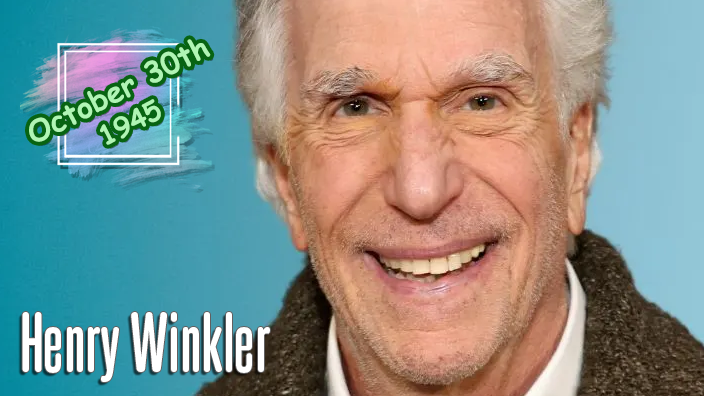
October 30, 1945, in Manhattan, New York City

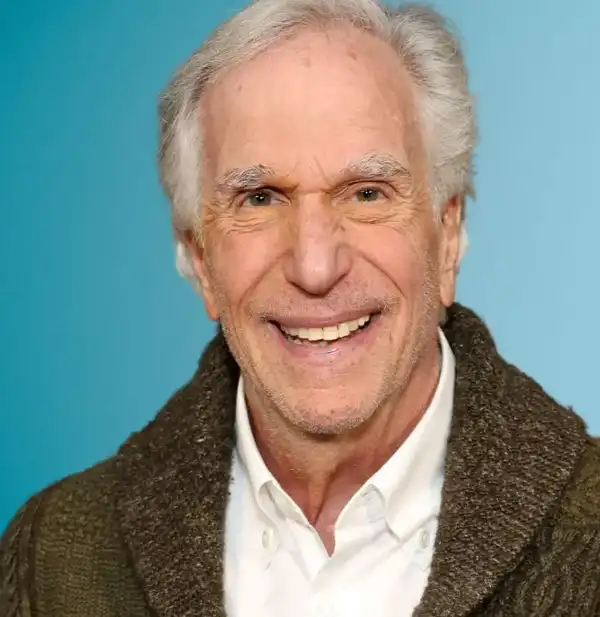
Henry Franklin Winkler was born on October 30, 1945, in Manhattan, New York City, to Harry Irving Winkler and Ilse Anna Marie Hadra Winkler. His parents were German Jewish refugees who escaped Nazi Germany in 1939, shortly before the outbreak of World War II. His father worked in the international lumber business, and the family established a comfortable life in New York. Although his parents placed considerable importance on education and professional success, young Henry had other ambitions. He wanted to become an actor, a career choice that did not exactly fit the family expectation that he would eventually join his father's business. Fortunately for television audiences, Henry was considerably more interested in performing on stage than calculating the wholesale price of timber.
Growing up was not particularly easy for Winkler, despite the warmth and humor that would later become his trademarks. He struggled academically throughout childhood, frequently receiving poor grades and experiencing considerable frustration with reading and writing. His parents believed he was not applying himself, and he was often criticized for what they interpreted as laziness. In reality, Winkler had dyslexia, a learning difference that remained undiagnosed until adulthood. The difficulties affected his confidence and made his school years unnecessarily painful. He later spoke openly about those experiences, explaining how being repeatedly told that he was not working hard enough had influenced his self-esteem long after he became successful.
Acting provided an escape from those academic frustrations. Winkler discovered that performing allowed him to express himself in ways that traditional classroom work did not. His early theatrical experiences included playing the title character in a school production of Billy Budd, and he gradually developed the determination to pursue acting professionally. He attended Emerson College in Boston, earning a bachelor's degree in 1967, before continuing his studies at the prestigious Yale School of Drama. In 1970, he graduated with a Master of Fine Arts degree. Considering the academic difficulties he had endured, completing such demanding university programs was a remarkable achievement, particularly for someone who had spent much of his childhood being told that he would never amount to very much.
After graduating, Winkler began building his professional acting career through theater, television commercials, and small television appearances. He worked with the Yale Repertory Theatre and appeared in stage productions before moving to Los Angeles in 1973. One of his early television appearances was on The Mary Tyler Moore Show, where he played a dinner-party guest. It was a modest beginning, but Hollywood has a long history of careers beginning with small roles that barely register with audiences. Winkler was about to discover that sometimes all an actor needs is one audition, one character, and a wardrobe department willing to provide a leather jacket.
That opportunity arrived when producer Garry Marshall was casting a new television comedy called Happy Days. The series, which premiered in January 1974, followed the Cunningham family and their friends in a nostalgic version of 1950s and early 1960s Milwaukee. Winkler auditioned for the role of Arthur Fonzarelli, a motorcycle-riding mechanic whose confidence, streetwise attitude, and rebellious appearance contrasted sharply with the wholesome Cunningham household. Although Fonzie was initially intended to be a relatively minor character, Winkler immediately recognized the possibilities. He gave the character a distinctive swagger, a confident expression, and a surprisingly gentle personality beneath the tough exterior.
The character quickly became a sensation. Fonzie, usually called "The Fonz," could command attention merely by walking into a room, adjusting his jacket, or raising his thumbs in approval. His familiar "Ayyy!" became one of television's most recognizable catchphrases, while his ability to operate the jukebox at Arnold's Drive-In with a well-placed thump seemed to suggest that mechanical engineering was unnecessary when sufficient coolness was available. The character's popularity grew so rapidly that he became central to Happy Days, sharing the spotlight with Ron Howard's Richie Cunningham, Marion Ross's Marion Cunningham, Tom Bosley's Howard Cunningham, and the rest of the beloved cast.
One of Winkler's greatest achievements was ensuring that Fonzie remained likable despite his rebellious appearance. Television tough guys were often portrayed as aggressive troublemakers, but Winkler gave Arthur Fonzarelli a strong sense of loyalty, honesty, and respect for others. Fonzie might have looked like someone who spent his evenings causing trouble, but he frequently became the person other characters approached when they needed sensible advice. His friendship with Richie Cunningham and his affectionate relationship with the Cunningham family helped transform him from a stereotypical motorcycle enthusiast into one of American television's most enduring characters.
The popularity of Fonzie reached extraordinary heights during the 1970s. Children imitated his mannerisms, teenagers adopted his expressions, and merchandise featuring the character appeared across the country. His familiar leather jacket became an important symbol of American television history and eventually entered the collection of the Smithsonian Institution's National Museum of American History. Winkler's performance earned him two Golden Globe Awards for Best Actor in a Television Series – Musical or Comedy, along with three Primetime Emmy nominations for his work on Happy Days. Although he became one of the most recognizable faces in entertainment, Winkler later admitted that playing such an iconic character created professional difficulties once the series ended.
One particularly memorable episode of Happy Days produced an expression that became famous for reasons nobody involved could have anticipated. In the 1977 episode "Hollywood: Part 3," Fonzie water-skied over a shark while wearing his trademark leather jacket. Years later, the phrase "jumping the shark" became a popular description for the moment when a television series resorts to increasingly outrageous situations to maintain audience interest. The expression entered the vocabulary of television criticism and eventually spread into discussions about politics, entertainment, and popular culture. Winkler has generally treated the association with good humor. After all, very few actors can claim to have inspired an expression that people still use decades later.
While appearing on Happy Days, Winkler also pursued opportunities in motion pictures. He starred in the 1977 drama Heroes, portraying a Vietnam War veteran struggling with the emotional consequences of his military service. The film allowed him to explore more serious material and demonstrated that his abilities extended beyond situation comedy. He subsequently appeared in The One and Only in 1978 and starred opposite Michael Keaton and Shelley Long in Ron Howard's 1982 comedy Night Shift. His performance as Chuck Lumley, a mild-mannered morgue attendant who becomes involved in an unlikely business venture, provided an entertaining contrast to Fonzie's overwhelming self-confidence. Winkler received a Golden Globe nomination for his work in the film.
When Happy Days ended in 1984 after eleven seasons, Winkler faced the familiar problem of an actor whose character had become almost inseparable from his public identity. Casting directors frequently struggled to imagine him playing anyone other than Fonzie, and substantial acting opportunities became more difficult to obtain. Rather than allowing that obstacle to end his career, Winkler increasingly worked behind the camera. He became involved in television production and helped develop successful programs, including the adventure series MacGyver, which premiered in 1985. The show followed a resourceful secret agent who solved dangerous problems through scientific knowledge, ingenuity, and an impressive ability to construct useful devices from ordinary household objects. Fonzie could fix a jukebox with his fist; MacGyver could probably build one from a paper clip and an empty cereal box.
Winkler also established himself as a director, making his feature-film directing debut with Memories of Me in 1988, starring Billy Crystal and Alan King. He later directed Cop and a Half in 1993, featuring Burt Reynolds, and continued working as a producer on television and film projects. These activities demonstrated the versatility that helped him survive the difficult transition from being a television phenomenon to maintaining a long-term entertainment career. Although audiences continued to recognize him as Fonzie, Winkler gradually established a professional identity that included acting, directing, producing, and developing entertainment for new generations.
During the 1990s, Winkler began appearing in roles that introduced him to younger audiences who had not grown up watching Happy Days. In Wes Craven's 1996 horror film Scream, he portrayed Principal Arthur Himbry, the unfortunate school administrator who discovers that managing teenagers is considerably less dangerous than encountering a masked killer. His appearance in the film was a welcome surprise for audiences familiar with his earlier television work. In 1998, he played Coach Klein in the Adam Sandler comedy The Waterboy, portraying a nervous football coach whose confidence has been badly damaged by professional humiliation. Winkler's willingness to embrace eccentric and occasionally ridiculous characters helped him establish a successful second chapter in his acting career.
His professional relationship with Adam Sandler continued through appearances in films such as Little Nicky, Click, and You Don't Mess with the Zohan. Winkler also appeared in the comedy Here Comes the Boom and contributed to numerous television productions. He demonstrated a particular talent for playing characters whose personalities were completely different from the confident Fonzie. Rather than trying to preserve the image that had made him famous, Winkler seemed increasingly comfortable making himself look awkward, nervous, confused, or thoroughly ridiculous whenever the script required it. For an actor once regarded as the personification of cool, that willingness to abandon his famous image was especially refreshing.
Television provided some of Winkler's most entertaining later roles. Beginning in 2003, he portrayed Barry Zuckerkorn, the Bluth family's spectacularly incompetent attorney, in the critically acclaimed comedy Arrested Development. The character was frequently more interested in his own peculiar activities than providing competent legal advice, and Winkler's wonderfully understated performance made him a recurring favorite. He later appeared in Royal Pains, Children's Hospital, New Girl, and Parks and Recreation, where he portrayed Dr. Saperstein, the father of the outrageously self-absorbed Jean-Ralphio and Mona-Lisa Saperstein. His appearances introduced him to audiences who might have recognized the name Fonzie without ever having watched an episode of Happy Days.
One particularly amusing connection between Winkler's past and later career occurred in Arrested Development. His character, Barry Zuckerkorn, encounters a dead shark lying on a dock and casually jumps over it. The moment was a deliberate reference to the famous Happy Days water-skiing episode and the expression it inspired. It demonstrated that Winkler was perfectly willing to laugh at his own television history. Considering how seriously some performers guard their famous characters, his ability to embrace such jokes revealed a refreshing sense of perspective.
Another important part of Winkler's life developed from his childhood struggles with dyslexia. After learning that he had the condition as an adult, he became an outspoken advocate for children with learning differences. He frequently visited schools, spoke about the importance of recognizing different learning styles, and encouraged students who felt discouraged by academic difficulties. Winkler understood from personal experience how damaging it could be when intelligent children were repeatedly told they were lazy or incapable. His message was straightforward: difficulties with reading or writing do not determine a person's intelligence, creativity, or potential for success.
In 2003, Winkler began collaborating with children's author Lin Oliver on the Hank Zipzer book series. The stories follow a bright, imaginative schoolboy who struggles with dyslexia and frequently finds himself in amusing situations because of his unconventional approach to everyday problems. The books drew heavily on Winkler's own childhood experiences and became popular with young readers, particularly those who recognized their own frustrations in Hank's adventures. The series eventually expanded into numerous titles and inspired the British children's television program Hank Zipzer, in which Winkler portrayed the supportive music teacher Mr. Rock. His work as an author allowed him to transform painful childhood memories into stories that entertained and encouraged children facing similar challenges.
Winkler and Lin Oliver subsequently collaborated on additional children's books, including the Here's Hank series and Alien Superstar. His literary career became an important achievement in its own right, proving that the boy who once struggled to read and spell could become a bestselling author. He also published books for adults, including I've Never Met an Idiot on the River, a collection of reflections inspired by his enthusiasm for fly-fishing. That hobby became one of his favorite ways to relax away from Hollywood, where the biggest challenge is generally convincing a trout to cooperate rather than persuading a television executive to approve another season.
A major career achievement arrived with the HBO dark comedy series Barry, which premiered in 2018. Winkler portrayed Gene Cousineau, an eccentric Los Angeles acting teacher whose students include Barry Berkman, a professional hitman attempting to abandon his violent occupation and pursue a career in theater. The series starred Bill Hader and combined dark humor, psychological drama, and increasingly dangerous situations. Winkler's performance as Cousineau was particularly impressive because the character could be pompous, insecure, self-important, vulnerable, and genuinely moving, sometimes within the same scene. It was a demanding role that allowed him to demonstrate the dramatic and comedic abilities he had developed over decades.
In 2018, Winkler won the Primetime Emmy Award for Outstanding Supporting Actor in a Comedy Series for his performance in Barry. It was his first competitive Primetime Emmy victory after decades of television work and several previous nominations. The award represented a particularly satisfying achievement for an actor who had once struggled to escape the enormous shadow of Fonzie. His acceptance speech was emotional, humorous, and warmly received, reflecting both his gratitude and the extraordinary length of his career. The success of Barry, which concluded in 2023, introduced Winkler to yet another generation of viewers and confirmed that his acting talents had never depended on a leather jacket or a motorcycle.
Winkler also participated in the NBC reality travel series Better Late Than Never, joining William Shatner, Terry Bradshaw, George Foreman, and comedian Jeff Dye on adventures through different countries. The program combined travel, friendship, cultural experiences, and considerable comedy as its participants encountered unfamiliar customs and activities. Winkler's enthusiasm and good-natured curiosity helped make him an engaging presence. Watching the former Fonz exploring the world alongside Captain Kirk and a collection of equally recognizable personalities offered viewers a rather unusual gathering of American entertainment and sporting history.
His later screen work continued to demonstrate considerable variety. He appeared in Wes Anderson's The French Dispatch, contributed to the superhero film Black Adam, and voiced characters in animated productions, including Fritz in Disney's Monsters at Work. Winkler also made guest appearances across television, maintaining a busy professional schedule long after many actors might have chosen retirement. His continuing popularity reflected not only nostalgia for Happy Days but also his ability to adapt to changing entertainment styles while retaining the warmth and humor that audiences associated with him.
In 2023, Winkler published his autobiography, Being Henry: The Fonz...and Beyond, written with James Kaplan. The memoir explored his childhood, the difficulties caused by undiagnosed dyslexia, his complicated relationship with his parents, the extraordinary success of Happy Days, and the challenges of developing an identity beyond his most famous character. Rather than presenting his life as an uninterrupted sequence of Hollywood triumphs, Winkler discussed his insecurities, personal struggles, and the emotional consequences of fame. The book became a bestseller and offered readers a candid portrait of a man whose public confidence had often concealed private doubts.
Winkler's personal life has provided stability throughout his lengthy entertainment career. In 1978, he married Stacey Weitzman, and the couple built a family that includes their children Max and Zoe, along with Stacey's son Jed from an earlier marriage. Winkler has frequently spoken about the importance of family and the support his wife provided during both the most successful and most difficult periods of his career. His children have pursued their own professional interests, with Max establishing himself as a director and Zoe becoming involved in education and charitable work. Despite the demands of Hollywood, Winkler has consistently emphasized that his family relationships are more important than awards, fame, or professional recognition.
Throughout his career, Winkler has received numerous honors recognizing both his entertainment achievements and his advocacy for people with learning differences. He received a star on the Hollywood Walk of Fame in 2000, and his portrayal of Fonzie remains one of the most recognizable performances in American television history. His two Golden Globe victories for Happy Days and his Emmy-winning performance in Barry demonstrate the remarkable distance he traveled professionally, from a supporting character in a nostalgic sitcom to a respected dramatic and comedic performer. His contributions to children's literature and educational advocacy have also given his career a significance extending well beyond television ratings and box-office receipts.
Perhaps the most remarkable aspect of Henry Winkler's career is that his greatest professional success never prevented him from continuing to grow. Many performers spend their lives hoping to create one unforgettable character, yet Winkler accomplished that early in his career and then spent decades proving that he had much more to offer. He became a successful producer, director, author, advocate, and award-winning actor, while retaining the affection of audiences who first encountered him standing beside a jukebox at Arnold's Drive-In. His willingness to discuss personal difficulties and encourage others has also made him an admired public figure beyond his acting achievements.
Henry Winkler's enduring appeal comes from a combination of talent, persistence, humor, and an unusually approachable personality. Arthur Fonzarelli may have convinced television audiences that coolness required a leather jacket, a motorcycle, and the ability to repair machinery without tools, but Winkler's own life has demonstrated something rather different. Genuine confidence comes from accepting personal imperfections, treating others with kindness, and refusing to abandon ambitions simply because the road becomes difficult.
And after all these years, there remains one undeniable truth about Henry Winkler: whether he is playing a motorcycle-riding mechanic, an incompetent lawyer, an eccentric acting teacher, or simply being himself, the man still knows how to make an entrance.
References & Sources