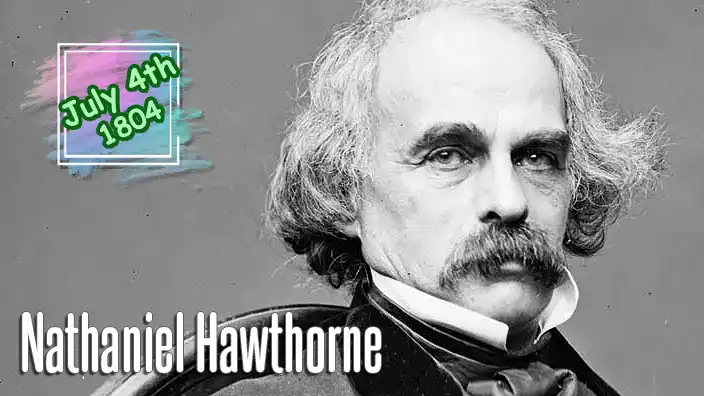
July 4, 1804, in Salem, Massachusetts
 May 19, 1864, in Plymouth, New Hampshire
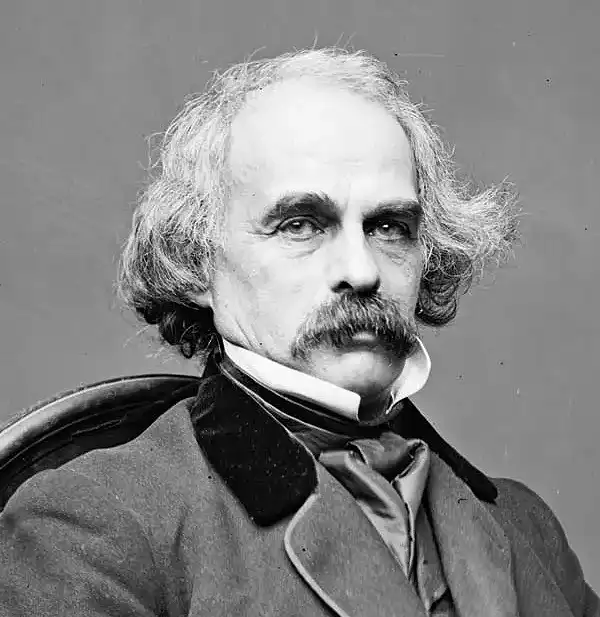
Nathaniel Hawthorne was born in Salem, Massachusetts, a town already famous for its maritime history and the Salem Witch Trials of 1692. Few writers have been more closely connected to the history of their hometown. In fact, Hawthorne's ancestors played a direct role in the witch trials, a connection that troubled him throughout his life and profoundly influenced his writing. His novels and short stories repeatedly explored themes of guilt, morality, justice, and the consequences of human actions.
Originally born Nathaniel Hathorne, he later added the "w" to his surname, partly to distinguish himself from his family and partly to place some distance between himself and the legacy of one ancestor, Judge John Hathorne, who had been one of the judges during the Salem Witch Trials. Although Hawthorne could not change history, he spent much of his literary career examining how the past continues to influence future generations.
When Hawthorne was just four years old, his father, a sea captain, died of yellow fever while serving in Suriname. His mother became increasingly withdrawn, and young Nathaniel grew up in a quiet household surrounded by books. Reading became both entertainment and education, fostering the imagination that would later produce some of America's most enduring works of fiction.
In 1821, Hawthorne entered Bowdoin College in Maine, where he formed friendships with several young men who would later become nationally important figures. Among his classmates were future President Franklin Pierce, who remained a lifelong friend, and celebrated poet Henry Wadsworth Longfellow. Although Hawthorne was not considered an outstanding student academically, he devoted himself to reading and developing his writing skills.
After graduating in 1825, Hawthorne spent nearly a dozen years writing in relative isolation. During this period he produced short stories while supporting himself through various jobs, often publishing anonymously or at his own expense. His first novel, Fanshawe (1828), received little attention, and Hawthorne later tried to suppress copies because he considered it immature. Fortunately, he persisted rather than giving up after an early disappointment.
Recognition finally arrived through his collection Twice-Told Tales (1837), which showcased his growing mastery of symbolism, atmosphere, and psychological storytelling. Unlike many writers of the period who focused primarily on adventure or romance, Hawthorne examined the inner lives of ordinary people wrestling with conscience, temptation, pride, and redemption. His stories often blurred the line between reality and the supernatural, leaving readers to wonder whether unusual events were truly happening or simply reflected the minds of his characters.
In 1842, Hawthorne married artist and illustrator Sophia Peabody, whose encouragement and support became an important part of his life. The couple settled at The Old Manse in Concord, Massachusetts, where Hawthorne became acquainted with leading intellectuals of the era, including Ralph Waldo Emerson and Henry David Thoreau. Although he respected many of the Transcendentalists, Hawthorne often viewed human nature more cautiously than his optimistic contemporaries.
Hawthorne's greatest success came in 1850 with the publication of The Scarlet Letter. Set in Puritan New England, the novel tells the story of Hester Prynne, who is forced to wear the scarlet letter "A" after bearing a child outside of marriage. More than a story about punishment, the novel examines shame, forgiveness, hypocrisy, compassion, and the complexity of human morality. Initially selling modestly, it gradually became recognized as one of the greatest novels in American literature and remains widely studied around the world.
Following the success of The Scarlet Letter, Hawthorne entered the most productive period of his career. The House of the Seven Gables (1851) explored family curses, inherited guilt, and redemption against the backdrop of a mysterious New England mansion. The Blithedale Romance (1852) drew inspiration from his brief experience living at Brook Farm, a utopian community experimenting with communal living. The Marble Faun (1860), written after time spent in Italy, expanded his interest in morality, innocence, and artistic beauty.
Hawthorne also became one of America's finest short story writers. Works including "Young Goodman Brown," "The Minister's Black Veil," "Rappaccini's Daughter," and "The Birth-Mark" remain staples of American literature courses. These stories combined vivid symbolism with psychological insight, encouraging readers to think deeply about good and evil, pride, science, faith, and the imperfections of humanity.
Beyond fiction, Hawthorne served in several government positions, including as Surveyor of the Port of Salem and later as United States Consul in Liverpool, England, after his friend Franklin Pierce became President. These appointments provided financial stability while allowing him to continue writing. His travels throughout Europe also broadened his perspective and inspired later works.
Hawthorne's influence extended far beyond his own lifetime. Writers including Herman Melville admired his work immensely. Melville even dedicated Moby-Dick to Hawthorne, recognizing the profound impact his friend's writing had on American literature. Later generations of authors continued to study his use of symbolism, psychological depth, and moral complexity.
Nathaniel Hawthorne died in his sleep on May 19, 1864, while traveling through the White Mountains of New Hampshire with former President Franklin Pierce. He was 59 years old. He was buried at Sleepy Hollow Cemetery in Concord, Massachusetts, alongside many of New England's literary giants. His passing marked the end of one of the most influential careers in nineteenth-century American literature.
Today, Hawthorne is remembered not simply because he wrote classic novels, but because he understood timeless questions about human nature. His stories continue to challenge readers to consider conscience, forgiveness, temptation, and personal responsibility. While fashions in literature have changed dramatically since the nineteenth century, the moral questions Hawthorne explored remain as relevant today as when he first put pen to paper.