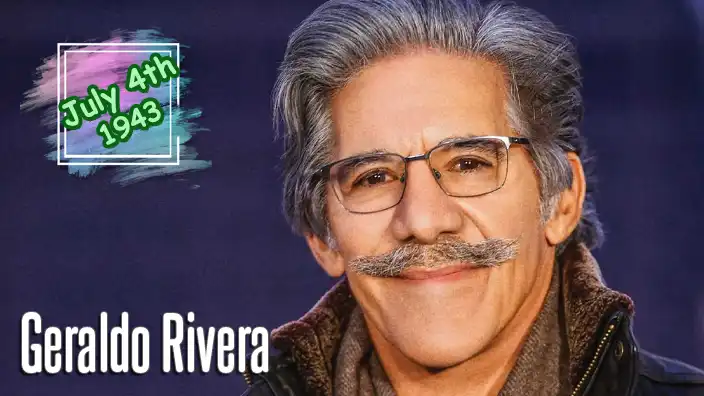
July 4, 1943, in Brooklyn, New York
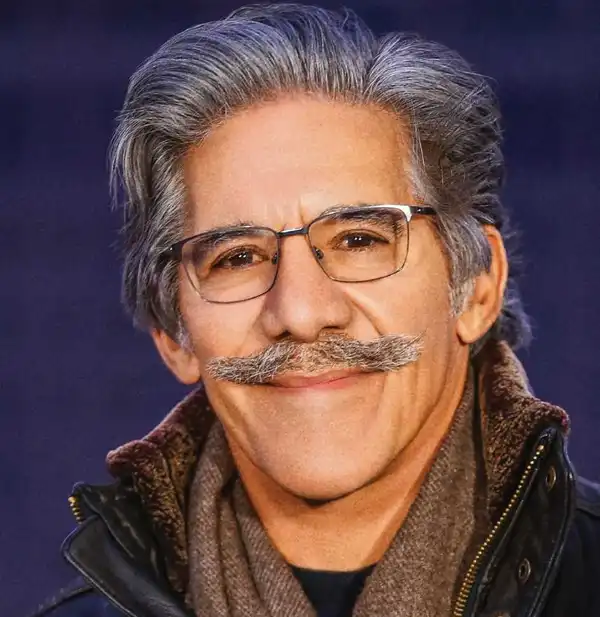
Geraldo Rivera was born Gerald Michael Rivera in Brooklyn, New York. The son of a Puerto Rican father and a Jewish mother, he grew up in a diverse neighborhood that helped shape his understanding of different cultures and communities. Those early experiences would later influence his work as a journalist, where he often focused on stories involving social justice, civil rights, and people whose voices were rarely heard.
Before entering television, Rivera pursued a career in law. He earned a bachelor's degree from the University of Arizona before graduating from Brooklyn Law School with a Juris Doctor in 1969. As a young attorney, he worked with organizations providing legal services to disadvantaged communities and became involved in civil rights advocacy. His legal background proved valuable throughout his broadcasting career, giving him a strong understanding of courtroom procedures, public policy, and investigative research.
Rivera's transition into journalism came almost by accident. While serving as an attorney for a Puerto Rican activist organization, he gave interviews about conditions in New York institutions for people with developmental disabilities. His ability to communicate clearly on camera attracted the attention of television producers, leading to opportunities in broadcast journalism. Soon afterward, he joined WABC-TV in New York as a reporter.
His first major breakthrough came in 1972 with the investigative documentary Willowbrook: The Last Great Disgrace. The program exposed shocking conditions at the Willowbrook State School on Staten Island, where residents with intellectual disabilities were living in overcrowded and inhumane conditions. The documentary prompted widespread public outrage, led to significant reforms, and earned Rivera a prestigious Peabody Award. It remains one of the most influential examples of investigative journalism in American television history.
Rivera joined ABC News and quickly became one of the network's best-known correspondents. Throughout the 1970s and 1980s, he reported on major national and international stories while appearing on programs including 20/20 and Good Morning America. His reporting often combined investigative journalism with human-interest stories, helping establish his reputation as an energetic and determined reporter.
In 1986, Rivera hosted one of the most talked-about television specials of the decade: The Mystery of Al Capone's Vaults. Broadcast live before a massive national audience, the program followed the opening of a hidden vault once connected to the notorious Chicago gangster. Although viewers eagerly anticipated buried treasure or long-lost secrets, the vault turned out to contain little of historical value. While the program became famous for its anticlimactic ending, it also demonstrated Rivera's remarkable ability to attract enormous audiences through live television.
The following year marked another major chapter in his career with the debut of Geraldo, a nationally syndicated daytime talk show. Airing from 1987 until 1998, the program tackled a wide variety of topics, from celebrity interviews and current events to controversial social issues. Like many talk shows of the era, it occasionally featured heated debates and dramatic confrontations, but it also provided a platform for discussions about topics rarely covered on traditional news broadcasts.
Rivera's reporting career continued alongside his work as a television host. He covered military conflicts in the Persian Gulf, Afghanistan, Iraq, and other regions around the world. Reporting from active war zones brought both praise and criticism. In 2003, during the Iraq War, Rivera came under scrutiny after sketching troop positions during a live broadcast, prompting military officials to remove him from the reporting area because of operational security concerns. The incident highlighted the difficult balance between reporting the news and protecting military operations.
Throughout the 2000s and 2010s, Rivera became a familiar face on cable television. He joined Fox News Channel in 2001, serving as a correspondent, political commentator, and rotating co-host on several programs. His willingness to express strong opinions while engaging in spirited debates made him one of the network's most recognizable personalities. Over the years, he also appeared regularly on radio, podcasts, documentaries, and other television news programs.
Rivera has authored several books, including memoirs and works discussing journalism, politics, and his personal experiences. His writing reflects the same conversational style that has characterized his broadcasting career, offering readers behind-the-scenes perspectives on some of the biggest stories he covered.
During his long career, Rivera has interviewed presidents, world leaders, entertainers, athletes, and countless ordinary people whose stories deserved national attention. Whether covering breaking news, natural disasters, criminal investigations, or cultural issues, he has consistently demonstrated a willingness to go directly to the scene rather than reporting from a distance.
Like many journalists with long public careers, Rivera has occasionally attracted controversy. Some of his reporting methods and opinions have generated debate among viewers and media critics alike. Yet even those who disagreed with his conclusions often acknowledged his determination, persistence, and ability to place himself where important events were unfolding.
In 2023, Rivera announced his departure from Fox News after more than two decades with the network. Rather than retiring quietly, he continued making guest appearances across various news and media outlets while remaining active in public discussions about journalism and current events. His departure marked the close of one significant chapter but not the end of a broadcasting career that has lasted more than fifty years.
Few television personalities have experienced as many different roles as Geraldo Rivera. He has been an attorney, investigative reporter, war correspondent, documentary producer, talk show host, political commentator, and bestselling author. Across each of those roles, one characteristic has remained constant: a willingness to pursue stories that capture public attention and encourage discussion. Whether admired for his investigative reporting or remembered for unforgettable moments of live television, Geraldo Rivera has secured a lasting place in American broadcast history.