September 19, 1974, in Brooklyn, New York
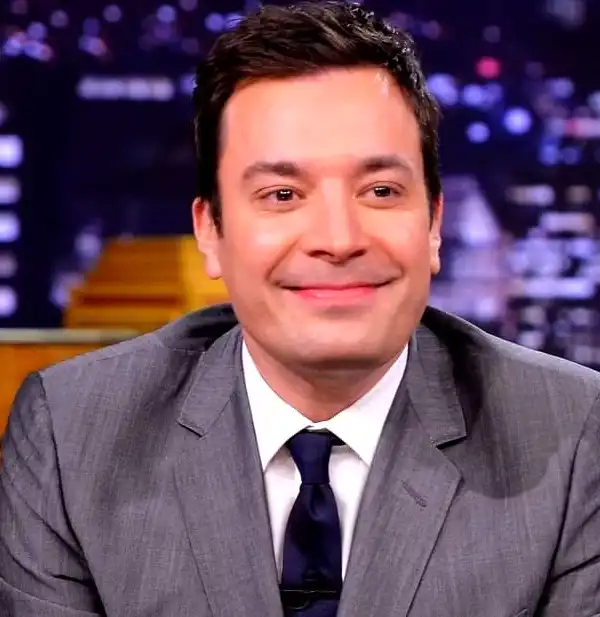
James Thomas Fallon was born on September 19, 1974, in Brooklyn, New York, and grew up in Saugerties, a town in New York's Hudson Valley. His parents, Gloria and James Fallon Sr., raised Jimmy and his older sister, Gloria, in a close family environment in which television and comedy played an important role. Like millions of American families, the Fallons watched Saturday Night Live, although young Jimmy went considerably further than merely laughing at it. His parents recorded selected sketches they considered suitable for him, and Fallon studied the performers, memorized routines and began doing impressions of the show's characters.
That childhood fascination eventually became a career plan. Fallon attended Saugerties High School and later enrolled at the College of Saint Rose in Albany, initially studying computer science before switching to communications. The pull of comedy proved stronger than the pull of a degree, and he left college before graduating to pursue entertainment professionally. Years later, after the missing credits were addressed, the college awarded him his bachelor's degree, allowing Fallon to complete one of show business's less common educational routes: leave college, become famous, return as commencement speaker and finally collect the paperwork.
Fallon moved to Los Angeles and began performing stand-up comedy, appearing at clubs including the Improv. His act already displayed many of the skills that would become familiar throughout his television career: celebrity impressions, music, characters and an enthusiasm for popular culture. His ultimate goal, however, was remarkably specific. He wanted to join Saturday Night Live.
His first audition did not accomplish that.
Fallon auditioned for SNL in the late 1990s but failed to make the cast. Rather than abandoning the ambition, he continued performing and developing his material. When another opportunity arrived in 1998, he auditioned again, this time armed with an impression-heavy routine featuring celebrities including Jerry Seinfeld, Adam Sandler, Chris Rock and others.
Producer Lorne Michaels hired him.
For Fallon, joining Saturday Night Live was not simply another television job. He had reached the program he had been imitating since childhood.
Fallon quickly became one of the show's most recognizable performers. His celebrity impressions included figures from entertainment and politics, while his musical abilities gave him another weapon unavailable to many sketch comedians. He could perform convincing musical parodies rather than merely pretending to play an instrument, and the combination of comedy and music became one of his signatures.
He was paired frequently with fellow cast member Horatio Sanz, particularly in sketches where the possibility of either performer maintaining a completely straight face sometimes seemed rather optimistic. Fallon became notorious for “breaking” — laughing during sketches when he was supposed to remain in character. Some viewers loved the infectious quality of it; others considered keeping a straight face rather an important part of acting.
Either way, people noticed him.
One of his most important Saturday Night Live assignments arrived in 2000 when Fallon joined Tina Fey behind the desk of “Weekend Update.” The pairing proved popular, with Fallon bringing a playful delivery while Fey supplied the sharply written deadpan style that would help make her one of the show's most celebrated writers and performers.
Fallon remained an “Update” anchor until leaving SNL in 2004. By then, he had spent six seasons on the program and had become enough of a celebrity to attempt the traditional next step for successful sketch-comedy performers: movies.
Hollywood results were mixed.
Fallon appeared in films including Woody Allen's Anything Else, Taxi opposite Queen Latifah and Fever Pitch with Drew Barrymore. Fever Pitch, loosely based on Nick Hornby's novel, relocated the story's sporting obsession from English football to the Boston Red Sox. Fallon played a schoolteacher whose devotion to the Red Sox creates problems in his relationship with Barrymore's character.
The production received an extraordinary piece of good fortune when the Red Sox won the 2004 World Series during filming, ending an 86-year championship drought. Fallon and Barrymore were permitted onto the field during the celebrations, allowing the filmmakers to incorporate genuine championship footage into the movie. Occasionally Hollywood spends millions creating a convincing ending. This time the Boston Red Sox supplied one.
Despite his film work, Fallon's natural habitat increasingly appeared to be television.
When Conan O'Brien was chosen to succeed Jay Leno as host of The Tonight Show, NBC needed someone to take over O'Brien's Late Night program. In 2008, the network announced that Fallon would become the new host.
It was not an obvious appointment. Hosting a nightly talk show requires skills quite different from sketch comedy, and Fallon had relatively little interviewing experience. Lorne Michaels, who had played such an important role in his SNL career, became an executive producer of the new program.
Late Night with Jimmy Fallon premiered in March 2009.
The early episodes showed a host learning the job in public, but Fallon and his production team gradually developed a format that played directly to his strengths rather than simply copying previous late-night hosts. Music became central, celebrity guests were encouraged to participate in games and sketches, and the program embraced the rapidly growing importance of online video.
The Roots became Fallon's house band, bringing one of the most respected groups in hip-hop into network late-night television. Led by Questlove and Black Thought, the band became much more than musical wallpaper between segments, regularly participating in sketches, performances and collaborations with guests.
Fallon's show also proved unusually adept at creating segments that could live beyond their original broadcast. Celebrity lip-sync competitions, musical impressions, classroom-instrument performances and elaborate games could be shared online as self-contained pieces of entertainment. At a time when television viewing habits were changing rapidly, Fallon's team recognized that a late-night show no longer existed only during the hour in which NBC broadcast it.
Among the show's recurring musical features was “Classroom Instruments,” in which Fallon, the Roots and major recording artists performed familiar songs using the sort of instruments normally found in an elementary school music cupboard. Maracas, toy drums, kazoos and xylophones suddenly accompanied international pop stars.
Fallon's musical impressions also became a major attraction. He has impersonated performers including Neil Young, Bruce Springsteen, Bob Dylan, Mick Jagger and others, often performing alongside the very musicians he was imitating. The joke worked because Fallon could actually sing and play well enough to make the imitation recognizable before pushing it toward comedy.
His success on Late Night eventually led to one of American television's most famous jobs.
In 2014, Fallon succeeded Jay Leno as host of The Tonight Show. The program returned to New York City after decades based primarily in California, bringing it back to the city where Tonight had been produced during much of Johnny Carson's early tenure.
For Fallon, the appointment completed an extraordinary television progression. The child who had watched Saturday Night Live recordings became an SNL cast member; the cast member became host of Late Night; and the Late Night host inherited one of the longest-running franchises in American television.
The Tonight Show Starring Jimmy Fallon premiered in February 2014.
Fallon's version retained the celebrity interviews, opening monologue and house-band structure expected of late-night television while greatly expanding the games and musical comedy that had worked on Late Night. “Thank You Notes,” an established feature from his earlier show, continued, as did celebrity competitions and performances designed to put guests in situations far removed from the standard promotional interview.
One particularly successful idea was “Lip Sync Battle.” Celebrities competed by miming elaborate performances of familiar songs, often with costumes, choreography and a commitment wildly disproportionate to the seriousness of the competition. The segment became popular enough to inspire a separate television series hosted by LL Cool J with Chrissy Teigen.
Other recurring games have included “Box of Lies,” “Wheel of Musical Impressions,” “Egg Russian Roulette” and variations involving guessing, singing, dancing or otherwise persuading extremely famous people to behave as though someone had organized party games after dinner.
The approach altered the relationship between host and guest. Rather than keeping celebrities on the opposite side of a desk for an extended interview, Fallon frequently joined them in whatever ridiculous activity had been devised for the evening. The result could reveal a side of performers that conventional interviews rarely produced.
Fallon's enthusiasm for music also generated memorable collaborations. Along with the Roots, he has performed with major artists across genres, staged reunions and created comedy performances that depended upon considerable musical preparation beneath the apparent silliness.
One of his most enduring collaborations has been with Justin Timberlake. Their “History of Rap” performances compressed decades of hip-hop into rapid-fire medleys, with Fallon and Timberlake moving through songs and styles while the Roots supplied live accompaniment. The chemistry between the two became a recurring feature across Fallon's programs.
Fallon has also hosted major awards broadcasts, including the MTV Movie Awards, the Primetime Emmy Awards and the Golden Globe Awards. These assignments made use of the same combination of live comedy, music and celebrity interaction that characterized his regular television work.
His career has extended into books as well. Fallon has written several titles, including the children's books Your Baby's First Word Will Be DADA, Everything Is Mama and This Is Baby. The first arose from Fallon's attempt to ensure that his daughter's first word would be “Dada,” an effort that transformed parental competition into publishing material. This is considerably more constructive than sulking when the baby says “Mama.”
Fallon married film producer Nancy Juvonen in 2007. Juvonen is a longtime producing partner of Drew Barrymore through their company Flower Films, providing another connection to Fallon's Fever Pitch co-star. Fallon and Juvonen have two daughters, Winnie and Frances.
His television career has brought numerous awards and nominations, including Primetime Emmy Awards connected with his late-night work and Saturday Night Live. He has also received People's Choice Awards, Critics Choice recognition and other honors reflecting his long presence in American entertainment.
That career has not been without criticism or controversy. Fallon's friendly interviewing style has sometimes been criticized as too deferential, particularly when dealing with political figures or controversial guests. A widely discussed 2016 interview with presidential candidate Donald Trump, during which Fallon playfully tousled Trump's hair, later drew criticism from viewers who believed the segment treated a presidential candidate too casually. Fallon subsequently expressed regret about the way the encounter was handled.
In 2023, Rolling Stone published allegations from current and former Tonight Show employees describing a difficult workplace environment and inconsistent behavior by Fallon. Following the report, Fallon apologized to staff during a meeting, according to accounts published at the time. NBC said employee concerns were investigated and addressed where appropriate. The episode added a more complicated chapter to the cheerful public image that had long been central to Fallon's television persona.
Yet the defining characteristic of Fallon's work remains enthusiasm. His television persona is less detached than that of many traditional late-night hosts. He is openly excited by musicians he admires, comedy he finds funny and celebrities whose work he enjoys. Sometimes he laughs before everybody else has quite caught up.
That tendency was apparent all the way back on Saturday Night Live.
The interesting thing is that Fallon ultimately turned what could have been considered a weakness into part of his professional identity. The performer who became famous for occasionally breaking character developed into a host whose willingness to laugh with his guests became one of the central characteristics of his show.
His career also reflects the changing nature of late-night television. Johnny Carson presided over an era when viewers generally watched The Tonight Show at the time NBC transmitted it. Fallon operates in a world of streaming, social media, online clips and audiences who may never watch an entire episode but will happily spend ten minutes watching a movie star attempt a musical impression.
Fallon and his producers adapted the old late-night format to that environment without abandoning its basic structure. There is still a desk. There is still a monologue. There is still a house band and a parade of celebrity guests.
But somebody may be about to have a raw egg smashed against his forehead.
Jimmy Fallon has traveled from comedy clubs to Saturday Night Live, from movies back to television, and from Late Night to The Tonight Show. Along the way he has impersonated musicians, interviewed presidents and movie stars, written children's books, hosted award shows, sung with some of the biggest performers in music and persuaded remarkably dignified celebrities to participate in remarkably undignified games.
For a man who once dreamed specifically of getting onto Saturday Night Live, things worked out rather well.
And somewhere, there is probably still an old VHS tape containing one of the SNL sketches his parents recorded for him.
That would be worth keeping.