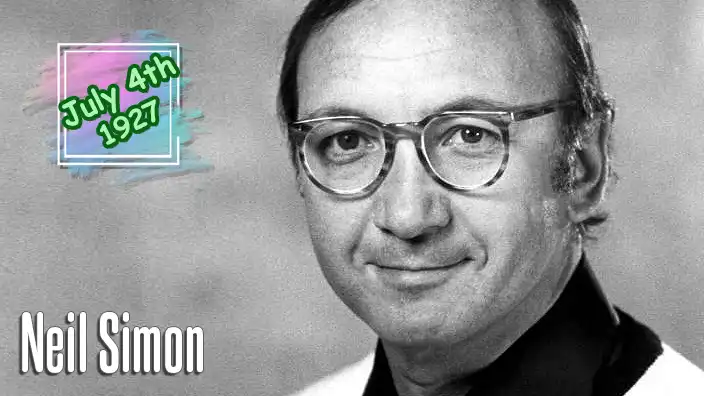
July 4, 1927, in the Bronx, New York City
 August 26, 2018, in Manhattan, New York City
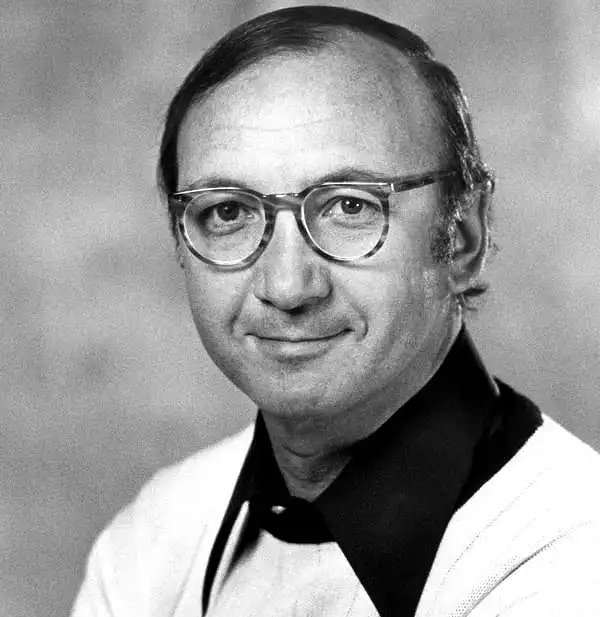
Neil Simon was born Marvin Neil Simon on July 4, 1927, in the Bronx, New York City. Growing up during the Great Depression, he experienced a childhood marked by financial hardship and family tension. His parents' troubled marriage and frequent separations would later provide inspiration for many of his plays, where humor often served as a way to explore relationships, misunderstandings, and everyday struggles. Rather than becoming discouraged by difficult experiences, Simon learned to see the comedy hidden within life's complications.
As a teenager, Simon developed a love of comedy by reading newspaper columnists, listening to radio comedians, and watching films starring entertainers such as Charlie Chaplin and the Marx Brothers. After graduating from high school, he briefly attended New York University before serving in the United States Army Air Force Reserve near the end of World War II. During his military service, he wrote comedy sketches for camp shows, discovering that making people laugh could become much more than a hobby.
Following the war, Simon teamed with his older brother, Danny Simon, to write comedy for radio and the rapidly growing medium of television. The brothers contributed material for popular programs featuring stars such as Sid Caesar and Phil Silvers, working alongside future comedy legends including Carl Reiner, Mel Brooks, and Woody Allen. The demanding pace of television writing sharpened Simon's ability to create witty dialogue and memorable characters under tight deadlines.
Although television provided steady work, Broadway became Simon's true calling. His first major success arrived in 1961 with Come Blow Your Horn, a comedy about two brothers whose very different lifestyles create endless misunderstandings. The play proved that Simon had an exceptional ear for realistic conversation and relatable humor, encouraging producers to back future projects.
Over the next decade, Neil Simon became one of Broadway's most successful playwrights. In 1963 he introduced audiences to Barefoot in the Park, a romantic comedy following newlyweds Paul and Corie Bratter as they adjust to married life in a tiny New York apartment. The play became a tremendous hit, running for more than 1,500 performances before being adapted into a successful film starring Robert Redford and Jane Fonda.
Just two years later, Simon created what many consider his greatest comedy: The Odd Couple. Inspired partly by the experiences of his brother Danny, the play paired neat, organized Felix Ungar with carefree sportswriter Oscar Madison after both men found themselves divorced. Their hilariously incompatible personalities produced one of the most recognizable comedy partnerships in entertainment history. The play was adapted into an Academy Award-nominated film starring Jack Lemmon and Walter Matthau, followed by an immensely popular television series that introduced the characters to millions more viewers.
During the 1960s and 1970s, Simon seemed almost unstoppable. At one point, four of his plays were running simultaneously on Broadway—an extraordinary achievement rarely matched by any playwright. Productions including The Sunshine Boys, Plaza Suite, California Suite, Chapter Two, and Brighton Beach Memoirs became audience favorites, combining sharp humor with genuine emotional depth. His characters often argued, worried, loved, and stumbled through life in ways audiences immediately recognized.
One reason Simon's work connected so strongly with theatergoers was his remarkable ability to find comedy in ordinary situations. Rather than relying on elaborate plots or outrageous characters, he wrote about marriage, parenting, friendships, aging, careers, vacations, and family gatherings. His dialogue sounded natural, his jokes felt effortless, and even minor characters often delivered unforgettable lines. Audiences laughed because they recognized pieces of themselves on stage.
Although best known for comedy, Simon also explored more serious themes throughout his career. Chapter Two drew heavily from his own experiences following the death of his first wife, Joan Baim, while Brighton Beach Memoirs, Biloxi Blues, and Broadway Bound formed an autobiographical trilogy inspired by his youth. These plays balanced laughter with heartfelt emotion, demonstrating that comedy and drama often exist side by side.
In 1991, Simon received one of American literature's highest honors when Lost in Yonkers won the Pulitzer Prize for Drama. Set during World War II, the play tells the story of two young brothers sent to live with their stern grandmother while their father struggles to support the family. Critics praised the work for blending humor, heartbreak, and compassion into a deeply moving portrait of family life. The play also earned the Tony Award for Best Play, further cementing Simon's reputation as one of America's greatest dramatists.
Throughout his extraordinary career, Neil Simon earned more Tony Award nominations than any other playwright of his era. He received multiple Tony Awards, a Pulitzer Prize, the Kennedy Center Honors, and numerous lifetime achievement awards recognizing his enormous contribution to American theater. In 1983, New York City renamed the Alvin Theatre as the Neil Simon Theatre, making him one of the few living playwrights to have a Broadway theater bear his name.
Away from the stage, Simon experienced both joy and heartbreak. He married five times, twice to actress Marsha Mason, and openly acknowledged that many of his personal experiences found their way into his writing. Despite facing health challenges later in life, he continued writing and remained closely connected to the theater community.
Neil Simon passed away on August 26, 2018, at the age of 91 following complications from pneumonia after living with kidney failure and Alzheimer's disease. Tributes poured in from actors, directors, playwrights, and audiences around the world. Many described him as the man who taught America how to laugh at itself while still caring deeply about the people behind every joke.
Today, Neil Simon's plays continue to be performed in professional theaters, schools, and community productions across the globe. His witty dialogue, memorable characters, and understanding of everyday human relationships have made his work timeless. Whether audiences are meeting Felix and Oscar for the first time or returning to Barefoot in the Park once again, Simon's humor continues to remind us that life's greatest comedy often comes from simply being human.