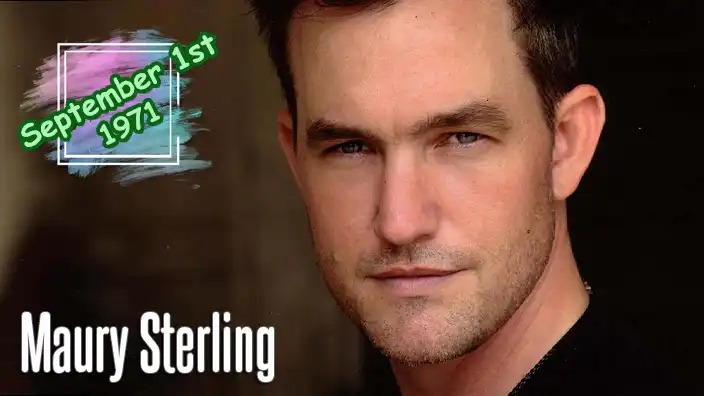
September 1, 1971, in Mill Valley, California
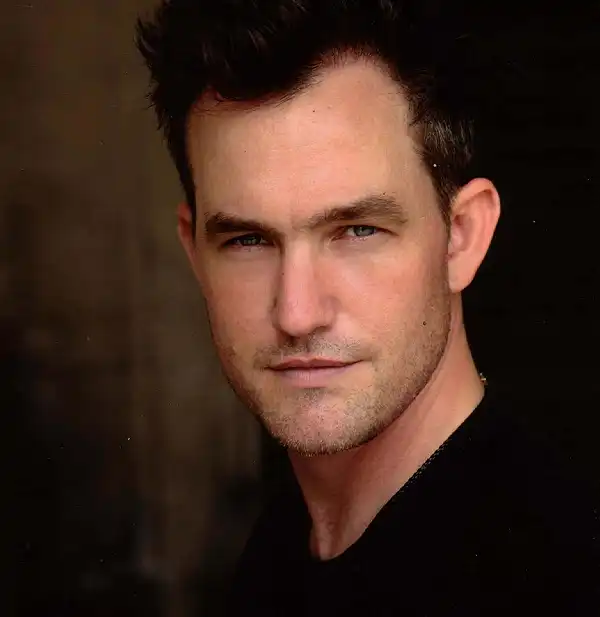
Born Charles Maury Wallace Sterling on September 1, 1971, in Mill Valley, California, Maury Sterling developed an interest in acting remarkably early. He began appearing in theater productions when he was around seven years old, long before anyone could reasonably expect him to understand contracts, residuals or why actors spend so much time waiting for somebody to adjust a light.
After attending San Francisco University High School, Sterling studied theater at UCLA. Following college, he helped establish the nonprofit Buffalo Nights Theater Company, continuing the stage work that had been part of his life since childhood. It was a solid foundation for the sort of career Sterling would eventually build: not one dependent upon a single blockbuster leading role, but upon versatility, character work and an ability to walk into practically any television series and look as though he had been living there for years.
His screen career began gathering momentum during the 1990s. Early credits included appearances in Picket Fences, Boy Meets World, The Naked Truth, Boston Common, Dark Skies and the 1995 Dustin Hoffman thriller Outbreak. In Outbreak, Sterling played a pilot, which at least gave him a profession considerably safer than many of the characters waiting for him later in his career.
Sterling became particularly adept at the television guest appearance. His credits accumulated across an extraordinary range of programs, including Judging Amy, JAG, Touched by an Angel, Angel, Crossing Jordan, Without a Trace, Six Feet Under, Nip/Tuck, Charmed, Monk, Deadwood, Criminal Minds, 24, Cold Case, Dollhouse, Lie to Me and Private Practice. If American television had issued a frequent-guest card, Sterling probably would have earned a complimentary toaster.
He also achieved an unusual crime-drama hat trick by appearing in all three original CSI series: CSI: Crime Scene Investigation, CSI: Miami and CSI: NY. Better still, he portrayed different characters rather than playing one spectacularly unlucky man who kept encountering murders every time he changed cities.
From 2004 to 2006, Sterling had a recurring role on ER as Dr. Nelson. He also ventured into science fiction with an appearance on Star Trek: Enterprise. These parts demonstrated something that became increasingly obvious as his career progressed: Sterling could comfortably move between comedy, medical drama, science fiction, crime, action and psychological thrillers without seeming misplaced.
Movie audiences received a considerably louder introduction to him in Smokin' Aces, released in 2006. Sterling played Lester Tremor, one of the thoroughly deranged Tremor brothers, alongside Chris Pine and Kevin Durand. The violent action film assembled an eccentric collection of assassins and criminals, yet the Tremor brothers somehow managed to make everybody else appear relatively well-adjusted.
Sterling went to considerable lengths for Lester Tremor, including shaving his head and eyebrows. This is the sort of professional commitment actors describe as "transformative" and everyone else describes as "I hope they paid you extra."
He returned as Lester in the 2010 prequel Smokin' Aces 2: Assassins' Ball. Between the two films, Sterling appeared as Rafferty in Disney's Beverly Hills Chihuahua in 2008, proving that an actor can indeed move from a homicidal neo-Nazi lunatic to a movie about talking dogs without Hollywood's machinery grinding to a complete halt.
Other film work included Hart's War, The A-Team and Coherence. The latter, released in 2013, became an especially well-regarded entry in Sterling's filmography. He played Kevin in the low-budget science-fiction thriller about a dinner party that becomes increasingly bizarre following the passage of a comet. Coherence earned strong critical attention and developed a substantial following among viewers who enjoy movies that make considerably less sense the moment you confidently announce that you have figured everything out.
Sterling has also worked extensively as a voice actor. His credits include Kung Fu Panda 2, Batman: The Killing Joke, Batman: Hush and video-game voice work. His career therefore covers the unusual spectrum from CIA surveillance equipment to homicidal assassins, talking animals, Batman villains and intergalactic adventures. That is either impressive versatility or evidence that his agent never learned the meaning of the word "category."
For millions of viewers, however, Maury Sterling is inseparable from Max Piotrowski in Showtime's Homeland.
Sterling first appeared as Max when Homeland premiered in 2011. Max was the younger brother of Virgil Piotrowski, played by David Marciano, and the pair worked as freelance surveillance specialists frequently recruited by CIA officer Carrie Mathison, played by Claire Danes.
Max initially appeared to be a supporting technician—the quiet fellow who installed equipment, monitored suspects and generally accomplished useful things while everyone else was busy having international crises. Yet the character gradually became far more important.
Reserved, socially awkward and technically gifted, Max developed into one of Carrie's most reliable allies. He was not a grandstanding intelligence officer delivering speeches in expensive suits. Max was the man behind the equipment, quietly doing the job and repeatedly placing himself in danger because someone he trusted needed his help.
That understated quality suited Sterling particularly well. Rather than turning Max into a stereotypical computer genius, he gave him vulnerability, loyalty and an awkward humanity that increasingly endeared the character to viewers.
Max's relationship with Fara Sherazi, played by Nazanin Boniadi, became an important part of his story during the fourth season. His feelings for Fara gave audiences another glimpse beneath his withdrawn exterior, making her death during the attack on the U.S. embassy particularly devastating for him.
Interestingly, Max himself came close to becoming one of the casualties of that storyline. During a 2015 PaleyFest discussion, Homeland executive producer Alex Gansa confirmed that his wife had influenced the decision to keep Max alive, with the creative team concluding that Carrie's subsequent scene with a grieving Max would be more powerful.
It proved an important decision because Max remained part of the Homeland universe for years afterward.
He returned to help Carrie and became increasingly embedded in intelligence operations. By the later seasons, Sterling's role had expanded substantially, and Max was elevated to series-regular status. A character who had begun near the edge of the story had become one of its emotional anchors.
That longevity made the events of the eighth and final season especially painful for longtime viewers. Max was captured in Afghanistan and eventually killed by Jalal Haqqani. After nearly a decade of watching the quiet technician survive situations that probably should have encouraged him to find a nice office job somewhere, audiences finally had to say goodbye.
Sterling later discussed Max's death and the character's importance as Homeland approached its conclusion in 2020. The reaction to Max's fate demonstrated how successfully Sterling had developed what could easily have remained a minor supporting role into a genuinely beloved character.
Away from Homeland, Sterling continued appearing in television productions including Extant, Masters of Sex, Murder in the First, Girlfriends' Guide to Divorce, NCIS: New Orleans, The Rookie and NCIS: Hawai'i. More recent credits have included projects such as Interior Chinatown, Creature Commandos, The Witcher: Sirens of the Deep and Suits LA, continuing a screen career now spanning several decades.
Sterling has also moved further into production. He and his wife, actress and producer Alexis Boozer Sterling, co-founded Little Idea Media in 2023. Sterling has producer credits that include My Dead Friend Zoe, expanding his work beyond acting and into developing projects behind the camera.
Sterling and Alexis Boozer married on May 10, 2014. They welcomed their son, Ford Bryant Sterling, in March 2020.
For an actor whose name has rarely dominated movie posters, Maury Sterling has accumulated an unusually rich collection of recognizable roles. That is the life of a successful character actor: the leading man may receive the enormous billboard, but somebody still has to make the fictional world around him believable.
Sterling has been doing precisely that since the 1990s.
His career demonstrates the value of actors who can disappear into a role rather than demand that the role disappear into them. He can be threatening, funny, awkward, sympathetic or unsettling, sometimes within the same performance. Homeland gave him the opportunity to demonstrate that talent over a much longer period, allowing Max Piotrowski to grow from a background surveillance specialist into a character whose loss genuinely mattered.
And perhaps that is Maury Sterling's greatest professional trick. He has spent decades playing supporting characters while repeatedly finding ways to make audiences remember them.
Not bad for "that guy."