April arrives with a mischievous grin and a slightly soggy welcome mat. It kicks off with April Fool’s Day, so trust nothing and double-check your chair before sitting. This month is a mix of budding blossoms, sudden downpours, and celebrations that swing between poetry and grilled cheese. It's Stress Awareness Month, National Humor Month, and the annual return of “what even is that growing in the yard?” April’s energy is unpredictable but full of promise—like springtime on a sugar rush. Grab your umbrella, embrace the absurd, and get ready to celebrate like a pollen-dusted poet.
As April rolls around, not only does it bring showers for May flowers, but it also ushers in National Arab American Heritage Month, when we get to swap out our usual trivia night questions for something a bit more spicy—like, can you name all 22 Arab countries? Spoiler alert: it's harder than resisting a second helping of baklava at a Middle Eastern dessert table.
Celebrated: Annually, throughout April
Discover the rich heritage and societal contributions of Arab Americans during National Arab American Heritage Month. Embrace the cultural diversity and vibrant traditions that shape the nation's identity.
Hope is kind of like that one friend who shows up uninvited, eats all your snacks, but somehow makes you feel better about your messy life. It doesn’t always fix things, but it leans in with a smile and says, “Hey, this disaster you're dealing with? You might survive it. Probably. Maybe. Just keep going.” Hope is the emotional equivalent of duct tape—maybe not pretty, but surprisingly strong and often holding things together behind the scenes while you pretend you totally have it all under control.
Celebrated: Annually, throughout April
Dive into the spirit of National Month of Hope, a time for spreading positivity, fostering hope, and transforming challenges into opportunities for growth.
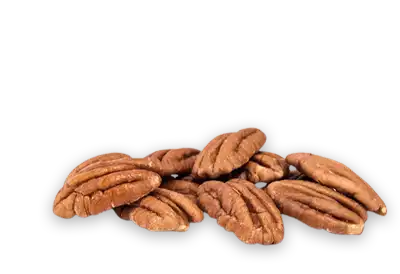
Pecans have spent centuries quietly improving pies, cookies, candies, salads, and just about anything else lucky enough to cross their path. National Pecan Month is a celebration of this remarkable native nut and the generations of farmers who grow it. It is also a convenient reminder that while Pecans contain healthy fats, fiber, and antioxidants, they somehow keep finding their way into desserts large enough to require their own zip code.
Celebrated: Annually, throughout April
From Pecan pie to towering Pecan trees, discover the history, flavor, and fun facts behind one of America's favorite native nuts during National Pecan Month
Some people dream of becoming guitar heroes. Others simply want to play a song without accidentally inventing three new chords along the way. International Guitar Month celebrates everyone from world-famous musicians to enthusiastic beginners whose families have heard the same practice song 437 times this week. So tune up, turn up, and remember: owning one guitar is a hobby, owning seven is apparently a lifestyle.
Celebrated: Annually, throughout April
Celebrate International Guitar Month with guitar history, famous players, fun facts, beginner tips, and plenty of reasons to pick up your favorite instrument

Your car has been loyal. It’s endured fast-food wrappers, questionable parking decisions, and at least one pothole that felt like it required a passport. National Car Care Month is your chance to return the favor—before your vehicle decides to express its feelings through smoke, squeaks, or a dashboard light that glows with quiet judgment.
Celebrated: Annually, throughout April
National Car Care Month highlights the importance of vehicle maintenance, safety checks, and preventative care to extend car life and improve performance.
Once upon a time, someone looked at tennis and thought, “This would be perfect if it involved less running, more paddle-smacking, and a name that sounds like a deli special.” And thus, pickleball was born—a sport where the ball is wiffly, the court is snack-sized, and the players are dangerously competitive despite wearing orthopedic sneakers. Whether you're 18 or 81, prepare to argue over the kitchen line like it’s a matter of national security.
Celebrated: Annually, throughout April
Explore National Pickleball Month, the sport that's a fun mix of tennis, badminton, and table tennis. Discover why all ages and skill levels love it.

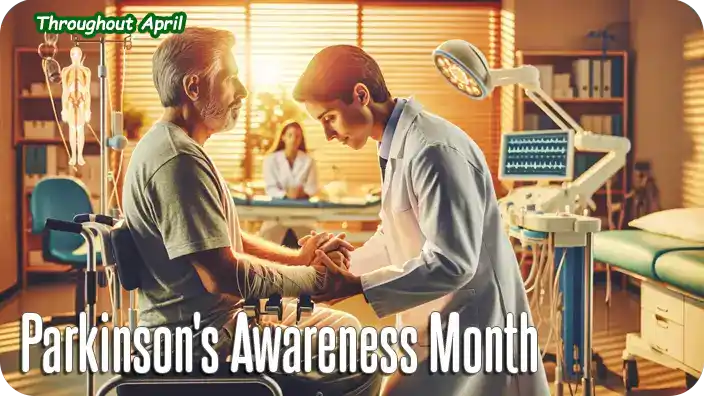
Parkinson’s Awareness Month arrives each April, reminding us that life doesn’t always move in a straight line… sometimes it throws in a wobble, a shimmy, and the occasional uninvited tap dance. Folks living with Parkinson’s navigate challenges most of us never think about, and they do it with more determination than someone trying to assemble flat-pack furniture without swearing. This month is our cue to learn, support, and tip our hats to the people facing this condition head-on — because a bit of awareness goes a long way, and a little kindness goes even further.
Celebrated: Annually, throughout April
Discover the global observance of Parkinson's Awareness Month, a beacon of hope and educational campaign aimed at increasing awareness and supporting individuals with Parkinson's disease.
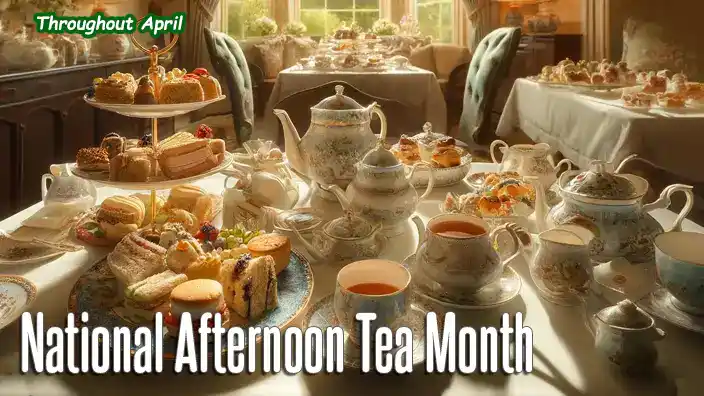
Somewhere between lunch and dinner lies a magical window where you’re socially permitted—expected, even—to sip from porcelain, nibble on finger-sized sandwiches, and pretend you’re too refined to eat an entire cake in one sitting (even though you absolutely will). It’s a moment where crusts are cut, pinkies rise, and calories cease to exist under the protective umbrella of tradition and floral china.
Celebrated: Annually, throughout April
Join the worldwide celebration of National Afternoon Tea Month. Dive into the history of tea time, and enjoy the spectacle of traditional tea serving.
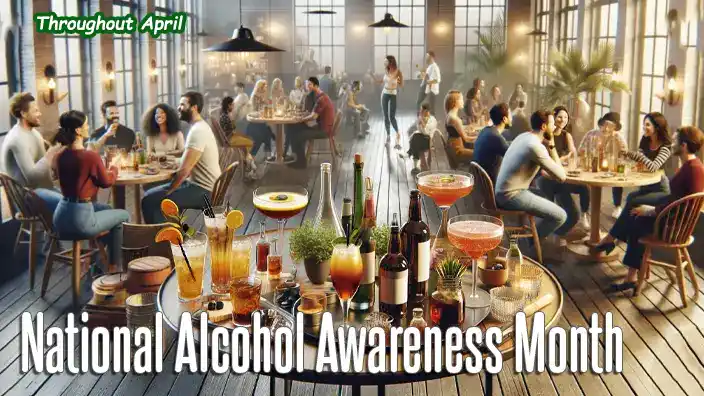
If April had a catchphrase, it might be, “Maybe just one... less.” While other months are out here flaunting flowers or planning pranks, April quietly sidles up with a raised eyebrow and a gentle suggestion to reconsider that third margarita on a Tuesday. It's not judging—just pointing out that your karaoke version of "Bohemian Rhapsody" may have been more enthusiastic than on-key.
Celebrated: Annually, throughout April
Explore the significance of National Alcohol Awareness Month, a time to reflect on our relationship with alcohol and promote moderation.

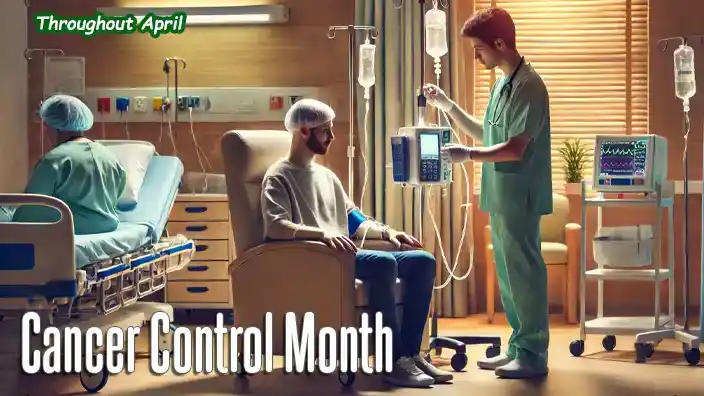
CAR-T cell therapy, a groundbreaking advancement in cancer treatment, offers new hope in the fight against this disease. This innovative approach involves genetically modifying a patient's own immune cells, turning them into chimeric antigen receptor (CAR) T cells that can specifically target and destroy cancer cells. Particularly effective in treating certain types of blood cancers, such as leukemia and lymphoma, CAR-T therapy has shown remarkable results where traditional treatments have failed, marking a significant leap forward in personalized medicine and cancer care.
Celebrated: Annually, throughout April
Cancer Control Month: awareness, prevention, advanced treatments, and global collaboration in the fight against cancer. A time for education, support, and hope.
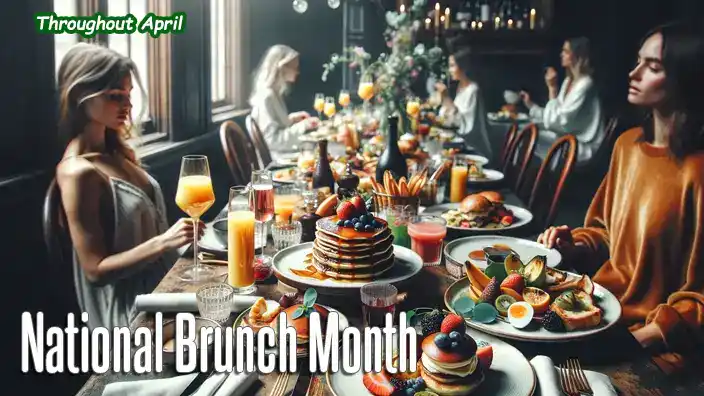
Some meals are straightforward—you eat, you move on. But not this one. This is the meal that lets you sleep in and still feel accomplished. The one where pancakes and bacon sit next to a Caesar salad, like it’s perfectly normal. It’s where coffee and cocktails shake hands, and no one questions why your "morning beverage" has a fruit garnish. It’s not just food—it’s an event, a mood, a mildly chaotic social experiment fueled by caffeine and carbs.
Celebrated: Annually, throughout April
Celebrate National Brunch Month, where culinary artistry meets casual couture. Indulge in a delightful fusion of breakfast and lunch, and embrace the joy of a stylish mid-morning feast.
A fascinating aspect of autism spectrum disorder (ASD) is the presence of exceptional talents, often called "savant skills," in some individuals. These can include extraordinary memory, advanced mathematical abilities, artistic brilliance, or musical genius, often contrasting with the usual challenges of ASD. These talents offer a unique perspective on the autistic brain's capabilities, highlighting the importance of recognizing and nurturing the potential in every individual with autism.
Celebrated: Annually, throughout April
Explore the significance of Autism Awareness Month, from its 1970s inception by the Autism Society of America to UN recognition in 2007.

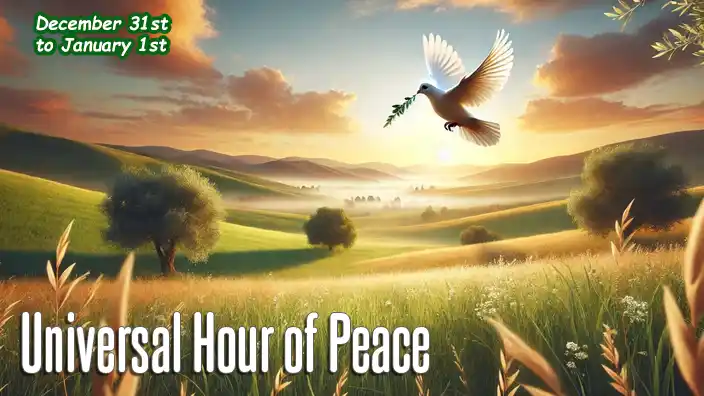
Peace for one hour? That’s like baking a cake and only eating the crumbs! If we can manage to...
There was a time when wearing pink to school might earn you a raised eyebrow, a snicker, or a...
Picture this: you're rummaging through a drawer, looking for a pen, but instead, you find a flip...
There’s nothing light about Good Friday—after all, it commemorates the darkest day in Christian...
Mental health is not just a personal matter—it's a global issue that affects millions of lives...
Having a hole in your bucket is nature’s way of saying, “You tried.” It’s the DIY version of a practical...
On September 14, 1814, lawyer Francis Scott Key was inspired to write the poem that eventually became the lyrics of the United States national anthem, “The Star-Spangled Banner.” During the War of 1812, British forces had captured Washington, D.C., and burned several major public buildings before turning their attention toward Baltimore. Key became involved after his friend, physician William Beanes, was taken prisoner by the British. He helped negotiate Beanes' release, but because the Americans had learned details of the planned attack, they were required to remain with the British fleet until the assault on Baltimore was completed.
From aboard a vessel in the Patapsco River, Key watched as British ships bombarded Fort McHenry through the night of September 13 and into the morning of September 14. When daylight came, the enormous American flag flying above the fort was still visible, showing that the defenders had held their position and the British attack had failed. Moved by the sight, Key began writing verses that became a four-stanza poem titled “Defence of Fort M'Henry.” It was soon published and sung to the melody of “To Anacreon in Heaven,” a British song composed by John Stafford Smith. Over time, Key's poem became better known by the title of its opening imagery, “The Star-Spangled Banner.”
Key, born August 1, 1779, in Maryland, was a prominent lawyer who later served as U.S. attorney for the District of Columbia. His song became increasingly associated with patriotic and official occasions, and President Woodrow Wilson directed that it be played at appropriate military and naval ceremonies in 1916. Congress formally designated “The Star-Spangled Banner” as the national anthem, with President Herbert Hoover signing the measure into law on March 3, 1931. Key did not live to see what became of his composition; he died on January 11, 1843, decades before his hastily written verses became the official musical symbol of the United States.
On September 14, 1964, Kellogg's introduced the toaster pastry that would become Pop-Tarts, although the company was not the first to announce the idea. Rival Post had already publicized plans for a shelf-stable, fruit-filled pastry called Country Squares but revealed the concept before the product was ready for widespread sale. Kellogg's recognized the opportunity and moved quickly, turning to William “Bill” Post, then working at the Hekman Biscuit Company in Michigan, to help develop a pastry that could survive both the supermarket shelf and a trip through the family toaster. Post and his team experimented with dough, fillings and production methods, with his children reportedly serving as enthusiastic taste testers along the way.
Kellogg's initially considered calling its creation Fruit Scones before settling on the far more memorable Pop-Tarts, a name that played nicely with the popularity of Pop Art during the 1960s. The original unfrosted pastries appeared in four flavors—strawberry, blueberry, brown sugar cinnamon and apple currant—and the early test market was enormously successful. Demand quickly outran supply, forcing Kellogg's to publish advertisements apologizing to customers because it had run out. Frosting arrived a few years later after the company developed a version capable of surviving toaster temperatures without melting into a sugary disaster, followed by sprinkles, additional flavors and Milton the Toaster, an animated mascot who helped promote the increasingly popular breakfast treat.
What began as a hurried response to a competitor became one of Kellogg's most recognizable products. William Post is frequently described as the inventor of Pop-Tarts, although he always emphasized that their creation was a team effort, and Kellogg's has also credited company executive William “Doc” Thompson and the people involved in developing the product. Over the following decades, Pop-Tarts expanded far beyond those original four flavors and became as much a snack as a breakfast food. Billions are now sold annually—a remarkable outcome for something that began with a few people looking at two pieces of dough with filling between them and essentially asking, “Do you reckon we can put this in a toaster?”
On September 14, 1974, Eric Clapton reached No. 1 on the Billboard Hot 100 with “I Shot the Sheriff,” a song written and recorded the previous year by Bob Marley and the Wailers for their album Burnin'. It became the only No. 1 single of Clapton's career in the United States, but the man singing it had been surprisingly uncomfortable about releasing it. Clapton admired Marley's original and understood reggae well enough to worry that his own recording didn't capture what made the music special. He later recalled thinking that his version shouldn't even be included on his album 461 Ocean Boulevard, much less released as a single, because he felt it wasn't fair to Marley and that his interpretation had given the song too much of a white rock feel. His American bandmates were considerably more enthusiastic, and eventually Clapton allowed himself to be persuaded.
His concern became even more understandable when the record took off. Marley's version had already been released, but Clapton's recording suddenly carried the song onto mainstream American radio and all the way to the top of the chart. Clapton subsequently spoke with Marley and was relieved to discover that the songwriter appeared pleased with what he had done. Marley later recalled that Clapton had asked him about the meaning of the song, while Clapton remembered struggling to understand parts of Marley's explanation. Whatever uncertainty remained about the interpretation, there seemed to be no lasting uncertainty about Marley's acceptance of the cover.
The irony was that the recording Clapton worried might unfairly overshadow Bob Marley ultimately helped bring enormous attention to him. Island Records founder Chris Blackwell later described Clapton's cover as a major breakthrough for Marley, because one of rock's biggest stars had effectively pointed his enormous audience toward the Jamaican songwriter whose work he admired. The official Bob Marley history similarly credits Clapton's recording with significantly increasing Marley's international profile. So while September 14, 1974, marks Eric Clapton reaching No. 1, the longer story belongs to both musicians: Clapton received the biggest American single of his career from a Bob Marley song, while millions of listeners who heard Clapton's version were given a reason to discover the man who had written it in the first place.
On September 14, 1982, Princess Grace of Monaco died at the age of 52, one day after suffering serious injuries when the car she was driving left a steep mountain road above Monaco. Her youngest daughter, Princess Stéphanie, was traveling with her and survived. Before becoming European royalty, Princess Grace had been Grace Kelly of Philadelphia, one of Hollywood's most celebrated stars of the 1950s. In a remarkably brief film career, she became known for an elegant screen presence that made her particularly memorable in Alfred Hitchcock's Dial M for Murder, Rear Window and To Catch a Thief. She also starred opposite Gary Cooper in High Noon and won the Academy Award for Best Actress for her performance alongside Bing Crosby in The Country Girl.
Born in Philadelphia on November 12, 1929, Kelly studied acting at the American Academy of Dramatic Arts in New York and supported herself through modeling and television work while pursuing stage roles. After appearing on Broadway and making her way into motion pictures, her rise was extraordinarily rapid. By the middle of the 1950s she was one of Hollywood's leading actresses, working with stars including James Stewart, Cary Grant, Clark Gable, Ava Gardner and Frank Sinatra. Yet at the height of that success, Kelly walked away from Hollywood. After meeting Prince Rainier III of Monaco in 1955, she married him in an elaborate ceremony the following April and became Princess Grace. Her final feature film, the musical High Society, was released in 1956, bringing an acting career of only a few years to a close.
Princess Grace and Prince Rainier had three children—Caroline, Albert and Stéphanie—and she spent the remainder of her life carrying out royal and charitable duties in Monaco. On September 13, 1982, while driving home with Stéphanie, Grace lost control of her Rover on the winding road near Monaco and the vehicle plunged down a steep slope. Early reports attributed the crash to a stroke suffered while she was driving, although the precise circumstances surrounding the accident have remained the subject of discussion. Stéphanie escaped with injuries, but Grace suffered devastating trauma and died the following day. Her death prompted mourning far beyond the tiny principality she had made her home, closing an extraordinary life that had taken her from Philadelphia to Broadway, from Hollywood stardom and an Academy Award to becoming one of the world's most recognizable princesses.
On September 14, 1994, Major League Baseball officially canceled the remainder of its season, including the postseason and World Series, after a players' strike that had begun on August 12 showed no sign of ending. It was an extraordinary moment for America's pastime: for the first time since 1904, there would be no World Series, and for the first time since the championship series began in 1903, its cancellation resulted from a labor dispute. At the center of the conflict were long-running disagreements between team owners and the Major League Baseball Players Association over salaries, revenue sharing, free agency and the owners' desire for a salary cap. Acting commissioner Bud Selig finally called off the remainder of the season with hundreds of regular-season games already lost.
The cancellation was particularly painful because the 1994 season had been producing some remarkable baseball. The Montreal Expos owned the best record in the majors at 74–40 and appeared capable of making the deepest postseason run in franchise history, while the New York Yankees led the American League East at 70–43. Individual achievements disappeared with the schedule as well. San Francisco's Matt Williams had already hit 43 home runs and Seattle's Ken Griffey Jr. had 40, giving both a chance to challenge Roger Maris' then-record of 61 in a season. Perhaps the most tantalizing unfinished story belonged to San Diego Padres great Tony Gwynn, who was batting .394 when play stopped and pursuing something no major leaguer had accomplished since Ted Williams hit .406 in 1941.
The dispute continued through the winter and into the following spring, with replacement players even appearing during 1995 spring training before a federal court injunction helped bring the strike to an end on April 2. Regular major-league players returned and the 1995 season eventually began, but the damage was considerable. Attendance suffered, fans expressed anger at both players and owners, and many people within baseball later described the canceled World Series as a lasting scar on the sport. There was no champion, no postseason heroics and no opportunity to discover whether Montreal could complete its remarkable season, whether Gwynn could reach .400, or whether Williams or Griffey could catch Maris. The 1994 season simply stopped—and baseball was left forever wondering how one of its most promising years might have ended.