Making Waves for Nature's Underwater Cities
If coral reefs could talk, they'd probably ask us to stop standing on them, quit dropping plastic into the ocean, and maybe keep the sunscreen out of their living room. These colorful underwater communities have been quietly going about their business for thousands of years, providing homes for countless marine creatures while asking for very little in return. They don't complain much—but they certainly deserve a little appreciation.
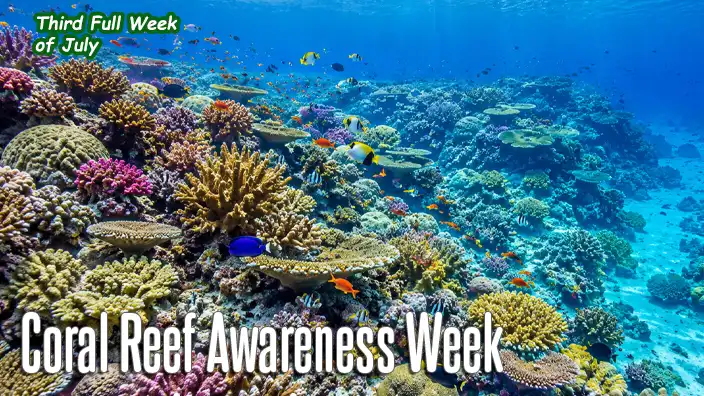
Coral Reef Awareness Week, sometimes listed on community calendars as National Coral Reef Awareness Week, is the perfect opportunity to discover why these remarkable ecosystems are among the most important places on Earth. Often called the "rainforests of the sea," coral reefs support an astonishing variety of marine life, protect coastlines from storms, and help sustain millions of people through fishing and tourism.
Whether you've snorkeled above a vibrant reef, watched a nature documentary, or simply admired the brilliant colors of tropical fish in an aquarium, you've already had a glimpse of their incredible beauty. Coral Reef Awareness Week invites us to look a little deeper, learn why these underwater cities matter, and discover how each of us can help ensure they continue to thrive for generations to come.
What Is Coral Reef Awareness Week?
Coral Reef Awareness Week is observed each year during the third full week of July to celebrate one of the world's most remarkable marine ecosystems and encourage people to help protect it. The annual observance brings together conservation organizations, aquariums, educators, scientists, divers, and nature enthusiasts to highlight the importance of coral reefs and the challenges they face. Although some calendars refer to it as National Coral Reef Awareness Week, both names describe the same celebration.
The week focuses on education as much as conservation. Through beach cleanups, public exhibits, guided snorkeling tours, classroom activities, documentaries, and community events, people are encouraged to learn how coral reefs support marine life, strengthen coastal communities, and contribute to the global economy. The goal is simple: the more people understand coral reefs, the more likely they are to help protect them.
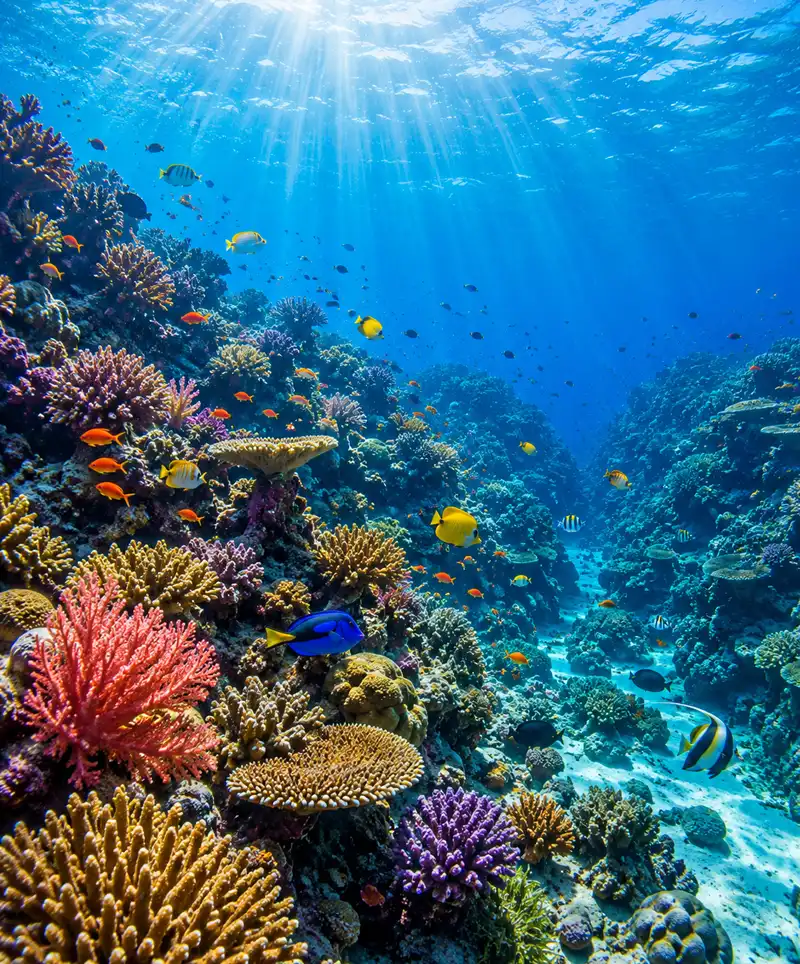
Coral reefs occupy less than one percent of the ocean floor, yet they support an estimated 25 percent of all marine species at some point in their lives. That remarkable statistic alone explains why they are often called the "rainforests of the sea." Coral Reef Awareness Week reminds us that these colorful underwater habitats are not only beautiful places to visit—they are living ecosystems that play an essential role in the health of our oceans and our planet.
Why Are Coral Reefs So Important?
It's easy to admire coral reefs for their incredible beauty, but their true value goes far beyond colorful fish and crystal-clear water. Healthy coral reefs perform countless jobs that benefit both marine life and people, making them some of the most valuable ecosystems on the planet.
Coral reefs provide food and shelter for thousands of species, from tiny shrimp and sea horses to sea turtles, sharks, and rays. Young fish often spend the earliest stages of their lives among the coral before venturing into the open ocean. Without healthy reefs, many marine populations would struggle to survive.
Reefs also serve as natural barriers that absorb the energy of powerful waves before they reach the shore. By reducing coastal erosion and helping protect communities from storms and hurricanes, coral reefs provide a level of natural coastal defense that would be difficult—and incredibly expensive—to replace with man-made structures.
People depend on coral reefs as well. Millions rely on healthy reefs for food, employment, and tourism. Recreational diving, snorkeling, and fishing generate billions of dollars each year while supporting local businesses and coastal communities around the world. Simply put, protecting coral reefs isn't just about saving marine life—it's about protecting livelihoods, economies, and coastlines for future generations.
Meet the Residents of the Reef
If coral reefs really are underwater cities, they're certainly lively places to live. Imagine a neighborhood where nobody ever sleeps, everyone wears bright colors, and your next-door neighbor might be an octopus. From tiny shrimp cleaning larger fish to sea turtles gliding overhead, there's always something happening on a healthy reef.
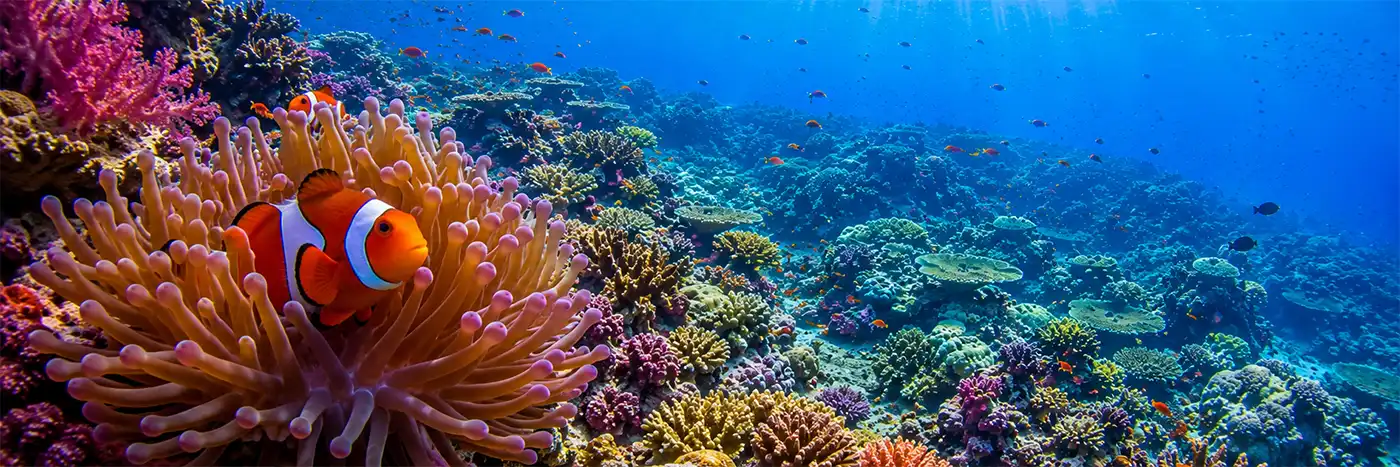
- Clownfish - Thanks to a certain animated movie, clownfish have become some of the world's most recognizable reef residents. Living safely among the stinging tentacles of sea anemones, they enjoy a remarkable partnership in which both animals benefit. The anemone provides protection, while the clownfish helps keep its host clean and may even lure food within reach.
- Parrotfish - If you've ever walked along a tropical beach, you may have been standing on sand that once passed through a parrotfish. Using powerful beak-like teeth, these colorful fish scrape algae from coral, accidentally grinding bits of coral into fine sand. A single large parrotfish can produce hundreds of pounds of sand each year, making them some of nature's most unusual beach builders.
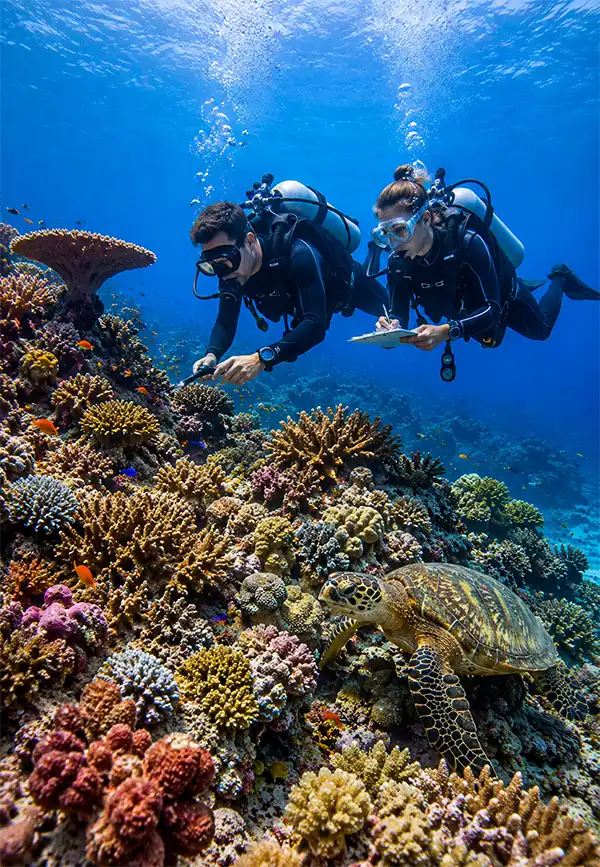
- Sea Turtles - Several species of sea turtles regularly visit coral reefs to feed, rest, and find shelter. Green sea turtles graze on seagrass growing near reefs, while hawksbill turtles use their narrow beaks to reach sponges hidden among the coral. Watching one glide effortlessly through the water is one of the great sights of the underwater world.
- Cleaner Shrimp - Every busy city needs a car wash, and coral reefs have cleaner shrimp. These tiny crustaceans set up "cleaning stations" where larger fish patiently line up to have parasites and dead skin removed. Instead of becoming lunch, the shrimp receive a free meal while the fish swim away healthier than before. It's one of nature's most remarkable examples of teamwork.
- Reef Sharks - Despite their intimidating reputation, reef sharks are generally shy and prefer to avoid people. As top predators, they help keep reef ecosystems balanced by preventing any one species from becoming too numerous. A healthy reef often has healthy shark populations, making their presence a sign that the ecosystem is functioning as it should.
From fish that manufacture beaches to tiny shrimp running underwater cleaning services, coral reefs are filled with extraordinary creatures performing important jobs every single day. The next time you see a reef documentary, remember you're not just looking at colorful fish—you're watching one of the busiest communities on Earth.
Amazing Coral Reef Facts
Coral reefs are among the oldest, busiest, and most fascinating ecosystems on Earth. The more scientists study them, the more remarkable they become. From tiny coral animals that build enormous underwater structures to fish that change gender during their lives, reefs are full of surprises. Here are a few amazing facts that make these underwater cities so extraordinary.
- Coral Isn't a Plant
It may look like colorful underwater vegetation, but coral is actually made up of thousands of tiny animals called polyps. Each polyp builds a hard limestone skeleton, and over hundreds or even thousands of years, millions of these tiny creatures work together to create the massive reefs we see today. - Some Coral Reefs Are Thousands of Years Old
A healthy coral reef doesn't appear overnight. Most reefs grow incredibly slowly, often adding only a few inches each year. Some of the world's largest reef systems have been developing for thousands of years, making them among the oldest living ecosystems on the planet. - The Great Barrier Reef Can Be Seen from Space
Stretching for more than 1,400 miles (2,300 kilometers) along Australia's northeast coast, the Great Barrier Reef is the largest coral reef system on Earth. Its immense size makes it one of the few living structures visible from space and home to thousands of species of marine plants and animals. - Coral Has a Secret Partner
The brilliant colors of many corals come from microscopic algae called zooxanthellae that live inside the coral's tissues. The algae use sunlight to produce food through photosynthesis, sharing nutrients with the coral, while the coral provides the algae with a safe place to live. It's one of nature's most successful partnerships. - Reef Fish Are Nature's Maintenance Crew
Every resident has a job to do. Parrotfish keep algae under control, cleaner shrimp remove parasites from larger fish, sea urchins graze on unwanted growth, and countless other species help keep the reef healthy. Without this constant maintenance, coral reefs would quickly become overgrown and much less hospitable for marine life.
The World's Greatest Coral Reefs
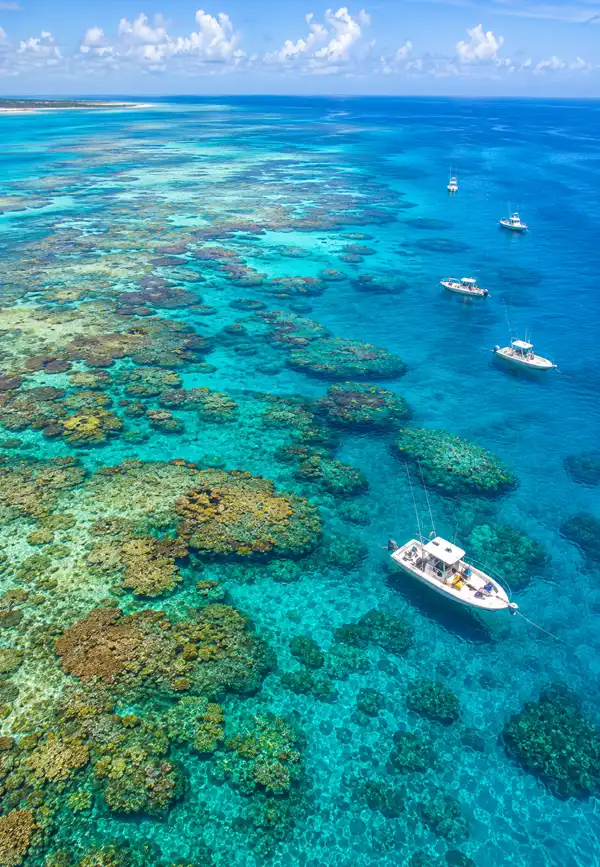
Not all coral reefs are the same. Some stretch for thousands of miles, while others are famous for their crystal-clear water or incredible marine biodiversity. Together, these underwater ecosystems attract millions of visitors each year and provide homes for an astonishing variety of sea life. If coral reefs had a "must-see" list, these three would undoubtedly be near the top.
- The Great Barrier Reef, Australia
The Great Barrier Reef is the largest coral reef system on Earth, stretching for more than 1,400 miles (2,300 kilometers) along Australia's northeast coast. Comprising nearly 3,000 individual reefs and hundreds of islands, it is home to thousands of species, including colorful reef fish, sea turtles, dolphins, giant clams, and several species of sharks and whales. Its immense size and breathtaking beauty have earned it recognition as a UNESCO World Heritage Site and made it one of the world's most famous natural wonders. - The Belize Barrier Reef, Belize
The Belize Barrier Reef is the largest reef system in the Atlantic Ocean and the second-largest barrier reef in the world. It is perhaps best known for the spectacular Great Blue Hole, a giant marine sinkhole that has fascinated divers for decades. Beyond this famous landmark lies an underwater paradise filled with coral gardens, eagle rays, nurse sharks, sea turtles, and hundreds of tropical fish species. Its clear, warm waters make it one of the premier diving and snorkeling destinations on the planet. - The Coral Triangle
Unlike a single reef, the Coral Triangle is a vast marine region that includes the waters of Indonesia, Malaysia, Papua New Guinea, the Philippines, the Solomon Islands, and Timor-Leste. Often called the "Amazon of the Seas," it contains the greatest diversity of coral and reef fish anywhere on Earth. Scientists estimate that more than 75 percent of all known coral species and over 2,000 species of reef fish can be found within this extraordinary region, making it one of the most biologically rich places on the planet.
Whether you're snorkeling in shallow tropical lagoons or exploring deeper reefs on a scuba dive, each of these remarkable places offers a glimpse into a world unlike any other. Their beauty may draw visitors from around the globe, but their true importance lies in supporting marine life, protecting coastlines, and reminding us just how extraordinary our oceans really are.
What Is Coral Bleaching?
One of the saddest sights in the ocean is a coral reef that has lost its vibrant colors. Instead of brilliant reds, blues, yellows, and purples, the reef appears ghostly white. Despite its name, coral bleaching doesn't mean someone poured bleach into the water. It happens when corals become stressed, usually because ocean temperatures remain unusually warm for an extended period.
Healthy corals live in partnership with microscopic algae called zooxanthellae. These tiny algae provide the coral with much of its food through photosynthesis while giving the reef its spectacular colors. When water temperatures rise too high, the coral becomes stressed and expels the algae. Without its tiny partners, the coral turns white because its limestone skeleton becomes visible beneath its transparent tissues.
A bleached coral isn't necessarily dead, but it is in serious trouble. If cooler conditions return quickly, the algae can return and the coral may recover. However, if the stressful conditions continue for too long, the coral can die, leaving behind a lifeless skeleton that is gradually covered by algae. Marine heatwaves, pollution, poor water quality, and other environmental pressures can all make bleaching events more severe.
The good news is that coral reefs are remarkably resilient when given the chance. Around the world, scientists, conservation groups, governments, and local communities are working together to reduce pollution, restore damaged reefs, and protect healthy ones. Coral Reef Awareness Week reminds us that while reefs face significant challenges, they're also worth every effort to preserve for future generations.
How to Celebrate Coral Reef Awareness Week
You don't need scuba gear, a passport, or a yacht named Reef Business to take part in Coral Reef Awareness Week. Whether you live beside the ocean or hundreds of miles inland, there are practical ways to learn about coral reefs, support marine conservation, and make choices that help protect the waterways that eventually lead to the sea.
- Learn Before You Dive: Watch a documentary, visit an aquarium, attend a local talk, or read about coral reef ecosystems and the creatures that depend on them. The more we understand reefs, the easier it becomes to see them as living communities rather than just pretty underwater scenery.
- Choose Reef-Friendly Habits: Reduce single-use plastics, recycle properly, avoid littering, and choose products that are less likely to harm waterways. Even small everyday choices matter, especially when millions of people make them.
- Use Reef-Safe Sunscreen: If you're swimming, snorkeling, or diving near coral reefs, use mineral-based sunscreen and follow local reef protection rules. Better yet, wear a rash guard or sun shirt to reduce how much sunscreen washes into the water.
- Support Responsible Tourism: Choose tour operators that protect reefs, avoid touching coral, never stand on a reef, and keep a respectful distance from marine life. Coral may look like rock, but it is a living animal, not an underwater footstool.
- Join a Cleanup: Beach, river, lake, and neighborhood cleanups all help prevent trash from reaching the ocean. Even inland cleanup efforts matter because storm drains and waterways often carry pollution far beyond where it started.
- Share the Message: Post reef facts, support conservation groups, or encourage friends and family to learn more. Coral Reef Awareness Week is about spreading appreciation as well as information, and a little awareness can travel a long way.
Coral Reefs in Movies and Popular Culture
Coral reefs have inspired filmmakers, authors, photographers, and artists for generations. Their dazzling colors and incredible diversity make them the perfect backdrop for adventure, discovery, and unforgettable stories. Whether they're home to lovable animated characters or featured in breathtaking nature documentaries, coral reefs continue to capture our imagination.
Finding Nemo
Few films have done more to introduce children to coral reefs than Pixar's Finding Nemo. Set among Australia's spectacular reefs, the movie follows a young clownfish on an unforgettable journey through an underwater world filled with colorful fish, sea turtles, sharks, jellyfish, and coral gardens. While the story is fictional, it sparked curiosity about marine life for millions of viewers around the globe.
Blue Planet
The acclaimed documentary series Blue Planet and Blue Planet II showcased coral reefs in extraordinary detail, revealing behaviors that many people had never seen before. From tiny reef fish cleaning larger species to spectacular nighttime spawning events, the series demonstrated just how complex and vibrant these underwater ecosystems really are.
Underwater Photography
Coral reefs have become one of the world's favorite subjects for underwater photographers. Brilliant schools of tropical fish, graceful sea turtles, curious rays, and colorful corals combine to create scenes that look almost too beautiful to be real. Many award-winning wildlife photographs have been captured on reefs, inspiring people to appreciate and protect these remarkable places.
More Than Just Beautiful Scenery
Coral reefs appear in travel magazines, conservation campaigns, postage stamps, artwork, children's books, and television programs around the world. They have become symbols of the beauty, diversity, and fragility of our oceans. Every stunning photograph or documentary serves as a reminder that these underwater cities are not only wonderful places to visit but also ecosystems worth protecting.
Whether they appear on a cinema screen, in a nature documentary, or in a diver's photo album, coral reefs have a way of leaving people speechless. Once you've seen one—whether in person or on film—it's easy to understand why so many people dedicate their lives to preserving these extraordinary underwater worlds.
Fun Facts
By now, you've probably realized that coral reefs are far more than colorful underwater scenery. They're packed with surprising creatures, unusual partnerships, and enough fascinating facts to keep even the most curious ocean lover entertained. Here are a few more reasons to be amazed.
- Coral reefs cover less than 1% of the ocean floor but support about 25% of all marine species during some stage of their lives.
- A single healthy reef can be home to thousands of different species, from microscopic plankton to sharks.
- Coral polyps are tiny animals, but together they can build reef structures visible from space.
- The Great Barrier Reef is the largest living structure on Earth, stretching for more than 1,400 miles (2,300 kilometers).
- Some coral colonies are hundreds of years old, quietly growing a few inches each year.
- Parrotfish help create tropical beaches by grinding coral into fine white sand as they feed.
- Cleaner wrasse and cleaner shrimp run "cleaning stations," where larger fish patiently line up to have parasites removed.
- Not all coral reefs are found in tropical waters. Deep-water coral reefs thrive in cold, dark oceans far below the reach of sunlight.
- Seahorses, clownfish, octopuses, sea turtles, rays, and reef sharks can all share the same reef without getting in each other's way—most of the time!
- Coral reefs protect coastlines by absorbing wave energy, helping reduce erosion and storm damage.
- Scientists continue discovering new reef species, proving there's still much to learn about these underwater worlds.
- Healthy coral reefs support the livelihoods of hundreds of millions of people through fishing, tourism, and coastal protection.
Coral reefs remind us that some of the world's greatest wonders are built by some of its smallest creatures. Working together over countless generations, tiny coral polyps create thriving underwater cities that benefit wildlife, people, and the planet alike.
Why Coral Reef Awareness Week Matters
Coral Reef Awareness Week is more than a celebration of colorful fish and crystal-clear water. It reminds us that healthy oceans depend on healthy reefs, and healthy reefs support countless forms of marine life, protect coastlines, and provide food and livelihoods for millions of people around the world. When coral reefs thrive, the benefits extend far beyond the shoreline.
Perhaps the greatest lesson coral reefs teach us is that everything in nature is connected. Protecting these remarkable underwater cities isn't just about saving coral—it's about preserving an entire ecosystem where every species, from the tiniest coral polyp to the largest sea turtle, has a part to play. By understanding that connection, we can all make choices that help keep our oceans vibrant for generations to come.
Coral Reef Awareness Week FAQ
Coral reefs are among the most spectacular ecosystems on Earth, but they also raise plenty of questions. Whether you're planning your first snorkeling adventure or simply curious about these underwater cities, these frequently asked questions will help you better understand Coral Reef Awareness Week and why it deserves our attention.
When is Coral Reef Awareness Week?
Coral Reef Awareness Week is observed during the third full week of July each year. Some calendars refer to it as National Coral Reef Awareness Week, but both names describe the same annual celebration of coral reefs and marine conservation.
Why is Coral Reef Awareness Week celebrated?
The week raises awareness of the importance of coral reefs, the incredible biodiversity they support, and the environmental challenges they face. It also encourages people to learn about reefs and take simple actions that help protect them.
Are coral reefs made of plants?
No. Coral reefs are built by tiny animals called coral polyps. These animals secrete hard limestone skeletons that gradually form the reef over hundreds or even thousands of years.
Why are coral reefs called the "rainforests of the sea"?
Coral reefs earn this nickname because they support an extraordinary variety of life. Although they cover less than one percent of the ocean floor, they provide habitat for about a quarter of all marine species at some stage of their lives.
What causes coral bleaching?
Coral bleaching usually occurs when ocean temperatures remain unusually warm for extended periods. The stressed coral expels the microscopic algae that provide much of its food and vibrant color, leaving the coral white and vulnerable.
How can I help protect coral reefs?
You can help by reducing plastic waste, supporting reef conservation efforts, choosing responsible tourism operators, using reef-safe sunscreen when visiting coral reefs, and learning more about the importance of healthy oceans. Even small actions can make a positive difference when practiced by millions of people around the world.
One Last Dive
Coral reefs are among the most extraordinary places on Earth. Built by tiny animals over thousands of years, they have become bustling underwater cities filled with color, movement, and life. From the smallest reef fish finding shelter among the coral to sea turtles gliding effortlessly through crystal-clear water, every reef tells a story of cooperation, resilience, and the remarkable balance of nature.
Coral Reef Awareness Week reminds us that protecting these incredible ecosystems isn't just about preserving beautiful places to visit—it's about safeguarding a living world that supports wildlife, strengthens coastlines, and benefits millions of people. The next time you see a photograph of a vibrant coral reef or have the opportunity to snorkel or dive among one, take a moment to appreciate the countless generations of tiny coral polyps that made it all possible. Some of the greatest wonders on our planet are built one small piece at a time.