Mark The Days - September

September arrives like a polite librarian after the rowdy summer party—straightening chairs, lowering voices, and gently reminding you that fun isn’t canceled, it’s just on a tighter schedule. It’s the month where kids trudge back to school, parents secretly celebrate, and sweaters begin to side-eye you from the back of the closet. The grill’s still warm, but the calendar’s hinting at responsibility. Still, September has its share of celebrations—from cheese pizza to talk-like-a-pirate day—because if we’re going to pretend we’ve got it together, we might as well do it with flair.
- Details
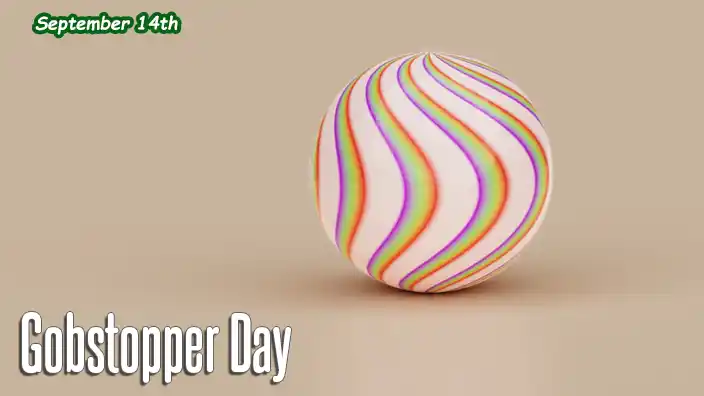
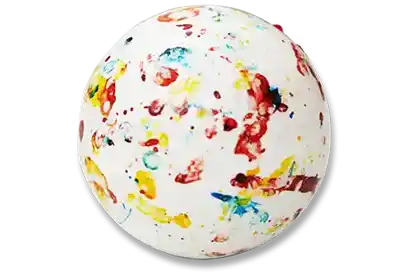
Gobstoppers are the candy world’s ultimate endurance test. They’re like the marathon of sweets—start strong, keep going, and somewhere around mile 10 (or minute 30), you begin to question your life choices. Each layer peels back to reveal yet another layer, like candy’s version of a Russian nesting doll, but with more dental risk. And just when you think you've reached the center, surprise—there's more! It’s the only candy that makes you feel like you’ve accomplished something just by surviving to the end.
Celebrated: Annually, on September 14th
Celebrate Gobstopper Day on September 14th! Discover the history, science, and fun of one of the longest-lasting candies. Perfect for candy lovers with patience.

- Details
Perched among the most luxurious of tropical branches, this bird seems to know it’s the fashion icon of the feathered world. With plumage so extravagant it could rival a peacock at a runway show, it’s as if this bird woke up one morning and said, “Why not go all out today?” Glowing in hues of blue and purple, it struts around like it’s late for an important meeting with paradise itself, making all the other birds feel like they’ve seriously underdressed. You don’t just stumble upon this bird; it arrives in a blaze of color, demanding admiration and probably a standing ovation.
Celebrated: Annually, on September 24th
Discover the significance of Bluebird of Happiness Day on September 24th, celebrating the joy and cheer this small, vibrant bird brings across cultures and centuries.


- Details
Is there anything more reliable than that golden, gooey circle of joy? When life gets complicated, and decision-making feels overwhelming, there’s always that comforting safety net of knowing you can just order a classic. No pineapple debates, no anchovy arguments—just pure, unadulterated perfection. It’s like the food version of your favorite sweatpants: always there, always delicious, and absolutely no judgment when you eat the whole thing by yourself.
Celebrated: Annually, on September 5th
Discover the allure of cheese pizza, a timeless classic celebrated on National Cheese Pizza Day. Learn about its history, virtues, and why simplicity reigns supreme.


- Details
Cool Sword Day is the one day people openly admit they have spent years wondering which sword they would carry into battle, despite struggling to open stubborn pickle jars at home. Deep down, most of humanity still believes a really cool sword would solve at least half of life’s problems.
Celebrated: Annually, on September 27th
Celebrate Cool Sword Day with the history of swords, famous blades, sword-fighting traditions, and legendary weapons from around the world


- Details
You know that magical liquid that somehow transforms you from a sluggish, incoherent being into a fully functioning human? Yeah, that stuff. It’s the reason you can face Monday mornings without calling in sick with a “bad attitude.” One moment you’re staring blankly at the wall, and the next, you’re solving complex problems and making small talk like it’s your job. Whatever it is, it’s more than a drink—it’s survival in a cup, and possibly the only thing keeping civilization from crumbling before noon.
Celebrated: Annually, on September 29th
Explore the rich history and global impact of coffee, from its origins in Ethiopia to its role in fueling revolutions and daily routines worldwide.

- Details
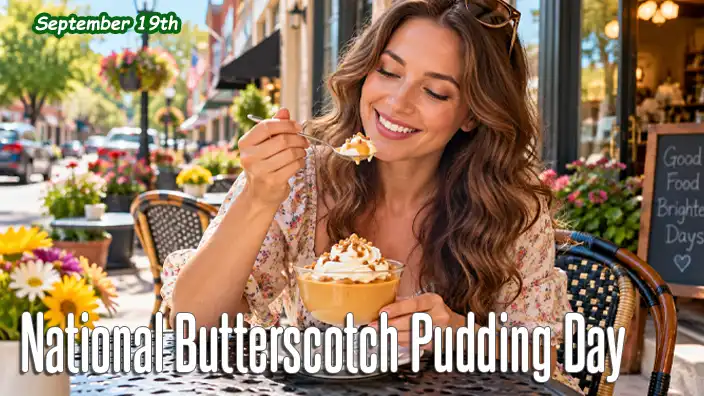
National Butterscotch Pudding Day arrives every September 19, bringing with it the irresistible combination of brown sugar, butter, and creamy, spoonable happiness. It's a celebration of a dessert that has survived changing fashions, complicated restaurant menus, and the invention of things nobody should ever put in a pudding. Grab a spoon, loosen your belt, and prepare to honor one of America's most comforting desserts. The pudding has been waiting patiently in the refrigerator, and frankly, it's beginning to feel neglected.
Celebrated: Annually, on September 19th
Celebrate National Butterscotch Pudding Day on September 19th! Discover the history, fun facts, and delicious ways to enjoy this creamy, nostalgic dessert.

- Details
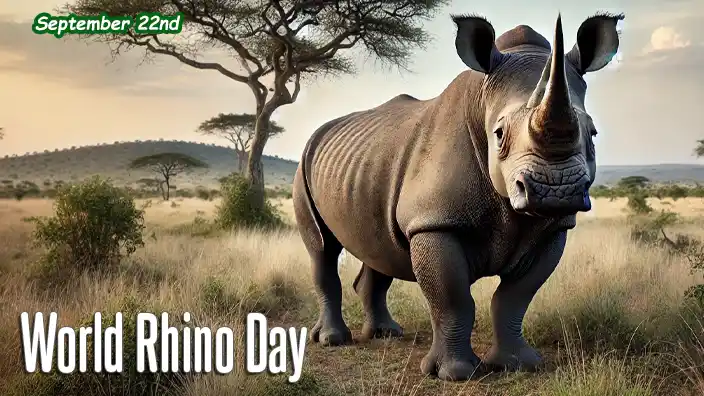
Rhinos are basically the world's biggest introverts—solitary, slow-moving, and always giving off that “don’t bother me” vibe. With skin like armor and a horn that could poke a hole in your picnic plans, they look like nature's toughest committee has designed them. But despite their tank-like appearance, they're really just oversized herbivores who love to graze and take mud baths. Imagine if your bathtub were an Olympic-sized pool and you weighed a few tons—who wouldn’t want to wallow all day? Just don’t mention their eyesight; they might not see you, but they will hear you laughing!
Celebrated: Annually, on September 22nd
Celebrate World Rhino Day on September 22nd. Learn about the evolution, species, and conservation efforts of these majestic creatures. Join the fight against poaching and habitat loss.


- Details
On the morning of September 11, 2001, the world stood still as unimaginable terror unfolded in the heart of America. The sky, once clear and ordinary, filled with smoke and chaos as two towering symbols of commerce and strength collapsed into a cloud of dust and despair. The horror of that day pierced through the nation’s soul, leaving an indelible scar on the hearts of millions. Firefighters, police officers, and everyday heroes rushed toward danger, embodying courage in the face of catastrophe. As we look back, we remember the lives lost, the bravery shown, and the unity that emerged from the ashes, reminding us of both the fragility and resilience of the human spirit. The memory of that day serves as a solemn reminder that in our darkest hours, the light of hope and solidarity can still shine through.
Celebrated: Annually, on September 11th
Discover how September 11, 2001, became a day of profound tragedy and global significance, forever altering American history and geopolitics with coordinated terrorist attacks that shocked the world.


- Details
Responsible Dog Ownership Day is the one day of the year when dogs everywhere quietly evaluate their humans and ask the big question: “Are you doing your job properly?” Did you remember the walk? The food? The vet visit? The ear scratches delivered in the exact approved location behind the left ear? Dogs give us loyalty, protection, and the occasional chewed slipper, but in return they expect responsible humans who provide care, training, and plenty of belly rubs. Responsible Dog Ownership Day celebrates the humans who step up to the task—and reminds the rest of us that the dog is definitely keeping score.
Celebrated: Annually, on the Third Saturday in September
Responsible Dog Ownership Day is a September observance that promotes proper care, training, and a lifelong commitment to our loyal canine companions.

- Details
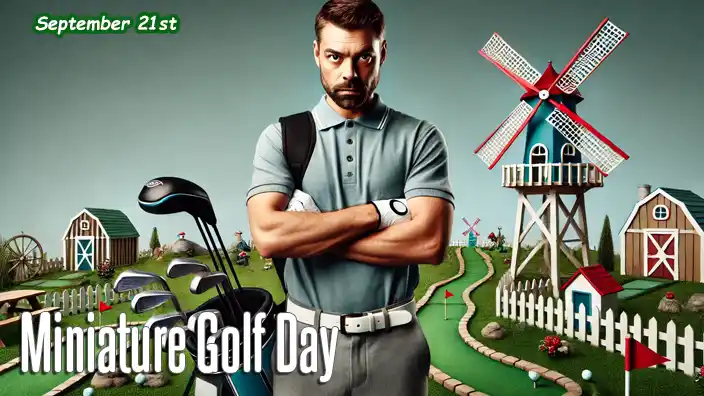
Miniature golf is that rare sport where your biggest adversary isn’t your opponent, but a rotating windmill that seems to have it out for you personally. Just when you think you’ve mastered the art of the putt, you find yourself launching your ball into a faux castle moat, watching it bob away as your dignity floats right alongside. It's a game where “serious” golfers can get schooled by a five-year-old, and the only thing standing between you and victory is a giant clown’s nose. Truly, it’s the only sport where failure is as much fun as success!
Celebrated: Annually, on September 21st
Dive into the whimsical world of miniature golf, where windmills, waterfalls, and rubber dinosaurs make for a fun, competitive experience. Celebrate Miniature Golf Day on September 21st!


- Details
Stopping procrastination is like trying to win an argument with your cat—it sounds good in theory, but the reality is full of distractions. One moment you’re ready to tackle that mountain of tasks, and the next, you’re 12 videos deep into a "how to bake the perfect sourdough" rabbit hole. The secret to beating procrastination is to do one tiny thing, like picking up a pen or moving the laundry, and suddenly you’re on a productivity streak. Or, you just realize you’ve become really good at finding creative ways to avoid responsibility.
Celebrated: Annually, on September 6th
Discover the quirks, facts, and battles against procrastination. From ancient times to modern distractions, explore the science, types, and strategies to overcome procrastination today.


- Details
Self-awareness is a funny thing. One minute you’re confidently explaining how everyone else is the problem, and the next minute you realize you just reheated your coffee for the fourth time because you got distracted arguing with the television. National Self Awareness Day encourages us all to slow down, take a thoughtful look at ourselves, and admit that maybe—just maybe—we are not always the wise, organized masterminds we imagined ourselves to be. Sometimes personal growth begins with a deep breath, a little honesty, and the painful realization that the family was right about your parking skills all along.
Celebrated: Annually, on September 28th
Discover the meaning of National Self Awareness Day, its history, and why self-awareness matters in relationships, work, and daily life


- Details
Cream-filled donuts are basically the lottery of baked goods—you never know when you’ll hit the jackpot of sweet, creamy goodness inside. You take a bite, hoping for that perfect cream-to-dough ratio, and sometimes, it's like a dream. Other times, the cream explodes out the back like it’s trying to escape. Either way, it’s a sticky, delicious adventure, and let’s face it, the mess is just part of the fun.
Celebrated: Annually, on September 14th
Celebrate National Cream Filled Donut Day on September 14th by indulging in a variety of cream-filled donuts like Bavarian Cream, Boston Cream, and Chocolate Cream.

- Details
Google is the digital genie that knows everything—whether you asked for it or not. It’s the place you go for life’s big questions, like "What’s the meaning of life?" or "How do I fix my Wi-Fi?"—and the not-so-big ones, like "Is my left nostril supposed to feel tingly?" Within seconds, it serves up an encyclopedia of knowledge, conspiracy theories, and the occasional cat meme. Google has become so essential that "just Google it" is the answer to any question, except, of course, when Google itself asks you to prove you’re not a robot. Ah, the irony!
Celebrated: Annually, on September 15th
Celebrate National Google.com Day on September 15th by exploring the history, quirks, and frustrations of the search engine that has become synonymous with 'look it up.'


- Details
Labor Day is the one holiday where the best way to celebrate hard work is by avoiding it entirely. It’s a day dedicated to workers everywhere—honored with burgers, naps, and the firm belief that anything requiring effort can absolutely wait until Tuesday.
Celebrated: Annually, on the First Monday in September
The history and meaning of Labor Day, from its origins in worker movements to modern celebrations and traditions.

- Details
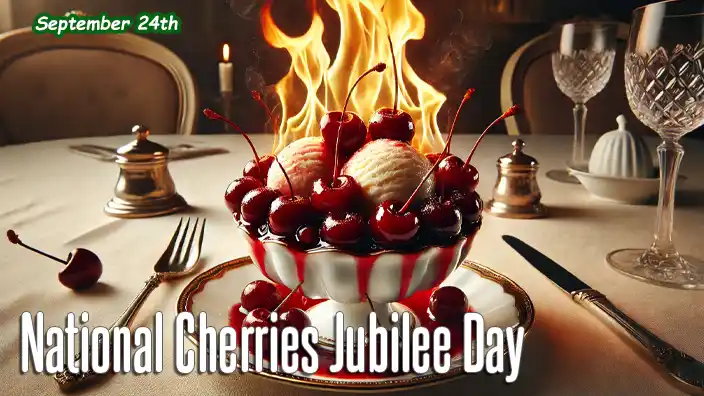
Cherries Jubilee is like the drama queen of desserts—it can't just be delicious; it has to arrive with a show. First, you have the cherries minding their business, simmering away in syrup, and then, boom! The brandy is added, and suddenly it's "watch me burn!" as flames leap from the pan like it’s auditioning for a Broadway show. It's the only dessert that lets you flirt with danger while pretending you’re still being classy, because nothing says “sophistication” like fruit on fire.
Celebrated: Annually, on September 24th
Celebrate National Cherries Jubilee Day on September 24th with a dessert that's a dramatic showstopper, complete with cherries, sugar, and flambéed brandy.


- Details
Giving to charity is like ordering a pizza for someone else—it feels good, everyone benefits, and you get to look like a hero without breaking a sweat. The best part? You get to bask in the glow of goodwill, even if all you did was click "donate" from the comfort of your couch, still in your pajamas. Sure, you’re not solving world hunger with a five-dollar donation, but you’re definitely making a dent—and maybe even justifying that extra-large latte you had this morning.
Celebrated: Annually, on September 5th
Discover the essence of charity from ancient times to modern philanthropy. Learn about the International Day of Charity and its humorous side.

- Details
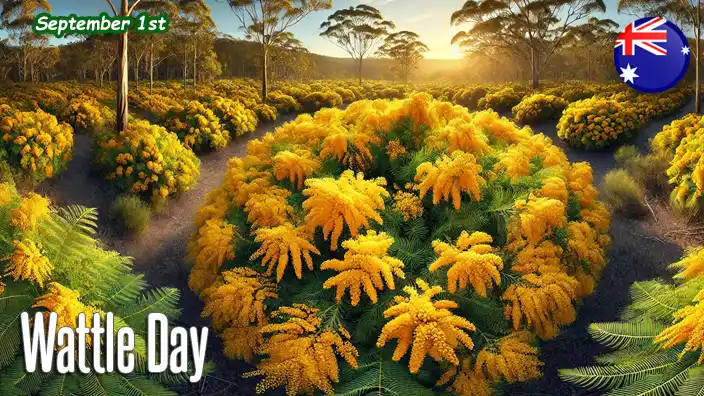
On Wattle Day, Australians don’t just stop to smell the flowers—they practically throw a party for them! Imagine a day where wearing a sprig of wattle on your lapel is like donning your most fashionable outfit, where the smell of wattle seeds roasting in the oven rivals even the best barbie, and where the simple act of planting a tree becomes a national pastime. It’s a day when Australians celebrate a flower that’s as tough as the Outback and as bright as the sun, proving once again that down under, even the plants have a sense of humor!
Celebrated: Annually, on September 1st
Discover the significance of Wattle Day in Australia, celebrating the country's national spirit and resilience through the golden blooms of the wattle flower. Explore the history and cultural importance of this cherished tradition.

From Our Marks Catelog
-

There’s something about putting on a hat that transforms an ordinary day into an adventure....
-

Scotland, the land where kilts are considered high fashion and bagpipes the ultimate soundtrack,...
-

One interesting aspect of Gazpacho Soup Day is its link to the British sci-fi sitcom "Red Dwarf."...
-

National Stay Home Because You're Well Day raises a hilarious dilemma: how do you call in 'well'...
-

American Football Day is that magical time when perfectly reasonable adults suddenly start yelling at...
-

Lucky pennies are the universe’s way of saying, “Hey, things might be falling apart, but here’s a...

