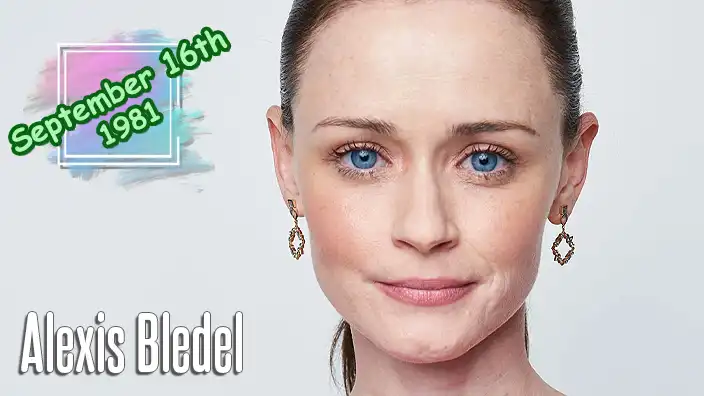
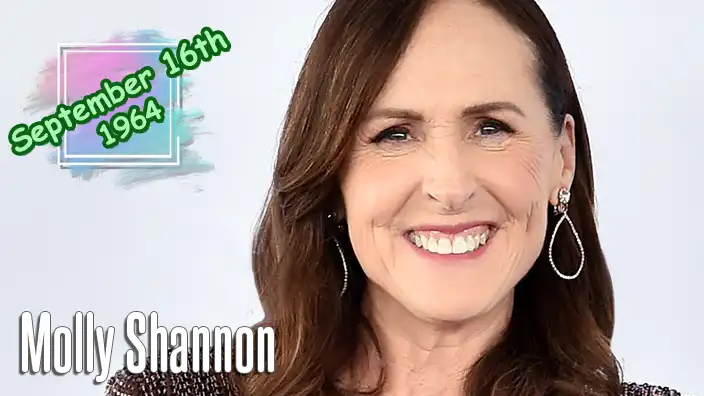
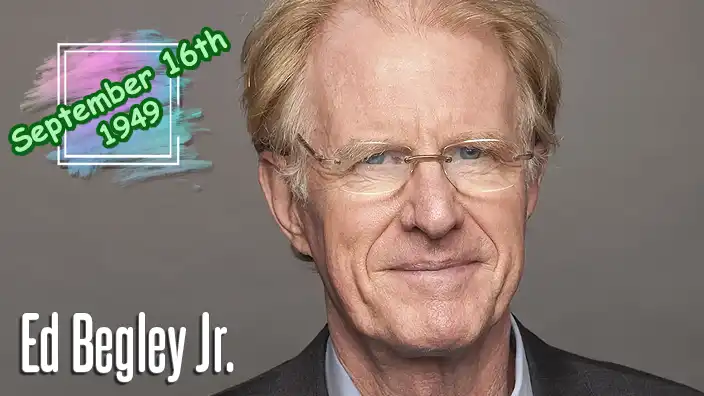
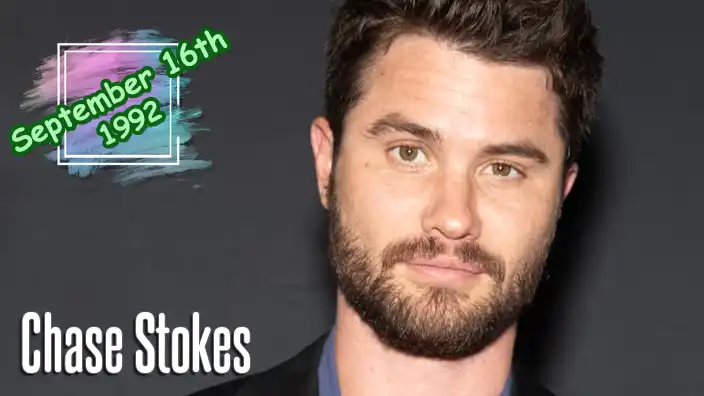
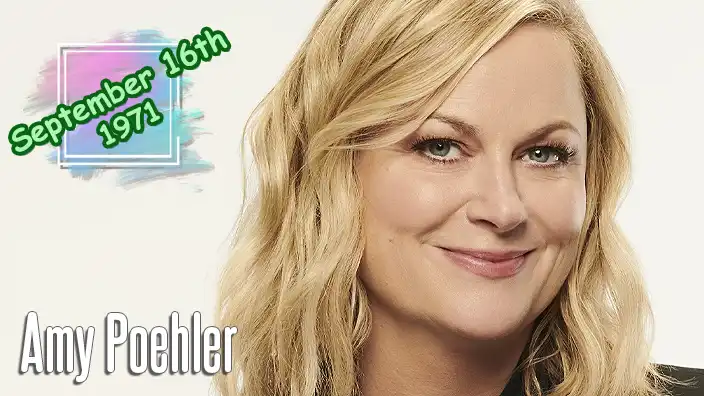
September 16, 1971, in Newton, Massachusetts
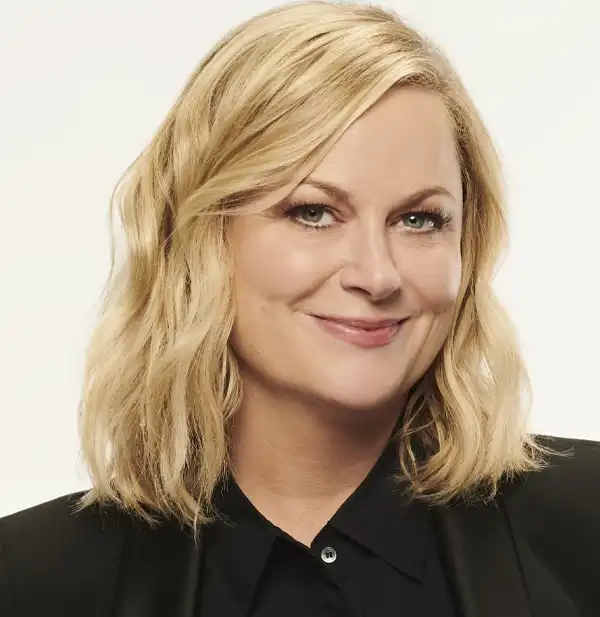
Amy Meredith Poehler was born on September 16, 1971, in Newton, Massachusetts, and grew up in nearby Burlington. Her parents, Eileen and William Poehler, were both teachers, and she attended Burlington High School before studying at Boston College. While at college, she became involved with an improvisational comedy troupe called My Mother’s Fleabag, discovering a form of performance that would shape virtually everything that followed. Improvisation rewards quick thinking, commitment and the ability to charge confidently into a situation without knowing exactly where it is going, which, come to think of it, also describes much of Leslie Knope’s approach to municipal government.
After graduating from Boston College, Poehler headed to Chicago, one of the traditional proving grounds for American improvisational comedy. She studied and performed at Second City and ImprovOlympic, now known as iO Chicago, and became part of a group of performers who would form the Upright Citizens Brigade. Poehler, Matt Besser, Ian Roberts and Matt Walsh eventually took the troupe to New York, where their performances developed a following and helped establish UCB as an important force in modern American improv. The group also landed a television series, Upright Citizens Brigade, which ran on Comedy Central for three seasons beginning in 1998.
The Upright Citizens Brigade became much more than a television show. Its theaters and training programs helped provide a launching pad for generations of comedians, writers and performers, while Poehler's association with the group established her as one of the significant figures in the improv revival of the period. Long before she was playing a government employee obsessed with parks, waffles and public service, she had learned how to build comedy collaboratively and react instantly to whatever another performer threw at her.
In 2001, Poehler joined the cast of Saturday Night Live. She arrived with substantial improv experience and quickly became one of the show's most dependable performers. Her collection of characters and celebrity impressions included Hillary Clinton, Kelly Ripa, Sharon Osbourne, Avril Lavigne and Michael Jackson, while original characters gave her plenty of opportunities to embrace the wonderfully strange world that develops when talented comedians are given wigs, costumes and several minutes of live television.
Poehler eventually joined Tina Fey behind the desk on Weekend Update. Their partnership was historically significant: Fey and Poehler became the first all-female anchor team in the history of the segment. Their friendship and comic partnership would extend far beyond SNL, developing into one of the most enduring pairings in modern comedy. They later appeared together in films, repeatedly hosted the Golden Globe Awards and demonstrated that an awards ceremony becomes considerably more entertaining when the hosts are perfectly willing to make fun of everyone in the room.
One of Poehler's most memorable Saturday Night Live periods came during the 2008 presidential campaign, when she portrayed Hillary Clinton opposite Tina Fey's enormously popular impression of Sarah Palin. The political sketches became cultural events in their own right, arriving during a campaign in which television satire and real political news occasionally seemed to be competing to see which could produce the more improbable storyline.
Poehler left Saturday Night Live after eight seasons, but there was very little time for anyone to wonder what she might do next. In 2009, she began starring as Leslie Knope in NBC's Parks and Recreation. The series, created by Greg Daniels and Michael Schur, followed the employees of the Parks and Recreation Department in the fictional Indiana town of Pawnee, a place where public meetings could become combat sports and the citizens appeared determined to make municipal government as difficult as humanly possible.
The first season of Parks and Recreation received a mixed response, but the series soon found its identity, and a major part of that transformation involved allowing Leslie Knope to become something unusually refreshing for a sitcom character: genuinely competent, fundamentally decent and almost frighteningly enthusiastic about her work. Rather than portraying Leslie simply as an incompetent bureaucrat, the series turned her into someone who sincerely believed government could improve people's lives. Her enthusiasm could exhaust everyone within a ten-mile radius, but it was difficult not to admire her.
Poehler surrounded Leslie's optimism with enough eccentricity to keep sainthood safely off the table. Leslie loved waffles, binders, friendship, Pawnee, ambitious public projects and celebrating virtually anything that could conceivably justify a celebration. She regarded political figures with the enthusiasm other people reserve for rock stars and approached even small government assignments as though the future of Western civilization depended upon the Parks Department getting the paperwork right.
The character also benefited enormously from the ensemble around her. Nick Offerman's libertarian department director Ron Swanson provided the perfect philosophical counterweight to Leslie's belief in energetic government. Rashida Jones played her best friend Ann Perkins, while Chris Pratt, Aubrey Plaza, Aziz Ansari, Adam Scott, Retta, Jim O'Heir and Rob Lowe helped turn Pawnee into one of television comedy's most memorable communities. Leslie's relationship with Adam Scott's Ben Wyatt eventually became an important emotional center of the show without requiring Leslie to surrender the career ambitions and personality that made her interesting in the first place.
Parks and Recreation ran for seven seasons, ending in 2015. Poehler received six Primetime Emmy nominations for her performance as Leslie Knope, while the series itself received considerable awards recognition. In 2014, Poehler won the Golden Globe for Best Actress in a Television Series – Musical or Comedy for the role. She was not merely the star of the series, either; she also worked as a producer, writer and director, helping shape the program behind the camera as well as in front of it.
Her film career was developing alongside her television work. Poehler appeared in the 2004 comedy Mean Girls, playing Mrs. George, the desperately permissive mother of Regina George. Although her screen time was relatively limited, the performance became one of the movie's many memorable ingredients. She later appeared alongside Will Ferrell and Jon Heder in Blades of Glory and reunited with Tina Fey for Baby Mama in 2008, with Fey playing a businesswoman who hires Poehler's character as a surrogate.
The Fey-Poehler partnership continued with the 2015 comedy Sisters, in which they played siblings returning to their childhood home before their parents sold it. Their chemistry worked partly because the two performers could switch comic roles rather than remaining trapped in fixed personalities. Either could be the sensible one or the lunatic depending upon what the scene required, although "sensible" should perhaps be considered a relative term whenever these two are throwing a party.
Poehler has also established a substantial career in animation. Her most celebrated voice role arrived with Pixar's Inside Out in 2015. She voiced Joy, one of the emotions operating inside the mind of a young girl named Riley. Joy initially believes that happiness should dominate Riley's emotional life and spends much of the film trying to keep Sadness from interfering. The story gradually reveals something considerably more sophisticated: sadness and other uncomfortable emotions are not failures to be eliminated but necessary parts of being human.
Poehler's performance was perfectly suited to Joy. Her naturally energetic delivery allowed the character to be relentlessly upbeat without becoming merely sugary, while the story gave her opportunities to explore vulnerability beneath the enthusiasm. Inside Out became both a commercial and critical success and won the Academy Award for Best Animated Feature. Poehler returned as Joy in Inside Out 2, released in 2024, as Riley entered adolescence and acquired a collection of new emotions, including Anxiety. Apparently puberty wasn't complicated enough without giving the control room additional staff.
Her work behind the camera has become increasingly important. Poehler founded the production company Paper Kite Productions and has served as a producer on numerous television projects. Her producing credits have included Broad City, Difficult People, Russian Doll and Making It. The latter reunited her with Parks and Recreation co-star Nick Offerman, with the pair hosting a competition centered on crafts and skilled making rather than the more traditional reality-television approach of placing people in a room and waiting for somebody to start shouting.
Poehler has also directed feature films. Her directorial debut, Wine Country, arrived in 2019 and brought together a formidable collection of comedy performers including Maya Rudolph, Ana Gasteyer, Rachel Dratch, Paula Pell, Emily Spivey and Tina Fey. She followed it with Moxie in 2021, a film about a teenage girl who starts an anonymous feminist publication at her high school. Poehler directed and appeared in both films, further expanding a career that had long since ceased to fit comfortably under the simple description of "actress."
Her contributions to comedy have also included Amy Poehler's Smart Girls, an organization and online project developed to encourage young people to be themselves, pursue their interests and value intelligence, curiosity and individuality. Its philosophy fit neatly with a recurring quality in Poehler's work: enthusiasm is not something that needs to be disguised in order to look cool. Leslie Knope certainly never received that memo, and fortunately nobody thought to send her one.
Poehler became an Emmy winner in 2016 when she and Tina Fey received the award for Outstanding Guest Actress in a Comedy Series for their return to Saturday Night Live. The victory produced an unusual bit of Emmy history, with the longtime friends sharing the honor for the same episode. It was an appropriate recognition for performers whose careers had crossed so frequently that separating them occasionally seemed like unnecessary administrative paperwork.
The pair have also repeatedly taken their partnership into the dangerous territory of awards-show hosting. Poehler and Fey hosted the Golden Globes together in 2013, 2014 and 2015 and returned in 2021. Their approach combined affection for Hollywood with a complete lack of fear about making Hollywood the punchline, producing ceremonies remembered as much for the hosts as for some of the awards being presented.
Poehler added another branch to her career with the launch of Good Hang with Amy Poehler in 2025. The conversational podcast brought her together with friends and fellow performers including Tina Fey, Rashida Jones, Quinta Brunson, Martin Short and others. In January 2026, Good Hang won the inaugural Golden Globe Award for Best Podcast, giving Poehler the distinction of winning a Golden Globe in a category that had never previously existed. She had already won one for acting; apparently she simply needed the awards people to invent another department.
What has made Amy Poehler's career particularly durable is that she has never relied upon one character, one television program or even one side of the entertainment business. She can perform tightly scripted comedy, improvise, deliver political satire on live television, voice an animated embodiment of happiness, direct movies, produce television series, interview fellow entertainers or play a municipal employee who treats a new park bench like the moon landing.
Yet Leslie Knope remains perhaps the clearest expression of what Poehler does especially well. Comedy often depends upon cynicism, embarrassment or characters who are spectacularly bad at being human. Leslie was funny for almost the opposite reason. She cared enormously. She worked too hard, planned too much, loved her friends extravagantly and believed that even a small Parks Department could make its community better. Poehler made all that optimism funny without making optimism itself the joke.
That combination of intelligence, generosity and comic fearlessness has helped Amy Poehler move from Chicago improv stages to Saturday Night Live, Pawnee, Pixar and beyond. Whether she is behind a Weekend Update desk, campaigning for Leslie Knope, attempting to keep Sadness away from the controls or simply talking with another comedian on a podcast, she has built a career around the very useful principle that being clever and being silly are not opposites. In the right hands, they make a remarkably good team.