October 11, 1962, in New York City
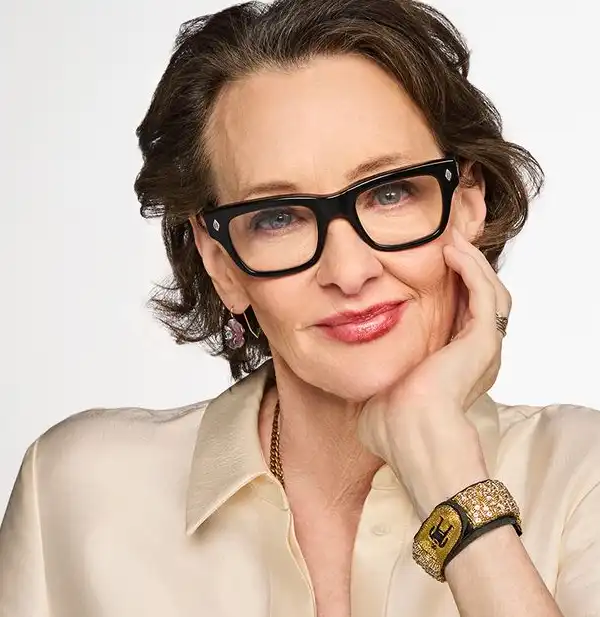
Born Joan Mary Cusack on October 11, 1962, in New York City, Joan Cusack is an American actress and comedian whose distinctive voice, expressive facial features, and exceptional comic timing have made her one of Hollywood's most recognizable character performers. Best known for her Academy Award-nominated performances in Working Girl and In & Out, as well as her portrayal of Jessie the cowgirl in Pixar's Toy Story films, Cusack has built a remarkable career spanning film, television, animation, and sketch comedy. Unlike performers who depend upon conventional leading roles, she has repeatedly demonstrated that a memorable supporting character can become the most entertaining person on screen. Give Joan Cusack a handful of lines, an uncomfortable situation, and a character experiencing a minor emotional crisis, and she can turn the entire scene into something audiences remember for years.
Although born in New York City, Cusack grew up in Evanston, Illinois, a suburb of Chicago, in a family where creativity and performance were strongly encouraged. Her father, Dick Cusack, was an actor, writer, and filmmaker who also worked in advertising, while her mother, Nancy Cusack, was a mathematics teacher and political activist. Joan was one of five children, and the family's interest in the performing arts extended to her siblings, including actors John Cusack and Ann Cusack. Their Irish-American household provided an environment in which storytelling, humor, and artistic expression were familiar parts of everyday life. With so many aspiring performers under one roof, ordinary family disagreements must occasionally have resembled auditions for a particularly argumentative television sitcom.
Cusack's interest in acting developed during childhood, when she began studying at the Piven Theatre Workshop in Evanston. Founded by Byrne and Joyce Piven, the workshop became an important training ground for young performers, emphasizing improvisation, ensemble acting, and creative exploration. Her brother John also trained there, and the experience helped both siblings develop the naturalistic performance styles that would later distinguish their film careers. Improvisational training proved especially valuable for Joan, whose comic performances frequently depend upon spontaneous-looking reactions, unexpected changes in expression, and the ability to make even the most unusual dialogue sound convincing. Although her characters often appear completely overwhelmed by events, the actress portraying them is usually exercising extraordinary control.
Her education continued at the University of Wisconsin–Madison, where she studied English and graduated in 1984. Her academic background complemented her theatrical training, providing experience with literature, language, and character development. During these years, Cusack was already pursuing professional acting opportunities, gradually establishing herself through small film appearances. Unlike some performers who achieve immediate recognition through a single starring role, she developed her career steadily, accepting supporting parts that allowed her to gain experience and demonstrate her versatility. This gradual progression helped establish the foundations of a career that would eventually include some of the most memorable comic performances in American cinema.
Cusack made an early screen appearance in the 1980 film ** My Bodyguard,** a coming-of-age drama starring Chris Makepeace, Adam Baldwin, and Matt Dillon. Set largely in a Chicago high school, the film explored bullying, friendship, and the complicated relationships between teenagers. Although Cusack's role was relatively small, the production provided valuable experience working alongside established performers and introduced her to the professional film industry. She subsequently appeared in several other productions during the early 1980s, including Class in 1983 and John Hughes's popular teenage comedy Sixteen Candles in 1984. These early roles helped establish her association with the Chicago-centered filmmaking community that produced several influential American comedies during the decade.
Her appearance in ** Sixteen Candles ** was particularly memorable because of the film's enduring popularity. Directed by John Hughes and starring Molly Ringwald, the comedy followed a teenager whose family accidentally overlooked her birthday amid preparations for her older sister's wedding. Cusack played a student wearing a neck brace, a small but visually distinctive character who contributed to the film's collection of awkward teenage personalities. Although she had limited screen time, her ability to communicate humor through physical performance was already apparent. The film also featured her brother John, marking one of several occasions when the siblings would appear in the same production.
In 1985, Cusack joined the cast of NBC's legendary sketch comedy program ** Saturday Night Live,** appearing during its eleventh season. The show provided an opportunity to develop original characters, perform live comedy, and work within the demanding environment of weekly television production. Cusack's unusual comic instincts made her a natural candidate for sketch comedy, where exaggerated personalities and rapid character transformations are essential. However, the season experienced considerable difficulties, and she departed after one year along with several other cast members. Although her time on the program was brief, it provided additional experience in live performance and demonstrated her willingness to experiment with different forms of comedy.
A significant step forward came with the 1987 film ** Broadcast News,** written, produced, and directed by James L. Brooks. The acclaimed comedy-drama starred Holly Hunter, William Hurt, and Albert Brooks as television news professionals navigating complicated personal relationships and ethical questions within the broadcasting industry. Cusack portrayed Blair Litton, an energetic production assistant whose frantic efforts to manage newsroom responsibilities provided some of the film's most memorable comic moments. Her performance captured the extraordinary pressure of live television production, including the frantic movement, technical complications, and barely controlled panic that frequently occur behind the scenes. It was a role particularly well suited to an actress capable of making professional anxiety look almost athletic.
Her major breakthrough arrived in 1988 with ** Working Girl,** directed by Mike Nichols and starring Melanie Griffith, Harrison Ford, and Sigourney Weaver. The romantic comedy-drama followed Tess McGill, an ambitious secretary attempting to establish herself in the competitive world of New York business. Cusack portrayed Cynthia, Tess's loyal and outspoken friend, whose distinctive fashion choices, practical observations, and unmistakable New York attitude provided a lively contrast to the corporate environment. Cynthia was supportive but never particularly restrained, offering advice and commentary with the confidence of someone who had already decided that subtlety was overrated.
Cusack's performance in Working Girl received widespread critical acclaim and earned her a nomination for the Academy Award for Best Supporting Actress at the 61st Academy Awards in 1989. The recognition represented an extraordinary achievement for a performer whose career had developed largely through supporting roles and ensemble productions. Although she did not win the award, the nomination established her as a major talent capable of delivering memorable performances alongside some of Hollywood's most prominent actors. Her portrayal of Cynthia also demonstrated an important characteristic of her acting style: the ability to create a fully developed personality through relatively limited screen time.
Following the success of Working Girl, Cusack appeared in a series of films that further demonstrated her range. She had a supporting role in the 1989 romantic comedy-drama Say Anything..., directed by Cameron Crowe and starring her brother John Cusack and Ione Skye. She also appeared in Men Don't Leave in 1990, a drama starring Jessica Lange, and My Blue Heaven, a crime comedy featuring Steve Martin and Rick Moranis. These productions allowed her to explore different character types, from emotionally grounded dramatic roles to eccentric comic personalities. Although audiences increasingly associated her with comedy, she consistently demonstrated an ability to bring warmth and emotional credibility to her performances.
Her collaborations with John Cusack became a distinctive feature of her career. The siblings appeared together in numerous films, including Class, Sixteen Candles, Say Anything..., Grosse Pointe Blank, High Fidelity, and War, Inc. Their shared acting background and familiarity with one another helped create a natural on-screen chemistry, even when their characters were not related. Joan frequently portrayed outspoken friends, colleagues, or associates who challenged the characters played by her brother. Their scenes often benefited from a believable conversational rhythm, suggesting the kind of familiarity that comes from spending years in the same household and learning exactly how to irritate one another.
In 1991, Cusack appeared in ** The Cabinet of Dr. Ramirez,** an experimental silent film directed by Peter Sellars and inspired by the German expressionist classic The Cabinet of Dr. Caligari. The unusual production demonstrated her willingness to explore unconventional material outside mainstream Hollywood comedy. She also appeared in the 1992 fantasy comedy Toys, directed by Barry Levinson and starring Robin Williams. The film combined elaborate visual design with a story about a toy factory threatened by an authoritarian new owner. Cusack portrayed Alsatia Zevo, a whimsical character whose unusual behavior and innocent personality complemented the film's imaginative setting. The role allowed her to embrace a deliberately exaggerated performance style while contributing to the production's distinctive visual atmosphere.
One of her most memorable comic appearances came in the 1993 film ** Addams Family Values,** directed by Barry Sonnenfeld. The sequel to The Addams Family featured Anjelica Huston, Raul Julia, Christopher Lloyd, and Christina Ricci as members of the famously macabre household. Cusack portrayed Debbie Jellinsky, a seemingly sweet nanny who becomes romantically involved with Uncle Fester while secretly pursuing a sinister agenda. Debbie's cheerful exterior concealed a ruthless personality and a history of suspiciously unfortunate marriages. Cusack embraced the character's exaggerated villainy with obvious enthusiasm, delivering a performance that combined dark comedy, theatrical melodrama, and spectacularly inappropriate romantic ambition.
Debbie Jellinsky became a particularly memorable antagonist because Cusack managed to make the character both ridiculous and genuinely threatening. Her exaggerated expressions, sudden emotional outbursts, and increasingly desperate attempts to control the Addams family created some of the film's funniest moments. The character's elaborate wedding plans and explosive temper provided an ideal opportunity for Cusack to demonstrate her physical comedy skills. Although Debbie was hardly a model of responsible behavior, audiences appreciated the energy and imagination of the performance. It takes considerable comic talent to portray a murderous gold digger in a family comedy without making the entire production unbearably grim.
Throughout the mid-1990s, Cusack continued appearing in popular films, including Nine Months in 1995 and Mr. Wrong in 1996. Her performances frequently involved characters whose personal relationships became increasingly complicated, providing opportunities for nervous reactions, exaggerated frustration, and unexpected moments of emotional honesty. She also maintained strong professional connections with Chicago and her family, choosing not to organize her entire life around Hollywood. This approach reflected a preference for balancing professional opportunities with personal stability, even as her reputation continued to grow.
In 1997, Cusack delivered another outstanding performance in ** In & Out,** directed by Frank Oz and starring Kevin Kline, Tom Selleck, and Matt Dillon. The comedy followed Howard Brackett, a small-town high school teacher whose life is thrown into turmoil when a former student publicly suggests that he is gay. Cusack portrayed Emily Montgomery, Howard's longtime fiancée, whose carefully planned wedding becomes the center of an increasingly embarrassing public controversy. Emily's reactions to the unfolding situation provided many of the film's funniest moments, but Cusack also brought considerable sympathy to a character experiencing genuine confusion and heartbreak.
Her performance in In & Out demonstrated the balance between broad comedy and emotional vulnerability that had become one of her professional strengths. Emily was capable of spectacular emotional outbursts, yet the character's disappointment remained understandable and relatable. Cusack's ability to shift between laughter and genuine sadness helped prevent the role from becoming a simple caricature. Her performance earned a second Academy Award nomination for Best Supporting Actress, as well as a Golden Globe nomination. The recognition confirmed her position among Hollywood's most accomplished supporting actresses and demonstrated that her earlier success in Working Girl had been no accident.
The same year, Cusack appeared in ** Grosse Pointe Blank,** a dark comedy starring John Cusack as Martin Blank, a professional assassin who returns to his hometown for a high school reunion. Joan portrayed Marcella, Martin's energetic and highly efficient assistant, who manages his unusual business arrangements while frequently expressing frustration with his personal decisions. Her performance provided a comic counterbalance to the film's mixture of romance, violence, and existential uncertainty. Marcella approached the administration of contract killing with the practical irritation of an office manager dealing with an employee who continually forgets to complete his paperwork. The role became another favorite among audiences who appreciated the siblings' natural comic chemistry.
Cusack continued her successful run of supporting performances with appearances in ** Runaway Bride ** in 1999, starring Julia Roberts and Richard Gere, and Arlington Road, a suspense thriller featuring Jeff Bridges and Tim Robbins. These films demonstrated her ability to adapt to contrasting genres, moving from lighthearted romantic comedy to darker dramatic material. She also appeared in Cradle Will Rock, directed by Tim Robbins, portraying the influential American theater producer Hazel Huffman. The film explored the relationship between art, politics, and social change during the 1930s, providing another opportunity for Cusack to participate in a historically themed ensemble production.
However, 1999 also introduced Cusack to a role that would become one of the most enduring achievements of her career. She joined the voice cast of Pixar's ** Toy Story 2,** portraying Jessie, an energetic cowgirl doll who becomes part of Woody's expanding circle of friends. The animated sequel featured returning stars Tom Hanks as Woody and Tim Allen as Buzz Lightyear, alongside new characters whose personalities added emotional depth and humor to the franchise. Jessie was enthusiastic, adventurous, outspoken, and occasionally overwhelmed by her own feelings, making her an ideal character for Cusack's distinctive vocal style.
Jessie's personality was particularly memorable because she combined boundless energy with genuine emotional vulnerability. Although initially appearing confident and cheerful, the character carried painful memories of being abandoned by her former owner, Emily. Her backstory became one of the film's most touching elements, exploring themes of attachment, loss, and the fear of being forgotten. Cusack's expressive voice helped communicate Jessie's emotional complexity, shifting from rapid-fire excitement to sadness and uncertainty. The character demonstrated that animated performances can require the same emotional precision as live-action acting, even when the performer is never physically visible on screen.
The success of Toy Story 2 established Jessie as a beloved member of Pixar's animated universe. Cusack returned to voice the character in ** Toy Story 3 ** in 2010, a film that explored the toys' uncertain future as Andy prepared to leave for college. Jessie played an important role in the group's adventures, demonstrating courage, loyalty, and determination during their efforts to escape an increasingly dangerous daycare center. The film became a major critical and commercial success, winning the Academy Award for Best Animated Feature. Its emotional conclusion resonated with audiences who had grown up watching the franchise, while Cusack's performance helped maintain Jessie's distinctive personality.
She returned again for ** Toy Story 4 ** in 2019, continuing Jessie's adventures alongside Woody, Buzz, and the other familiar characters. The film introduced new personalities and explored themes of purpose, change, and independence, while preserving the humor and emotional warmth that had characterized the earlier installments. Cusack also voiced Jessie in animated television specials, short films, and related projects, including Toy Story of Terror! and Toy Story That Time Forgot. Her work across the franchise helped establish Jessie as one of Disney and Pixar's most recognizable female animated characters.
In 2026, Cusack returned once more as Jessie in ** Toy Story 5,** directed by Andrew Stanton. The film explored the challenges facing traditional toys in a world increasingly dominated by electronic entertainment, placing Jessie at the center of a story involving Bonnie and a technologically advanced tablet. The production reunited several familiar voice performers, including Tom Hanks and Tim Allen, while examining how childhood play has changed in the digital era. Cusack's return demonstrated the lasting appeal of Jessie and the importance of her vocal performance to the character's identity. After decades of adventures, the energetic cowgirl remained determined to prove that imagination and friendship were not obsolete simply because somebody had invented another electronic screen.
Outside the Toy Story franchise, Cusack continued providing voices for animated productions. In 2005, she portrayed Abby Mallard, better known as the Ugly Duckling, in Disney's Chicken Little. The character was a loyal and sensible friend to the film's anxious young protagonist, providing encouragement while navigating a series of increasingly ridiculous situations. Cusack's recognizable voice was particularly well suited to the character's combination of humor, sincerity, and practical advice. She also contributed to animated films such as Hoodwinked Too! Hood vs. Evil, Arthur Christmas, and the acclaimed 2019 Netflix film Klaus, further expanding her work in family entertainment.
Her live-action film career remained equally varied. In ** High Fidelity ** in 2000, she appeared as Liz, a friend of the record-store owner portrayed by John Cusack. Based on Nick Hornby's novel, the film explored romantic relationships, musical obsession, and the emotional complications of adulthood. Joan's character provided a refreshingly direct perspective on the protagonist's frequently self-absorbed behavior, delivering criticism with the authority of someone who had heard quite enough excuses. The performance became another example of her ability to enliven a supporting role through sharp dialogue and natural comic timing.
In 2003, Cusack appeared in the hugely popular musical comedy ** School of Rock,** directed by Richard Linklater and starring Jack Black. She portrayed Rosalie Mullins, the strict principal of an elite private school where an unemployed musician poses as a substitute teacher and secretly forms a rock band with his students. Initially appearing stern and humorless, Rosalie gradually reveals a more complicated personality, including an unexpected enthusiasm for Stevie Nicks. Cusack's performance provided a wonderful contrast to Black's energetic antics, combining rigid professional discipline with moments of vulnerability and comic surprise.
The role of Rosalie Mullins became one of Cusack's most recognizable performances because it allowed her to demonstrate both restraint and comic exaggeration. Her character's carefully maintained professional image slowly unraveled as the film progressed, creating opportunities for subtle facial expressions and increasingly entertaining reactions. Her interactions with Jack Black helped establish the film's balance between anarchic comedy and genuine affection for music. Although the students and their unconventional teacher provided the central storyline, Cusack's principal became an essential part of the film's appeal. Every school needs someone to maintain discipline, even when the substitute teacher is busy preparing the children for a rock concert.
Cusack's other notable films during the 2000s included Raising Helen in 2004, Friends with Money in 2006, Martian Child in 2007, and ** Kit Kittredge: An American Girl ** in 2008. She also appeared in Confessions of a Shopaholic in 2009, portraying the mother of Isla Fisher's financially irresponsible protagonist. These performances frequently emphasized family relationships, friendship, and the complications of everyday life. Her ability to portray eccentric characters without sacrificing their humanity remained a consistent feature of her work.
In 2011, Cusack began one of the most important television roles of her career when she joined Showtime's comedy-drama ** Shameless.** The series followed the dysfunctional Gallagher family as they struggled with poverty, relationships, addiction, and the challenges of life on Chicago's South Side. Cusack portrayed Sheila Jackson, an eccentric neighbor whose severe agoraphobia initially prevented her from leaving her home. Sheila was compassionate, anxious, intensely organized, and frequently involved in complicated personal relationships. The character's unusual behavior provided considerable comedy, but her struggles also allowed Cusack to explore more serious emotional material.
Sheila Jackson became one of the show's most memorable supporting characters because Cusack combined extreme eccentricity with genuine warmth. Her attempts to manage anxiety, maintain relationships, and gradually confront the outside world provided both humorous and touching moments. Although Sheila's decisions were frequently questionable, Cusack portrayed her with enough sincerity to encourage sympathy from viewers. Her performance demonstrated that television comedy could address difficult personal circumstances without abandoning humor or emotional complexity.
Cusack appeared in the first five seasons of Shameless, receiving five consecutive Primetime Emmy Award nominations for Outstanding Guest Actress in a Comedy Series. In 2015, she won the award, adding another prestigious honor to her career. The victory recognized a performance that had become central to the show's distinctive mixture of dark comedy and emotional drama. It also demonstrated her continuing ability to create memorable characters across different generations of television audiences. After decades of acclaimed film work, Cusack had found another opportunity to show that an apparently ordinary neighbor could become one of the most fascinating people in an entire fictional neighborhood.
Her later television appearances included a memorable role in the final episode of ** The Office ** in 2013, where she portrayed the biological mother of receptionist Erin Hannon. The brief appearance contributed to one of the series finale's emotional storylines, demonstrating how even a relatively small role could benefit from Cusack's warmth and sincerity. She also appeared as Justice Strauss in Netflix's A Series of Unfortunate Events, bringing her distinctive comic sensibility to the adaptation of Lemony Snicket's popular books. Her television work further included the psychological thriller Homecoming, in which she portrayed Francine Bunda.
Beyond acting, Cusack has maintained strong connections with Chicago, choosing to raise her family away from the traditional Hollywood environment. She married attorney Richard Burke in 1996, and the couple have two sons, Dylan and Miles. Her decision to remain closely associated with the Chicago area reflected a desire for family stability and a degree of separation between her professional and personal lives. Although she has spent decades working in the entertainment industry, Cusack has generally avoided the constant publicity that surrounds many Hollywood celebrities. Her approach suggests that an actor can enjoy a highly successful career without feeling obligated to provide the public with a detailed account of every trip to the supermarket.
Cusack has also pursued interests outside acting, including operating Judy Maxwell Home, a gift shop in Chicago. Named after the character portrayed by Barbra Streisand in the classic 1972 comedy What's Up, Doc?, the business reflects Cusack's affection for unusual objects, playful design, and the kind of unexpected discoveries that make shopping an adventure. She has spoken humorously about the experience of running the store, acknowledging that it has been personally enjoyable without necessarily becoming a major commercial enterprise. For someone whose professional career has involved playing eccentric characters, a shop filled with unusual merchandise seems an entirely appropriate extracurricular activity.
One of Cusack's most important contributions to American cinema is her demonstration that character acting can be every bit as demanding and artistically rewarding as leading roles. Her performances rarely depend upon glamour or conventional romantic appeal. Instead, she creates characters through physical movement, distinctive vocal patterns, carefully observed behavior, and an extraordinary ability to communicate emotion through facial expression. Whether portraying an anxious neighbor, a frustrated school principal, a fiercely loyal friend, or an animated cowgirl, she gives each character a recognizable personality and emotional foundation.
Her influence is particularly apparent in comedy, where supporting performers frequently determine whether a scene succeeds. Cusack understands how to react to another actor, when to interrupt a conversation, and how to create humor without overwhelming the central storyline. Her characters often appear nervous, impulsive, or socially awkward, yet the performances themselves are carefully controlled. She has mastered the difficult art of making a character's discomfort entertaining while preserving enough humanity for audiences to recognize something familiar in the situation. Anyone who has ever said the wrong thing at precisely the wrong moment can probably identify with at least one Joan Cusack character.
Her two Academy Award nominations, Primetime Emmy victory, and extensive filmography reflect an unusually consistent career. From early appearances in Chicago-centered teenage comedies to major Hollywood productions and internationally successful animated films, Cusack has remained a distinctive presence in American entertainment. She has worked with acclaimed directors, appeared alongside some of the industry's most celebrated performers, and helped create characters that continue to entertain audiences long after their original release. Her collaborations with John Cusack have become an enjoyable recurring feature of her career, while her work as Jessie introduced her voice to generations of children around the world.
Joan Cusack's enduring appeal comes from her ability to find humor, vulnerability, and personality in characters who might otherwise remain ordinary supporting figures. Her performances in Working Girl and In & Out earned recognition from the Academy, her work in Shameless brought Emmy success, and her portrayal of Jessie helped give the Toy Story franchise one of its most beloved characters. Throughout her career, she has demonstrated that memorable acting does not always require the largest role, the most dialogue, or the most dramatic entrance. Sometimes all it takes is a wonderfully expressive face, a distinctive voice, and the ability to look completely horrified by something everyone else considers perfectly normal. And if the situation becomes particularly ridiculous, Joan Cusack will probably make it even funnier.