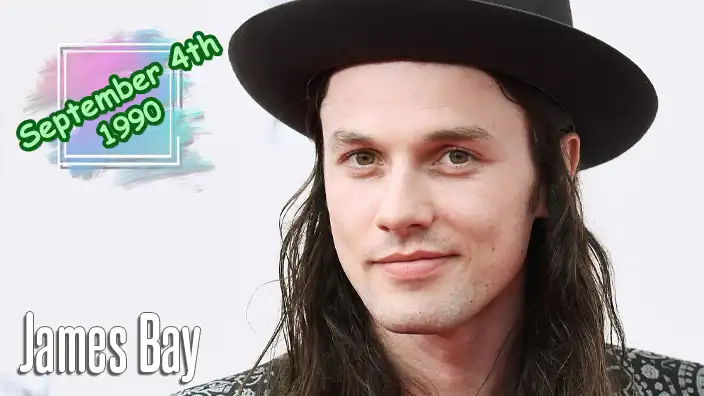
September 4, 1990, in Hitchin, England
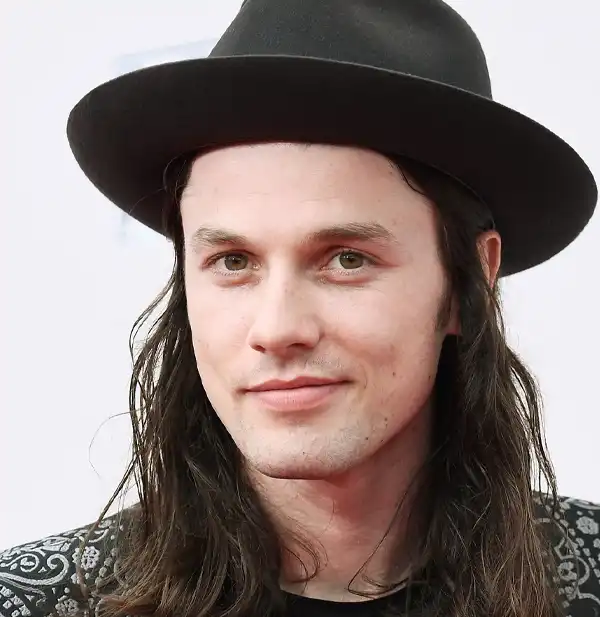
James Michael Bay was born on September 4, 1990, in Hitchin, Hertfordshire, England. He grew up there with his older brother, Alex, in a household where music gradually became far more than something playing in the background. Bay's fascination with the guitar began when he was around 11 years old after he discovered an old classical guitar at home. Like generations of aspiring guitarists before him, he started teaching himself to play, and before long the instrument had become an increasingly important part of his life.
One particularly important influence arrived through Eric Clapton's recording of "Layla." Bay has recalled hearing Clapton's guitar playing and becoming captivated by what could be expressed through the instrument. He learned by listening to songs, studying guitar parts and working them out for himself, developing the musical instincts that would eventually underpin his own songwriting. Other influences would include artists such as Bruce Springsteen, Bob Dylan, Ray LaMontagne and various blues and rock performers whose music placed emotion and storytelling ahead of elaborate production.
Bay attended Hitchin Boys' School and began performing locally while still young. By his teenage years, he was playing in bands and developing the confidence required to stand in front of other people with a guitar and persuade them to stop talking for a few minutes. That is one of the earliest and most unforgiving tests of a musician. A festival crowd may have paid to see you; people in a pub are under no such obligation.
Determined to pursue music professionally, Bay later moved to Brighton and studied at the Brighton Institute of Modern Music, now known as BIMM University. Brighton's thriving live-music scene provided an ideal education beyond the classroom. Bay performed at open-mic nights and small venues, steadily developing his stagecraft and songwriting while learning the traditional musician's lesson that glamour generally arrives considerably later than carrying your own equipment.
His breakthrough began in wonderfully modern fashion. During one of Bay's performances at an open-mic night, someone recorded him and uploaded footage to YouTube. The video attracted attention and eventually reached people connected with Republic Records. A performance in a small venue had suddenly become an international audition without Bay necessarily realizing that an audition was taking place.
Bay signed a recording contract and began working toward his first releases. In 2013, he issued his debut EP, The Dark of the Morning. It introduced listeners to the stripped-back acoustic sound that characterized his early work: guitar-led arrangements, soulful vocals and songwriting focused heavily on relationships and emotional uncertainty. Another EP, Let It Go, followed in 2014 and contained the song that would become one of his signatures.
"Let It Go" was a slow-burning success. Built around Bay's guitar and increasingly powerful vocal performance, the song examined the painful recognition that sometimes a relationship cannot be repaired simply because both people would prefer it to be. It eventually became an international hit, reaching the Top 10 of the UK Singles Chart and finding substantial success in the United States and elsewhere.
Then came "Hold Back the River."
Released in 2014, the song transformed Bay from a promising young singer-songwriter into an internationally recognizable performer. "Hold Back the River" begins with relative restraint before expanding into the enormous chorus that became its defining feature. The song reached No. 2 on the UK Singles Chart and charted internationally, giving Bay the sort of breakthrough single that record companies spend considerable amounts of money attempting to manufacture and musicians spend years hoping will simply happen.
The title came from Bay's feeling that life was moving too quickly as his career accelerated. Touring and recording were taking him away from family and friends, and the song reflected a desire to slow everything down long enough to reconnect with the people who mattered. That gave the enormous chorus an unexpectedly intimate foundation: beneath all that musical scale was essentially a young man asking the world to wait a minute.
The success of "Hold Back the River" arrived alongside significant industry recognition. Bay won the BRITs Critics' Choice Award for 2015, an honor previously received by artists including Adele and Sam Smith. Soon afterward, the BBC placed him second in its influential Sound of 2015 poll. Suddenly, the singer who had been playing small venues was being presented as one of Britain's major emerging artists.
His debut studio album, Chaos and the Calm, was released in March 2015. Produced largely by Jacquire King, whose credits include work with Kings of Leon and Tom Waits, the album combined Bay's singer-songwriter roots with a fuller rock and soul sound. It included "Hold Back the River," "Let It Go," "Scars," "If You Ever Want to Be in Love" and "Best Fake Smile."
Chaos and the Calm entered the UK Albums Chart at No. 1 and became a major commercial success. It also performed strongly internationally, including reaching the Top 20 on the American Billboard 200. Bay had accomplished the difficult transition from promising new performer to artist capable of selling an entire album rather than simply one successful single.
His rapid rise culminated at the 2016 BRIT Awards, where Bay won British Male Solo Artist. He also performed at the ceremony with Justin Bieber, an unusual pairing that demonstrated just how quickly Bay had entered mainstream pop culture. Around the same period, he received three Grammy Award nominations: Best New Artist, Best Rock Album for Chaos and the Calm, and Best Rock Song for "Hold Back the River."
The hat helped.
During his early career, Bay became almost inseparable from his distinctive wide-brimmed fedora. Combined with his long hair, skinny jeans and guitar, it created an immediately recognizable silhouette. For a new artist trying to become memorable in a crowded industry, this was not exactly a disadvantage. You could practically identify James Bay from the other side of a festival field.
Eventually, however, Bay decided it was time for a change.
His second album, Electric Light, arrived in 2018 and represented a deliberate departure from the acoustic singer-songwriter image associated with his debut. The hat disappeared, his hair became shorter, and the music incorporated electronic production, pop, R&B and more experimental arrangements. It was the musical equivalent of walking back into the room after lunch looking sufficiently different that somebody might ask whether you were the new employee.
Songs including "Wild Love," "Pink Lemonade" and "Us" demonstrated Bay's determination not to make Chaos and the Calm again simply because it had worked. Electric Light divided some listeners who preferred the guitar-driven sound of his debut, but it also showed an artist unwilling to spend an entire career repeating the record that had made him successful.
"Us" became one of the album's most enduring songs. Bay later recorded a version with Alicia Keys, combining two distinctive voices on a track centered on hope and human connection. The collaboration demonstrated the soul influence that had always existed beneath Bay's rock and acoustic foundations.
Bay continued experimenting with collaborations and new releases. In 2019, he released the EP Oh My Messy Mind, featuring "Peer Pressure," a collaboration with American singer Julia Michaels. The song explored vulnerability and attraction while giving Bay another successful entry into contemporary pop without abandoning the emotional directness of his songwriting.
His third studio album, Leap, was released in 2022. The record marked something of a return toward the warmth and immediacy of his earlier material while reflecting the personal changes that had occurred in Bay's life. Songs including "Give Me the Reason," "One Life" and "Everybody Needs Someone" dealt with commitment, family, anxiety and the importance of emotional support.
"One Life" was particularly personal. Bay wrote it about Lucy Smith, his longtime partner whom he had known since their teenage years. The couple welcomed a daughter, Ada, in 2021 and later married. After years of writing songs about relationships being uncertain, complicated or painfully close to collapse, Bay had apparently discovered that occasionally they work. This is encouraging news for the singer-songwriter industry, although perhaps slightly inconvenient for future breakup albums.
Fatherhood influenced Bay's perspective on both life and music. He has spoken about the stability provided by his family and the importance of balancing touring with being present at home. For an artist whose breakthrough song was partly inspired by wanting life to slow down so he could reconnect with people he loved, the theme had come full circle.
In 2024, Bay released his fourth studio album, Changes All the Time. The album included collaborations and contributions from musicians including Noah Kahan and The Lumineers, while returning prominently to the guitar-based songwriting that first established Bay's reputation. Tracks such as "Up All Night" showed him embracing the communal, organic sound associated with his strongest early work while bringing another decade of experience to it.
Throughout his career, Bay has also developed a formidable reputation as a live performer. His music translates naturally to concerts because the songs are built around vocals and guitar rather than studio effects that are difficult to reproduce onstage. Whether performing with a full band or simply standing with an acoustic guitar, Bay's songs retain their identity.
He has performed at major festivals and venues around the world and shared stages with artists including Taylor Swift, The Rolling Stones and Ed Sheeran. One particularly memorable moment came when Bay performed alongside Ronnie Wood, demonstrating that the young guitarist inspired by classic blues and rock had eventually found himself playing with one of the musicians who helped define that tradition.
Bay's guitar playing is sometimes overshadowed by his voice and songwriting, but it remains central to his musical identity. His performances frequently incorporate blues phrasing, melodic lead work and energetic rhythm guitar, revealing an artist who is not merely using the instrument as something convenient to hold while singing. Guitar music formed the foundation of his career and has remained present even when his production moved toward pop and electronic territory.
There is also something reassuringly traditional about the path James Bay took into music. Before the awards, international tours and millions of streams came years of learning guitar, writing songs and playing wherever people would listen. Technology helped somebody discover him, certainly, but there still had to be something worth recording when the phone camera was pointed toward the stage.
More than a decade after "Hold Back the River" first carried his voice around the world, Bay has avoided becoming permanently trapped inside his breakthrough moment. He has experimented, changed his appearance, altered his production and then rediscovered elements of the sound that made audiences notice him in the first place.
The guitar remains. The voice remains. The songs continue. And somewhere, presumably, that hat is enjoying a peaceful retirement.