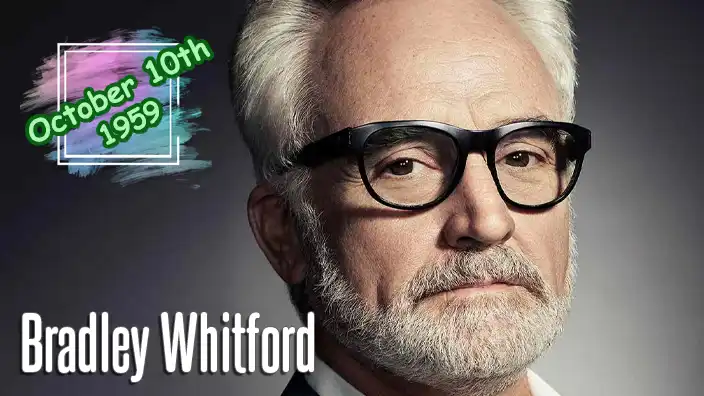
October 10, 1959, in Madison, Wisconsin
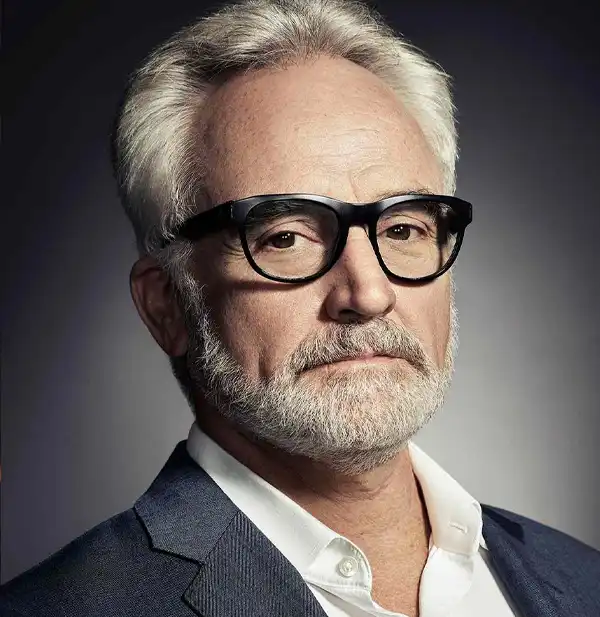
Bradley Whitford, born October 10, 1959, in Madison, Wisconsin, is an American actor, producer, and director whose distinguished career has encompassed theater, television, and motion pictures. Best known for portraying the quick-witted White House Deputy Chief of Staff Josh Lyman in NBC's The West Wing and the calculating Commander Joseph Lawrence in Hulu's The Handmaid's Tale, Whitford has earned three Primetime Emmy Awards and widespread recognition for his remarkable versatility. His performances range from idealistic political advisers and eccentric television executives to manipulative villains and morally conflicted authority figures. With his distinctive combination of intelligence, sharp comic timing, and emotional depth, Whitford has developed a reputation for making even thoroughly disagreeable characters fascinating to watch. His ability to deliver complicated dialogue at extraordinary speed has also made him particularly valuable to screenwriters who apparently believe actors should be able to speak without stopping to breathe.
Whitford grew up in Madison, Wisconsin, in a family that encouraged education, intellectual curiosity, and creative expression. His mother, Genevieve Louie Smith Whitford, was a poet and writer, while his father, George Van Norman Whitford, worked in education and administration. The family's interest in literature and public affairs helped shape his appreciation for language, storytelling, and social issues. As a young man, Whitford developed an enthusiasm for theater, discovering that performing offered an opportunity to explore different personalities and communicate ideas through dramatic expression. He attended Madison East High School, where his involvement in theatrical activities encouraged him to consider acting as a professional career. Although his later performances would frequently involve powerful political personalities, his own introduction to public speaking was considerably less intimidating than addressing a room full of fictional White House officials.
After completing high school, Whitford attended Wesleyan University in Middletown, Connecticut, where he studied English literature and theater. His academic education exposed him to classical and contemporary writing, providing a strong foundation for interpreting complex dramatic material. He graduated in 1981 and subsequently pursued advanced theatrical training at the prestigious Juilliard School in New York City. Juilliard's demanding curriculum emphasized voice, movement, character development, and the disciplined interpretation of dramatic texts. The experience helped Whitford refine his natural abilities while developing the technical skills necessary for a professional acting career. His education also established an appreciation for ensemble performance, a quality that would become particularly important during his years working alongside the distinguished cast of The West Wing.
Whitford's early professional career developed through theater, where he gained experience performing in productions that demanded both emotional intensity and precise delivery. His first professional stage appearance came in an Off-Broadway production of Sam Shepard's Curse of the Starving Class, alongside Kathy Bates. The play's examination of family dysfunction, economic uncertainty, and personal frustration provided a challenging introduction to professional theater. Working with experienced performers helped Whitford develop confidence and discipline, while the demanding material encouraged him to explore characters whose motivations were not always sympathetic or straightforward. His early theatrical work established a pattern that would continue throughout his career: an attraction to intelligent writing, complicated personalities, and situations in which apparently ordinary conversations could rapidly deteriorate into spectacular arguments.
His stage career expanded through appearances in productions including Shakespeare's Romeo and Juliet, Measure for Measure, and Coriolanus, along with contemporary works such as Three Days of Rain. Classical theater provided opportunities to develop his command of language and explore the relationship between character, motivation, and dramatic structure. Whitford became particularly effective at delivering lengthy passages of dialogue while maintaining a natural conversational rhythm, a skill that would later become essential to his television success. His theatrical experience also taught him the importance of responding to fellow performers rather than simply waiting for the next opportunity to speak. This ability contributed significantly to the believable relationships he would eventually create with his television colleagues.
A particularly important theatrical opportunity arrived in 1989 when Whitford appeared in the original Broadway production of A Few Good Men, written by Aaron Sorkin. The military courtroom drama explored questions of duty, authority, responsibility, and the moral consequences of following orders. Whitford portrayed Lieutenant Jack Ross, a military prosecutor involved in the investigation of a Marine's death. The production brought him into contact with Sorkin, whose distinctive writing style emphasized rapid dialogue, intellectual confrontation, and characters who frequently expressed themselves through elaborate arguments. Their professional relationship would eventually become one of the most significant collaborations of Whitford's career, although neither could have known that their future work would involve so many fictional White House meetings.
During the late 1980s and early 1990s, Whitford began establishing himself in film and television through supporting roles. His early film appearances included Adventures in Babysitting, in which he portrayed Mike Todwell, the unreliable boyfriend whose behavior helps set the film's chaotic events in motion. He subsequently appeared in Presumed Innocent, starring Harrison Ford, and Scent of a Woman, featuring Al Pacino. These productions provided opportunities to work alongside established Hollywood performers while developing his screen presence. His early roles frequently involved ambitious, arrogant, or socially unpleasant individuals, suggesting that casting directors had already recognized his ability to portray men whose confidence considerably exceeded their charm.
Whitford continued building his filmography with appearances in Philadelphia, A Perfect World, The Client, and Billy Madison, starring Adam Sandler. In Billy Madison, he portrayed Eric Gordon, an ambitious executive determined to prevent the title character from inheriting control of his father's business empire. Whitford embraced the character's smug personality and increasingly desperate schemes, creating a memorable comic antagonist. The role demonstrated his ability to make an unpleasant character entertaining without attempting to disguise his selfish intentions. Eric Gordon was the sort of executive who could turn an ordinary business meeting into a personal vendetta, making him an excellent candidate for promotion in certain fictional corporations.
His growing television experience included guest appearances in established series and supporting roles in dramatic productions. Whitford developed a reputation as a dependable character actor capable of handling complicated dialogue and portraying individuals whose outward confidence often concealed personal insecurities. Although his work attracted professional respect, widespread recognition remained elusive during the early stages of his screen career. Like many accomplished performers, he spent years moving between auditions, theatrical productions, and supporting appearances before encountering the role that would transform his professional circumstances. His persistence demonstrated the importance of maintaining a broad range of skills in an industry where even talented actors cannot predict which opportunity will lead to a major breakthrough.
That breakthrough arrived in 1999 when Aaron Sorkin cast Whitford as Josh Lyman in The West Wing, a political drama exploring the personal and professional lives of senior staff members working in the White House. The series starred Martin Sheen as President Josiah Bartlet and featured an outstanding ensemble including Allison Janney, Richard Schiff, John Spencer, Rob Lowe, Dulé Hill, and Janel Moloney. Whitford's character served as the White House Deputy Chief of Staff, a brilliant but frequently abrasive political strategist whose loyalty to the president and his colleagues was matched by an extraordinary capacity for sarcasm. Josh's intelligence, ambition, emotional vulnerability, and occasional spectacular lapses in judgment made him one of the show's most recognizable personalities.
One of the defining features of The West Wing was its distinctive dialogue, with characters frequently conducting rapid conversations while moving through the corridors of the White House. These celebrated walking-and-talking sequences became closely associated with Sorkin's writing and the show's visual style. Whitford proved particularly effective at delivering lengthy passages of complicated political dialogue while maintaining the appearance of spontaneous conversation. His character frequently argued with colleagues, challenged political opponents, and attempted to solve administrative crises before they developed into national embarrassments. The performances required considerable preparation, particularly when actors had to remember intricate dialogue while navigating corridors, doorways, and other performers moving in carefully coordinated patterns. For Whitford, years of theatrical training proved invaluable, although remembering where to turn while delivering an argument about federal legislation must occasionally have resembled an unusually complicated driving examination.
Josh Lyman's relationships with his colleagues provided much of the emotional and comic foundation of The West Wing. His friendship with Sam Seaborn, portrayed by Rob Lowe, and his complicated professional relationship with Toby Ziegler, played by Richard Schiff, created opportunities for sharp exchanges and moments of genuine loyalty. His interactions with White House Chief of Staff Leo McGarry, portrayed by John Spencer, frequently revealed Josh's insecurities beneath his confident exterior. Leo served as both a mentor and an authority figure, challenging Josh's impulsive behavior while recognizing his exceptional political instincts. Whitford's ability to balance arrogance with vulnerability helped prevent Josh from becoming merely an irritating know-it-all, although the character occasionally worked remarkably hard to make that distinction difficult.
One of the show's most popular relationships developed between Josh and his assistant, Donna Moss, portrayed by Janel Moloney. Their exchanges combined workplace comedy, emotional tension, mutual affection, and years of romantic uncertainty. Donna frequently challenged Josh's assumptions and exposed the weaknesses in his arguments, while Josh relied on her organizational abilities and personal loyalty far more than he initially acknowledged. The relationship gradually developed into one of the series' central emotional storylines, attracting considerable attention from viewers who hoped the characters would eventually recognize their feelings for one another. Their complicated romance demonstrated that even highly intelligent political professionals can spend years failing to understand matters that are perfectly obvious to everybody watching at home.
The series also explored Josh's psychological vulnerability, particularly following a traumatic shooting at a public event. Whitford delivered a powerful performance as his character struggled with post-traumatic stress disorder, revealing the emotional consequences of an experience that threatened his life and those of his colleagues. The storyline allowed Whitford to demonstrate dramatic abilities beyond the sharp humor and political confidence that initially defined Josh. His portrayal of emotional distress, denial, and gradual recognition of his need for help contributed to one of the show's most memorable episodes, "Noël." The performance illustrated how a character celebrated for intellectual control could become overwhelmed by experiences that resisted logical solutions, adding significant depth to Josh's personality.
The West Wing became one of the most acclaimed television dramas of its era, earning numerous awards and developing a devoted international audience. Its portrayal of political idealism, institutional conflict, and personal responsibility resonated with viewers interested in the workings of American government. Whitford's performance contributed substantially to the show's success, earning him the Primetime Emmy Award for Outstanding Supporting Actor in a Drama Series in 2001. He also received additional Emmy nominations and three consecutive Golden Globe nominations for his portrayal of Josh Lyman. The recognition established him as one of television's leading dramatic performers, confirming that years of theatrical training and supporting roles had prepared him for an exceptionally demanding character.
Whitford remained with The West Wing throughout its seven-season run, from 1999 to 2006, allowing Josh Lyman to develop from an ambitious White House strategist into a central figure in a presidential election campaign. During the show's later seasons, Josh became involved in supporting Congressman Matt Santos, portrayed by Jimmy Smits, as a presidential candidate. The storyline expanded the character's responsibilities while exploring the personal sacrifices associated with political ambition. Whitford's performance maintained the familiar combination of humor, impatience, and determination while revealing the emotional consequences of years spent working under extraordinary pressure. By the series finale, Josh had become one of the program's most fully developed characters, and Whitford's association with the role was firmly established in television history.
Following the conclusion of The West Wing, Whitford reunited with Aaron Sorkin for Studio 60 on the Sunset Strip, which premiered in 2006. The series explored the backstage politics and creative conflicts surrounding a fictional late-night sketch comedy program. Whitford portrayed Danny Tripp, a television producer attempting to manage professional pressures, personal difficulties, and the unpredictable personalities involved in producing live entertainment. Matthew Perry co-starred as Matt Albie, Danny's longtime creative partner and the show's head writer. Their relationship provided the emotional foundation of the series, combining professional loyalty with the frustrations of working in an industry where artistic ambition frequently collided with commercial expectations.
Although Studio 60 on the Sunset Strip attracted considerable attention because of its creative team and distinguished cast, it lasted only one season. The program received mixed critical reactions and struggled to maintain sufficient audience numbers despite its ambitious writing and performances. Nevertheless, Whitford's portrayal of Danny Tripp demonstrated his continued effectiveness with Sorkin's distinctive dialogue and his ability to create emotionally convincing professional relationships. The series also provided an opportunity to explore the entertainment industry from behind the scenes, where television executives and creative professionals frequently behaved with the same intensity as the political strategists portrayed in The West Wing. Apparently, deciding whether a comedy sketch should air could generate almost as much anxiety as negotiating an international diplomatic crisis.
Whitford continued exploring television comedy with the Fox series The Good Guys, in which he portrayed Detective Dan Stark opposite Colin Hanks. The series followed two mismatched police detectives whose contrasting personalities created both professional difficulties and comic opportunities. Whitford's character was an old-fashioned, mustachioed detective who approached modern police work with enthusiasm, questionable methods, and a fondness for outdated expressions. The role allowed Whitford to embrace broad comedy and physical characterization, moving considerably further from the sophisticated political strategist who had made him famous. Although the series had a brief run, it demonstrated his willingness to experiment with different television formats and characters.
His television work also included the ABC sitcom Trophy Wife, in which he portrayed Pete Harrison, a man attempting to manage relationships with his current wife, former spouses, and children. The comedy explored the complications of blended family life, providing Whitford with opportunities to combine domestic humor with the character's frequently unsuccessful attempts to maintain order. The series featured Malin Åkerman, Marcia Gay Harden, and Michaela Watkins, creating an ensemble built around contrasting personalities and family dynamics. Whitford's performance presented a more relaxed and affectionate character than many of his earlier roles, although Pete's household arrangements were sufficiently complicated to make a White House scheduling meeting appear refreshingly straightforward.
Whitford achieved another important television success through his appearances in Amazon's Transparent, a comedy-drama exploring family relationships, identity, and personal transformation. He portrayed Marcy, a transgender woman whose relationship with the show's central characters contributed to its examination of identity and self-expression. His performance earned the Primetime Emmy Award for Outstanding Guest Actor in a Comedy Series in 2015, marking his second Emmy victory. He subsequently portrayed the historical sexologist Magnus Hirschfeld in another episode, receiving an additional Emmy nomination. These performances demonstrated his willingness to undertake sensitive and unconventional material while exploring characters whose experiences differed considerably from those he had previously portrayed.
Whitford also continued appearing in feature films, including The Cabin in the Woods, a clever and unconventional horror production written by Joss Whedon and Drew Goddard. He portrayed Steve Hadley, one of two technicians overseeing a mysterious operation involving a group of young people visiting an isolated cabin. Alongside Richard Jenkins, Whitford delivered a performance that combined bureaucratic routine with increasingly disturbing revelations. The film satirized familiar horror conventions while presenting its sinister events through the perspective of employees who approached extraordinary violence as an ordinary workplace responsibility. Whitford's understated comic delivery proved particularly effective, creating humor through the contrast between horrifying circumstances and the mundane conversations of people apparently concerned with little more than completing another day at the office.
His film appearances also included Saving Mr. Banks, starring Emma Thompson and Tom Hanks. Whitford portrayed Don DaGradi, a Disney screenwriter involved in adapting P. L. Travers's Mary Poppins stories for the screen. The film explored the creative tensions surrounding the development of the beloved musical, particularly the disagreements between Travers and the Disney production team. Whitford's character contributed to the collaborative effort to transform the books into a successful motion picture, demonstrating the challenges of balancing artistic intentions with the practical requirements of filmmaking. His performance offered another example of his ability to portray intelligent professionals whose work depends on negotiation, persuasion, and the occasional exhausting argument.
One of Whitford's most memorable film performances came in Jordan Peele's acclaimed 2017 horror thriller Get Out. He portrayed Dean Armitage, a seemingly welcoming suburban father whose friendly behavior conceals deeply disturbing intentions. The film follows Chris Washington, played by Daniel Kaluuya, as he visits the family of his girlfriend and gradually discovers that the household's apparent hospitality masks a terrifying conspiracy. Whitford's performance was particularly effective because Dean initially appeared familiar and reassuring, using polite conversation and awkward attempts at friendliness to disguise his sinister motivations. His portrayal demonstrated how ordinary social behavior could become unsettling when audiences began recognizing the disturbing implications beneath apparently harmless remarks.
Get Out became a major critical and commercial success, earning widespread recognition for its inventive combination of psychological horror, social satire, and suspense. The film explored racism, exploitation, and the dangers concealed beneath outward expressions of acceptance, using genre conventions to examine contemporary social anxieties. Whitford's performance contributed significantly to its unsettling atmosphere, particularly because his character's cheerful manner contrasted so sharply with the horrors unfolding around him. The role represented another successful departure from his earlier television persona, establishing him as an actor capable of portraying villains whose greatest weapons were charm, intelligence, and an extraordinary talent for making guests regret accepting an invitation to dinner.
The same year, Whitford appeared in Steven Spielberg's The Post, portraying journalist and editor Arthur Parsons. The film dramatized the decision by The Washington Post to publish material from the Pentagon Papers during the Vietnam War, exploring questions of press freedom, government secrecy, and journalistic responsibility. Its distinguished cast included Meryl Streep and Tom Hanks, and the production received significant critical recognition. Whitford's participation reflected his continuing interest in stories involving institutions, public responsibility, and individuals confronting difficult ethical decisions. Although his role was smaller than his television leads, he contributed to an ensemble examining a significant moment in American journalism.
His later film credits included The Darkest Minds, Godzilla: King of the Monsters, and The Call of the Wild. In Godzilla: King of the Monsters, he portrayed Dr. Rick Stanton, a scientist working with the organization Monarch as enormous prehistoric creatures threaten human civilization. The role provided opportunities for Whitford's dry humor amid spectacular scenes of destruction, demonstrating that his comic timing remained effective even when the characters were confronting monsters capable of flattening entire cities. It was a considerable change from the corridors of the White House, although both environments involved emergencies, complicated chains of command, and individuals who were occasionally reluctant to listen to expert advice.
Whitford also appeared in the 2021 musical drama tick, tick... BOOM!, directed by Lin-Manuel Miranda. The film explored the early career and personal struggles of composer Jonathan Larson, portrayed by Andrew Garfield, before his breakthrough with the musical Rent. Whitford portrayed legendary composer Stephen Sondheim, whose encouragement and professional insight played an important role in Larson's artistic development. The performance connected Whitford's screen career with his longstanding theatrical background, allowing him to portray an influential figure in American musical theater. His interpretation emphasized Sondheim's intelligence, professional generosity, and appreciation for creative ambition, contributing to a film celebrating the dedication and uncertainty involved in pursuing an artistic career.
Another defining television role began in 2018 when Whitford joined Hulu's The Handmaid's Tale as Commander Joseph Lawrence. Based on Margaret Atwood's influential novel, the series depicts a dystopian society in which an authoritarian regime known as Gilead imposes severe restrictions on individual freedom, particularly the rights of women. Whitford's character is a powerful intellectual and architect of Gilead's economic system, whose complicated relationship with the regime creates considerable moral ambiguity. Unlike some of the show's more openly brutal authority figures, Lawrence frequently employs sarcasm, intellectual detachment, and calculated manipulation, making his motivations difficult to interpret.
Commander Lawrence became one of the series' most intriguing characters because of the contradictions between his intelligence, personal regrets, and continued involvement in an oppressive political system. Whitford portrayed him as a man capable of recognizing the destructive consequences of policies he helped establish, yet frequently unwilling or unable to accept full responsibility for his actions. His interactions with June Osborne, portrayed by Elisabeth Moss, created some of the show's most compelling dramatic exchanges. The characters frequently challenged one another through carefully measured conversations in which apparent cooperation could conceal conflicting objectives. Whitford's performance emphasized the danger of intellectual arrogance when separated from moral responsibility, presenting a character whose intelligence did not necessarily translate into wisdom.
The role also allowed Whitford to employ his distinctive dry humor within an otherwise intensely serious drama. Lawrence frequently delivered sarcastic observations and unsettling remarks that revealed his contempt for other officials while simultaneously demonstrating his own compromised moral position. These moments of dark comedy made the character unpredictable, allowing audiences to recognize his intelligence without necessarily trusting his intentions. Whitford's ability to balance humor with emotional complexity proved essential to the performance, preventing Lawrence from becoming a conventional villain or a straightforward figure of redemption. His portrayal demonstrated that some of television's most disturbing characters are those who understand the consequences of their actions yet continue making morally questionable decisions.
Whitford received the Primetime Emmy Award for Outstanding Guest Actor in a Drama Series in 2019 for his portrayal of Commander Lawrence, bringing his total Emmy victories to three. He subsequently received additional nominations for the role, reflecting the character's growing importance within the series. His performance helped establish Lawrence as one of the central figures in the show's later seasons, particularly as the story explored the internal contradictions and political struggles of Gilead. The series concluded with its sixth season in 2025, completing Whitford's involvement in a production that had become one of the defining television dramas of its period. His work provided another demonstration of his ability to transform a morally compromised authority figure into a character of considerable psychological complexity.
Whitford also expanded his responsibilities behind the camera by directing an episode of The Handmaid's Tale. His experience as a performer and his understanding of the show's characters provided a foundation for approaching the production from a different creative perspective. Directing required him to consider the relationships between acting, cinematography, pacing, and visual storytelling, extending his involvement beyond the interpretation of his own character. His work as a producer has similarly allowed him to participate in projects that reflect his professional interests and commitment to socially relevant storytelling. These activities demonstrate a career that has continued evolving rather than remaining confined to acting alone.
In addition to his dramatic television work, Whitford has remained active in comedy through guest appearances and recurring roles. He portrayed Roger Peralta, the unreliable father of Detective Jake Peralta, in the popular sitcom Brooklyn Nine-Nine. The role provided opportunities for awkward family comedy and emotional reconciliation, particularly as Roger attempted to rebuild his relationship with his son, played by Andy Samberg. Whitford's portrayal combined charm, irresponsibility, and occasional genuine affection, creating a character whose attempts at fatherhood were frequently undermined by his own behavior. The performance demonstrated that Whitford could make an entertainingly disappointing parent without resorting to the terrifying methods employed by some of his dramatic characters.
His more recent television work has included the AMC crime drama Parish, the Netflix thriller The Madness, and the political drama The Diplomat. In The Diplomat, Whitford portrayed Todd Penn, the husband of Vice President Grace Penn, played by Allison Janney. The casting reunited two performers whose chemistry had contributed significantly to the success of The West Wing, offering a particularly enjoyable connection for longtime viewers. Their appearances in the Netflix series demonstrated how effectively both actors could return to politically charged storytelling while portraying characters with very different relationships and responsibilities.
Whitford's portrayal of Todd Penn earned him a 2026 Primetime Emmy nomination for Outstanding Guest Actor in a Drama Series. The recognition brought his career total to nine Primetime Emmy nominations, including three victories. His continuing success in television demonstrates the durability of his acting career and his ability to remain relevant across changing genres and production formats. Rather than relying exclusively on the popularity of The West Wing, he has continued finding characters that challenge his abilities and introduce his work to new audiences. His professional journey also illustrates the importance of adaptability in an entertainment industry where audience expectations and storytelling conventions evolve continually.
Away from his professional commitments, Whitford has maintained an active interest in political and social issues, frequently participating in public discussions and advocacy initiatives. His political engagement has included support for Democratic candidates, voting rights, and organizations addressing social inequality. He has also supported charitable initiatives and documentary projects exploring the experiences of individuals confronting significant personal and social challenges. His work as an executive producer on the documentary Not Going Quietly reflected his interest in public advocacy and the personal stories behind political movements. These activities have become part of his public identity, although his acting career remains distinct from the political positions he expresses as a private citizen.
Whitford married actress Jane Kaczmarek in 1992, and the couple had three children before their divorce was finalized in 2010. He subsequently married actress Amy Landecker in 2019, establishing another family connection within the entertainment industry. Despite the public attention surrounding his career, Whitford has generally maintained boundaries between his professional activities and family life. His experiences as a father and husband have unfolded alongside decades of demanding production schedules, theatrical performances, and international promotional commitments. These personal responsibilities provide another dimension to an actor whose screen characters are frequently so consumed by professional ambition that their domestic lives become spectacularly complicated.
Throughout his career, Whitford has demonstrated a particular talent for portraying intelligent individuals whose personal weaknesses complicate their professional achievements. Josh Lyman's brilliance was frequently undermined by impatience and emotional insecurity, while Commander Lawrence's intellectual accomplishments existed alongside profound moral failures. Dean Armitage in Get Out concealed horrifying intentions beneath the appearance of suburban respectability, while Eric Gordon in Billy Madison transformed ordinary corporate ambition into increasingly absurd villainy. These characters differ enormously in genre and tone, yet each benefits from Whitford's ability to communicate confidence, calculation, and the possibility that something is going badly wrong beneath the surface.
His theatrical training remains evident in his command of dialogue, particularly when performing scenes involving rapid exchanges, emotional confrontation, or complicated arguments. Whitford frequently employs subtle changes in expression and vocal tone to reveal the motivations of his characters, allowing humor and tension to emerge naturally from the situation. His performances also demonstrate an appreciation for ensemble storytelling, particularly in productions where relationships between characters are as important as individual dramatic moments. These qualities have made him an effective collaborator with writers and directors who favor character-driven narratives, including Aaron Sorkin, Jordan Peele, and the creative teams behind The Handmaid's Tale.
Bradley Whitford's remarkable career illustrates how sustained dedication, versatility, and a willingness to embrace challenging material can produce an enduring place in American entertainment. From his early theatrical performances and supporting film roles to his Emmy-winning portrayal of Josh Lyman in The West Wing, his disturbing performance in Get Out, and his morally complicated Commander Lawrence in The Handmaid's Tale, he has consistently demonstrated an ability to bring intelligence, humor, and emotional depth to diverse characters. His three Primetime Emmy Awards, extensive filmography, and continuing involvement in television, theater, and production reflect a professional life characterized by creative ambition and adaptability. And while Whitford has spent a considerable portion of his career portraying men involved in political crises, government conspiracies, and institutional disasters, audiences can at least take comfort in knowing that when the cameras stop rolling, somebody else is responsible for cleaning up the mess.