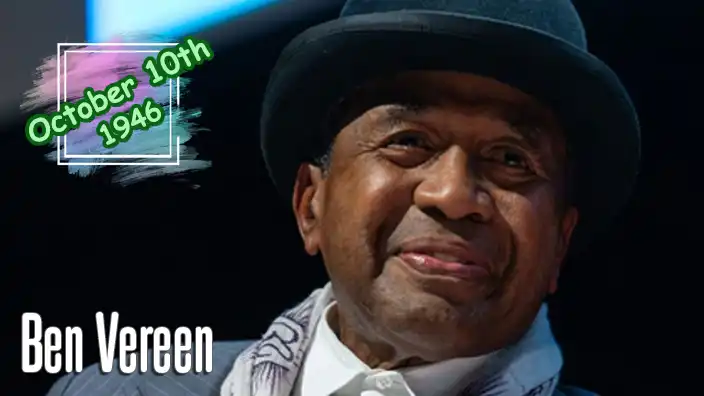
October 10, 1946, in Laurinburg, North Carolina
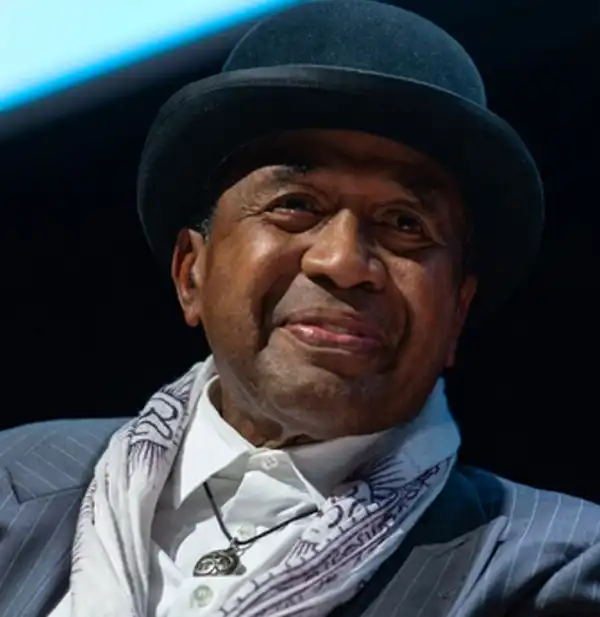
Benjamin Augustus Vereen, born October 10, 1946, in Laurinburg, North Carolina, is an American actor, singer, dancer, and entertainer whose remarkable career has spanned Broadway theater, television, motion pictures, and live concert performances. Best known for his Tony Award-winning portrayal of the Leading Player in the original Broadway production of Pippin and his memorable performance as Chicken George in the groundbreaking television miniseries Roots, Vereen has earned recognition as one of the most versatile performers in American entertainment. His exceptional dancing ability, powerful singing voice, charismatic personality, and dramatic range have allowed him to move comfortably between musical comedy and serious historical drama. Throughout a career marked by professional triumphs and profound personal challenges, Vereen has remained closely associated with the energy, discipline, and expressive freedom of American musical theater.
Although born in North Carolina, Vereen was raised in the Bedford-Stuyvesant neighborhood of Brooklyn, New York, after being adopted by James and Pauline Vereen. His adoptive father worked in a paint factory, while his mother was employed as a domestic worker, and the family lived far removed from the glamour of Broadway. As a child, Vereen demonstrated a natural enthusiasm for music, movement, and performance, entertaining friends and relatives with his developing talents. His early surroundings exposed him to the rich musical traditions of African American communities, including gospel, jazz, rhythm and blues, and popular dance. These influences helped shape the expressive performance style that would later distinguish him on stage. Long before audiences paid good money to watch him dance, Vereen was already discovering that remaining perfectly still was not necessarily his strongest professional qualification.
Recognizing his unusual abilities, his family encouraged him to pursue formal artistic training. Vereen attended New York City's prestigious High School of Performing Arts, an institution known for developing talented young actors, dancers, and musicians. There, he received rigorous instruction in ballet, modern dance, drama, and musical performance, gaining the technical foundation necessary for a professional theatrical career. His education emphasized discipline, physical control, musical interpretation, and the importance of communicating emotion through movement. The demanding curriculum required students to combine academic responsibilities with hours of rehearsal and performance preparation. For Vereen, the experience provided an opportunity to transform natural talent into professional skill, establishing habits that would sustain him through the demanding schedules of Broadway productions.
After completing his formal education, Vereen continued developing his theatrical skills through professional training and performance opportunities. He studied dance under distinguished instructors, including Martha Graham, whose influential approach to modern dance emphasized emotional expression and physical storytelling. The combination of classical technique and contemporary movement helped Vereen develop an unusually flexible style, allowing him to perform everything from elegant theatrical choreography to energetic jazz routines. His early professional experiences included appearances in stage productions and entertainment venues where performers were expected to demonstrate versatility rather than specialize in a single discipline. This broad foundation would prove particularly valuable as Broadway musicals increasingly demanded performers capable of acting, singing, and dancing with equal confidence.
Vereen's major theatrical breakthrough came through the musical Hair, the revolutionary production that challenged traditional Broadway conventions with its rock music, countercultural themes, and unconventional staging. He joined the original Broadway cast in 1968, performing in a show that became closely associated with the social and cultural upheavals of the decade. Hair explored issues including war, racial identity, sexuality, personal freedom, and generational conflict, presenting them through an energetic mixture of music, dance, and dramatic expression. For Vereen, the production offered an opportunity to participate in a theatrical movement that was redefining what American musical theater could accomplish. It also provided a particularly lively introduction to Broadway, where the costumes were occasionally minimal, the music was unapologetically loud, and the traditional rules of respectable theatrical behavior were enthusiastically reconsidered.
His association with Hair continued when he portrayed Claude in the Los Angeles production, further strengthening his reputation as a dynamic young performer. The musical's unconventional style suited his expressive abilities, allowing him to combine technical dancing with emotionally charged singing and acting. Working in such an influential production exposed Vereen to audiences and theatrical professionals who recognized his potential for larger roles. The experience also demonstrated his willingness to participate in material that addressed difficult social issues rather than limiting himself to conventional entertainment. As his career progressed, this combination of artistic ambition and social awareness became an important feature of his professional identity.
In 1969, Vereen joined the Broadway production of Jesus Christ Superstar as Judas Iscariot, one of the musical's most demanding and emotionally complex characters. The production, created by Andrew Lloyd Webber and Tim Rice, presented the final days of Jesus Christ through contemporary rock music and dramatic theatrical staging. Vereen's portrayal required considerable vocal power, emotional intensity, and physical stamina, particularly during musical sequences exploring Judas's conflicted motivations and tragic fate. His performance attracted critical recognition and earned him a Tony Award nomination for Best Featured Actor in a Musical. The role established him as a serious Broadway talent capable of handling substantial dramatic responsibilities while maintaining the musical and physical precision required by a major theatrical production.
The defining stage achievement of Vereen's career arrived in 1972 when he originated the role of the Leading Player in the Broadway production of Pippin, directed and choreographed by the legendary Bob Fosse. With music and lyrics by Stephen Schwartz and a book by Roger O. Hirson, the musical follows a young prince searching for meaning, fulfillment, and an extraordinary life. The Leading Player serves as the mysterious master of ceremonies, guiding the story while manipulating its characters and drawing the audience into an increasingly unsettling theatrical spectacle. The role demanded a performer who could sing, dance, act, charm, and intimidate, sometimes within the same musical number. Vereen's combination of athletic movement, precise timing, and magnetic stage presence made him an ideal choice for the character.
Working with Bob Fosse proved enormously influential in Vereen's artistic development. Fosse's choreography was characterized by distinctive body positions, controlled gestures, intricate rhythms, and an unmistakable sense of theatrical style. Vereen mastered these demanding techniques while bringing his own personality and energy to the performance, creating a character who was simultaneously entertaining, seductive, and disturbing. His interpretation of the Leading Player became one of the most celebrated performances in Broadway musical history, helping establish Pippin as a major theatrical success. The production's choreography and staging also demonstrated how movement could communicate psychological complexity rather than merely provide decoration between songs. For Vereen, it was the ideal opportunity to combine the technical discipline acquired through years of training with the expressive freedom that had always characterized his performances.
In 1973, Vereen received the Tony Award for Best Actor in a Musical for his performance in Pippin, confirming his position among Broadway's leading entertainers. The award represented an extraordinary achievement for a performer who had risen from modest beginnings in Brooklyn to the highest levels of American musical theater. His portrayal of the Leading Player became closely associated with the production, influencing subsequent interpretations of the character and helping establish its enduring theatrical appeal. The success also brought him increased attention from television and film producers, who recognized that his distinctive combination of musical ability and dramatic presence could translate beyond the Broadway stage. Winning a Tony Award was certainly an impressive accomplishment, although anyone who had watched Vereen perform might reasonably have wondered whether the trophy should also have included a special allowance for the punishment inflicted upon his dancing shoes.
Vereen's transition into television included appearances on variety programs, musical specials, and dramatic productions that introduced his talents to audiences far beyond New York's theater district. His energetic performance style was particularly effective on television, where close-up photography allowed viewers to appreciate the facial expressions and subtle gestures that complemented his larger theatrical movements. He appeared on popular entertainment programs and developed a reputation as a versatile guest performer capable of delivering musical numbers, comedy routines, and dramatic material. His increasing television exposure helped establish him as a familiar personality in American households, preparing the way for the role that would bring him some of the widest recognition of his career.
That opportunity arrived in 1977 when Vereen portrayed Chicken George Moore in Roots, the landmark television adaptation of Alex Haley's novel Roots: The Saga of an American Family. The miniseries traced several generations of an African American family, beginning with the capture and enslavement of Kunta Kinte in Africa and continuing through the experiences of his descendants in the United States. Vereen's character, Chicken George, was a charismatic and resourceful man whose skill in training fighting roosters became central to his family's circumstances. The role combined humor, charm, resilience, and emotional depth, allowing Vereen to demonstrate dramatic abilities that audiences familiar with his musical performances might not have fully appreciated.
Roots became a cultural phenomenon, attracting enormous television audiences and encouraging widespread discussion of slavery, racial injustice, family history, and African American identity. Its historical themes were presented through intensely personal stories, making the experiences of enslaved individuals and their descendants central to a major American television event. Vereen's performance as Chicken George contributed significantly to the production's emotional impact, presenting a character whose humor and ingenuity existed alongside the harsh realities of enslavement. His portrayal earned a Primetime Emmy Award nomination, demonstrating that his talent extended well beyond musical entertainment. The success of Roots also helped establish the television miniseries as a powerful format for ambitious historical storytelling.
The character of Chicken George remains one of Vereen's most recognizable dramatic performances, partly because of the complexity he brought to the role. George's ability to entertain and charm others served as both a personal characteristic and a means of navigating a society in which his freedom was severely restricted. Vereen conveyed the character's intelligence, affection for his family, and determination to survive circumstances beyond his control. The performance required him to balance moments of humor with scenes of considerable emotional intensity, demonstrating the importance of dramatic restraint as well as expressive energy. For audiences accustomed to seeing Vereen command a Broadway stage through dazzling choreography, Roots revealed a performer equally capable of commanding attention through stillness, vulnerability, and carefully delivered dialogue.
Vereen subsequently appeared in Roots: The Next Generations, continuing his association with the influential historical saga. His work in these productions contributed to a broader transformation in American television, as networks increasingly recognized the importance of presenting complex stories centered on African American experiences. The extraordinary public response to Roots demonstrated that historical drama could achieve both commercial success and cultural significance. Vereen's involvement became an important part of his professional legacy, linking his name to a production that influenced television storytelling and public discussions of American history for generations.
His film career included the 1975 musical comedy Funny Lady, starring Barbra Streisand as entertainer Fanny Brice. Vereen portrayed Bert Robbins, contributing his musical abilities to a production that explored the personal and professional life of one of America's most celebrated stage performers. The film provided an opportunity to work alongside established Hollywood personalities while participating in elaborate musical sequences. He later appeared in All That Jazz, Bob Fosse's semi-autobiographical musical drama starring Roy Scheider as a driven theatrical director and choreographer. Vereen portrayed O'Connor Flood, a performer within the film's fictional entertainment world, further strengthening his association with Fosse's distinctive artistic vision.
All That Jazz explored the exhausting demands of theatrical production, the destructive consequences of obsessive ambition, and the complicated relationship between artistic creativity and personal well-being. Its elaborate musical sequences combined fantasy, autobiography, and theatrical spectacle, creating a visually distinctive examination of show business. Vereen's participation reflected his long professional connection with Fosse and his familiarity with the physical and emotional demands of Broadway performance. The film received widespread critical recognition and several Academy Awards, becoming an influential work in the history of musical cinema. For performers who had experienced the relentless rehearsal schedules and physical demands of professional theater, its portrayal of backstage exhaustion was probably less a work of fiction than an unusually elaborate documentary.
Vereen also became a familiar presence in family entertainment through appearances in television programs and films aimed at younger audiences. His credits included The Muppet Movie, in which he made a cameo appearance, and other productions that allowed him to showcase his playful personality. His willingness to participate in lighthearted entertainment reflected a belief that performance should reach audiences of different backgrounds and generations. Whether appearing alongside celebrated dramatic actors or sharing the screen with puppets, Vereen approached his work with professional enthusiasm. After all, a performer who has survived the demanding choreography of Bob Fosse is unlikely to be intimidated by a conversation with Kermit the Frog.
During the 1980s, Vereen continued working extensively in television, including starring as the title character in Tenspeed and Brown Shoe, opposite Jeff Goldblum. The series followed an unlikely partnership between a streetwise private investigator and a more conventional aspiring detective, combining mystery, comedy, and character-driven entertainment. Vereen's performance demonstrated his ability to lead a television series outside the musical format, relying on personality, timing, and dramatic interaction rather than elaborate choreography. Although the program had a relatively brief run, it attracted a following and remains an interesting example of the unconventional television projects in which Vereen participated.
He also portrayed the character E. L. "Tenspeed" Turner in other television appearances and continued making guest appearances on established programs. His television work eventually included roles in Webster, The Fresh Prince of Bel-Air, Star Trek: The Next Generation, and numerous dramatic and comedy productions. These appearances demonstrated his ability to adapt to changing television styles while maintaining the distinctive personality that audiences associated with his stage career. In The Fresh Prince of Bel-Air, he portrayed Lou Smith, the estranged father of Will Smith's character, in a memorable episode exploring abandonment and family disappointment. The emotionally charged storyline became one of the sitcom's most frequently remembered dramatic moments, showing that Vereen could make a lasting impression without singing a note or taking a single dance step.
One of the most difficult periods of Vereen's life occurred in 1992 when he experienced a series of devastating personal events. His teenage daughter Naja died in a traffic accident, bringing profound grief to the family. Later that year, Vereen himself suffered life-threatening injuries after being struck by a vehicle while walking along a California highway. The accident caused severe physical trauma and required extensive medical treatment and rehabilitation. For a performer whose career depended heavily on physical movement, the injuries presented an especially frightening challenge. His recovery demanded determination, patience, and prolonged therapy, with no guarantee that he would regain the abilities necessary to resume his professional career.
Vereen's eventual return to performance became an important chapter in his life story. Rehabilitation required him to rebuild physical strength, coordination, and confidence, while also coping with the emotional consequences of his personal losses. His determination to resume dancing and performing attracted public attention, transforming his recovery into an example of resilience in the face of extraordinary adversity. Although his physical abilities had been severely challenged, he gradually returned to the stage and television, demonstrating that his professional identity extended beyond the athletic accomplishments for which he had become famous. His experiences also encouraged him to speak publicly about recovery, rehabilitation, and the importance of maintaining hope during difficult circumstances.
His return to Broadway included a prominent role in the 1992 revival of Jelly's Last Jam, a production celebrating the life and music of jazz pioneer Jelly Roll Morton. Vereen later appeared in the long-running musical Chicago, portraying the flamboyant lawyer Billy Flynn. The role allowed him to combine theatrical charisma with musical performance, presenting a character whose success depended largely on his ability to manipulate public attention. Vereen's portrayal reflected his deep understanding of showmanship, demonstrating that the skills required to command a courtroom in a Broadway musical are not entirely different from those needed to captivate an audience in a concert hall. Both, after all, depend on timing, confidence, and knowing exactly when to make an entrance.
Vereen's theatrical work also included appearances in Wicked, in which he portrayed the Wonderful Wizard of Oz. The production reimagines the familiar story of Oz through the experiences of characters traditionally identified as villains, exploring friendship, political manipulation, prejudice, and the nature of reputation. Vereen's role as the Wizard provided an opportunity to portray a charming but morally complicated authority figure, combining humor and theatrical confidence with the character's underlying weaknesses. His involvement introduced his talents to younger theatergoers, many of whom were discovering Broadway through contemporary productions rather than the classic musicals associated with his early career. It also allowed Vereen to demonstrate that his stage presence remained effective even when the elaborate dancing was left primarily to other members of the cast.
Beyond Broadway, Vereen has enjoyed an extensive career as a concert performer, presenting musical programs that combine songs, dance, personal stories, and reflections on his experiences in entertainment. His concerts have celebrated the traditions of American musical theater, jazz, and popular music while incorporating material associated with his own professional achievements. These performances have allowed him to connect directly with audiences, sharing both the excitement of live entertainment and the personal experiences that have shaped his life. His distinctive approach often combines humor with more reflective moments, demonstrating the emotional range that has characterized his theatrical work. Audiences attending a Ben Vereen concert are therefore likely to encounter considerably more than a conventional collection of familiar songs.
Vereen has also devoted attention to education, mentorship, and charitable activities, particularly initiatives supporting young performers and individuals facing personal challenges. His experiences with serious injury and rehabilitation have informed his public advocacy for health awareness and recovery programs. He has participated in events and organizations promoting access to the performing arts, recognizing the importance of artistic education in developing confidence, discipline, and creative expression. His own journey from a talented child in Brooklyn to a celebrated Broadway performer illustrates the opportunities that can emerge when young people receive encouragement and professional training. By sharing his experiences, Vereen has sought to inspire others to pursue their ambitions despite obstacles that may initially appear overwhelming.
His professional achievements have received numerous honors, including his Tony Award, television award nominations, and recognition from organizations celebrating contributions to American entertainment. In 2012, Vereen was inducted into the Theater Hall of Fame, acknowledging his distinguished contributions to the American stage. He has also received honorary academic recognition and awards celebrating his artistic achievements and community involvement. These honors reflect a career that has influenced multiple generations of performers, particularly those seeking to combine dancing, singing, and acting within a single professional identity. His association with Broadway classics such as Pippin and Jesus Christ Superstar remains especially significant, as contemporary performers continue studying the theatrical styles and techniques that helped make those productions successful.
Vereen's career has not been without controversy. In 2018, several actresses involved in a Florida production of Hair directed by Vereen publicly alleged inappropriate conduct during rehearsals, including unwanted sexual advances. Vereen subsequently apologized for his conduct, acknowledging that his actions had created an uncomfortable environment for members of the production. The allegations became part of the wider public discussion surrounding professional boundaries and accountability within the entertainment industry. While his artistic accomplishments remain significant, this episode also forms part of the public record of his career, illustrating the importance of considering professional conduct alongside creative achievement.
Throughout his professional life, Vereen has demonstrated an unusual ability to move between different forms of entertainment while maintaining a recognizable personal style. His early Broadway performances established him as an extraordinary dancer and musical actor, while Roots revealed his capacity for emotionally demanding dramatic roles. His film appearances, television performances, concert tours, and theatrical revivals subsequently demonstrated a versatility that few performers achieve. His work has also connected several important periods in American entertainment history, from the experimental musicals of the late 1960s and the groundbreaking television dramas of the 1970s to contemporary Broadway productions and modern television.
One of Vereen's most enduring contributions has been his influence on the development of musical theater performance. His work with Bob Fosse helped establish a distinctive approach to choreography in which physical movement, emotional expression, and theatrical storytelling became inseparable. His portrayal of the Leading Player in Pippin remains an important reference point for performers studying the musical, while his dramatic work demonstrates the value of developing skills beyond any single specialty. The ability to sing, dance, and act at a professional level requires extraordinary dedication, and Vereen's achievements illustrate the rewards of combining technical discipline with individual artistic expression.
Ben Vereen's remarkable journey through American entertainment encompasses some of Broadway's most influential musicals, one of television's most important historical dramas, memorable film appearances, and decades of live performance. His Tony Award-winning work in Pippin, his emotionally compelling portrayal of Chicken George in Roots, and his contributions to productions such as Jesus Christ Superstar, All That Jazz, Chicago, and Wicked have secured his place in the history of American performing arts. His career has included extraordinary successes, devastating personal losses, difficult recoveries, and public controversies, reflecting a life considerably more complicated than the dazzling performances audiences have witnessed on stage. Yet his influence on musical theater and television remains substantial, and his work continues to provide inspiration and material for discussion among performers and audiences alike. For Ben Vereen, the stage has never been merely a place to stand beneath bright lights; it has been a place to communicate stories through music, movement, and emotion. And after decades of performing, he has demonstrated that the true secret of show business is not simply knowing how to make an entrance, but understanding how to hold an audience's attention long after the music begins.