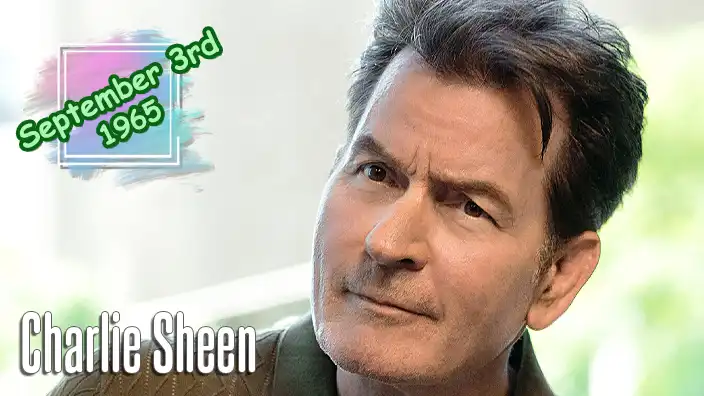
September 3, 1965, in Melbourne, Australia
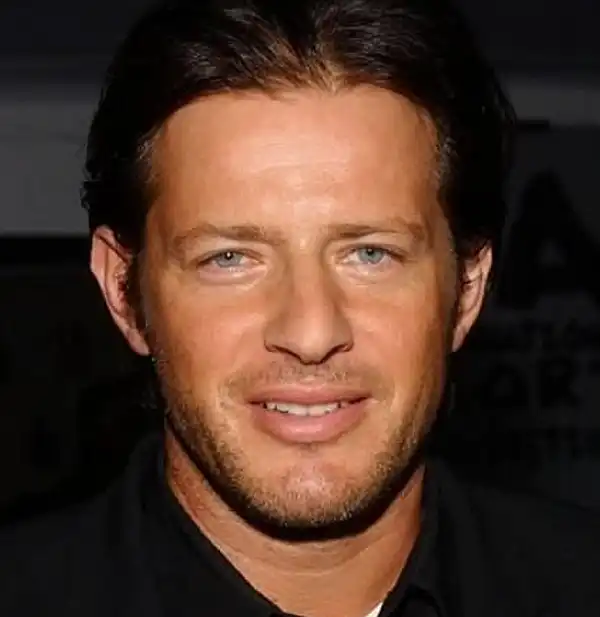
Costas Mandylor was born Costas Theodosopoulos on September 3, 1965, in Melbourne, Victoria, Australia, to Greek immigrant parents Louise and Yannis Theodosopoulos. His father worked as a taxi driver, and Greek culture was an important part of the household in which Costas and his younger brother, fellow actor Louis Mandylor, were raised.
The surname Mandylor was adopted professionally and was derived from their mother's maiden name, Mandylaris. It certainly gave Hollywood casting directors something considerably easier to fit across a movie poster than Theodosopoulos, although Costas has always remained strongly connected to his Greek heritage.
Acting was not Mandylor's original career plan. As a young man, his ambitions were centered on soccer, or football as Australians and most of the rest of the planet sensibly call it. He played professionally in Australia and also spent time pursuing the sport in Europe.
Unfortunately, injuries interfered with his prospects of establishing a long-term professional soccer career. It was an unwelcome development at the time, but it eventually redirected Mandylor toward acting. Had his legs remained cooperative, horror fans might never have met Mark Hoffman — although several fictional victims would presumably have been grateful.
Mandylor moved to the United States and began pursuing acting during the 1980s. Like most newcomers to Hollywood, he did not immediately receive a studio office, reserved parking space and starring vehicle. He worked at establishing himself and gradually began landing screen roles.
An important early opportunity arrived with Triumph of the Spirit, the 1989 drama directed by Robert M. Young and starring Willem Dafoe. The film told the true story of Greek Jewish boxer Salamo Arouch, who was forced to fight other prisoners for the entertainment of guards at Auschwitz during the Holocaust. Mandylor appeared as Avram Arouch.
A considerably more visible role followed in The Doors, Oliver Stone's 1991 film about Jim Morrison and the legendary rock band. Mandylor played Count, giving the Australian actor another opportunity to work in a major American production relatively early in his career.
His breakthrough, however, came on television.
In 1992, Mandylor was cast as Officer Kenny Lacos in Picket Fences, David E. Kelley's acclaimed CBS drama about the inhabitants of the fictional town of Rome, Wisconsin. The series combined police procedural, courtroom drama, family stories and the sort of bizarre local incidents that suggested Rome's municipal authorities probably deserved considerably better retirement plans.
Mandylor's Kenny Lacos was one of the officers working under Sheriff Jimmy Brock, played by Tom Skerritt. The ensemble also included Kathy Baker, Lauren Holly, Holly Marie Combs and Fyvush Finkel.
Picket Fences became one of the most critically acclaimed television dramas of the 1990s, winning numerous Emmy Awards during its run. Mandylor remained a regular cast member for several seasons, giving him widespread television exposure and establishing him as a recognizable character actor.
The role also demonstrated a quality that would become useful later in his career. Mandylor could project authority while leaving audiences uncertain about exactly what was going on beneath the surface. With Kenny Lacos that quality remained within the relatively respectable boundaries of law enforcement. Mark Hoffman would eventually take it somewhere considerably darker.
Mandylor continued working steadily after Picket Fences, appearing in numerous films and television productions. His credits included projects such as Mobsters, Almost Dead, Fist of the North Star, Last Exit to Earth, The Fury Within, Players, Secret Agent Man and Charmed.
He also appeared in the 1995 science-fiction action film Virtuosity, starring Denzel Washington and Russell Crowe. Mandylor played John Donovan in a story involving a virtual-reality serial killer who escapes into the physical world. Compared with what Mandylor would eventually encounter in Saw, an artificial-intelligence murderer almost qualifies as a warm-up exercise.
Over the following years, Mandylor became the definition of a working character actor. He moved between television movies, independent productions, action films, thrillers and guest appearances. He was rarely confined to a single genre, although crime stories and darker dramatic material proved particularly compatible with his screen presence.
Then came Saw.
The original Saw, released in 2004, had been created by Australian filmmakers James Wan and Leigh Whannell and became a surprise horror phenomenon. Its success produced a rapidly expanding franchise centered on John Kramer, better known as Jigsaw, played by Tobin Bell.
Mandylor entered the series as Detective Mark Hoffman in Saw III in 2006. Initially, Hoffman appeared to be another law-enforcement officer investigating the gruesome crimes associated with Jigsaw.
Anyone familiar with the Saw franchise will immediately recognize that the word "initially" is doing quite a lot of work in that sentence.
Hoffman's importance expanded dramatically in Saw IV. The film revealed that his relationship with Jigsaw was considerably more complicated than anyone had previously understood. Hoffman was not merely investigating the killings. He had become involved with John Kramer and eventually emerged as one of Jigsaw's apprentices.
The character's history gradually unfolded across several films. Hoffman had suffered the murder of his sister, Angelina, and became consumed with anger after her killer was released from prison. He constructed a Jigsaw-style trap to kill the murderer, attempting to make the death look like one of Jigsaw's crimes.
There was, however, one rather serious flaw in Hoffman's plan.
The real Jigsaw noticed.
John Kramer confronted Hoffman and forced him into becoming an apprentice. From there, Hoffman became increasingly entangled in Jigsaw's philosophy and operations, although the two men differed significantly in their motivations. Kramer insisted that his traps were intended to make victims appreciate life by forcing them to confront their behavior. Hoffman increasingly demonstrated that he was perfectly comfortable with the killing part whether anybody learned a useful lesson or not.
Mandylor's Hoffman became progressively more important following the death of John Kramer. In Saw V, Hoffman moved toward the center of the story while FBI Agent Peter Strahm, played by Scott Patterson, began suspecting his involvement.
The conflict between Hoffman and Strahm produced some of the franchise's most memorable confrontations. It also demonstrated a fundamental rule of the Saw universe: when somebody leaves detailed instructions telling you to climb voluntarily into a suspicious-looking glass box, ignoring those instructions may not be the brilliant display of independence it initially appears to be.
Hoffman survived and returned in Saw VI, where his secret increasingly threatened to unravel. Investigators were closing in, evidence was accumulating, and Hoffman's relationship with Jigsaw's widow, Jill Tuck, became particularly dangerous.
Jill eventually placed Hoffman into the infamous reverse bear trap, an apparatus familiar to fans since the earliest days of the franchise. Unlike Amanda Young's original test, Hoffman was given little realistic opportunity to escape.
He escaped anyway.
That survival helped cement Hoffman as one of the franchise's most formidable characters. Injured, furious and considerably less interested in Jigsaw's philosophical niceties, he returned in Saw 3D, also known as Saw: The Final Chapter, in 2010.
Hoffman's campaign in that film became increasingly brutal as he pursued Jill and attempted to eliminate anyone standing between him and revenge. His story eventually came full circle when Dr. Lawrence Gordon, played by Cary Elwes and unseen in the franchise since the original Saw, captured Hoffman.
Gordon chained Hoffman inside the dilapidated bathroom from the first movie and threw away the hacksaw before leaving him in darkness.
For a franchise built around elaborate mechanical traps, there was something wonderfully old-fashioned about solving the Hoffman problem with a chain, a locked door and extremely poor bathroom maintenance.
Mandylor's performance helped make Hoffman one of the most recognizable characters outside John Kramer himself. Whereas Tobin Bell played Jigsaw with eerie calm and philosophical certainty, Mandylor gave Hoffman a harder, more physical presence. Hoffman often seemed less interested in explaining the moral architecture of a trap than ensuring it accomplished its intended purpose.
The character also inspired a substantial following among Saw fans. His grim expressions, ability to survive seemingly impossible situations and increasingly ruthless behavior turned Hoffman from a supporting detective into one of the central figures of the franchise's mythology.
Mandylor eventually returned to the role in Saw X, released in 2023. The film takes place chronologically between the events of the original Saw and Saw II, allowing Tobin Bell's John Kramer and Shawnee Smith's Amanda Young to return prominently despite events that occurred later in the series.
Hoffman's appearance was brief but enormously welcome to longtime fans. His return also demonstrated the remarkable longevity of the character. More than fifteen years after Mandylor first appeared as Hoffman, audiences immediately recognized the voice and understood exactly what it meant.
Outside Saw, Mandylor has maintained the prolific working career he established long before entering Jigsaw's universe. His filmography includes scores of productions across action, crime, drama, horror and thriller genres.
He has appeared in projects including Sinners and Saints, The Blackout, Once Upon a Time in Brooklyn, The Horde, Death Count, Cosmic Sin and numerous independent films. The sheer volume of his credits reflects the career of an actor who has consistently worked rather than depending entirely upon one famous franchise.
Mandylor has also appeared alongside his younger brother Louis Mandylor, himself a prolific actor known for films including My Big Fat Greek Wedding. The brothers have occasionally shared the screen, providing the comparatively rare Hollywood circumstance in which casting two Australian actors of Greek heritage does not require looking beyond one family.
Yet Mark Hoffman inevitably remains Costas Mandylor's signature character. The role grew far beyond its introduction in Saw III. What began as another detective connected to the Jigsaw investigation developed into an apprentice, antagonist, successor and ultimately one of the franchise's principal villains.
That progression required Mandylor to reveal the character gradually. Early Hoffman could plausibly stand among police officers without immediately announcing himself as a psychopath. Later Hoffman was colder, more calculating and increasingly comfortable with violence. By the time his secret was fully exposed, the respectable detective had almost completely disappeared.
The Saw films are famous for elaborate traps and gruesome surprises, but their continuing popularity also depends upon an unusually tangled mythology. Characters who appear briefly in one installment may turn out several movies later to have been standing three feet away from something enormously important. Hoffman became one of the primary threads holding that expanding story together.
For Mandylor, the franchise provided something especially valuable to a character actor: a supporting role that kept growing. Instead of appearing once and disappearing into horror history, he returned repeatedly, eventually becoming essential to the continuing story.
Born on September 3, Costas Mandylor has traveled an unusual road from Melbourne and professional soccer ambitions to American television and one of modern horror cinema's most enduring franchises. Picket Fences established him with mainstream television audiences, decades of film and television work demonstrated his versatility, and Mark Hoffman gave horror fans a character they continue debating, quoting and occasionally demanding to see again.
Not bad for a soccer player whose injuries forced him to reconsider his career.
Although, considering what happens to knees, ankles and practically every other available body part in a Saw movie, professional football may actually have been the safer occupation.