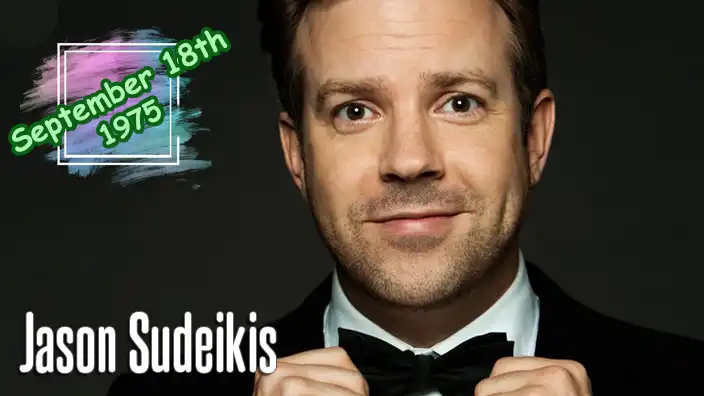
September 18, 1975, in Fairfax, Virginia
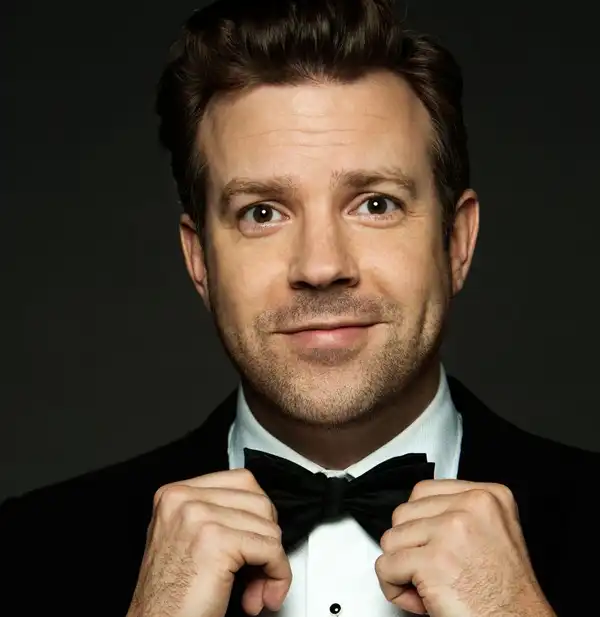
Jason Sudeikis has built a career around a particularly useful talent: he can walk into a scene looking completely confident while playing a man who may have absolutely no idea what he is doing. Sometimes that man is an incompetent husband, sometimes an enthusiastic criminal, sometimes a politician, and sometimes an American football coach who arrives in England knowing approximately three things about soccer. Somehow, Sudeikis usually makes the fellow worth rooting for.
Daniel Jason Sudeikis was born on September 18, 1975, in Fairfax, Virginia, and grew up in Overland Park, Kansas. Long before Hollywood came calling, basketball was an important part of his life. He attended Fort Scott Community College on a basketball scholarship, but the classroom-and-basketball route ultimately gave way to something considerably less predictable: improvisational comedy.
Sudeikis began performing with ComedySportz in Kansas City before heading into the broader world of improv. He studied and performed in Chicago, including work connected with the Annoyance Theatre and ImprovOlympic, now known as iO. He also performed with Boom Chicago in Amsterdam and became part of The Second City Touring Company. In the early 2000s, he was among the founding members of The Second City Las Vegas.
That background was important. Improvisational comedy requires performers to listen closely, react instantly and build upon whatever absurdity has just been thrown at them. There is no opportunity to stop the scene and announce that everyone should please return to page 17 because somebody has wandered off script. Those skills would become fundamental to Sudeikis' later work, particularly his ability to make characters seem spontaneous even when every beat has been carefully constructed.
His big break arrived through Saturday Night Live, although not initially in front of the camera. Sudeikis joined SNL as a writer in 2003. He occasionally appeared in small roles before becoming a featured performer in 2005 and later a repertory cast member.
It turned out that keeping him behind the scenes would have been a considerable waste.
During his years on Saturday Night Live, Sudeikis became one of the show's most versatile performers. He played an assortment of original characters and celebrity impressions and frequently appeared in political sketches. Among his better-known impressions were Joe Biden and Mitt Romney, giving him the unusual professional distinction of pretending to be politicians from both sides while millions of people watched on Saturday night.
His SNL work also revealed one of his comic strengths: Sudeikis did not always need to be the loudest person in a sketch. He could play smug, irritated, cheerful, clueless or quietly ridiculous and let the situation provide much of the comedy. That ability to underplay absurdity would later become especially valuable.
While still associated with SNL, Sudeikis increasingly appeared in films and other television productions. He had a recurring role as Floyd DeBarber on 30 Rock, playing one of Liz Lemon's more significant romantic interests. Considering the romantic history of Liz Lemon, surviving several episodes without being chased away by some bizarre catastrophe was itself an accomplishment.
Film roles followed in What Happens in Vegas and The Bounty Hunter, but comedy increasingly became his cinematic home. In 2011, Sudeikis starred alongside Owen Wilson in Hall Pass, playing one of two married men temporarily granted permission by their wives to behave as though they were single. Predictably, the men discover that their imagined powers of seduction have not been quietly improving while they were married.
That same year brought Horrible Bosses, one of Sudeikis' best-known film comedies. He starred with Jason Bateman and Charlie Day as three friends driven to desperation by their appalling employers. Their entirely sensible response, naturally, is to contemplate murder.
Sudeikis played Kurt Buckman, whose confidence substantially exceeds his judgment. The chemistry between Sudeikis, Bateman and Day became central to the movie's success, and all three returned for Horrible Bosses 2.
Then came We're the Millers in 2013. Sudeikis played David Clark, a small-time marijuana dealer who recruits a stripper, a runaway teenager and an awkward young neighbor to pose as his family while smuggling drugs across the Mexican border in an RV.
It is not, admittedly, the sort of family holiday normally recommended by travel agents.
The film paired Sudeikis with Jennifer Aniston and became one of his most commercially successful movie comedies. His character begins as selfish and opportunistic, but the fake Miller family gradually develops something resembling genuine affection. Beneath the raunchy comedy was a theme that would appear repeatedly in Sudeikis' later work: people who begin as a collection of individuals gradually becoming a team.
Other films demonstrated that he was willing to move beyond broad studio comedy. He appeared in Race, portraying track coach Larry Snyder opposite Stephan James as Jesse Owens. He starred with Anne Hathaway in the unusual science-fiction dark comedy Colossal, played a grieving father in Kodachrome alongside Ed Harris and Elizabeth Olsen, and appeared in Downsizing and Driven.
He also accumulated voice work, including roles in The Cleveland Show and the Angry Birds films. Apparently, once an actor has conquered live-action comedy, the next logical challenge is arguing with animated birds.
But the character that would redefine Sudeikis' career had actually appeared years before his television series.
Ted Lasso began as a character created for NBC Sports promotional videos connected with the network's coverage of the English Premier League. The basic joke was wonderfully simple: an American football coach arrives in England to manage a soccer club despite knowing almost nothing about the sport.
The original version of Ted was broader and more abrasive than the character audiences would later embrace. He was an enthusiastic American fish thoroughly out of water, bewildered by draws, relegation, the offside rule and the alarming realization that English football did not stop every few seconds for somebody to sell a truck.
The promotional character might easily have disappeared after completing his advertising duties. Instead, Sudeikis and collaborators Brendan Hunt, Joe Kelly and Bill Lawrence developed the idea into Ted Lasso, which premiered on Apple TV+ in 2020.
This time, something important had changed.
Ted was still funny and still profoundly unfamiliar with English football, but his ignorance was no longer the entire joke. Instead, Sudeikis and the writers built a character around optimism, empathy and leadership. Ted might not understand tactics when he arrives at AFC Richmond, but he understands people.
That distinction transformed what could have been a one-joke comedy into something considerably richer.
The premise has Ted hired to manage fictional Premier League club AFC Richmond by its new owner, Rebecca Welton, played by Hannah Waddingham. Rebecca secretly wants the club to fail because it was treasured by her unfaithful former husband. Hiring an American coach who knows virtually nothing about soccer seems like a splendid method of achieving that objective.
Unfortunately for Rebecca's plan, Ted begins winning people over.
He brings homemade biscuits to her office. He treats equipment manager Nathan Shelley with respect. He attempts to break through the magnificent wall of profanity surrounding veteran player Roy Kent. He recognizes the potential beneath Jamie Tartt's enormous ego. And when people insult him, Ted frequently responds with curiosity rather than anger.
The series arrived during the COVID-19 pandemic, when its combination of humor, kindness and emotional vulnerability found an especially receptive audience. Yet Ted Lasso was never simply relentlessly cheerful. Beneath Ted's optimism were anxiety, loneliness, marital difficulties and panic attacks. The character's kindness was not presented as evidence that life was easy; it was presented as a choice made despite life being difficult.
That gave Sudeikis considerably more dramatic territory than audiences familiar primarily with Horrible Bosses or We're the Millers might have expected.
Ted could deliver a ridiculous speech about barbecue sauce in one scene and confront profound emotional pain in another. Sudeikis made both sides of the character believable because the comedy and sadness were not treated as separate personalities. Ted jokes partly because humor is how he connects with people and partly because humor is one of the ways he protects himself.
The performance produced extraordinary awards recognition.
The Television Academy credits Sudeikis with nine Primetime Emmy nominations and four wins. He won Outstanding Lead Actor in a Comedy Series for Ted Lasso in both 2021 and 2022. As an executive producer, he also shared in the show's Outstanding Comedy Series victories in those same years. He received additional Emmy nominations for writing, producing and acting.
The Golden Globes brought further recognition. Sudeikis won Best Actor in a Television Series – Musical or Comedy for Ted Lasso in consecutive years, with another nomination following later.
For someone who had spent years making audiences laugh while surrounded by enormous SNL ensembles and movie comedy casts, Ted Lasso established Sudeikis unmistakably as a leading man.
It also demonstrated the breadth of his work behind the camera. Sudeikis was not merely the star. He was a co-creator, writer and executive producer, helping shape the character and the larger world around AFC Richmond.
That world became essential to the show's appeal. Ted Lasso may bear one character's name, but its success depended heavily upon its ensemble. Hannah Waddingham's Rebecca, Brett Goldstein's Roy Kent, Juno Temple's Keeley Jones, Brendan Hunt's Coach Beard, Nick Mohammed's Nathan Shelley, Jeremy Swift's Higgins and the rest of AFC Richmond gradually became characters with stories extending far beyond their relationship with Ted.
The series also performed a curious cultural trick. It persuaded large numbers of American viewers who might previously have regarded English football as something involving inexplicable clocks and suspiciously few commercial breaks to become emotionally invested in a fictional Premier League club.
Meanwhile, British viewers were presented with an American character whose relentless friendliness initially appeared almost medically concerning.
Sudeikis' connection with Ted also carried an interesting echo of his earlier life. Before comedy became his career, basketball had been important enough to take him to college on a scholarship. Years later, his most celebrated character would be another Midwestern basketball and American-football coach whose sporting knowledge becomes secondary to his ability to understand athletes as people.
The famous Ted Lasso mustache helped complete the transformation. Combined with the visor, tracksuit and relentlessly cheerful expression, it turned Sudeikis into a character immediately recognizable even to people who had never watched the show. Few actors spend years establishing themselves as Hollywood leading men only to discover that one of the smartest career moves available is growing an enormous mustache.
Yet Ted Lasso did not erase everything that came before it. Instead, the role seems almost like the culmination of Sudeikis' earlier experiences. The improvisational performer learned to listen and react. The SNL writer learned how comedy is constructed. The sketch performer learned how to build characters quickly. The movie actor learned how to carry broad comedy. The dramatic roles demonstrated that he could work beyond punchlines.
Ted required all of it.
Sudeikis' career also provides a reminder that success rarely follows a tidy route. He did not arrive in Hollywood as an overnight leading man. He worked in improv companies, toured with Second City, wrote sketches, appeared in small SNL parts, became a cast member, moved into supporting film roles and eventually became a movie comedy star.
Then, after all of that, the role most closely associated with him grew from a character originally created to promote televised soccer.
There is probably a Ted Lasso lesson hiding in there somewhere.
Today, Jason Sudeikis can be described as an actor, comedian, writer, producer, improviser and multiple Emmy winner. Yet his greatest success came from a character whose philosophy is built less around trophies than around curiosity, compassion and helping other people become better versions of themselves.
For a career that began with trying to make strangers laugh in improvisational theaters, that is quite a journey.
And somewhere, Ted Lasso would probably remind us that birthdays aren't about getting older. They're about believing.
Then Coach Beard would quietly point out that they are, technically, very much about getting older.