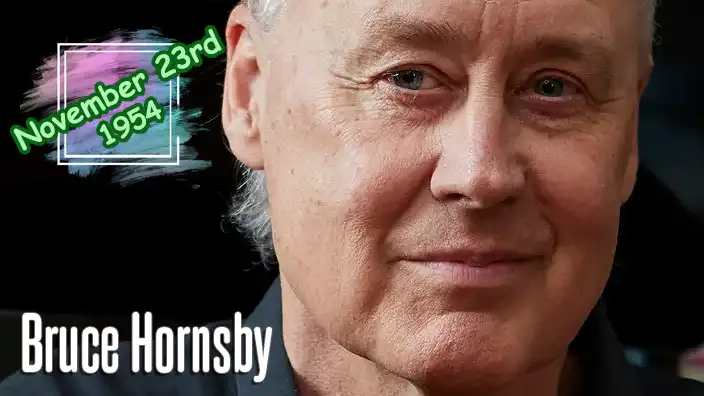
November 23, 1954, in Williamsburg, Virginia

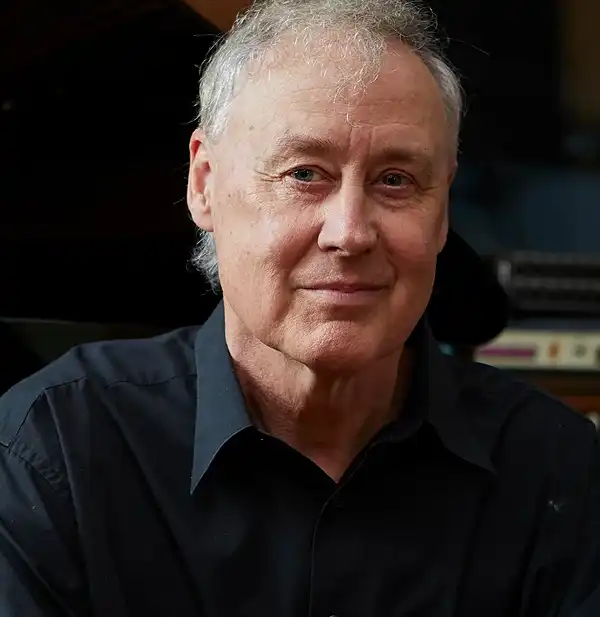
Bruce Randall Hornsby, born November 23, 1954, in Williamsburg, Virginia, is an American singer, songwriter, pianist, composer, and bandleader whose extraordinary musical career has crossed the boundaries of rock, pop, jazz, bluegrass, classical music, and American roots traditions. Best known for his 1986 international hit "The Way It Is," recorded with Bruce Hornsby and the Range, he has become one of contemporary music's most respected and adventurous performers. His distinctive piano style, thoughtful songwriting, and willingness to experiment have earned him three Grammy Awards, millions of record sales, and collaborations with some of the industry's most celebrated musicians. While many successful artists spend their careers trying to recreate their biggest hit, Hornsby has generally preferred discovering what might happen if he ignored the musical rulebook and wandered into an entirely different genre.
Hornsby grew up in Williamsburg, Virginia, in a family where music and athletics played important roles. His father, Robert Stanley Hornsby, was a lawyer and real estate developer, while his mother, Lois, encouraged the family's musical interests. Bruce and his brothers developed an appreciation for different musical styles, including rock, jazz, blues, and traditional American music. His upbringing in Virginia exposed him to the rich musical traditions of the American South, influences that would later become essential elements of his distinctive sound. Unlike musicians who establish themselves through one particular genre, Hornsby absorbed a wide variety of influences, eventually developing a style that combined sophisticated piano arrangements with accessible melodies and emotionally engaging lyrics.
During his teenage years, Hornsby developed a passion for basketball as well as music. He played the sport competitively and demonstrated considerable athletic ability, eventually continuing his involvement during his college years. His interest in basketball would remain an important part of his life, influencing friendships, professional relationships, and even some of his musical projects. Apparently, being an accomplished pianist wasn't quite enough physical activity for him. While other musicians were resting their fingers between performances, Hornsby was perfectly happy to spend time running up and down a basketball court.
After graduating from high school, Hornsby attended the University of Richmond before continuing his musical education at the Berklee College of Music in Boston. He subsequently transferred to the University of Miami, where he graduated in 1977 with a degree in music. His formal training exposed him to jazz harmony, composition, classical techniques, and the complexities of musical arrangement. These studies helped establish the technical foundation for his distinctive piano playing, characterized by elaborate chord structures, flowing improvisations, and a remarkable ability to combine traditional melodies with unexpected harmonic changes.
During his early musical development, Hornsby was influenced by artists including Keith Jarrett, Bill Evans, Elton John, Leon Russell, and various American roots musicians. Jazz pianist Keith Jarrett became a particularly important influence, inspiring Hornsby's interest in improvisation and expressive keyboard performance. Rather than simply reproducing the techniques of his musical heroes, Hornsby began developing an individual approach that incorporated elements of jazz, gospel, bluegrass, and rock. His playing could sound delicate and reflective one moment, then suddenly erupt into an energetic sequence of notes that suggested the piano had developed a mind of its own.
Following his college graduation, Hornsby returned to Williamsburg and performed with local bands, gradually developing his songwriting and stage experience. He played in clubs and bars, learning how to communicate with audiences while refining his musical style. His early work included performing with his brother Bobby in a group known as Bobby Hi-Test and the Octane Kids, which played country-rock and other popular styles. These experiences provided valuable practical training, allowing Hornsby to explore different musical arrangements and develop the improvisational confidence that would later become a defining feature of his live performances.
In 1980, Hornsby moved to Los Angeles with his younger brother John, who became an important songwriting collaborator. The brothers pursued opportunities within the music industry, working as songwriters and attempting to establish professional connections. Their early experiences included writing material for other artists and navigating the competitive world of recording contracts and studio sessions. Like countless aspiring musicians before them, they discovered that talent was essential but did not automatically persuade record company executives to start writing checks.
During this period, Hornsby worked as a session musician and developed connections with established performers. He eventually became associated with the touring band of singer-songwriter Sheena Easton, gaining valuable experience performing before larger audiences. His abilities as a keyboard player and songwriter attracted increasing attention, and he began assembling musicians who shared his interest in combining thoughtful songwriting with sophisticated arrangements. These experiences helped prepare him for the commercial breakthrough that would transform his career.
In 1984, Hornsby formed Bruce Hornsby and the Range, a band that included guitarist David Mansfield, bassist Joe Puerta, guitarist George Marinelli, and drummer John Molo. The group developed a sound that blended rock, pop, folk, and jazz influences, emphasizing Hornsby's expressive piano playing and melodic songwriting. Unlike many popular bands of the era, which relied heavily on synthesizers and electronic production, the Range placed the acoustic piano at the center of its musical identity. It was a distinctive approach during a decade when synthesizers were everywhere and some musicians seemed determined to replace every instrument with something that required batteries.
The band's breakthrough arrived in 1986 with the release of its debut album, The Way It Is. The record introduced Hornsby's distinctive sound to international audiences, combining thoughtful lyrics with polished arrangements and memorable piano melodies. Its title track, "The Way It Is," became an enormous success, reaching number one on the Billboard Hot 100 in December 1986. The song's instantly recognizable piano introduction helped establish Hornsby as a major new musical talent, while its socially conscious lyrics demonstrated that popular music could address serious issues without sacrificing commercial appeal.
"The Way It Is" explored racial inequality, poverty, social prejudice, and the challenges of achieving meaningful change. Rather than presenting a conventional romantic pop song, Hornsby created a thoughtful examination of social attitudes and the resistance people often encounter when attempting to challenge established systems. Its message resonated with listeners, and the song became one of the defining recordings of the 1980s. The success was particularly remarkable because the recording's sophisticated piano arrangement and serious subject matter differed considerably from much of the popular music dominating radio at the time.
The album also produced the successful singles "Mandolin Rain" and "Every Little Kiss," both of which helped establish Bruce Hornsby and the Range as a major presence on American radio. "Mandolin Rain," with its reflective lyrics and memorable melody, became a particularly enduring favorite, reaching the Billboard Hot 100's top five. The song demonstrated Hornsby's ability to combine emotional storytelling with sophisticated musical arrangements, creating a recording that appealed to both casual listeners and musicians who appreciated its technical complexity.
The commercial success of The Way It Is brought widespread recognition and major concert opportunities. The album sold millions of copies, and the band performed on prominent television programs, including Saturday Night Live. Hornsby and the Range toured extensively, sharing stages with established artists such as Steve Winwood, Huey Lewis, John Fogerty, and the Grateful Dead. Their success demonstrated that piano-driven music could compete with the guitar-heavy rock and electronic pop dominating the charts. It also proved that a musician didn't necessarily need enormous hair, a smoke machine, and an army of synthesizers to attract an enthusiastic audience.
In 1987, Bruce Hornsby and the Range received the Grammy Award for Best New Artist, recognizing their extraordinary breakthrough during the previous year. The award established Hornsby as one of the most promising musicians of his generation and opened doors to further collaborations and recording opportunities. Winning Best New Artist can occasionally become an uncomfortable distinction when performers struggle to maintain their success, but Hornsby would go on to build a remarkably varied career. He apparently interpreted the award as encouragement to keep experimenting rather than an instruction to repeat the same album indefinitely.
The band's second album, Scenes from the Southside, arrived in 1988 and continued its commercial success. Featuring songs including "The Valley Road," "Look Out Any Window," and "The Show Goes On," the album expanded the group's musical identity while maintaining Hornsby's recognizable piano-centered arrangements. "The Valley Road" became another major hit, reaching the Billboard Hot 100's top five and reinforcing the band's popularity. The album also demonstrated Hornsby's growing interest in storytelling, with songs examining everyday experiences, relationships, social observations, and the complicated emotional landscapes of American life.
In 1989, Hornsby earned his second Grammy Award for Best Bluegrass Recording through a collaboration with the Nitty Gritty Dirt Band on a bluegrass interpretation of "The Valley Road." The recording appeared on the group's album Will the Circle Be Unbroken: Volume Two, bringing Hornsby's songwriting into a traditional American musical setting. The achievement demonstrated the versatility of his compositions, which could move successfully between contemporary pop arrangements and acoustic bluegrass performances. It also suggested that Hornsby had discovered an effective way to confuse anyone attempting to organize his recordings into a single category at the local music store.
The Range released its third studio album, A Night on the Town, in 1990. The record featured songs including "Across the River," "A Night on the Town," and "Lost Soul," the latter featuring a duet with singer Shawn Colvin. The album explored more sophisticated musical arrangements and increasingly adventurous songwriting, reflecting Hornsby's desire to move beyond the familiar expectations associated with his earlier commercial success. Although the album did not match the enormous sales of the band's debut, it demonstrated his continuing artistic development and willingness to challenge established formulas.
One of the most important developments in Hornsby's career began through his association with the legendary American rock band Grateful Dead. The relationship started in the late 1980s when Bruce Hornsby and the Range opened concerts for the group. Hornsby developed friendships with members of the band, particularly guitarist and singer Jerry Garcia, and discovered a shared enthusiasm for improvisation and musical exploration. The Grateful Dead's famously unpredictable concerts offered an environment in which musicians could experiment freely, making the group a natural fit for Hornsby's adventurous approach to performance.
Following the death of Grateful Dead keyboardist Brent Mydland in 1990, Hornsby began performing with the band as a touring keyboardist. He played more than 100 concerts with the group between 1990 and 1992, frequently improvising alongside Garcia and the other musicians. Unlike the carefully structured arrangements common in mainstream pop concerts, Grateful Dead performances often involved extended instrumental passages, spontaneous musical changes, and unexpected interpretations of familiar songs. Hornsby embraced the experience enthusiastically, developing his improvisational abilities while contributing his distinctive piano style to the band's legendary live performances.
His association with the Grateful Dead continued beyond his regular touring period, and he remained connected with the group's members and musical community. He participated in later reunion performances and appeared on several Grateful Dead recordings. In 2015, he joined surviving members for the Fare Thee Well concerts celebrating the band's fiftieth anniversary. His involvement with the group became an important part of his musical identity, introducing him to audiences who appreciated improvisation, extended performances, and the possibility that a song scheduled to last five minutes might cheerfully continue for another twenty.
By the early 1990s, Hornsby had decided to move away from the commercial expectations associated with Bruce Hornsby and the Range. The band dissolved, and he began concentrating on solo recordings that allowed greater artistic freedom. His first major solo studio album, Harbor Lights, appeared in 1993 and marked a significant departure from the polished pop-rock sound of his earlier work. The album incorporated jazz influences, sophisticated improvisation, and collaborations with musicians including Branford Marsalis, Pat Metheny, and Jerry Garcia.
Harbor Lights received strong critical recognition and demonstrated Hornsby's ability to explore complex musical ideas while maintaining his talent for memorable melodies. The album included songs such as "Fields of Gray" and the title track, showcasing his increasingly adventurous arrangements and lyrical interests. In 1994, the recording was named Album of the Year in the DownBeat Readers Poll, an important acknowledgment from the jazz community. The recognition reflected Hornsby's growing credibility among musicians and listeners who valued improvisation and instrumental sophistication.
In 1993, Hornsby received his third Grammy Award, sharing the honor for Best Pop Instrumental Performance with saxophonist Branford Marsalis for "Barcelona Mona." The composition was associated with the 1992 Olympic Games in Barcelona and highlighted the musical chemistry between the two performers. The award added another genre to Hornsby's Grammy achievements, following his earlier recognition in pop and bluegrass. Three Grammy Awards in three different musical categories represented a particularly satisfying achievement for an artist who had never shown much interest in staying within conventional boundaries.
His 1995 album Hot House continued exploring jazz-influenced arrangements and complex compositions. Featuring contributions from prominent musicians, the recording emphasized instrumental interplay, improvisation, and musical experimentation. Hornsby increasingly approached his albums as opportunities to develop new ideas rather than simply produce radio-friendly singles. Although this direction sometimes resulted in less commercial exposure, it strengthened his reputation as a serious musician whose creative ambitions extended well beyond the expectations of mainstream popular music.
In 1998, Hornsby released the ambitious double album Spirit Trail, featuring an extensive collection of songs that combined rock, jazz, folk, and classical influences. The recording showcased his extraordinary piano abilities and growing interest in unconventional song structures. Its elaborate arrangements, unusual harmonies, and extended compositions demonstrated his determination to explore new musical territory. For listeners expecting another straightforward version of "The Way It Is," the album provided a friendly reminder that Hornsby had long since misplaced the instruction manual for predictable pop music.
Hornsby continued developing his live performances through a rotating group of accomplished musicians known as Bruce Hornsby and the Noisemakers. The band became known for its adventurous concerts, combining familiar songs with unexpected arrangements, improvisational passages, and material drawn from different stages of Hornsby's career. Unlike performers who reproduce their recordings almost exactly on stage, Hornsby frequently changes melodies, harmonies, rhythms, and arrangements during live performances. As a result, audiences attending several concerts may hear dramatically different versions of the same song, which is either a wonderful musical adventure or a serious challenge for anyone attempting to sing along.
The Noisemakers released the live album Here Come the Noise Makers in 2000, followed by studio projects including Big Swing Face in 2002 and Halcyon Days in 2004. These recordings continued Hornsby's exploration of different musical styles, incorporating elements of rock, jazz, electronic music, and experimental arrangements. Big Swing Face was particularly unusual because it emphasized electronic keyboards and rhythmic experimentation rather than his familiar acoustic piano sound. The album demonstrated that Hornsby was willing to challenge even the musical characteristics most closely associated with his success.
Throughout his career, Hornsby has collaborated with an extraordinary range of musicians, including Bob Dylan, Bonnie Raitt, Don Henley, Willie Nelson, Stevie Nicks, Elton John, Eric Clapton, Sting, and Chaka Khan. His ability to adapt to different musical environments has made him a sought-after pianist, songwriter, and recording partner. These collaborations have introduced his distinctive playing to audiences who may not have followed his solo career, while allowing him to explore styles ranging from country and rock to jazz and contemporary pop.
One of his most memorable contributions to another artist's recording came in 1991 when he played piano on Bonnie Raitt's celebrated ballad "I Can't Make You Love Me." Hornsby's sensitive accompaniment helped create the song's intimate and emotionally powerful atmosphere, complementing Raitt's expressive vocal performance. The recording became one of the most admired ballads of its era and remains an enduring example of how restrained instrumental playing can strengthen a song's emotional impact. Sometimes the most impressive thing a pianist can do is resist the temptation to play every note available on the keyboard.
Hornsby's music also reached a new generation through its influence on hip-hop. In 1998, rapper Tupac Shakur achieved a posthumous international hit with "Changes," which incorporated elements of Hornsby's "The Way It Is." The song addressed racism, poverty, violence, and social inequality, connecting closely with the themes explored in Hornsby's original recording. The musical relationship between the two songs demonstrated the enduring relevance of Hornsby's composition and its ability to communicate across different genres and generations.
The use of "The Way It Is" in "Changes" introduced Hornsby's music to millions of hip-hop listeners and established an important connection between his songwriting and contemporary urban music. Other artists have subsequently drawn inspiration from his compositions, demonstrating their continuing cultural influence. The success of these recordings reinforced the idea that thoughtful songwriting can remain relevant long after its original release, particularly when its subject matter addresses social issues that continue to affect communities.
In 2007, Hornsby collaborated with bluegrass musician Ricky Skaggs on the album Ricky Skaggs & Bruce Hornsby. The project combined Hornsby's songwriting and piano playing with Skaggs' traditional bluegrass expertise, producing arrangements that bridged contemporary and traditional American music. The collaboration included interpretations of familiar songs alongside new musical explorations, demonstrating the natural compatibility between the two performers. Their partnership continued with the 2013 live album Cluck Ol' Hen, which captured the energy and spontaneity of their performances together.
Also in 2007, Hornsby released Camp Meeting, a jazz trio recording featuring drummer Jack DeJohnette and bassist Christian McBride. The album explored jazz standards, improvisation, and contemporary compositions, allowing Hornsby to demonstrate his technical abilities within a demanding instrumental setting. Working alongside two highly respected jazz musicians required exceptional musical communication and adaptability, qualities Hornsby had developed throughout his career. The project further strengthened his reputation as a pianist capable of moving comfortably between popular music and sophisticated jazz performance.
His 2009 album Levitate continued this adventurous approach, combining rock, jazz, roots music, and unconventional songwriting. Several compositions were associated with a theatrical project titled SCKBSTD, developed with songwriter Chip deMatteo. The album featured elaborate arrangements and unexpected musical changes, reflecting Hornsby's growing interest in storytelling through complex compositions. The title track also became associated with sports culture, earning recognition from Sports Illustrated among notable sports songs.
Hornsby's connection with basketball extended beyond his own athletic interests. He developed friendships with prominent basketball figures and frequently performed the American national anthem at major sporting events, including NBA Finals games. His distinctive instrumental interpretations brought sophisticated harmonies and expressive piano arrangements to a melody familiar to millions of Americans. These performances demonstrated his ability to combine musical creativity with respect for traditional compositions, although his unusual arrangements occasionally gave audiences a little more musical complexity than they were expecting before tipoff.
His involvement in film and television music became another important dimension of his career. Hornsby developed a longstanding creative relationship with director Spike Lee, contributing songs, scores, and instrumental music to several productions. His work included music for Clockers, Bamboozled, Red Hook Summer, Da Sweet Blood of Jesus, and BlacKkKlansman. He also composed music for Lee's basketball documentary Kobe Doin' Work and the Netflix series She's Gotta Have It. These projects allowed Hornsby to apply his musical abilities to storytelling beyond conventional albums and concerts.
Hornsby's film contributions also include "Set Me in Motion" for the 1991 firefighter drama Backdraft and "Big Stick" for the 1996 golf comedy Tin Cup. His music has appeared in numerous other films and television productions, introducing his compositions to audiences through dramatic and comedic settings. He even appeared as himself in the 2009 dark comedy World's Greatest Dad, starring Robin Williams. The appearance added an acting credit to his résumé, although his principal talents have remained firmly attached to musical instruments rather than memorizing lengthy dramatic speeches.
In 2014, Hornsby released Solo Concerts, an album documenting his adventurous solo piano performances. The recordings combined original compositions, familiar songs, improvisation, and influences drawn from classical and contemporary music. Without a backing band, Hornsby had complete freedom to explore different harmonies, rhythms, and musical directions. His solo concerts became particularly admired among dedicated listeners because they revealed the full complexity of his piano technique and his remarkable ability to reinvent familiar material spontaneously.
His interest in classical music continued through orchestral collaborations, including performances with the New World Symphony under conductor Michael Tilson Thomas. These projects allowed Hornsby to explore the relationship between contemporary songwriting, jazz improvisation, and orchestral composition. His music incorporated elements of modern classical harmony, sometimes introducing deliberately dissonant passages and unconventional structures. For listeners accustomed to predictable chord progressions, these performances occasionally provided the musical equivalent of taking an unexpected turn down a road that wasn't on the map.
In 2016, Hornsby and the Noisemakers released Rehab Reunion, an album that prominently featured the Appalachian dulcimer rather than his usual piano. The decision reflected his continuing fascination with American folk instruments and traditional musical sounds. The dulcimer's distinctive tone helped create an unusual musical atmosphere, allowing Hornsby to approach songwriting from a different instrumental perspective. After decades of being associated with piano playing, he had apparently decided that a few strings stretched across a wooden box deserved an opportunity to share the spotlight.
His later career introduced another important creative partnership with Justin Vernon, the musician behind the acclaimed indie-folk project Bon Iver. Vernon had frequently cited Hornsby as an important musical influence, and the two musicians began collaborating on recordings and live performances. Their partnership connected different generations of experimental popular music, combining Hornsby's sophisticated harmonic approach with Vernon's interest in electronic textures, unconventional vocals, and atmospheric production.
In 2019, Hornsby released Absolute Zero, an ambitious recording featuring collaborations with Justin Vernon, Jack DeJohnette, yMusic, and other musicians. The album explored experimental arrangements, complex rhythms, electronic influences, and unusual lyrical themes. Critics praised its originality and willingness to challenge expectations, recognizing Hornsby's continued development as a creative artist. The recording demonstrated that commercial success decades earlier had not diminished his curiosity or his appetite for musical experimentation.
The following year, Hornsby released Non-Secure Connection, continuing his exploration of experimental pop, jazz, and electronic music. The album featured contributions from musicians including James Mercer of the Shins, Justin Vernon, Leon Russell, and Vernon Reid. Its compositions combined intricate arrangements with unexpected melodic and rhythmic ideas, further demonstrating Hornsby's refusal to settle into a predictable musical identity. His ability to attract respected collaborators from different generations reflected the continuing influence of his work across the music industry.
In 2022, Hornsby completed a loosely connected trilogy of experimental albums with 'Flicted, featuring contributions from Ezra Koenig of Vampire Weekend, Danielle Haim, Blake Mills, and the chamber ensemble yMusic. The recording continued exploring unusual harmonies, complex compositions, and unconventional storytelling. Rather than attempting to recreate the commercial success of his earliest recordings, Hornsby pursued musical ideas that interested him personally, demonstrating the artistic independence that had become central to his career.
In 2024, Hornsby collaborated with the New York chamber ensemble yMusic on Deep Sea Vents, released under the name BrhyM. The project combined his songwriting and piano playing with the ensemble's sophisticated instrumental arrangements, creating music that moved between chamber classical, jazz, and experimental pop. The album reached number one on Billboard's Classical Crossover Albums chart, adding another unusual achievement to Hornsby's extensive musical résumé. After spending decades moving between genres, he had finally reached the point where even the classical music charts were welcoming him aboard.
His creative journey continued in 2026 with the release of Indigo Park, a reflective collection exploring memory, childhood, personal experiences, and the complicated passage of time. The album combined accessible melodies with experimental arrangements and featured contributions from musicians including Bonnie Raitt, Ezra Koenig, and Bob Weir. Songs such as "Silhouette Shadows" and "Ecstatic" illustrated Hornsby's ability to transform personal memories and unusual observations into thoughtful musical compositions. Released four decades after The Way It Is, the project demonstrated that his interest in new musical ideas remained as strong as ever.
Beyond his recordings and performances, Hornsby has contributed to music education through his association with the University of Miami's Frost School of Music. He helped establish the Creative American Music Program, designed to encourage young musicians to explore songwriting and the diverse traditions that have shaped American popular music. The program emphasizes creativity, musical versatility, and an understanding of styles including blues, gospel, folk, and jazz. His involvement reflects his belief that musicians benefit from studying different traditions rather than limiting themselves to one particular genre.
Hornsby's personal life has remained relatively private despite his decades in the public spotlight. He married Kathy Yankovich on December 31, 1983, and the couple have twin sons, Russell and Keith. His family has remained an important part of his life while he has continued recording, touring, and collaborating with other musicians. His son Keith pursued basketball and played professionally, continuing the family's connection with the sport. Hornsby's ability to maintain a family life alongside an extraordinarily busy musical career reflects the importance he places on relationships beyond the entertainment industry.
Throughout his career, Hornsby has developed a reputation for treating live performance as an opportunity for exploration rather than repetition. His concerts frequently include audience requests, improvised passages, unusual covers, and dramatically rearranged versions of familiar songs. He has been known to move between musical styles without warning, transforming a recognizable pop composition into something influenced by jazz, bluegrass, or classical music. This unpredictability has helped establish a loyal audience that appreciates the possibility of hearing something entirely different at every performance.
His influence extends well beyond the success of his early recordings. Musicians from rock, jazz, country, hip-hop, bluegrass, and alternative music have drawn inspiration from his distinctive piano playing and adventurous approach to composition. His willingness to collaborate across genres has helped connect musical communities that might otherwise have remained separate. From Tupac Shakur's reinterpretation of "The Way It Is" to his work with Bon Iver and yMusic, Hornsby's compositions have continued finding new audiences and unexpected creative possibilities.
What makes Bruce Hornsby particularly remarkable is his determination to remain a student of music throughout his career. Despite enormous commercial success, prestigious awards, and decades of professional experience, he has continued studying new techniques, experimenting with unfamiliar instruments, and collaborating with musicians whose approaches differ from his own. His career demonstrates that artistic achievement does not require abandoning curiosity or accepting the limitations imposed by commercial expectations. In fact, Hornsby seems to regard musical boundaries primarily as interesting suggestions that deserve to be investigated before being cheerfully ignored.
From the historic streets of Williamsburg, Virginia, to international concert stages, Grammy Award ceremonies, jazz festivals, recording studios, and orchestral performances, Bruce Hornsby has built a remarkable musical legacy through talent, persistence, and extraordinary creative independence. His recordings have entertained millions, his collaborations have connected generations of musicians, and his distinctive piano playing has become one of the most recognizable sounds in contemporary American music. Whether performing "The Way It Is," improvising with the Grateful Dead, exploring bluegrass with Ricky Skaggs, or experimenting with chamber music, Hornsby continues to demonstrate that music offers endless opportunities for discovery. And if anyone ever suggests that a pianist should stick to one musical style, Bruce Hornsby will probably smile, sit down at the keyboard, and spend the next ten minutes proving otherwise.
References & Sources