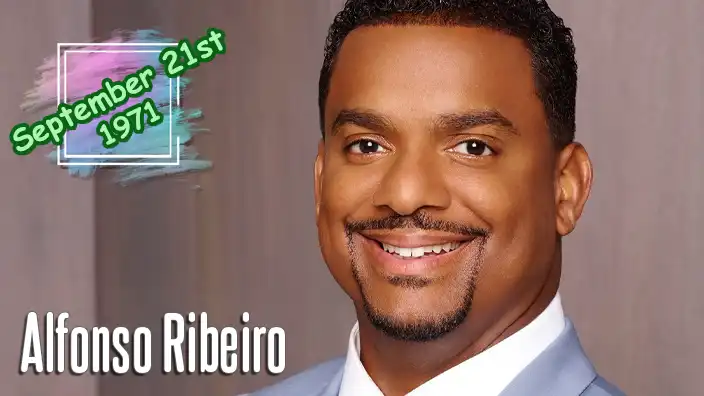
September 21, 1971, in New York City
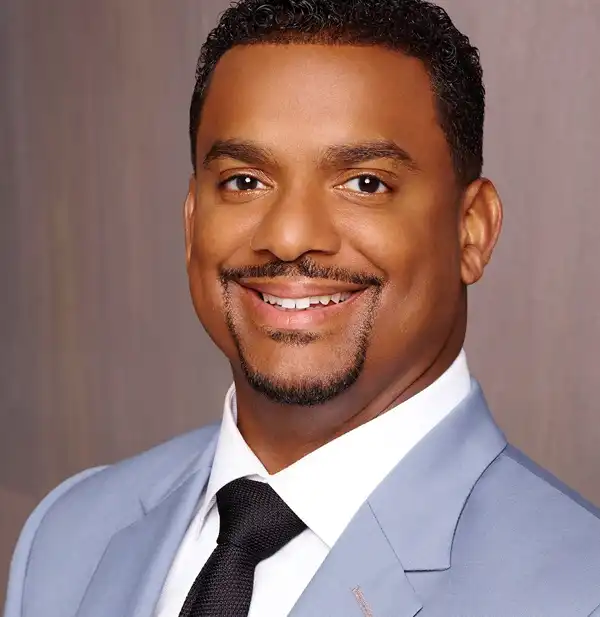
Alfonso Lincoln Ribeiro was born on September 21, 1971, in New York City, and entered show business remarkably early. Long before audiences knew him as Carlton Banks, Ribeiro was already singing, dancing and acting professionally, demonstrating the energetic stage presence that would eventually become one of his trademarks. His parents were of Trinidadian heritage, and Ribeiro grew up in New York, where his performing career began while most children were still concentrating on considerably less complicated matters such as homework and convincing adults that bedtime was unnecessary.
His first major breakthrough came with the Broadway musical The Tap Dance Kid. Ribeiro played the title role in the production, which opened on Broadway in 1983, putting the young performer at the center of a demanding musical requiring acting, singing and, unsurprisingly, quite a lot of tap dancing. The role attracted considerable attention and established Ribeiro as an unusually versatile child performer. Rather than entering television with little professional experience, he arrived having already learned the discipline of performing live onstage, where forgetting what comes next cannot be corrected by shouting "Cut!"
His dancing ability also brought him into the orbit of Michael Jackson. Ribeiro appeared with Jackson in a well-known Pepsi commercial during the 1980s, one of several high-profile appearances that increased his national visibility. He even released music during his childhood career, making it clear that young Alfonso was not particularly interested in limiting himself to one branch of entertainment. Acting, singing and dancing were all apparently going into the toolbox.
Television soon provided another major opportunity. Ribeiro joined the NBC sitcom Silver Spoons, starring Ricky Schroder, playing Alfonso Spears, a friend of Schroder's character Ricky Stratton. The series introduced Ribeiro to a broad television audience and allowed him to develop the comic timing that would become increasingly important later. Child performers do not always make an easy transition into adult careers, but Ribeiro had already accumulated substantial professional experience before the role that would permanently attach him to television history arrived.
In 1990, Ribeiro was cast as Carlton Banks on NBC's The Fresh Prince of Bel-Air. The premise involved Will Smith playing a fictionalized version of himself, a street-smart teenager from West Philadelphia sent to live with his wealthy aunt and uncle in Bel-Air, California. Carlton was Will's cousin and, in almost every obvious respect, his opposite. Will was relaxed, fashionable and instinctively cool. Carlton was conservative, academically ambitious, preppy, intensely enthusiastic and absolutely convinced that his approach to life was perfectly sensible.
That contrast could easily have reduced Carlton to a simple joke, but Ribeiro made him considerably more interesting. Carlton could be pompous, competitive and spectacularly naïve, yet he was also intelligent, loyal and fundamentally decent. His privileged upbringing sometimes left him unprepared for realities outside the Banks family's affluent world, but the series increasingly allowed him moments of vulnerability and seriousness. Carlton became funny not because he was merely ridiculous, but because Ribeiro made him recognizable as someone trying desperately to succeed according to the rules he believed mattered.
And then there was the dance.
"The Carlton" became one of the most recognizable comedy dances in television history. Ribeiro would swing his arms enthusiastically from side to side, usually accompanied by Tom Jones singing "It's Not Unusual," while displaying the serene confidence of a man entirely unaware that everyone else might have questions. The routine became so closely associated with Carlton Banks that it followed Ribeiro long after The Fresh Prince of Bel-Air ended. Ribeiro has explained in interviews that the dance drew inspiration from several sources, including Courteney Cox dancing onstage in Bruce Springsteen's "Dancing in the Dark" video and Eddie Murphy's imitation of a stereotypical white person's dance.
The brilliance of "The Carlton" was not really its complexity. Quite the opposite. Anyone could attempt it, and millions undoubtedly did, often after discovering that confidence and coordination are separate commodities. Ribeiro performed it with complete commitment, which made the joke work. Carlton never believed he was dancing badly. Carlton believed the rest of the room had finally been fortunate enough to witness excellence.
The Fresh Prince of Bel-Air ran for six seasons from 1990 to 1996 and became one of the defining American sitcoms of the decade. Although remembered primarily for its comedy, the program regularly addressed serious subjects including racism, class differences, family relationships, gun violence and parental abandonment. Carlton was central to several of those stories, allowing Ribeiro to demonstrate dramatic ability that could easily be overlooked amid the character's sweaters and enthusiastic dancing.
One particularly significant episode involved Carlton and Will being stopped by police while driving a Mercedes belonging to family friend Henry Furth. Carlton initially struggled to accept Will's belief that race had influenced their treatment because Carlton's privileged upbringing had encouraged him to trust institutions and assume that following the rules would protect him. The episode forced Carlton to confront an experience that challenged those assumptions, giving Ribeiro material far removed from the broad physical comedy associated with the character.
The series also explored Carlton's determination to attend Princeton University, his academic ambitions and his complicated relationship with Will. The cousins frequently competed and insulted each other, but beneath the jokes was genuine affection. Carlton occasionally envied Will's effortless social confidence, while Will sometimes underestimated Carlton because of his sheltered personality. Their differences gave both characters opportunities to grow, and Ribeiro's willingness to let Carlton be vulnerable prevented the character from becoming a one-note caricature.
After The Fresh Prince of Bel-Air, Ribeiro continued acting and moved increasingly toward directing. He directed episodes of television comedies including Meet the Browns and Are We There Yet?, developing another aspect of his career behind the camera. Directing sitcoms made considerable sense for someone who had spent years learning how television comedy works from the performer's side of the lens. Timing, reactions and ensemble chemistry had been part of Ribeiro's professional education since childhood.
He also remained closely associated with dance, which eventually led to one of the most successful chapters of his post-Fresh Prince career. In 2014, Ribeiro competed in Season 19 of ABC's Dancing with the Stars, partnered with professional dancer Witney Carson. Audiences who remembered Carlton's exuberant living-room performances quickly discovered that Ribeiro was, unsurprisingly given his Broadway background, a genuinely accomplished dancer.
Naturally, "The Carlton" made an appearance.
During the competition, Ribeiro and Carson performed a jazz routine that incorporated the famous dance, giving audiences the nostalgic moment they had been waiting for. But Ribeiro's performances throughout the season demonstrated considerably greater range than his sitcom alter ego's signature moves. He and Carson ultimately won the competition and took home the Mirrorball Trophy. The victory reminded viewers that Ribeiro's dancing career had begun long before Carlton Banks ever discovered Tom Jones.
Television hosting subsequently became an increasingly important part of Ribeiro's career. He hosted the game show Catch 21, combining his comic timing with the ability to keep a television format moving smoothly. Hosting requires a different set of skills from sitcom acting: the performer must communicate directly with contestants and audiences, react to unpredictable moments and remain energetic without overwhelming whatever is happening around him. Ribeiro's background in live performance and improvisational comedy made the transition appear natural.
In 2015, he became the host of ABC's America's Funniest Home Videos, succeeding Tom Bergeron. The program had already been a television fixture for decades, built around a wonderfully durable principle: somewhere, at this very moment, someone is attempting something unwise while another person happens to be holding a camera.
Ribeiro proved well suited to the format. Hosting America's Funniest Home Videos involves introducing clips, interacting with audiences and providing commentary without getting in the way of the real stars of the program — children saying peculiar things, pets behaving badly, wedding mishaps and adults discovering that trampolines, ladders and garden hoses have been quietly waiting for revenge. Ribeiro brought enthusiasm and warmth to the role while maintaining the family-friendly style that has allowed the series to survive enormous changes in television and technology.
His connection with Dancing with the Stars also continued. Ribeiro returned to the franchise in a hosting capacity, eventually becoming a co-host of the long-running competition. It represented an interesting full-circle development: the child Broadway dancer who became famous for a deliberately awkward sitcom dance, then won Dancing with the Stars, eventually found himself helping present the competition itself. Television careers rarely follow a straight line, but Ribeiro's has occasionally resembled choreography.
Ribeiro has also remained connected to The Fresh Prince of Bel-Air and his former castmates. The enduring popularity of the sitcom introduced Carlton Banks to generations who were not even born during its original run. Streaming, reruns and online clips ensured that Carlton's dances, arguments and memorable scenes continued circulating long after the Banks family originally left NBC. Ribeiro participated in the 2020 Fresh Prince of Bel-Air Reunion, joining Will Smith and other cast members to look back on the series and its cultural impact.
The remarkable durability of Carlton Banks could easily have become a burden. Actors who create an iconic character sometimes spend the remainder of their careers attempting to escape it. Ribeiro took a different route. He acknowledged Carlton, laughed about Carlton and occasionally danced like Carlton while continuing to build a career in directing, reality television and hosting. Rather than pretending the character never existed, he accepted that creating something audiences still remember decades later is not the worst professional problem to have.
There is also a certain irony in the fact that Ribeiro became such a comfortable television host. Carlton Banks frequently seemed like a man desperately trying to convince everyone that he belonged in charge of proceedings. Ribeiro actually became the man in charge of proceedings, calmly steering television programs while contestants dance, families submit videos and people fall into swimming pools.
His career has therefore stretched far beyond one sitcom role. Ribeiro was a Broadway performer before The Fresh Prince of Bel-Air, a television actor before Carlton, an experienced dancer long before Dancing with the Stars, and a director and host afterward. Yet Carlton remains central to his legacy because Ribeiro transformed what could have been a supporting stereotype into one of the most affectionate and recognizable characters of 1990s television.
Alfonso Ribeiro has spent most of his life entertaining audiences, moving from Broadway to sitcoms, directing, dance competitions and television hosting with remarkable adaptability. Yet somewhere, at almost any public appearance, there is probably still one person waiting for those opening notes of "It's Not Unusual."
At this point, resistance would seem futile.