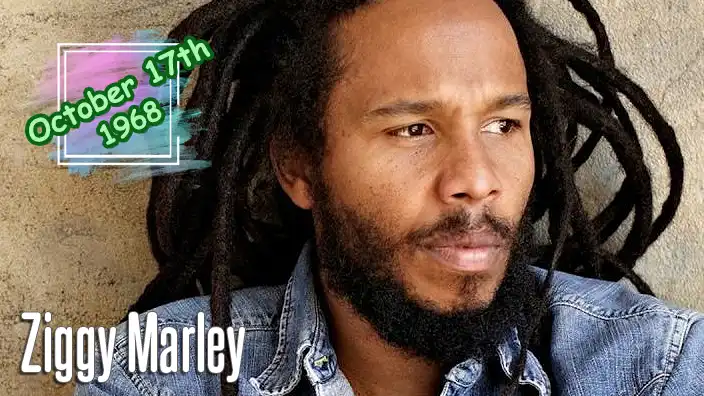
October 17, 1968, in Kingston, Jamaica
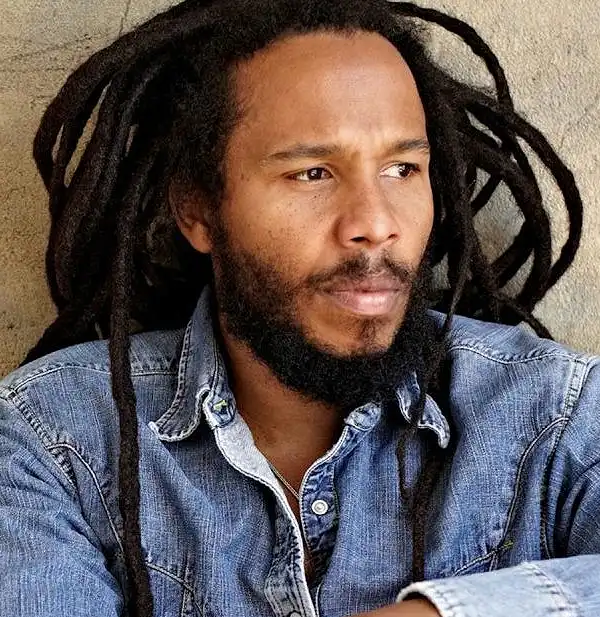
Born David Nesta Marley on October 17, 1968, in Kingston, Jamaica, Ziggy Marley entered a world already filled with music, cultural change, and the emerging international influence of reggae. His father, Bob Marley, would become one of the most recognizable musicians in history, while his mother, Rita Marley, was an accomplished singer and member of the I Threes, the vocal trio that supported Bob Marley and the Wailers. Growing up in such an environment provided Ziggy with an extraordinary introduction to music, but it also meant that the expectations surrounding his future were considerably different from those facing most children. While other youngsters might have been encouraged to become doctors, teachers, or engineers, Ziggy grew up surrounded by musicians whose recordings would eventually influence audiences across the world.
Ziggy's childhood unfolded during an important period in Jamaican musical history. Reggae was developing into an internationally recognized genre, combining distinctive rhythms with lyrics addressing spirituality, poverty, inequality, political conflict, and the experiences of ordinary people. Bob Marley's growing popularity brought international attention to Jamaica, while the Rastafari movement influenced the family's cultural and spiritual outlook. Ziggy absorbed these influences from an early age, learning that music could serve purposes beyond entertainment. A song could encourage reflection, challenge injustice, celebrate cultural identity, or bring people together despite differences in language and background. These ideas would become central to his own musical philosophy, although it probably took some time before he realized that most children didn't have internationally famous recording artists dropping by the house.
His father personally encouraged Ziggy's musical development, teaching him guitar and drums and allowing him to observe recording sessions with the Wailers. By the time he was ten, Ziggy was becoming familiar with the workings of a professional recording studio and the collaborative process involved in producing music. He also witnessed the demands of international fame, including the extensive touring and public attention surrounding his father's career. These experiences gave him a valuable understanding of the music industry long before he became a professional performer. Nevertheless, the lessons were not exclusively technical. Bob Marley's emphasis on spiritual awareness, social responsibility, and the power of music to communicate important messages became a lasting influence on his son's artistic direction.
In 1979, Ziggy joined his siblings Cedella, Stephen, and Sharon to record "Children Playing in the Streets," a song written by their father. The recording marked an important early step in the development of the family group that would become known as Ziggy Marley and the Melody Makers. Initially performing at family events and other gatherings, the young musicians gradually developed their own sound while remaining closely connected to their father's musical traditions. Their performances combined youthful enthusiasm with the distinctive rhythms and socially conscious themes associated with Jamaican reggae. The family arrangement also provided an unusual working environment, since disagreements between band members could presumably continue long after everyone had left the recording studio and returned home for dinner.
The death of Bob Marley on May 11, 1981, profoundly affected Ziggy and the entire Marley family. His father's passing created an enormous personal loss while leaving behind a musical legacy that would continue influencing generations of performers. Ziggy and his siblings participated in musical tributes honoring their father, and the Melody Makers gradually developed into a professional recording group. The responsibility of carrying forward the Marley name was considerable, particularly because Ziggy's vocal style and physical resemblance to his father invited frequent comparisons. Rather than attempting to imitate Bob Marley completely, Ziggy began developing his own approach, blending traditional reggae with elements of pop, rock, soul, and other contemporary musical styles.
The Melody Makers released their debut studio album, Play the Game Right, in 1985, introducing audiences to a new generation of Marley musicians. The recording demonstrated their musical abilities while also revealing the challenges of establishing an identity separate from their famous family background. Their second album, Hey World!, followed in 1986 and continued exploring a combination of reggae rhythms and accessible contemporary arrangements. Although these early recordings did not achieve enormous commercial success, they helped the group gain experience and build an international audience. Ziggy increasingly emerged as the band's principal vocalist and songwriter, assuming a leadership role that would define much of his early professional career.
A major breakthrough arrived in 1988 with the release of Conscious Party, produced by Chris Frantz and Tina Weymouth of Talking Heads and Tom Tom Club. The album introduced a polished, energetic sound that combined traditional reggae foundations with pop accessibility, allowing the Melody Makers to reach listeners beyond established reggae audiences. Its most successful single, "Tomorrow People," became an international hit and entered the American Billboard Hot 100 Top 40. The song's upbeat rhythm carried a message encouraging listeners to consider their roots, responsibilities, and the consequences of their actions. Its commercial success helped establish Ziggy Marley and the Melody Makers as an important musical act in their own right, demonstrating that the Marley name could continue attracting audiences without depending entirely on recordings from the previous generation.
Conscious Party earned the Grammy Award for Best Reggae Recording at the 1989 ceremony, marking a major achievement for Ziggy and his siblings. The award recognized both the group's musical accomplishments and its contribution to reggae's continuing international development. The album's success also introduced a broader audience to the group's distinctive vocal harmonies and optimistic musical outlook. Unlike some performers who rely on controversy to attract attention, Ziggy built much of his reputation around positive messages, social awareness, and an energetic stage presence. It was a refreshing approach, particularly in a music industry where arguments, scandals, and public feuds sometimes receive more attention than the recordings themselves.
The group followed its breakthrough with One Bright Day in 1989, another commercially successful album that earned a Grammy Award for Best Reggae Recording. Songs such as "Look Who's Dancing" and the title track continued exploring themes of hope, unity, and social responsibility while maintaining the infectious rhythms that had attracted international audiences. The album demonstrated that the Melody Makers were capable of sustaining their success rather than simply enjoying a brief moment of popularity. Their recordings became familiar to reggae enthusiasts around the world, while their concert performances reinforced their reputation for energetic musicianship and strong family harmonies.
Throughout the 1990s, Ziggy Marley and the Melody Makers continued releasing albums that explored different musical directions. Recordings such as Jahmekya (1991), Joy and Blues (1993), Free Like We Want 2 B (1995), and Fallen Is Babylon (1997) combined reggae traditions with influences from rock, funk, soul, and contemporary popular music. These projects reflected Ziggy's interest in musical experimentation while maintaining his commitment to lyrics addressing social justice, spirituality, and personal responsibility. Fallen Is Babylon earned another Grammy Award for Best Reggae Album, confirming the group's continued standing within the international reggae community. By this stage, the Melody Makers had established a substantial musical catalog and demonstrated that their success was built on more than a famous surname.
One of Ziggy's defining characteristics as a songwriter has been his belief that music should communicate ideas capable of improving people's lives. His lyrics frequently address love, freedom, education, environmental responsibility, and the importance of treating others with dignity. Although his recordings often feature relaxed rhythms and cheerful melodies, their subjects can be serious, examining poverty, discrimination, political conflict, and the consequences of human behavior. This combination of accessible music and thoughtful messages reflects the influence of his father while demonstrating Ziggy's independent artistic perspective. He has consistently argued through his music that entertainment and social responsibility need not be competing objectives. A song can make people dance while also encouraging them to think, although coordinating both activities simultaneously may require a little practice.
After years of success with the Melody Makers, Ziggy began pursuing a solo career, releasing his first solo studio album, Dragonfly, in 2003. The recording represented an important transition, allowing him greater freedom to explore his musical interests outside the established family group. Featuring contributions from musicians including Flea and John Frusciante of the Red Hot Chili Peppers, the album incorporated reggae, rock, and other contemporary influences. Its songs explored personal freedom, social concerns, and spiritual reflection, demonstrating Ziggy's continued interest in music with meaningful lyrical content. Although the Marley name remained an important part of his public identity, Dragonfly helped establish him as an independent recording artist with a distinctive creative direction.
His second solo album, Love Is My Religion, arrived in 2006 and became one of the most significant recordings of his solo career. The album's title expressed a philosophy emphasizing compassion, understanding, and human connection rather than divisions created by religious or cultural differences. Its songs combined traditional reggae rhythms with contemporary production and thoughtful lyrics, appealing to both longtime Marley enthusiasts and newer listeners. The album won the Grammy Award for Best Reggae Album, reinforcing Ziggy's standing as a major reggae performer independently of the Melody Makers. Its central message also became closely associated with his public identity, reflecting his belief that love and mutual respect should guide human relationships. It was a fairly straightforward philosophy, although humanity has spent several thousand years demonstrating that putting it into practice can be surprisingly complicated.
Ziggy continued exploring his musical interests with Family Time, released in 2009. Unlike his previous recordings, this album was designed primarily for children and families, combining reggae rhythms with playful songs and positive educational messages. The project featured collaborations with several prominent performers, including Paul Simon, Willie Nelson, and Jack Johnson, bringing together musicians from different backgrounds to celebrate childhood, imagination, and family relationships. Songs addressed subjects such as friendship, cooperation, personal confidence, and the importance of enjoying time together. The album won the Grammy Award for Best Musical Album for Children, demonstrating that Ziggy's musical abilities extended beyond conventional reggae audiences. It also proved that children's music could be entertaining for adults without requiring parents to hide the recording after hearing it for the seventeenth consecutive time.
Family has remained central to Ziggy's personal and professional life. He married Orly Agai in 2004, and together they have raised a family while balancing the demands of recording, touring, and other professional activities. Ziggy is the father of seven children, and his experiences as a parent have influenced his interest in educational projects and children's entertainment. His music frequently emphasizes the importance of nurturing young people, encouraging creativity, and helping children develop an understanding of the world around them. These values reflect both his own upbringing and his belief that cultural traditions should be passed from one generation to the next. For someone raised in one of music's most recognizable families, the relationship between parents, children, and inherited responsibilities is hardly an unfamiliar subject.
In 2011, Ziggy released Wild and Free, an album exploring personal independence, social responsibility, and environmental awareness. The recording included collaborations with musicians from different genres and reflected his continuing interest in combining reggae with contemporary musical influences. Its title track addressed freedom and the importance of independent thought, while other songs explored relationships, social conditions, and the responsibilities individuals have toward their communities. The album reached number one on Billboard's Reggae Albums chart, reinforcing his commercial appeal as a solo performer. His music continued to demonstrate that reggae could remain relevant to contemporary audiences without abandoning the rhythms and cultural traditions that originally defined the genre.
Ziggy also became involved in documentary filmmaking, serving as an executive producer of the 2012 documentary Marley. Directed by Kevin Macdonald, the film examined Bob Marley's life, music, political experiences, and international influence through interviews, archival recordings, and contributions from family members and associates. Ziggy's involvement helped provide a personal perspective on his father's legacy while supporting a broader historical examination of one of reggae's most important figures. The documentary received considerable attention for its detailed portrayal of Bob Marley's achievements and personal experiences. For Ziggy, the project represented an opportunity to preserve family history while introducing new generations to the musician whose work had helped bring Jamaican reggae to international prominence.
His 2013 live album, Ziggy Marley in Concert, earned another Grammy Award for Best Reggae Album, highlighting his abilities as a live performer. Recorded during performances featuring material from different stages of his career, the album captured the energy, audience participation, and musical spontaneity associated with his concerts. Ziggy's live performances have long emphasized the communal qualities of reggae music, encouraging audiences to sing, dance, and participate rather than simply observe. His concerts frequently combine upbeat songs with reflective material, creating an atmosphere that balances entertainment with messages of unity and social awareness. The approach reflects reggae's longstanding tradition of using public performance as a means of bringing communities together.
In 2014, Ziggy released Fly Rasta, an album celebrating his Jamaican heritage and the musical traditions associated with the Rastafari movement. The recording featured songs such as "I Don't Wanna Live on Mars" and "I Get Up," combining contemporary production with familiar reggae rhythms and socially conscious lyrics. The album won the Grammy Award for Best Reggae Album, further strengthening his reputation as one of the genre's leading contemporary performers. Its title reflected Ziggy's continuing identification with Rastafari culture, while its musical arrangements demonstrated his willingness to explore new sounds without abandoning traditional influences. His career had developed considerably since the early days of the Melody Makers, but his commitment to reggae's cultural foundations remained unmistakable.
Ziggy released a self-titled studio album in 2016, continuing his exploration of love, freedom, social responsibility, and spiritual awareness. The recording included songs such as "Weekend's Long," "Amen," and "Heaven Can't Take It," presenting a combination of upbeat rhythms and thoughtful lyrical themes. The album earned another Grammy Award for Best Reggae Album, adding to an already impressive collection of industry honors. His continued success demonstrated that reggae remained capable of reaching international audiences despite changing musical fashions. While commercial trends frequently favor whatever sound happens to dominate streaming platforms, Ziggy maintained a recognizable musical identity rooted in Jamaican traditions and personal conviction.
In 2018, he released Rebellion Rises, an album addressing social division, political conflict, environmental concerns, and the importance of collective action. The title track encouraged listeners to confront injustice and consider their responsibilities toward society, while other compositions explored unity, compassion, and personal awareness. The album reflected Ziggy's longstanding belief that music can encourage constructive social change, particularly when its messages reach audiences across cultural and national boundaries. His approach continued the tradition established by earlier reggae performers who used music to discuss social conditions and promote greater understanding. Even when addressing difficult subjects, Ziggy generally favored messages of hope and cooperation rather than despair.
Ziggy's work has also extended into television, film, and other forms of entertainment. He contributed music and appeared in productions designed for both adults and children, including the animated film Shark Tale, in which he voiced Ernie, one of two jellyfish characters. His involvement in family entertainment reflected his interest in reaching younger audiences through accessible storytelling and music. He also participated in children's television projects, including Sesame Street, further demonstrating his willingness to use popular entertainment to communicate positive messages. These appearances introduced his voice and personality to audiences who might not have been familiar with his recording career, although being recognized as a cartoon jellyfish probably creates an entirely different category of fan encounter.
In 2020, Ziggy released More Family Time, returning to the children's music format that had brought him earlier success. The album featured collaborations with artists including Sheryl Crow, Ben Harper, Lisa Loeb, and Alanis Morissette, combining playful arrangements with messages encouraging cooperation, creativity, and family connection. Its release during a period when many families were spending more time together at home gave the project particular relevance. The recording demonstrated Ziggy's continuing belief that music can strengthen relationships and provide opportunities for children and parents to share enjoyable experiences. Rather than treating children's entertainment as a minor diversion from his regular career, he approached the project with the same attention to musical quality and meaningful content found in his other recordings.
Beyond recording and performing, Ziggy has established himself as an author of children's books. His picture book I Love You Too, published in 2014, was inspired by his song of the same name and celebrated affection between parents and children. He followed it with My Dog Romeo in 2021 and Little John Crow in 2022, exploring themes of friendship, identity, and understanding through imaginative stories. In 2025, he released Pajammin', a picture book inspired by his father's famous song "Jamming." The book transformed the familiar musical idea into a celebration of family activities, imagination, and screen-free entertainment. These projects allowed Ziggy to extend his messages of love and cooperation beyond recorded music, reaching children through storytelling and illustration.
Ziggy's humanitarian activities have been another important part of his career. He established the U.R.G.E. Foundation, whose name stands for Unlimited Resources Giving Enlightenment, to support children and communities facing difficult social and economic circumstances. The foundation has supported initiatives involving education, health, and community development, particularly in Jamaica and other underserved regions. Its work reflects Ziggy's belief that public recognition carries responsibilities extending beyond personal success. Through charitable projects and public advocacy, he has sought to encourage greater opportunities for young people while drawing attention to the importance of education and social welfare. His involvement demonstrates that the messages expressed in his recordings are connected to practical efforts to improve people's lives.
Environmental awareness has also featured prominently in Ziggy's public activities and music. He has supported initiatives encouraging sustainable living, responsible use of natural resources, and greater public understanding of environmental challenges. His interest in these subjects reflects the relationship between Rastafari philosophy, respect for nature, and the belief that human communities have responsibilities toward the natural world. Songs exploring environmental themes have allowed him to communicate these ideas to audiences who might otherwise encounter them primarily through scientific reports or political discussions. Reggae music, with its accessible rhythms and tradition of social commentary, provides a distinctive platform for encouraging reflection on such issues.
In 2024, Ziggy became involved in another major project celebrating his father's legacy when he served as a producer of the biographical film Bob Marley: One Love. Directed by Reinaldo Marcus Green and starring Kingsley Ben-Adir as Bob Marley and Lashana Lynch as Rita Marley, the film examined an important period in Bob Marley's life, including political tensions in Jamaica, the 1976 assassination attempt, and the creation of the Exodus album. Ziggy's participation helped bring family perspectives to the production, while the film introduced Bob Marley's story to another generation of audiences. Its release also renewed international interest in the music and cultural influence of the Marley family.
The film's associated musical projects continued the family's connection with contemporary performers. The album Bob Marley: One Love – Music Inspired by the Film (Deluxe) received the Grammy Award for Best Reggae Album at the 2025 ceremony, with Ziggy among the credited contributors. The project brought together artists interpreting songs associated with Bob Marley's musical legacy, demonstrating the continuing influence of reggae across generations and musical styles. For Ziggy, the film and its accompanying recordings represented another opportunity to celebrate his father's achievements while encouraging younger musicians to explore the traditions that shaped Jamaican popular music.
During 2024, Ziggy also joined his brothers Stephen, Julian, Ky-Mani, and Damian for the Marley Brothers' Legacy Tour. The performances brought together members of the family to celebrate Bob Marley's music and its continuing international appeal. Audiences heard familiar songs performed by musicians who had each developed individual careers while maintaining strong connections to their shared musical heritage. The tour highlighted the remarkable influence of the Marley family on contemporary reggae and demonstrated the continuing popularity of Bob Marley's recordings. It also provided an unusual family reunion in which the relatives gathered onstage before thousands of enthusiastic fans rather than around a dining room table.
Ziggy's career has continued evolving through new recordings and creative projects. His ninth solo studio album, Brightside, released in 2026, features eight songs co-produced with his brother Stephen Marley and recorded at Ziggy's Rebel Lion Studio in Los Angeles. The project emphasizes hope, perseverance, and positive thinking while blending reggae with other musical influences. Its release demonstrates his continued interest in developing new material rather than relying exclusively on earlier successes or his family's celebrated catalog. More than four decades after his first recordings with his siblings, Ziggy remains active as a musician, songwriter, producer, and performer, bringing reggae to audiences who continue to appreciate its distinctive rhythms and messages.
Throughout his career, Ziggy Marley has earned numerous awards and honors, including multiple Grammy Awards recognizing his achievements with the Melody Makers, his solo recordings, and his contributions to children's music. His success has helped maintain reggae's international visibility while demonstrating the genre's ability to accommodate different musical styles and generations of performers. His work has also earned recognition for its educational and humanitarian contributions, reflecting the breadth of his interests beyond commercial recording. Although comparisons with Bob Marley have followed him throughout his life, Ziggy has established a substantial independent career built on his own compositions, performances, and creative decisions.
The Marley family's influence on popular music remains extraordinary, and Ziggy occupies an important position within that history. His recordings have introduced reggae to new audiences while preserving the spiritual and cultural ideas associated with its development in Jamaica. His commitment to family, social responsibility, education, and environmental awareness has given his work a consistency that extends beyond musical fashion. Whether performing an energetic reggae anthem, recording a children's song, producing a documentary, or supporting charitable initiatives, Ziggy has maintained a recognizable philosophy centered on compassion, unity, and personal responsibility.
From a childhood surrounded by Jamaican music to international success with the Melody Makers, a celebrated solo career, Grammy-winning albums, and humanitarian projects, Ziggy Marley has demonstrated that inheriting a famous name need not prevent an artist from developing an independent identity. His music celebrates the rhythms and traditions of reggae while encouraging listeners to consider the importance of love, freedom, and mutual respect. Bob Marley helped introduce reggae to the world, and Ziggy has devoted much of his life to ensuring that its message continues reaching new generations. The Marley family may have begun with one extraordinary musical legend, but Ziggy has proved that the family business remains in very capable hands. And judging by the number of musicians in the extended Marley family, Jamaica is unlikely to experience a shortage of reggae performers anytime soon.